Showing posts with label Philippines. Show all posts

Friday, April 4, 2025

D is for the Deity of the Wind and Matabagka (Women's Epics A to Z)

This year my theme for the A to Z Blogging Challenge is Women's Epics. My goal was to read 26 traditional epics from around the world that have women as their heroes. Because epics like this do exist, and they are fascinating! Read the intoduction post here.

Matabagka searches for the deity of the wind

Talaandig

This is actually a story that is a part of a larger epic cycle called Nalandangan. Nalandangan is the main epic of the Talaandig people who live on the island of Mindanao in the Philippines.
The story of Matabagka has been translated as part of an MA thesis by Corazon A. Manuel, but the manuscript is "too fragile to browse" (I reached out to the library). I read it in an extensive summary in this book that also includes selected parts of the verse text. It is divided into 10 parts.

What is it about?

TL;DR: When her kingdom is threatened, Matabagka sets out on a quest to steal wind-controlling magic instruments from the enemy. She succeeds at great cost, and wins peace in the end.

The great hero Agyo is warned by his guardian spirit that an enemy is preparing to invade his kingdom, Nalandangan. The enemy's name is Imbununga, and he has power over windstorms, so his victory is assure. Agyo confides in his sister Matabagka, who decides to set out on a quest to save the kingdom. She travels flying on her sulinday hat until she finds Imbununga. However, when she arrives, he forces her to be his wife, and keeps the winds from helping her fly home. His brother sends out people to find her, but they don't succeed.

Matabagka eventually finds out where her husband keeps the instruments that let him control the wind. She drugs him and escapes with them. When Imbununga wakes up, he sends his warriors in pursuit of her, and makes her flying hat land by the sea. She puts up a heroic fight that lasts for days, and kills many people, but eventually she is overwhelmed (but not killed, because Imbununga orders his men not to harm her). Just in that moment her brother's warriors finally catch up to her, and help her escape.

Arriving home, Matabagka tells her story while her family nurses her back to health. Her brother decides to stop the war by negotiating with Imbununga. They all return to the seashore, where Matabagka uses her magic to revive the dead warriors, and returns the wind instruments to her husband. Peace is achieved.

The highlights

Matabagka is described in the story as "a distinct woman... nobody could equal", a "remarkable maiden" because she is courageous and fearless. When she summons the wind to fly, instead of ordering or controlling it like Imbununga does, she addresses and calls it, and it is referred to as her "friend and acquaintance." She flies around, looking for Imbununga until it occurs to her to ask the wind itself for directions - addressing it in as a friend and partner. The wind chides her gently for not asking for directions sooner. I loved this relationship.

At first I was taken aback that the resolution of the story is that Matabagka stays with the man that forced her to marry him. But in the actual text, it seems like she gains respect for him when he refuses to let his warriors harm her, and she agrees with her brother that Imbununga would be a good ally for the kingdom. It was also interesting that the war was resolved by Imbununga taking the warriors' "vigor" away with his wind magic, while Matabagka revived them. So everyone lived, but the energy to fight had gone out of them.

The best line comes from the warriors facing Matabagka in battle, where she wields her knife beheading her attackers: "We are in trouble like a defeated decoy chicken!"

THIS STORY IS A PART OF A LONGER CYCLE, BUT MATABAGKA STILL GETS HER OWN EPIC SONG TO SHINE.

Are there other epic heroines you wish would get their own story?

Alternately: what would your flying instrument be?

Saturday, April 22, 2023

S is for Saliva (Body Folktales)

 This year, my A to Z Challenge theme is Body Folktales. Enjoy! 

NOTE: I am sorry I have not been visiting back. I really miss seeing all your posts! I was traveling, my phone died, and then the Internet went down at home. I will catch up as soon as I can!

I could not find a single image that was not gross,
so here's a puppy.

CW: These stories will get gross.

Spitting and saliva have long featured into all kinds of customs and folklore. This book has a long list of them. I also blogged about a Japanese legend earlier about a samurai killing a giant centipede with arrows he'd spat on. Here are some other interesting tales I found:


In this 5th century legend a saint slays a dragon by spitting into its mouth. The trick works, says the notes, because there was a long-standing belief that human saliva is scalding to serpents. In another 13th century text, people trap and kill a dragon by fasting and then spitting a circle around it.
(This is a whole D&D adventure waiting to happen...)

Juan and the Princess (Philippines)

A poor boy is challenged by a king to find his hidden daughter. He succeeds, but the king still doesn't want to keep his promise and marry him to the princess. Juan receives help from some birds, who give him a pen-point but no ink, telling him to use his saliva. Whatever the king makes him write turns to gold, proving that the boy is special.

Kvasir (Norse mythology)

In Norse mythology there is a wise being named Kvasir, who was born from a bowl of spit. The Aesir and Vanir gods once had a fight, and decided to make peace by spitting into a bowl together (try this next time you have a family fight). Thus, Kvasir was born, blessed with all kinds of knowledge. Later, two Dwarves killed him, and from his blood they made the Mead of Poetry.


Chasing a monster that has been stealing apples from the garden, the hero of this story ends up in the depths of the underworld. There, he meets a woman who is making dough with her own saliva instead of water, for her six children. She tells the hero that there is no water in their realm because a monster is guarding the well. Of course the hero manages to defeat the monster, and bring water back.

Glaucus (Greece)

Glaucus, son of King Minos of Crete, dies, and the seer Polydius brings him back to life. Against his will, Minos forces the seer to teach Glaucus the art of divination. However, when Polydius is finally allowed to leave, he asks Glaucus to spit into his mouth, and the boy forgets everything he'd learned.

The fairy midwife (Guernsey)

This is a common tale type I have blogged about before, where a woman acts as midwife to the fairies, and accidentally gets something in her eye that allows her to see through enchantments later on. In a version from Guernsey, that something is the saliva of the newborn fairy baby.

Talking spit

This is a folktale motif, rather than an individual tale. There are many stories around the world where someone escapes captivity of witches / ogres / devils / abusive parents / etc., and spits on the floor on the way out. Later on, the spit answers in their name, delaying the discovery that they'd escaped. (D1611: Magic spittle impersonates fugitives)
In the tale of Dhon Cholecha from Nepal, a girl escapes from demons by leaving spittle behind and putting charcoal in it. The motif is especially common in Blancaflor tales from Spain and Latin America (see here, here and here).

Would you tell any of these stories to your audiences? 

Thursday, April 13, 2023

K is for Knees (Body Folktales)

This year, my A to Z Challenge theme is Body Folktales. Enjoy!

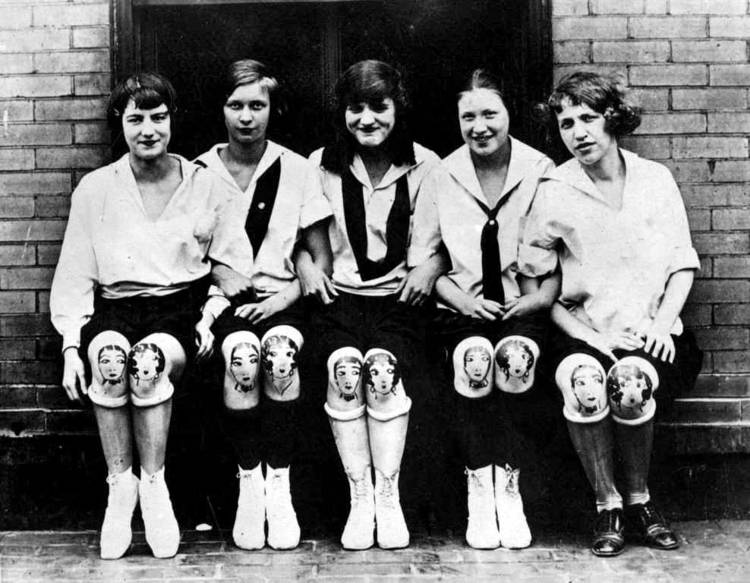
(Learn more about painted knees here)

How Sosruquo was born (Abaza legend)

One of the most famous heroes of the Caucasian Nart sagas is Sosruquo (Soslan), who is born from a stone and burns so hot that the blacksmith god has to temper him. The smith grabs the red-hot baby with tongs around his knees and plunges him in water/milk repeatedly, making his whole body strong like steel. However, his knees where the tongs covered him remain vulnerable, much like Achilles' heel. (Warning, mention of attempted sexual assault in the linked text.)

The treacherous brothers (Greece)

Three princes set out to find a magic lamp that can save their kingdom. The youngest ends up saving three princesses from three different ogres. One ogre has his strength in his knees: he kills people by luring them to lay their head on his lap (promising to de-louse them), and then crushes their skull between his knees. The prince, despite his brothers' inevitable betrayal, is victorious in the end.

Lunja (Morocco)

Princess Lunja follows some birds into the wilderness and ends up being kidnapped by a ghoul woman. When her cousin comes to the rescue, she manages to escape, but the ghoul is in hot pursuit. Lunja manages to trick her into thinking she'd run even faster if she ate her own knees. She doesn't. (The young couple has other adventures after that, but all is well in the end.)

How human beings got kneecaps (Ekoi people, Nigeria)

A woman sees a very pretty white rock in the river, and repeatedly wishes to have it. Her wish is so strong that the rock jumps out of the water and sticks to her knee; after that, she can't get rid of it anymore. And ever since, humans have had kneecaps.

The betel-nuts (Itneg people, Philippines)

This is a long mythical story about a woman who marries the sun. I am including it for a smaller detail: whenever there is a gathering of people in the story, they send out betel-nuts to invite the guests. The nuts tell those who are invited that they have to come, otherwise they grow on their knees and make them unable to walk. Some heed the warning and some don't.

"My father is a fish and my mother is a man" (ATU 705)

This is a folktale type popular in Scandinavian countries and Arab traditions. It generally involves a couple that wishes for a child, but the man accidentally eats the miracle pregnancy food (fish) instead of his wife. A daughter is then born from his knee. She later becomes queen and goes through several adventures; in the end, she is recognized by her lost husband by the riddle of her birth.

What do you think of these stories?

If you got a painting for your knee, what would it be? :)

Monday, April 10, 2023

H is for Hands, Hair, Hips, Heels (Body Folktales)

This year, my A to Z Challenge theme is Body Folktales. Enjoy!

(Yes, I am aware it's Nails, Hair, Hips, Heels, but it was low hanging fruit.)

HANDS

There were some obvious choices here that I'm omitting, such as Beaumains from Arthurian legends, or the folktale type of the Handless Maiden (which I really hate, except for one Hungarian variant).

Invisible Grandfather (Italy)

A girl sets out to seek her fortune, and ends up in an enchanted castle. She encounters no one except a floating pair of hands that serve her food and make her bed. The hands turn out to belong to Invisible Grandfather, who helps the girl secure a king as a husband - but when she doesn't follow his instructions, he curses her to grow a beard. Unusually for folktales, the curse is lifted by an apology.

The most beautiful hands in the world (Philippines)

A girl is proud of her beautiful, soft hands but refuses to do any work to help others. She mocks another girl for having rough, dirty hands. And yet, when that other girl helps a poor woman, she is rewarded with riches - and told that her hands are the most beautiful.

The legend of St. Kilda (Scotland)

According to legend, people from both Uist and Harris coveted the island of St. Kilda. They decided to have a rowing race, and agreed that whoever lays a hand on the island first will be its owner. As they neared the shore, people from Harris were winning - but the leader of the boat from Uist, Colla MacLeod, chopped off his left hand in the last minute, throwing it to the shore, and thus won the race.

HAIR

Hair is very common in folktales. Think Rapunzel, think the Devil's three golden hairs, think Lady Godiva, or The youth with the golden hair (ATU 314). From mythology, think Sif's golden hair, Sedna's tangled hair, Prince Zal's white hair, or the myth from Guam where women catch a monster fish with their hair. (If any more come to mind, sound off in the comments!)

I picked some lesser known, interesting examples:

The king's daughter who lost her hair (Akamba people, Kenya)

My favorite hair-themed story. A haughty princess goes bald from a curse, and sends people out to find a magic tree that grows hair. A young man travels far and finds the enchanted island where the tree grows; he brings back all kinds of hair for the princess.

The maiden with the red-gold hair (Hungary)

This is a "False bride" folktale where the false bride (forced into pretending by her mother) is treated surprisingly kindly. The story tells about a prince who is looking for a special maiden with red-gold hair, and an evil countess who disguises her own daughter to fit the description.

The raven-haired prince (Slovakia)

In a kingdom where everyone has red hair, a raven-haired prince is born. His parents try everything to change his hair color but nothing succeeds; eventually they send him abroad to try his luck. On his way home his servant blackmails him to swap places. After that, the prince goes through a series of dangerous quests, even dies and is revived, and eventually reclaims his rightful place. And his hair turns red.

The girl who became a bird (Hausa, Niger)

A very beautiful Cinderella variant where the prince falls in love with the girl when he sees her at the party in tattered clothes, and asks about her life. Later, her stepmother braids a charm into her hair and turns her into a bird; she is found and rescued by her brother and her husband.

The dragon prince (Spain)

A girl encounters an injured dragon in the woods, and helps him. Later she discovers he is an enchanted prince who can only be saved if someone creates a suit of golden hair for the giant who cursed him. The girl takes up service as a princess' handmaid, and begs her for her golden hair - but she has to promise her the prince's hand in exchange. Luckily, it turns out the golden-haired beauty is the dragon prince's sister, so our heroic girl gets to marry him in the end.

HIPS

Father and Daughters (Morocco)

This is a "Basil Maiden" type folktale, about a clever girl who saves herself and her sisters from the intrigues of a prince. When he tries to put sleeping powder in their food, she manages to stay awake and kicks the guy out of the house so hard he breaks his hip. Later on, disguised as a doctor, she shows up at court to treat his injury (and get up to more shenanigans). At the end of the story the prince is sentenced to death for trying to harm her, but she commutes his sentence.

The lazy beauty and her aunts (Ireland)

A "Three Spinners" type tale, where a lazy girl is taken to a prince's castle with her mother's promise that she can work miracles in spinning and weaving. Three mysterious old women show up to help her - one with large feet, one with a large nose, and one with wide hips (Cailleach Croman Mór, Woman of the Big Hips). Each in turn tells the prince that their shape is due to the hard work they had done all their life. Alarmed, the prince forbids his bride from working ever again.

HEELS

The most obvious example would be Achilles' heel, but I'm not going to repeat it. If you are curious about a lesser known myth about the same, you can find it in my book.

How mosquitoes came to be (Tlingit)

A giant keeps killing people and devouring their heart. A brave man pretends to be dead, and the giant takes him to his house. There, he discovers that the giant is unkillable because he keeps his own heart in his left heel. As he enters the house again, the hero plunges a knife in his heel, killing him. He then burns the body - and the ashes turn into the first mosquitoes.

How rice came to Earth (Indonesia)

A poor boy walks up to the heavens on the rainbow, following some fairies. There, he encounters rice for the first time, but he is forbidden from taking any of it. When he tries to steal some, he cuts his heel on the rainbow bridge while fleeing and gets caught. The second time, he hides some grains inside the healing wound on his heel, and smuggles them safely down to earth.

The soldier and the wizard (Russia)

The folktale version of a villain being brought down by his own monologuing. A soldier encounters a wizard at night in a cemetery and goes on a clandestine nighttime adventure with him. At one point the wizard takes blood from a young couple, and tells the soldier they can only be revived if someone cuts them on the heel and restores their blood. In the end, the soldier learns all the wizard's secrets, and kills him.

Did you have fun with the stories on this list? Do you have a favorite?

Sunday, April 18, 2021

A stroll around seven thousand islands (Following folktales around the world 198. - Philippines)

Today I continue the blog series titled Following folktales around the world! If you would like to know what the series is all about, you can find the introduction post here. You can find all posts here, or you can follow the series on Facebook!

Tales from the 7,000 Isles
Popular Philippine Folktales
A.R. Guillermo & Nimfa M. Rodeheaver
Read Me Books, 1996.

A lovely volume with many colorful illustrations (some better than others), containing 20 folktales on a mere 87 pages. It was interesting, but I did not fall in love with it. The authors claim some stories were "rewritten" to make them more dramatic, but don't specify what parts they changed. There was a short introduction about the flora and fauna of the islands; they also mentioned they selected from the larger ethnic groups of the Philippines, but did not specify them with the stories. Names came with notes and explanations (animal's names were often the word used for that animal). There was not much extra information included, but it was an entertaining read.

Highlights

Most of the memorable stories were placed among the myths in the beginning of the book. My favorite was the completely conflict-less story about how different plants went to the Great Spirit to be told where they will live. It was interesting to observe who became ambassadors to various plant groups: hardwood was represented by mahogany, grasses by bamboo, fruit trees by mango, food plants by rice, and tall trees by coconut, who was deemed the most important of all. Another interesting myth explained why sea is salt - it was about a hero who wanted to build a salt castle for his love, and while building a salt-bridge to another island the bridge collapsed under him. 
The book also had a short version of one of the great epics of the Philippines, Ibong Adarna the magic bird. I read the original in translation, so this summarized version was not nearly as exciting, but I was still happy to see it here. And the rainbow colored magic bird somehow got translated as a nightingale...

Connections

There were many. Most oft he stories belonged to familiar types, such as animals running a race (here buffalo and tortoise), fairy bride with stolen wings (or rather, star bride), and even an Aladdin story that was so close to the 1001 Nights I wondered how it ended up on the Philippines. There was also a version of the story where sea animals want a monkey's liver, but he manages to convince them he's left his organs on dry land. I knew this one from Japan.

Where to next?
Indonesia!

Monday, April 27, 2020

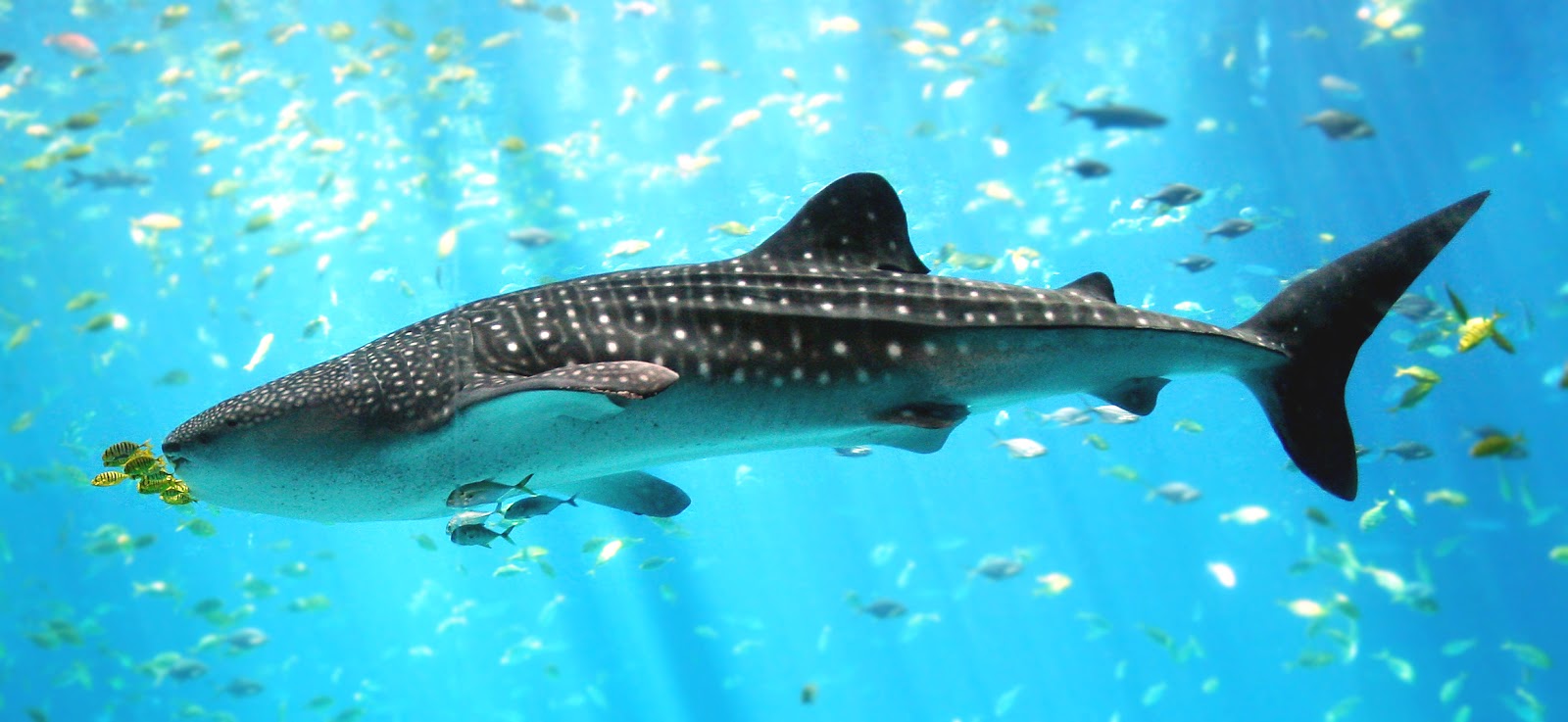
W is for Whale sharks (Folktales of Endangered Species)

Welcome to the 2020 A to Z blogging challenge! This year my theme is Folktales of Endangered Species. I am researching cool traditional stories about rare, fascinating animals - to raise awareness of what we might lose if we don't get our collective shit together. Enjoy!


Species: Whale shark (Rhincodon typus)

Status: Endangered

Lolo Awing
Bantoanon legend from the Philippines

Muslim pirates capture an old man from his island, but they decide he is not useful to them, so they put him ashore on a deserted island. With no way to get home, the old man prays every day to God for help, and survives by foraging. One day a whale shark swims up to the shore. The next it comes back with another whale shark. On the third day there are three of them. The old man hopes they were sent by God, so he tells them to swim away and come back, to prove they understand him. When they do, he sits on the back of the largest whale shark, and it carries him safely home, with the other two swimming along for protection.

I also found a Swahili legend from Kenya and Mozambique, in which God creates all the creatures of the sea, and he is so pleased with how beautiful the whale shark turned out that he and the angels throw handfuls of gold and silver coins at it. The coins stick, and the whale shark has had spots on its back ever since. In Kiswahili they call it "papa shillingi."

Sources: Read Lolo Awing here. Read the Swahili story here.

How can I help?

Read about conservation efforts here, here, here, or here.

Would you swim with a whale shark? They are the largest fish in the ocean, and they only eat plankton! 

Thursday, January 16, 2020

Pablo and the Princess (Feminist Folktales 3.)

Another Thursday, another post for Feminist Folktales! It's a series of traditional stories from around the world that display motifs that reflect feminist values. I am not changing any of the stories, merely researching and compiling them, and posting them here as food for thought. You can find the list of posts here.

Origin: Philippines

The story


Three friends - Pedro, Juan, and Pablo - set out to seek their fortune. They decide to go their separate ways at the crossroads, and meet again in one year's time. Independently from each other, each of them meets an old man who gives them a magic item in exchange for sharing their food. Pedro receives a flying carpet, Juan an all-knowing book, and Pablo an ivory tube that can heal anyone if he blows into their nose with it.
When they meet again at the crossroads, the three friends discover from the book that the princess of a faraway land is dying. They fly there on the carpet, and Pablo heals her with the ivory tube. The king, however, is baffled: he doesn't know which man he should give his daughter to (he previously promised to give her hand in marriage to the one that saves her). He comes up with a new test: the three men have to shoot arrows at a banana flower, symbolizing the princess' heart. Pedro and Juan hit the flower right in the center, but Pablo refuses to compete: he doesn't want to cause harm to the princess, not even symbolically. With this caring attitude, he wins the contest, and the princess happily marries him.

What makes it a feminist folktale?


Bat pollinating a banana flower, from here
This tale has many solutions in many different cultures, ranging from definitely feminist ("let her make up her own mind") to kinda horrible (where the suitors give her as a wife to their father, because he is older). I like this version especially because the question is not decided by strength or dexterity, or even by "usefulness." Pablo wins the princess with his empathy. The king knows exactly what he is doing when he sets up a banana flower as a target. It is heart-shaped and dark red, very much reminiscent of an actual human heart. Pedro and Juan shoot at it without care or consideration, eager to prove that they are better than the other two. It is more important to them to prove their own worth than to think about the deeper meaning of the task.
Pablo is the only one who sees the symbolic message behind the practical, and he resists the competitive instinct to stop and consider the best course of action. He does not want to hurt the princess, not even symbolically. This is a lovely counterpoint to all the cases where people are blind to non-physical abuse. The two other suitors immediately shoot the "heart" of the woman they claim to be in love with, to prove a point about their manliness. Pablo takes the risk of losing by not participating at all, and puts the princess' comfort above his own need for approval. This is the kind of respectful, empathetic attitude that allows the other person the freedom to make her own choice, letting her know what her safety is more important than winning.

I also like the fact that this version of the story gives a separate, new task to the suitors instead of trying to decide which one of them was the most "useful" in saving the princess (a lot of variants declare the healer to be the winner by default). This is a good reminder that you can't win someone by doing useful things for them. Despite what writers of romantic movies might think, you can't win a woman by doing X number of favors for her until you collect enough points to exchange for a date. Just because you save someone from a bad situation, they are not obligated to marry you as a thank you. Pablo, by declining to participate in the contest, proves himself to be the most mature of the suitors - and also that he is capable of not only love, but also respect and caring, allowing the princess to draw her own conclusion.

Things to consider

In the original text it's the king that declares Pablo the winner, explaining why his choice was better. When I tell this story, it's usually the princess herself who does the same (balancing out the fact that she had been promised by her father).
Also, because I like men who read, I usually give Pablo the book instead of the ivory tube. It's not a bad option, since, according to some sources, originally the book was the healing item, and the tube used to be an all-seeing spyglass (see here). This has the added bonus of connecting reading with empathy, which is a proven phenomenon.

Sources

"Narrated by Dolores Zafra, a Tagalog from La Laguna. She heard the story from her father."

Dean S. Fansler: Filipino Popular Tales (American Folk-Lore Society, 1921.)

Notes

The tale belongs to the ATU 653B type (The most wonderful thing in the world). It is originally a dilemma tale - the audience is expected to discuss possible solutions, and come up with a satisfying ending.

Saturday, June 29, 2019

StorySpotting: Tag, you're it (Avengers: Endgame)

StorySpotting is a weekly or kinda-weekly series about folktales, tropes, references, and story motifs that pop up in popular media, from TV shows to video games. Topics are random, depending on what I have watched/played/read recently. Also, THERE WILL BE SPOILERS. Be warned!


I feel like sufficient time has passed now since the premiere of Endgame so that I won't get dragged for talking about the plot. If you think otherwise, please stop reading now.

Where was the story spotted?

Avengers: Endgame (2019)

What happens?

In the epic final battle against Thanos and his army, the Avengers all team up to save the world. Their goal is to dismantle the Infinity Gauntlet, or at least keep it away from Thanos, who wants to use it to snap the entire universe out of existence (and start a new, better one, probably with blackjack and hookers). In order to get the gauntlet from point A to point B (and away from Point Thanos), they pass the important object from one person to the next. In the moment when one of them is about to drop it, or be overwhelmed by the enemy, someone else swoops in and carries it on. They continue tagging in and out of the chase, passing the gauntlet along in a relay race, until the story reaches its final climax.


What's the story?

TEAMWORK, people! It was not invented by coaching experts. The world-saving relay race does appear in some very old traditional stories which are really fun to research and tell. They usually have to do with the theft of fire.
Fire theft, a popular motif in folklore and mythology, has its own motif number, A1415. Within this large group of narratives, there is a sub-type, numbered "A1415.2 - Theft of fire by animals." If you dig even deeper, you will eventually arrive to "A1415.2.2. - Coyote Steals Fire."

This Native American story exists in several versions from various nations. The basic idea is always the same: The world needs fire, but fire is hoarded and guarded by some powerful beings who are not willing to share. Coyote, being a Trickster, comes up with a plan to steal fire with the help of other animals. He makes the initial theft, then passes the fire on to the next animal. The enemy pursues the stolen fire, but every time they come close, and the carrying animal tires or stumbles, someone else jumps in and picks up the flame. They eventually get to a safe place, or manage to hide the fire somewhere the powerful beings can't get it back from.
Picture from here
The stories vary in terms of animals and enemies. One version from the Pacific Northwest has Coyote-Wolf-Squirrel-Frog, stealing fire from monster-beings called Skookums. A story of the Salishan from Nicola Valley has Coyote-Antelope-Fox-Wolf, and "all the good runners" running away from the Fire People (and being killed one by one). In the Shoshone version, Coyote is helped by Stinkbug, Porcupine, and Packrat. In the Karuk version, fire is stolen from the Yellow Jacket Sisters with the help of Eagle, Frog, Turtle, Fox, and Mountain Lion.
This tale type, interestingly enough, also appears in the Philippines. Among the Ilocano people, it is the human trickster and culture hero Lam-ang who initiates the theft of fire from the giants (read the story here or here). He is helped by Frog, Cat, Dog, and Lion, among others.

Conclusion

The life-or-death relay race for the saving of the world is a narrative trope that is full of tension and excitement. When used well, it can channel a sense of epicness as well as a strong idea of teamwork and community. I'm not going to lie, it's one of my favorite folktale motifs, and I was delighted to see it in a modern adaptation in Endgame.

Tuesday, April 23, 2019

T is for Tamarind Tree (A to Z Challenge 2019: Fruit Folktales)

Sampaloc Lake is the largest of seven lakes near San Pablo City in the Philippines. There is a legend about how the lake was born, and that legend just happens to be tied to a tamarind tree.

The legend tells of a greedy couple who lived nearby once upon a time, and owned a huge tamarind tree. On a hot day, an old woman stopped at their house, begging for some tamarind fruit from the tree; she was sick, and only the sour taste of the fruit could cure her. The couple, however, rudely told her that the fruit was not for sale, and they would definitely not give it away for free. The old woman kept begging, and even tried to pick a fruit, until the evil couple set the dogs on her.

Chased away from the tree without any fruit, the old woman cursed the owners. They laughed at her words... but soon after an avalanche was unleashed, and it buried them, house and all. The avalanche was followed by a deluge, and a new lake was formed where the house had once been.
Legend says that the huge tamarind tree still stands on the bottom of the lake, full of fruit. Legend also says that the lake claims a life every day, so people should not be swimming in it.

The lake is called Sampaloc Lake - sampaloc is the Tagalog word for tamarind.

(Read the legend here or here.)


Friday, July 14, 2017

MythOff Budapest 2017 - Sun, Moon, and Stars

There is no summer without MythOff in Budapest! It was Szilvia's idea to pick the theme of Sun, Moon, and Stars, in honor of this summer's upcoming solar eclipse (and the lucky people who will get to see it). Everyone really liked the suggestion, so the agreed to choose our myths accordingly.
We made some good choices.
Once again, we outgrew our venue, so this time we performed at the RS9 theater; a space of almost 100 seats, which we managed to fill to capacity! (We would like to take this time to thank our wonderful, loyal, and ever-growing audience). Behind the emcee's microphone we had Varga-Fogarasi Szilvia, who did not only suggest the theme, but also took care of the music, the prizes, the announcements, and some fiery spectacles at the end of the show.
The myths and tellers were as follows:
(Watch the videos by clicking on the names!)

Round one: Lights in the night sky
Lovranits Júlia opened the evening by telling us a myth from the Philippines about the birth of the Moon. In it, the Sun demanded a princess for a wife; the girl, defying her protective father, rose up to the sky to light up the night for the people she loved.

Next we had Hajós Erika telling the heavy yet beautiful Greek myth of Callisto and Arcas (the Big Bear and the Little Bear) - she talked with grace and empathy about Zeus' violence, Hera's vengeance, and all the topics this story tend to bring up.
Voting question: If Hera went hunting, and her prey was defended by the kind-hearted Sulamyn, who would win the confrontation?
The winner: Greece

Round two: Sunrise 

This round was all about the Sun. Bumberák Maja told the Japanese myth of the goddess Amaterasu, how she hid herself from the world, and how she was lured out of her cave by the goddess of happiness and a mirror. Her telling was graceful and poetic, and showed some of the many meanings and layers of this important story.
She was followed by Gregus László, who brought is the Chinese myth of Yi the Heavenly Archer, who shot down nine of the ten suns in the sky to save the earth from being scorched to ashes.
(I blogged about this epic earlier)
Voting question: If you had to light up a storytelling event, what would you rather use - the chariot of the ten suns, or Amaterasu's mirror?
The winner: Japan


Round three: Lucky stars

In this round, the storytellers drew cultures (or cultural regions) from a hat, and they had to find their sun-moon-star myths accordingly.
Yours truly had the luck of pulling South Africa as a region. I spent a couple of weeks reading myths and folktales from various South African cultures, especially from the San and Khoikhoi peoples. In the end, I settled for a KhoiKhoi story called Windbird and the Sun - it is a tale about a girl who was loved by the Sun and the Wind and who loved colors, so both of them tried to make the world as colorful for her as they could.
(Video here, original source here, picture book here, I got my mythical background information here and here, among other sources)
The evening concluded with Nagy Enikő, who brought us some Hindu myths about the Pleiades, Mars, and the birth of Kartikeya, the god of war. Enikő is an elegant teller, who told us the stories with grace and wonder.
Voting question: If someone wanted to start a new fashion trend, should it be based on the colors of the Khoikhoi myth, or the sparks and lights of the Hindu myth?
The winner: Khoikhoi mythology

All in all, we had a great lineup of diverse stories, and a lovely audience that supported us, voted, and asked many questions about mythology. MythOff, once again, was a special experience.

We will do it again soon!

Friday, April 10, 2015

I is for the Ibong Adarna (Epics from A to Z)

(I bet you thought it was gonna be the Iliad, huh)

Origins
Ibong Adarna (The Adarna Bird) is a metrical romance from the Philippines. It was originally written in Tagalog sometime in the 17th century while the Philippines were under Spanish rule; the author is unknown. It consists of 1034 short verses that rhyme in the original language; sadly, they don't rhyme in the English translation, but the story was still enjoyable.
The story itself is an elaborate mash-up of many well-known folktale types. We have three princes that go on quests, magic birds to find, princesses to rescue, dragons to slay, bird-maidens to steal dresses from, magical flights with objects turning into obstacles... the works. It reads as if the author decided to put the "best of" lineup of fairy tale motifs into one continuous romance. They succeeded.

The Hero
The hero of the epic, Don Juan, is the youngest of the three sons of King Fernando of Berbania (feeling some Spanish influence here). He does everything a youngest prince does: Surpasses his older brothers until they want to kill him, goes on long and elaborate adventures, and survives against all impossible odds. Don Juan in this case is also quite amorous. He will woo any princess that comes his way, which creates an interesting conflict at the end of the story: All the princesses he swore his love to show up for a wedding, and since this is a Christian romance, Don Juan can only wed one of them. Oops.

Highlights
Although it follows well-known folktale types, the story does have a few rare gems:

1. The Adarna Bird. Not just any magical bird - it sings beautifully every night seven times, and molds between songs so its feathers take on seven different hues. Also, if it poops on you, you turn to stone.
2. One of the princesses rescued from the Underworld has a pet wolf. A magical pet wolf. A flying magical pet wolf. Yep.
3. One of the settings for the epic is a place called the Crystal Kingdom (or, as it is said in the translation, "Kingdom de los Cristal"). It is mostly named so because the failed suitors of the princess turn into crystal instead of stone. Now there is a visual I would love to see in a movie.
4. The end of the romance is definitely the best part. After Don Juan returns home with Bride B (Doña Maria), he meets Bride A (Doña Leonora) again, and completely forgets about Bride B. Doña Maria, who is by the way a very accomplished white magic sorceress, comes to the wedding and puts on a shadow-puppet show, telling the story of how she met Don Juan, and how she had saved his life more than eight times (!). Every time the shadow-puppet bride hits her foolish shadow-puppet husband, it is Don Juan who actually gets hurt. Because magic. Doña Maria successfully makes her case with the show, and ends up marrying Don Juan. Doña Leonora gets to marry one of the older brothers. 
Happily Ever After.