Showing posts with label flowers. Show all posts

Tuesday, October 2, 2018

Down the research mole rat hole

Every year, various organizations in Hungary announce natural treasures of the year, to raise awareness of the country's flora and fauna, and gather resources for conservation. We have Bird of the Year, Mammal of the Year, Wildflower of the Year, etc. Since it is by now a very popular tradition, I decided that this year I'd make a storytelling program that contained stories for all these natural treasures; I named the idea Wonders of the Year, and got right down to research.


Just to show you what I was trying to find stories for:

Bird: Peregrine falcon
Tree: Mountain ash
Wildflower: Marsh gentian
Mineral: Fluorite
Fish: Asp
Insect: Emperor dragonfly
Mammal: Mole rat
Reptile: Viviparous lizard
Herb: Lavender
Fungus: Lion's mane

The idea was to find one story for each, and then take the whole show to educational settings. Since I had a fairly busy year, the program did not really come together until the end of September, when we have the national Night of Research: Research institutions, universities and museums are open all night, and have all kinds of exciting science-related programs. A friend of mine, Dr. Beáta Oborny, biologist and storyteller, suggested that we should take the show to the university's own Natural History Museum; she'd provide the exciting factual information for each natural treasure, and I'd tell the stories. So we did.


In the end, the research process was not at all what I'd expected. Falcons show up in lots of stories, but none mentioned a peregrine specifically (in Hungarian, "falcon" used to refer to this particular species to begin with, other falcons had other names), and of course I had to give up on the "viviparous" part of the lizard very early on. Mole rats rarely ever come to the surface, so the folklore on them was pretty scant as well. But on the other hand, delving deeper into nature stories did bring up some unexpected, delightful surprises.

I tracked down some Bulgarian folk songs in which a girl is forced to marry a dragon, only to find out that her husband has no power over gentian flowers, and she uses them to escape; bonus in the story was the way the dragon's marriage entourage arrived at her house, and the dragon women re-braided her hair "in their fashion, like a dragon." Fluorite seemed like a lost cause from the get-go, but then I learned about the famous Blue John mines in England, which just happen to have a fabulous dragon legend attached to them (courtesy of Ruth Tongue, from Forgotten Folktales).
In the cases where I could not find the exact species, I did my best to improvise. For example, lizards appear in many stories; I almost fell for one where Lizard helps find the stolen Sun, but then I found out that this particular species is known for living in colder climates and habitats, and is the northernmost reptile known in Europe. In the end, I tracked down a Hungarian folktale (a variant of the Frog Princess) where a girl, turned into a lizard, lived at the edge of the world, and ventured into underground kingdoms to help a prince acquire magical items. Similarly, I went all the way to Japan to find some worthwhile mentions of the lion's mane mushroom. There it is associated with the yamabushi monks, and it just so happens that there is a well known Japanese comedy that features such a monk trying to pray an infestation of demon mushrooms away.

The hardest challenge, in the end, was the mole rat. It has been chosen as Mammal of the Year because building the wall on our southern border (*cough*useless*cough*) cut its habitat in half, and now it is severely endangered. Because it rarely ever comes above ground, there is not much folklore attached to it, and the one that exists is pretty bad. In some parts of Hungary it was believed that killing one with your left hand gave you healing powers (not for the poor creature, obviously). Other than that, I found some beliefs that children born from sibling incest live as mole rats for 7 years (weremolerats, hey!), although the word they use for mole rat could also just be a word for a mythical creature. In the end, I found a newspaper clipping from 1927 in which a mole rat was found on the road by someone, captured, lost, found again, and eventually made it into town from where the local doctor sent it on to London. Using all these small moving parts, I made up a story from the mole rat's perspective, and spiced it up with interesting details about these fascinating creatures.


I am proud to report that in the end I managed to find stories for all ten things on the list; most of them traditional folktales and legends, with some creative additions. It was tons of work, and I didn't even get to tell all of them in one show, but I had great fun with working on it. I still have three months to take it to other venues... and I can't wait to find out what treasures we'll have on the list for next year!

Monday, April 23, 2018

T is for Tulip Soldiers (WTF Hungary - Weird Things in Hungarian Folktales)

Welcome to this year's A to Z Challenge titled WTF Hungary - Weird Things in Hungarian Folktales! You can find all other participating blogs on the A to Z Challenge main blog.

You have probably already guessed that tulips have a special place in Hungarian folklore.

This one is a historical legend featuring one of our great national heroes, Rákóczi Ferenc II, the leader of the 1703-1711 revolution against Habsburg rule (which we lost). He is a very common figure in folktales and folk legends, along with his mother, the legendary Zrínyi Ilona. There are "Rákóczi trees" all over the country, ancient trees people claim he either slept under, tied his horse to, or, in the case of the one in my home village, watched a battle from under it. And this is not his only connection to flora either.

According to a cute little story, Rákóczi as a child once had a dream that his mother's tulips were in danger. He crept out of his bed and took his blankets, covering the flowerbed and protecting it from a sudden frost. As he did so, an angel appeared, and handed him a golden horn.
Some time later the boy was playing in the courtyard when he heard the sound of an alarm: The enemy was attacking their castle. They had no soldiers to defend themselves. The boy blew into the magic horn, and suddenly all the tulips in the garden transformed into soldiers, and picked up their swords to defend the family.

I have a soft spot in my heart for this story. I found it while researching Transcarpathian folklore for my latest book; Pályuk Anna, the storyteller whose tales I translated, also had many stories about flowers transforming into people. Maybe it's a Transcarpathian thing.

Friday, April 6, 2018

F is for Flowerbeard (WTF Hungary - Weird Things in Hungarian Folktales)

Welcome to this year's A to Z Challenge titled WTF Hungary - Weird Things in Hungarian Folktales! You can find all other participating blogs on the A to Z Challenge main blog.

Today's folktale comes from a famous storyteller named Cifra János (1898-1983). He was of Hungarian Roma descent, and lived in Corunca, Transylvania, where his tales were collected by Nagy Olga in the 1970s. He was a storyteller of extraordinary imagination and talent.

My favorite tale of his is titled Nyeznyám, but I like to refer to it as Flowerbeard.

Pic from here
At the beginning of the story, a king is out hunting in the mountains when he finds a strange and very handsome man whose beard is made of spring flowers. The king takes this man home and locks him in a room (rude). He invites other kings to come and look at the curiosity... But while they are arriving, the little seven-year-old prince accidentally shoots an arrow inside the prison. Flowerbeard talks to him through the door, begging to be set free. The prince steals the key from his mother and releases Flowerbeard.
When the king finds out, he first thinks his wife cheated on him, and sentences the queen to death. Hearing this, the boy confesses, and takes on the death sentence. The king sends him out to the mountains with a servant who is supposed to kill him and bring back his heart, liver, and little finger. The boy manages to convince the servant to kill a dog instead, and offers his little finger to be cut off as proof.

From this point in the story, Flowerbeard takes care of the prince. As an invisible presence, he makes his finger grow out again, and then makes sure the boy is never cold, thirsty, or hungry as he wanders around the world. When the prince grows up, he goes on to kill dragons and defeat armies (all with the strength he got from Flowerbeard). Eventually he falls in love with a princess, and pretends to be a mute gardener to get close to her. He works as a gardener for the king until, after various challenges, he ends up marrying the princess.

At the wedding, Flowerbeard appears once more, thanking the prince for setting him free. He then takes off the beard of violets and other spring flowers, and places it on the prince's face. The prince becomes king, and lives happily ever after.

Pic from here
Obviously, there is tons of symbolism in this story. Masculinity, coming of age, changing of the seasons, man's relationship to Nature, you name it. Flowerbeard reminds me of all the Green Man legends I've read. And not only that - every time I run into this tale type, the magical captive is always some kind of a nature-related being; for example, in Estonia he is the Mushroom King.
Apparently, flowers in beards are a popular hipster accessory now. You can see a bunch of awesome photos here. 


Monday, March 5, 2018

Flowers and gemstones (Following folktales around the world 61. - Romania)

Today I continue the blog series titled Following folktales around the world! If you would like to know what the series is all about, you can find the introduction post here. You can find all posts under the Following Folktales label, or you can follow the series on Facebook!


Szegény ember okos leánya
Román népmesék
Kovács Ágnes (szerk.)
Európa Könyvkiadó, 1974.

Yet another volume of our wonderful Tales of Nations series, and once again a very valuable collection. It contains fourteen beautiful, elaborate Romanian fairy tales selected from 19th century sources. In the afterword, folklorist Ortutay Gyula explains that while Hungarian storytellers for example tend to focus on action and dialogue, Romanian tellers took pleasure in detailed, exquisite descriptions. This definitely shows in the tales, and I loved every minute of it. Of course the book contains notes for each story, complete with sources, tale types, and comparable Hungarian variants.

Highlights


Since most of the tales belonged to well-known types, the highlights mostly came from small details and elaborations within the stories. For example, in the story of Calin the Fool, the hero fell in love with the middle (!) sister - out of princesses of copper, silver, and gold, he chose silver. In The Man Turned to Stone, the magical helper of the heroes was the Spring Breeze. His mother hid the heroes (under the wings of an emerald-eyed and diamond-beaked magic bird) when he came home. Spring Breeze was a youth with golden hair and silver wings, carrying a staff covered in flowers and vines, smelling like roses and rosemary. He drank doe milk and violet water for dinner. In the same story, the heroes rode a fairy carriage to the princess' palace, a palace of sapphire with a door made of cypress wood.
As a whole, I think my favorite tale was that of Tugulea, Son of Old Man and Old Woman. It began with a dragon queen stealing the boy's sinews at birth, because she was afraid he'd kill her when he grew up. The crippled hero could not walk, but he learned how to shapeshift, turned into a bird, and eventually got his sinews back (and killed the dragon queen). The story from here turned into that of the Extraordinary Helpers - Tugulea had companions who could eat and drink a lot, withstand freezing cold, and do magic. The latter came in handy when one of the tasks posed to the hero was that he had to make fifty barren women have babies in one night (hello, Hercules). The magician did the trick "with the power of his magic wand."
At the end of the volume there was also a more "modern" fairy tale, in which The Fairy of the Waters did not only help the hero succeed, but they also ended feudalism in the process...

Connections


Georges Rochegrosse:
Le Chevalier aux Fleurs
The title story, The Poor Man's Clever Daughter, was that of the common tale type - a long and elaborate version. Youth without old age and life without death was a lovely and complex variant of the prince seeking immortality - in this case, he had to fight several witches on the way, including one named Scorpion. Fairy Ilona was a similarly long and beautifully detailed variant of the princess who turns into a prince.
After the Ukraine and Moldova, I once again encountered the story of the sister who is kidnapped by a dragon while bringing food to her brothers to the fields where they work. She is rescued by her late-born little brother and his friend (in this case, Peter Peppercorn and Florea of the Flowers). I especially liked the figure of the Knight of Flowers who became a close friend to the hero.

Where to next?
Bulgaria!

Sunday, April 2, 2017

Scattered stories (Following folktales around the world 19. - Uruguay)

Today I continue new blog series titled Following folktales around the world! If you would like to know what the series is all about, you can find the introduction post here. You can find all posts under the Following Folktales label, or you can follow the series on Facebook!

For the duration of the A to Z Challenge, Following Folktales post will go online on Sundays.

Today's post is a little bit different than usual - given that I did not manage to locate a collection of traditional tales from Uruguay. Instead, I hunted down a bunch of collections that had at least some stories from Uruguay in them.

This is a bilingual edition of traditional tales from the southern countries of South America (Peru, Bolivia, Chile, Argentina, Paraguay, Uruguay). It contains five tales from the latter, as well as games, folk recipes, and a short introduction to the country's landscape and culture.

The river of painted birds
A short story; mostly a list of indigenous bird species. It concludes with the Guaraní arriving to this land, and naming it Uruguay, which means "river of painted birds", after the rich local wildlife.

Candombe drums
Again, a tiny tale that paints a picture of how the sound of drums first arrived to Uruguay with people taken from Africa as slaves, and how it made the local wildlife dance.

Ingele thinks he is dead
I knew this as a Hodja story, but apparently it exists in other cultures as well. Ingele, the simpleton, believes that he is dead, because a random stranger told him so. Later, he "comes back to life," and scares the daylights out of some travelers.

Yerba mate
A really beautiful guaraní legend about how Yasí, the moon, wanted to come down to earth to marvel at it up close. She gets attacked by a jaguar, and rescued by a mortal man; as a gift, she creates the mate plant for him, so that he has mate to drink to keep himself alert, strong, and healthy.

The legend of the lajau (ombú) tree
Another really beautiful guarnaí legend, re-told by a children's author. Tupá, the creator, asks each tree what they wish for. The ombú viszes for light and porous wood, and a large canopy so that it can shelter many creatures. Tupá also grants the tree immortality for its generosity.
It is truly a remarkable tree:


Uruguayan tales from other books:

The Green Moss Prince (Stories from the Americas)
A tale of European, probably Italian origins; I knew a variation of it as Prince Canary, from Italo Calvino's collection. Here, the prince visits his lover in the form of a green parrot; when her evil stepsisters hurt the bird and chase him away, the girl sets out to find and rescue him with the help of the Wind, the Moon, and the Sun.

The origin of the camlet (camalote) flower (Ride with the Sun)
Indigenous legends from the colonial era. It tells of the daughter of a white settler, who rescued a native boy from a flood; the boy survived, but the white girl was swept away. Tupá, the creator, turned her into a lovely blue water flower as a reward for her bravery.

The sad tale of a foolish fellow (The King of the Mountains)
The same tale as Ingele, told a little differently.

Oversmart is bad luck (The King of the Mountains)
The Fox tries to lure a rooster off a tree by lying to him, claiming there is a decree that no animal shall eat another (therefore it is safe to come down). The rooster tricks the fox into thinking the hutner is coming with his dogs, and then yells after the fleeing fox: "Tell them about the decree!"

Where to next?
Brazil!

Monday, March 13, 2017

Myths, flowers, and an army of chinchillas (Following folktales around the world 16. - Bolivia)

Today I continue new blog series titled Following folktales around the world! If you would like to know what the series is all about, you can find the introduction post here. You can find all posts under the Following Folktales label, or you can follow the series on Facebook!


Mitos, leyendas, y cuentos populares de Bolivia
Textos en castellano; quechua-castellano y aymara-castellano
Roberto Ágreda Maldonado (Ed.)
Grupo Editorial Kipus, 2015.

A little under 300 pages, this collection is a great introduction to the traditional stories of Bolivia (and it doesn't include nearly as much Quechua or Aymara text as suggested by the subtitle). It was created by an organization of poets and writers, and each chapter corresponds to a certain region of the country - each containing traditional stories of great variety, from indigenous myths through historical legends all the way to 20th century ghost stories. The original authors of the texts are always noted; some of the tales come from earlier written sources (some from the 19th century), but there was also at least one that came from the Internet, where someone posted stories from their grandma. It is a mixed assortment of stories, some gorgeous, and some slightly confusing, but I am very happy it exists. It even has a glossary at the end, and a handy table that explains the differences between myth, legend, and folktale.

Highlights


One of the most beautiful stories in the book was the origin legend of the kantuta flower (one of the national flowers of Bolivia). It told about the rivalry of two kings over whose star was brighter on the night sky, and how their vanity brought war to their lands. The kings, dying from battle wounds, left the war to their sons, who had to fight even though they did not want to. In the end, wounded like their fathers, the two young princes made peace on the battlefield, saving their people, and they were buried together. On their grave grew the kantuta flower, the symbol of unity.
There was a similarly beautiful myth about the birth of the chestnut tree, in which two deities wanted children, but did not know how to procreate. They observed the natural world around them and learned to make love. Their first child was the chestnut tree, and then all the other trees, until the jungle was born.
Because I have a soft spot for hummingbirds, I also loved the legend about the condor that kidnapped a wife for himself, and the hummingbird named Lorenzo who rescued her from her mountain cave. Similarly vivid and visual was the origin myth of the peanut, where a mysterious supernatural woman combed the first peanuts out of her hair to feed hungry people. In fact, there were origin legends for almost every indigenous plant in the book, from corn born from a murdered wife to potatoes born from executed lovers. Especially touching was one legend about how the Sun God gave the coca plant to indigenous people at the dawn of colonization, to ease their suffering.
Less serious and more amusing was the myth about four mountain deities competing for the love of the same woman, in which one brother sent an army of chinchillas to (literally) undermine his rival. Chinchillas were not the only native species featured either; there was also a nice little folktale about why the armadillo's armor is so uneven.
Among the historical legends, the most interesting was probably the chapter about Inca rulers playing chess. One story told about how Atahualpa, the Inca imprisoned by the Spanish conquerors, learned to play chess, and when his captors found out, he was ordered to be executed, perceived too smart to be allowed to live.
Finally, one remarkable ghost/monster story was that of the k'arisiri, a creature that hunts people at night in order to suck the grease out of their body...

Connections

I did not have to wait long to have my first encounter with the Crying Woman (the ghost of a mother walking along a river, crying for her children) on this South American journey. I suspect I'll be seeing her more later on...
Reminiscent of North American indigenous tales was the guarayo myth where two brothers (Sun and Moon) climbed up to the sky on a ladder created by shooting arrows into each other. There was also a flood myth from the chiriguana, where a boy and a girl were placed in a gourd so that they could survive. A story about raising the sky reminded me of Polynesian mythologies - in this case, earth and sky were so close to each other they sometimes smashed together, killing people. The sky was finally raised up by a giant worm named Nyucu, whom we can still see every night in the form of the Milky Way.

Where to next?
Moving on to Paraguay.

Wednesday, September 23, 2015

Back to the gardens

I did my second round of seed-and-flower storytelling at the school today. I only had two classes: 3rd grade and 2nd grade, although several other kids attempted to drag me into their classrooms as well.
I told the Pumpkin Girl in 3rd grade, because I was curious to see if it would work with a younger audience, or if the 6th grade was just particularly enthusiastic about it. Turns out that kids are very easily entertained with the thought of a talking pumpkin, and they giggled all the way through. While it is definitely a fun story to tell, it also brought up some questions from the kids that I need to consider before the next telling (if "being loved just as she was" turned the pumpkin back into a girl when why did her mother's love not break the spell? - thank you, Frozen!). I also told the Jasmine Princess again, because I was in the mood for monkeying around with the kids, and they definitely got a kick out of it. The giant's character is also a lot of fun to do.
(Background: It took me a while as a storyteller to dare to do funny voices and sounds. I don't do them a lot, but sometimes they are definitely fun)
Second grade remembered me as "the storyteller with the superhero stories," and wished to continue the conversation where we had left off last year (now there's a compliment). I told Jasmine Princess again (I am really starting to love this story, and the kids react to it really well). I also told the Magic Garden, and for some strange reason, it hit the right spot for 2nd grade. Some of them told me this was the best story they ever heard, and they seemed enchanted by the idea of birds, and seeds, and gardens, and the whole thing. When I told them that such gardens really exist, they got really excited. Also, one of the boys wanted to know what birds are made of. I passed the question off to their teacher.
All in all, the flowers and gardens theme was tons of fun to do, and I got some great new stories out of it. I wonder what the next request will be!

Tuesday, September 22, 2015

Sunflowers, seeds, storytelling

School's back in session, the semester has begun, and I am doing the grad student thing of papers and exams and whatnot. But even now I need regular storytelling to re-charge my batteries; so I have returned to my designated practice school. I contacted them early in September to ask what they were up to. The unexpected answer:

"Do you happen to have any stories about sunflowers?"

(Catholic school; their theme for the year is "Planting the seeds of virtues")
Have I mentioned that I am a sucker for thematic challenges? I gave my standard answer: Nope, but give me three weeks.
It has been an immensely fun three weeks too. I dug into folklore and mythology, looking for tellable stories involving sunflowers. I soon made some discoveries:

1. When you search for sunflower stories, 80% of what you find will be the Greek myth of Clytie. Which is a mistranslation. It's about the heliotrope. The Greeks didn't have sunflowers, because...
2. Sunflowers are indigenous to the Americas. Which means myths involving their creation are Native American myths, and I do not tell those (for various cultural / ethical reasons). Which led me to... 
3. Finding folktales and other stories that mention sunflowers. Sadly, several of them had the sunflower added in a literary version, or a picture book. Mufaro's Beautiful Daughters, for example, added sunflowers where there were originally none. While that is all good and well, I kept digging.

Eventually, I came up with a story from Peru (it was noted as a "legend" in some sources, but I did find an original author for it); a folktale from India; and two tales that mention sunflowers marginally. To this I added ten other tales that feature gardens, flowers, flower seeds, and the occasional fruit. It took me about three weeks to sift through a lot of folklore, and order books through Inter-Library Loan. I narrowed the stories down to fourteen from forty or so. 
But it was worth it.

Today, I went to the school and told in 6 classrooms (half an hour each). It was tons of fun.

In the kindergarten (garden, hah) I told "Why snow is white" from the new Bavarian folktale collection. It is a tiny story, but it works like a charm with the little ones. They loved imagining what show would be like if it was different colors, and they found sunflower-colored "yellow snow" the funniest thing in the world (don't eat yellow snow, kids). After the storytelling, they all wanted to hug me, and I toppled over against the bookshelves.
Another story that worked great with the younglings (K and 1st) was the Jasmine Princess. While some of the boys initially made faces about a "princess story," the giant and the monkeys soon won them over. It is a great story to tell, especially when you get two dozen six-year-olds making monkey noises.
For the older grades (7th and 8th) I told the legend of Stavoren the Sunken City. Not only is it a great environmental tale full of important messages, it is also very timely, since it talks about feeding the poor. Similarly, the Kazakh folktale of the Magic Garden (one of my favorites) worked well with the discussion about urban gardening.
One of my favorite new stories is Watermelon Island, a Vietnamese folktale about the discovery of watermelons. It is a very popular story, and I found many versions of it. It is not a magical tale - all very practical instead, but kids did get a kick out of discussing how great and tasty watermelons are. It did not help that I was very thirsty at the time. I might have drooled a little.
Of course I told the Empty Pot a couple of times, as the shortest story in my flower-and-garden repertoire. It is a very clever little tale. But the big winner of the day (in 6th grade, which is my favorite bunch at the school) was the Pumpkin Girl, a Persian folktale where a baby girl turns into, and lives, as a pumpkin. The class found it absolutely hilarious, and tried to puzzle out the details of how the magic worked. My favorite part: "You can't really shop for clothes for a pumpkin, right?" Boy: "You have to go to the Halloween store and buy a pumpkin costume." Me: "You can't just dress up a pumpkin as a pumpkin!" This story, by the way, showed Cinderella in a new light to me: In this case, there is a ring that has to fit the mysterious bride perfectly. However, the prince (groom) has to send the ring house to house, not because he wouldn't recognize her, but because he can't enter houses to meet girls face to face. So he sends a ring with a female servant. LOGIC.

I am going back for another round on Wednesday.
And now if you'll excuse me I'll go buy a watermelon.

Thursday, September 17, 2015

Folklore Thursday: The Virgin Mary gets her period

Today is Folklore Thursday on social media! If you want to find out more, follow this link, or click on the #FolkloreThursday hashtag on Twitter! Hosted by @FolkloreThursday.

Continuing the theme of the Peasant Bible from last week.
Jesus and Saint Peter are not the only biblical characters that get to create things, intentionally or accidentally. A lot of Hungarian tales and folk beliefs feature the Virgin Mary as well. We usually call her Szűzanya (Virgin Mother) or Boldogasszony (Happy Woman) - the latter is probably a remnant of a pre-Christian fertility goddess.
And talking about fertility, here are some nice little snippets about Her:

1. Seven skirts
The Virgin Mother sat down, and it was the time of her period. She was wearing seven skirts, but even the seventh one got soaked through. Women nowadays got as much as the last skirt; the Virgin Mary had seven times more, and never complained anyway. And yet women nowadays complain so much!

(We have all been there, huh.)

2. Flowers
The Virgin Mother sat down by the road, and it was her time of the month. Her blood dripped down, and stained the flowers. There are some flowers that are white with a red dot inside; and also leaves that have brown spots on them. That is all because the Virgin Mary sat on them when she had her period.

(Hygiene products are a blessing, sisters.)

3. Holy Family on the run
An angel appeared to Joseph, telling him that Herod had sent out his soldiers to kill all children under the age of two. Joseph woke his wife, they took the newborn, and ran. It was late at night, and a storm was raging outside; they ran in the wind and the rain until morning, and they were exhausted. The sun came out; Joseph looked around, and noticed a tall, lean apple tree.
"We will rest in the shade and eat some" he said; but when they walked to the tree, it was too tall to reach the apples. But as they were looking up, hungry and desperate, the tree leaned down, lowered itself like the arc of the rainbow, and offered its fruit to the Holy Family.
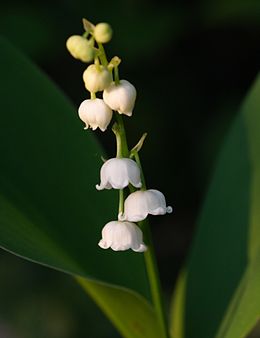
They rested under the tree. The Virgin Mary cried, for she was exhausted and afraid; her tears turned into the first lilies of the valley. When she went to sleep, she rested her head on a rock; some of her hair put roots down there, and by the morning it turned into feather grass.
They had a little water in a jar. They drank and washed; wherever the water spilled, the dry soil sprouted soft green grass, and a stream was born. The Virgin poured out the bathing water of Baby Jesus; that is how the first forget-me-nots were born.
The babe was washed, but also needed to be changed. The Virgin washed the diapers, and hung them on a dog-rose bush to dry. That is why the dog-rose has such an awful smell.
Both parent were exhausted; the Virgin tied a blue ribbon on her wedding ring, and gave it to the Baby Jesus to play with. The babe played and giggled; suddenly, a bird swooped down, and stole the ring and the ribbon. It dropped it somewhere far away; the ring was under the earth for fifteen hundred years, before someone found it.
But that's another story.

(I added some smaller bits of folklore to this story - the part with the diapers and the forget-me-nots were originally separate pieces. In some versions of the tale, the apple tree is a palm tree - which actually makes more sense)

Friday, April 25, 2014

V is for Violet, Violante, and Violetta

Since I have used the Vermilion Bird of the East under Cinnabar, I will have to choose another color for V. (We are almost done, people!)
V is for Violet. It is a lovely deep shade of purple, and also (once again, after Lilac and Heliotrope) a flower. There are, of course, violets of other shades. My grandmother's garden is often full of white-and-purple violets in the spring that all stemmed from a rare plant that "escaped" from the local botanical garden and took over the roadsides.
Violet is also a girl's name (in Hungarain it is Ibolya). It is close to my hears because it is the name of one of my favorite historical figures: Queen Violant of Hungary, or, as she was known in her second home, Aragón, Violante de Hungría (in Hungarian we call her Jolánta). She was a Hungarian princess in the 13th century who got married off to Aragón to Jaime I, the Conqueror, one of the most famous sovereigns in Spanish history. It was an arranged marriage, but it became a famous and passionate love union, and Violante became a beloved queen, an equal partner to her husband, and a mother of many children. If you read Spanish, definitely read Albert Salvadó's historical novel trilogy of the amazing couple.

As for folktales: One that comes to mind is a tale from the Pentamerone. It features three sisters, aptly named Rose, Pink and Violet, and seems to be the origin of all "love-hate" romantic chick flicks. It starts out with a handsome young prince who walks by the house of the sisters and greets them politely, hoping he would get a similarly polite answer. Instead, what he gets from Violet is "Good day to you, prince! I know more than you do." Chick's both smart and sassy. That's enough to piss the prince off. Eventually the father, afraid for his daughter, sends her to live with her aunt. The prince makes a deal with the aunt to arrange for her to be alone with Violet, but she slips out of the situation and goes home; what ensues after is an elaborate series of practical jokes between Violet and the prince where they take turns having the last laugh. In the end, Violet triumphs, and the prince admits that he has been defeated. With that question settled, they can get married.

Purple Power, girls.

For more stories check out Andrew Lang's Violet Fairy Book (I swear, that guy had a book for all the colors...)

Friday, April 18, 2014

P is for Pretty (and dead) in Pink

Today's letter is Pink, which could stand for Pink or Purple, but since I have already done shades of purple for Lilac and Heliotrope, I'm going to do Pink now. Not the singer, the color. Duh.

Honestly, there are not that many folktales about the color pink. One of the more entertaining ones I found is aptly titled Pink, and is a folktale (or more of an urban legend) from Florida. The story tells us about a woman who loves gardening and the color pink, and plants the entire garden full of pink flowers. The husband, feeling his masculinity threatened by the onslaught of pink, takes offense at her hobby, but despite repeated warnings, she keeps on gardening in pink. Eventually she even takes on a young man to help her with the garden chores. The husband, suspecting that the young gardener is cultivating more than just flowers, accuses her of cheating, and in a rage of passion he accidentally kills her. Scared at his crime, he buries the body under a bunch of pink flowers in the garden, and skips town. A few years later he returns, just to find out that the new owners of the house found the body and buried her in the local cemetery. Visiting the grave he finds it covered in pink flowers; the stress is too much for him, and he collapses dead. Legend says the grave is still there, completely covered in pink, except for the man-shaped empty space in the middle.

This story, apart from the entertaining use of the color pink, has a lot in common with the Lilac story I recounted earlier, and also a classic Grimm tale known as the Juniper Tree. The tale type is 720, cheerfully referred to as Mother Killed Me, Father Ate Me. It usually revolves around an unpunished murder within the family, and the soul of the dead returning in the shape of a plant or a bird to warn people of the injustice that happened to them.
I find it all kinds of fascinating that such an old story type (it exists in Greek mythology) is still alive and well, and was transplanted to the US as an urban legend.

For more pink, check out Andrew Lang's classic Pink Fairy Book.


Tuesday, April 15, 2014

M is for Mint, and love in the Underworld

The first M colors that came to mind were Maroon and Magenta, but neither of them yielded any exciting stories. And then I remembered Mint.
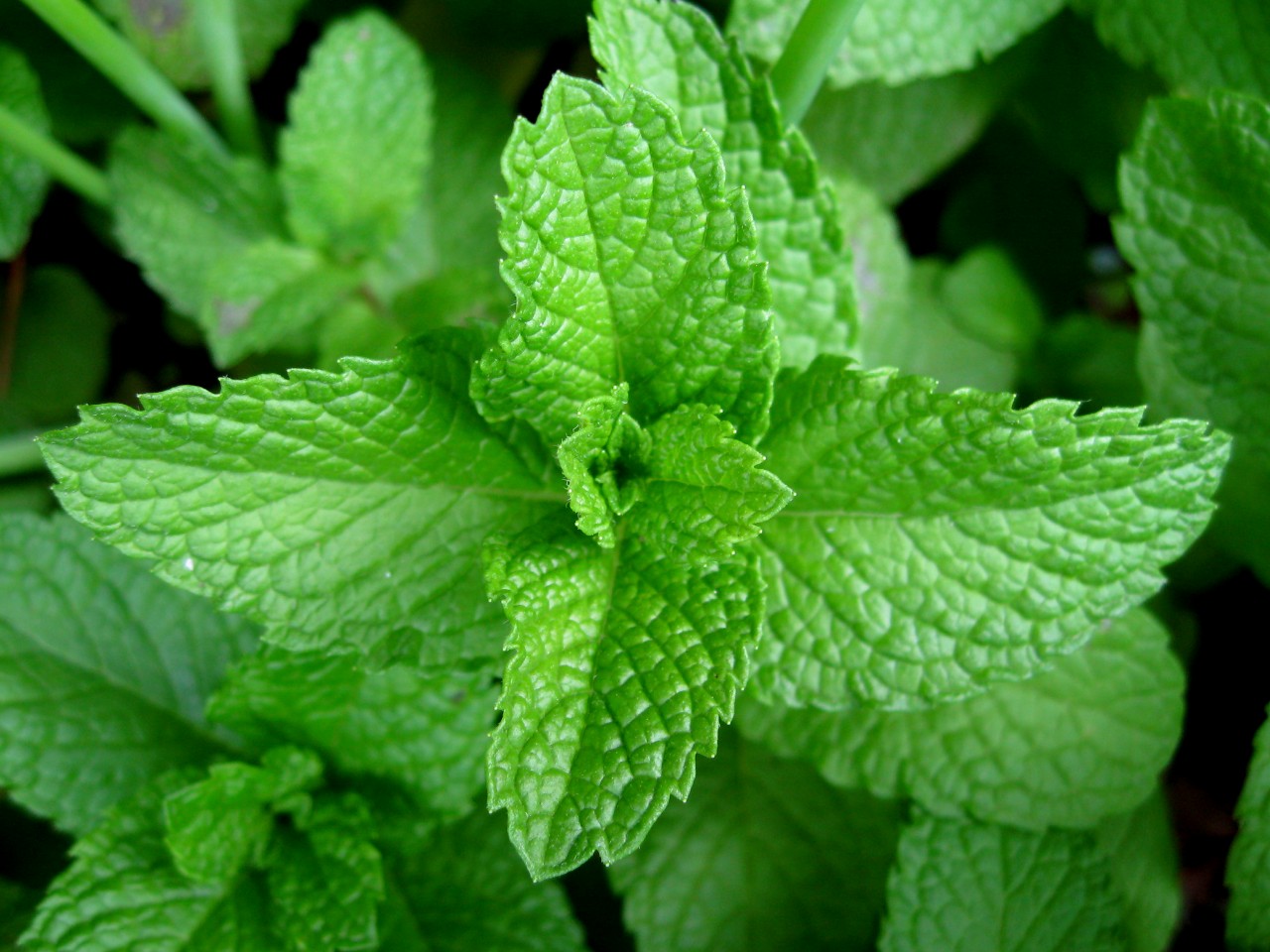
Mint is a soft, light green color named after a plant with a very specific, strong scent, usually associated with freshness and chewing gum. When I was little, I remember rolling around in a mint patch during a class hiking trip, enjoying the scent.

The story associated with mint comes from Greek mythology. It tells us about Minthe, a nymph from the river Cocytus (one of the five rivers of the Underworld), who was in love with Hades, the Lord of the Dead. They were lovers for a while, but unfortunately Hades also happened to be (un)happily married to Persephone, who found out about the affair, and was not thrilled. She turned the nymph into a small, plain green plant and walked away. Hades, who could not reverse the transformation, have the gift of divine scent to Minthe to soften the blow.
In ancient Greece mint was associated with funeral rites, along with other spices and herbs that had a strong enough scent to mask the smell of a dead body.

As simple as this story is, I kind of like it for a few reasons. One of them is that I have never been crazy about Hades and Persephone. The whole "kidnap my niece and force her to marry me" just sounded disturbing to me. On the other hand, I kind of find it adorable that someone can have a crush on the Lord of the Dead. In some versions of the story I have found Minthe watched Hades from far away before she approaches him with her feelings. There is someone out there for everyone.

For one of my favorite literary characters, Minty Fresh, see the books A Dirty Job and Coyote Blue by Christopher Moore.

Monday, April 14, 2014

L is for Lilac in its many shades

It's getting closer to the time when lilacs start to bloom. Somewhere. Not around here, but somewhere.
Thinking about a color for L, lilac was the first one that came to mind. In Hungarian, our world for purple is "lila." Also, I love the flower; it has an amazingly sweet scent.

As for the stories: One that pops up a lot is the Telltale Lilac Bush, a version of a folktale type that is favored by ghost story tellers around the world. In this tale, a man's wife mysteriously disappears, yet he does not seem distressed at all - in fact, he is having the time of his newly bachelor life. But one day some of his guests notice that the lilac bush next to the house is beating furiously against the windows, even though there is no wind. Thoroughly disturbed by the aggressive plant, they dig up the lilac bush, and discover the wife's corpse buried beneath.
(Plants growing on graves revealing injustice about one's death is a very common motif in folklore. This version was collected in Virginia. See the book on the link).

Another lilac episode can be found in the old French fairy tale Blondine. I have a visceral dislike for French fairy tales written in the 18th and 19th centuries - they are literary tales, which makes them too long and too convoluted to tell, and most of them are just too sugary sweet for my taste, with pretty princesses fainting all over the place, and princes crying rivers. Ugh. Anyway, this tale includes Princess Blondine getting lost in the Forest of Lilacs, which is a nice image. You can read the story on the link if you want to.

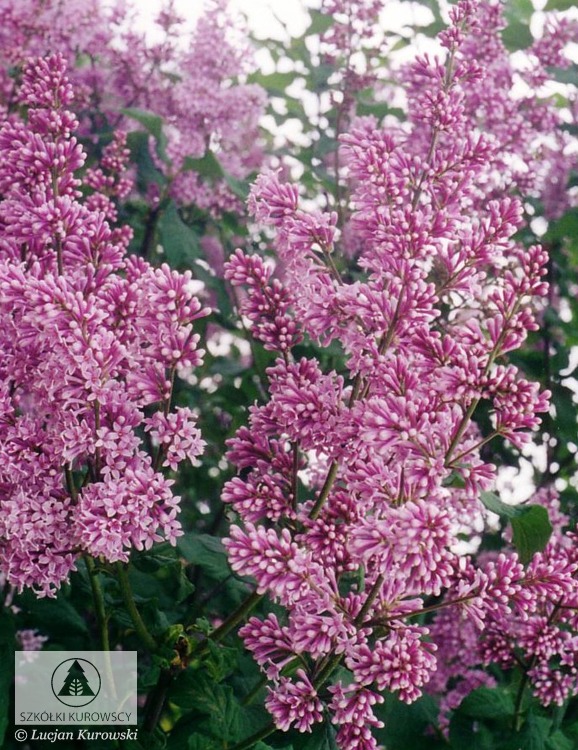
Lilac also has a Hungarian relation: One specific kind of lilac, Syringa Josikaea, was first discovered in Hungary and named after Countess Rozália Jósika. A lot of sources just call it Josika's Lilac. You can see it in the picture above.

For more lilac, check out Andrew Lang's classic Lilac Fairy Book.

For more Hungarian curiosities, check out my other blog (also participating in A to Z): MopDog - The crazy thing about Hungarians...

Wednesday, April 9, 2014

H is for Heliotrope, and blaming the other woman

Yet another flower that saves me from using colors like "hooker green" or "hot pink."

Heliotrope is both a color and a flower, in a nice deep shade of purple. The name literally means "turn after the sun," which is what this flower tends to do (much like a lot of other plants). If anyone, I can most definitely relate to trying to follow the sun's heat. In fact, I have been seriously debating about installing a heat lamp over a large rock instead of a couch in my living room.

The myth of the heliotrope comes from Greece. It tells us about Klytia, an Oceanid (ocean nymph) who fell in love with Helios, the sun god. He returned her feelings for a while, but then quickly grew bored (as gods do) and moved on to another sea goddess, Leukothea. Klytia, mad with jealousy, told Leukothea's father, who took revenge on his promiscuous daughter and buried her alive (talk about blaming the other woman). Klytia probably thought that taking out the competition would get her back into Helios' bed, which was not the case (it really never is). Instead, she was all alone and abandoned, so she just sat on the sun-warmed rocks on the beach, following Helios with her eyes as he passed across the sky for several days. In the end, she transformed into a purple flower that still favors sunlit rocks, and still turns after the Sun.

In many translations of the myth, heliotrope is translated as "sunflower." This is, however, false, since ancient Greeks did not know sunflowers, which are a much later import from the Americas. Some version of the myth actually specifies the purple color of the heliotrope.

Read more about this story and the language of flowers here.

Friday, April 4, 2014

D is for Darling Dandelions and Depressing Daffodils

If you are doubting that Daffodil or Dandelion are official colors, check out this list. And be glad I didn't pick "Dollar green."
We will circle back to Yellow at the end of the month, but I wanted to give you a taste of flower shades, mostly because it is pouring ice cold rain outside my window and there is no spring in sight. So. Flowers.

I love dandelions. Their Hungarian name is 'pitypang' which is a lot of fun to say. There is also a story I like to tell especially to small children in the spring. I am not entirely sure it is a folktale (it sounds kind of too sugary) bit it is darling none the less.
In the story an angel (or a fairy) visits all kinds of flowers in turn, looking for one that can get a special favor from her. She asks all the flowers where they want to live and what they want to do, and all of them sound really snobbish and selfish. In the end she asks the dandelion, and all the little flower wants is grow all over the place and play with children. The wish is granted, and ever since then, neighbors all over the world have been spending the spring on their hands and knees, weeding tiny yellow bobbing flowers out of their perfect lawn.
(In an extended version of the story the dandelion is originally a wish-granting star that comes down to earth to carry the wishes of children.)

Daffodils have a fairly well-known connection to mythology. In many languages (like Hungarian) they are named after Narcissus, a Greek youth most well known for falling in love with his own reflection. Interesting to note though that while most people know the image of Narcissus gazing at himself in a pond, not many know the full story. 
Narcissus' story actually starts with Echo, the nymph who used to be a storyteller before she got cursed into never uttering her own words again (Greek gods have a cruel knack for punishment...). Echo in turn fell in love with this incredibly handsome young man who was in the habit of spurning both men and women who lusted after him. Echo withered in her sadness and pined away, only leaving her voice behind. The other nymphs, in order to punish the youth's indifference, made him fall in love with his own reflection in a pond. Narcissus, in turn, also pined away in the end, and turned into a bobbing yellow flower that likes to dip its head and admire itself in a pond or stream.

Enjoy the yellow flowers, and happy spring to those who have it! :)

Monday, April 15, 2013

M is for the Myrtle Princess

Today's princess is brought to you from Italy by Giambattista Basile, who wrote the fairy tale collection Pentamerone in 1634. It's a delightful collection that contains many older versions of well-known fairy tales such as Cinderella and Sleeping Beauty.

But today, we shall talk about the Myrtle Princess.

The first thing you will note if you read this story is that this girl is actually not a princess. I took a liberty with this choice. My mother told me this story countless times when I was little, over and over again, long before I ever discovered the written version, and she always calls it "Myrtle Princess" so this is how it is stuck in my head. Plus, in the end, she does marry a prince. If that counted for Princess and the Frog, it counts for me.

All in all, this story is pretty similar to the Apple Princess: A woman wishes for a child, and instead of giving birth to one, she gives birth to a sprig of myrtle. The prince, passing by, smells the sweet scent of the flowers, and begs the mother to let him take the flowerpot to the castle.

Just like the Apple Princess, Myrtle comes out of the flowers every night and walks around. Of course, eventually, she finds her way to the prince's bed. Jealous people might try to destroy their love, but all is well in the end.

The image of the Myrtle Princess lived vividly in my mind from the childhood stories. She is tiny, like a fairy, wears a pink dress and a crown of pink flowers. My grandmother used to have myrtle growing in flowerpots, and I remember sitting by, touching the silky petals carefully, and collecting the drops of sweet nectar in little syringes (I was not allowed to eat them, but that was the closest I ever got to feeling like a butterfly).

Myrtle Princess is a sweet story, if not particularly earth-shattering.

Let a new A to Z (or, rather, M to R) week begin!

Thursday, April 11, 2013

J is for the Jasmine Princess (and a Prince)

Both of the tales today are brought to you from India by the marvelous folktale collections of A. K. Ramanujan.

The princess of the day is called The Princess of the Seven Jasmines. She earned that name by weighing as much as seven jasmine blossoms, no more, no less. Also, similar to our previous cat-eyed princess, she also has the ability to laugh flowers - in this case, guess what, jasmine flowers. But there is a catch: this princess never laughs. Talk about teenage angst...

I like this story in particular because it also features a smart and environmentally conscious prince. When his kingdom is plagued by snakes, he eventually figures out that curing the Snake King (and making sure he keeps his subjects in line) is better than killing every single one of them. In order to do that, he needs some special jasmine flowers (ever had jasmine tea for a headache? Uncle Iroh knows his stuff!). So the quest is on: locate princess, marry princess, make princess laugh. Not necessarily in that order.

I have a soft spot for tales about making princesses laugh. They show the importance of laughter in a relationship. And in the world in general.
The type is AT 559, in case anyone is interested in reading more.

The other tale that I want to mention here is called The Jasmine Prince. It is about a prince who fills the air with the scent of jasmines when he laughs - but it has to be a true, heartfelt laugh. Of course sooner or later someone will try to force him, and it will not go well. For the rest, read the story. And then go on and read the entire book. One of the best folktale collections I have read.

And then go drink some jasmine tea.

Happy J day!

PS: If you are interested in Indian tales about flowers and plants, I also highly recommend this book.

Wednesday, April 3, 2013

C is for the Cat-eyed Princess

Today's princess is brought to you by famous folktale collector and teller Benedek Elek, from Hungary.

I remember reading this story as a child and being thoroughly creeped out by it. You are welcome.

This princess starts out with very princess-like supernatural qualities: roses fall from her mouth when she laughs, pearls fall from her eyes when she cries, and if she walks barefoot golden coins appear from every step. Naturally she makes her father's kingdom quite rich, and everyone wants to marry her. Except for the neighboring kingdom's heir, that is, because he is too busy fighting a war. But fear not, the queen goes behind his back and mail-orders the magical bride to be delivered upon victory.

As usual, there is a hitch in the plan, no pun intended: the woman who is escorting the princess to her new home, while her grace is cheerfully dancing out gold for the poor along the way, decides her ugly daughter would make a much better queen, so she calls up a storm (witch alert!), carves the princess' eyes out, and tosses her in a ditch. Ouch.

It doesn't get better from heir either. First the princess is found by poor men who help her up, but as soon as they see the gold coins under her feet they just lead her around in circles until she drops from exhaustion. Next a gardener picks her up and takes her home, but his wife complains that they can't keep a blind chick around. Fortunately for said blind chick, there is a witch in town who deals in eyes (we are getting into Minority Report here). The first pair the gardener takes home and applies to the princess' eyes is not quite right, because the moment they are in the princess curls up in a corner and stares into a hole for hours until the gardener starts to suspect that he got cat eyes for his money instead of human eyes. Fortunately once again, the witch has a return and exchange policy, and she swaps the cat eyes for a pair of brand new human ones that she happened to find in a ditch (!).
Now at this point princess has had her eyes carved out twice, and moonlighted as a cat for a while, so naturally when she gets her own eyes back she cries a ton of pearls, laughs a garden of roses, and then moves on to marry the prince who was too dumb to tell a princess from a kitchen maid in a dress. But before she does, she has to work as a maid to said wench in order to get close to the prince. It is not long before the wench slaps her for being clumsy with the hairbrush, and out come the pearl tears again, revealing who is the real deal, and who is the fraud. Happy ending, at last.

Being a princess is not always sunshine and cupcakes, people. I don't usually tell this story to children, because even though they find the eye swap hilarious, it never fails to creep the hell out of parents and teachers, and then all hell breaks loose backstage. It is very successful for adult female audiences, though. Go figure.

This folktale is another very popular type called AT 403 - The White Bride and the Black One (from the times when white was considered beauty and black was... not). It usually includes a true bride and then an ugly/mean girl who tries to get rid of her and take her place. Stories get very creative with ways of killing or almost killing a princess, but the eye thing is still the most graphic I have encountered. Yuck.

Also, one can't help but wonder what would have happened if the princess kept the cat eyes. Now there is food for thought.

Friday, April 13, 2012

L is for Lilies (and fairies)

Again, short post. It's that time of the semester.

I grew up in the northwestern part of Hungary, a world of rivers, lakes, streams, marshes and islands. Even though many people find other parts of the country more attractive, I believe that it is one of the prettiest places you can visit in Hungary. Also, we have a lot of unique stories, and many of them are about water, and water creatures.

Most of all, fairies.


Hungarian fairies (tündér), at least in my neck of the willow woods, are water creatures. They live in the lakes and rivers, or on the islands where the woods are thick and flowers are like an endless carpet. They look like humans, except a lot more beautiful; sometimes they even marry mortal men. They laugh, they dance, they sing, and they have their own queen, Tündér Ilona, who rules over them from her palace that has a crystal dome.
There is a story that tells us that water liles (or, as we call them, fairy roses) used to be a fairy girl called Rózsa. Her queen turned her into a flower so she could stay and watch over mortals after all the fairies were gone...
Another story, which doesn't cease to amuse me, tells us that when fairies pee in the water, their pee turns into gold. People used to wash gold from these rivers and streams. I guess no one would tell a fairy not to pee in the pool...

Sunday, April 1, 2012

A is for Almonds

I found out about the A to Z challenge a mere few hours before it started! Since it is such a fun project, with so many participants, and it feeds my grafomania that is not satisfied with currently working on a Master's thesis, of course I had to sign up for this!!!

My personal challenge within a challenge is to post story- and storytelling-related posts every day. Starting with A...
A could stand for so many things! But because trees are in bloom, and spring is all over the place, and because I have been telling this story a lot lately...

... well, for me, A is for ALMONDS!

Some of you might now this story as The Queen who longed for Snow. I have been telling it as a folktale, with a prince and a princess, for a long time before I decided to read more about where the tale came from. And what I found out was much, much more interesting!

First of all, we have a young Moorish sultan, Ibn Almundin, who rules over Al-Gharb, later known as Portugal - more than eight hundred years ago. Tales do not say much about him, except that he is always victorious in battle. One day, when prisoners are brought in front of him, one of them catches his eye: a young woman called Gilda with light hair and blue eyes, a girl from a snow-covered country in the North, far far away. The young sultan falls in love, frees her, and asks for her hand in marriage; she agrees. They live happily for a while; people adore their new queen; but as time goes on, Gilda seems to be fading away, longing for something that no one can name. The young sultan is frantic to find out what he can do to bring the smile back onto her face; finally, he asks a poet who has been captured in the same battle she was, to explain to him what makes the queen so sad. The poet explains that Queen Gilda longs for snow and winter; in the kingdom of Al-Gharb summer rules all year round, and it never snows. Ibn Almundin thinks about this for a while; then he orders his people to bring him almond trees on ships from far away, and plants them around the castle as far as the eye can see. The next spring, one day, the queen walks to her window, and she sees a white blanket covering the hills and the valleys; she smiles for the first time in months, and runs out of the castle, to discover that the white blanket is not snow but petals of the almond blossom. From that day on, Queen Gilda is happy again; and every year, when the almond trees are in bloom, the whole kingdom celebrates.

Such a beautiful story! Also, so full of symbols and images. The young Moorish sultan (when I tell this story, I describe him with almond-shaped eyes, long before I tell my audience that the trees are almond trees), the fair Norse girl, the trees in bloom... Ibn-Almundin's name that sounds like almonds, and the sweet taste of marzipane and turrón. I was amazed when I came to the USA that so few people know what marzipane is...
Also, almond trees are native to the Middle East and Asia; the Arabic conquest of the Iberian peninsula brought them to Spain and Portugal, just like many other things. Fascinating story, with a colorful historical background!