Showing posts with label colors. Show all posts

Monday, May 5, 2014

Reflections in Colors

So this year's A to Z run was both easier and more difficult than I expected. I don't usually schedule posts ahead of time, so the end of the semester devolved into a scramble for stories and colors.
It was delightful.
I am one of those strange people that work their best on a deadline, and I also masochistically enjoy research (as long as it is about stories). You can read the results of all of this if you scroll back down through April.
The first time I did A to Z in 2012, I did my reflection in the form of a list of my favorite story characters that did not make the cut. You can see the list here.
Last year, after successfully finishing my slightly crazy Weird Princess Tales run, I reflected in the form of a list of awesome ladies from the world of story that did not get a place on the princess list. You can find that list here.
This year, I have a much shorter list of amazing characters: They are called Team Damyanti. For the first time in my A to Z career, this year I was a minion! Which means it was actually my duty to visit blogs day in and day out. I have found many wonderful, wonderful things, and I am grateful to be one of the Seven Ladies of Team Damyanti. Kind of reminded me of the Seven Wise Princesses. I got dibs on Yellow. Just sayin'.
Thank you Damyanti, Guilie, Anna, Samantha, Vidya, Jemima, and Mary!

Shameless self-promotion: If you liked my collection of weird and rare folktales, check out my book, Tales of Superhuman Powers (out on Nook, Kindle, and Paper). It is a collection of 55 folktales that have superpowers in them. It was a crazy fun book to research and write. It features 60 different superpowers, everything from invisibility through sonic blast to eye beams (yeah, really), and at least one folktale, myth or legend for each. If you ever want to be super cool in front of a class of middle school students, this is the way to do it.

With this post, the everyday routine of the Multicolored Diary resumes. Stay tuned for posts about folktales, storytelling, and assorted adventures. Follow options to the left, or find me on Twitter as @TarkabarkaHolgy.
Cheers!

Wednesday, April 30, 2014

Z is for Zaffre, alchemy, and coming full circle in the end

We started the month with blue, and we end it with blue as well. I totally planned it that way.
(I didn't.)
Zaffre is a shade of dark blue, and also a substance used in alchemy, usually meaning cobalt oxide or cobalt arseniate. While zaffre itself does not have a story to go with it, alchemy definitely does. A while ago I did a storytelling program about alchemy for high school chemistry classes. One of the most fun topics I ever worked on.
One of my favorite alchemy stories comes from the Italian epic Orlando Furioso. It tells us about a wizard-alchemist names Atlantes who lives in a tower, searching for the secrets of the Philosopher's Stone. One day his experiment (getting a bunch of substances hit by lightning) leads to unexpected results: Instead of the Stone, he accidentally creates a hippogriff (don't you just hate it when that happens?). With the help of his new pet, he builds himself a magical castle, and starts enchanting and kidnapping people to keep him company. After a whole bunch of folks go missing, his spells brings to him the knight Astolpho, who is smart and well-equipped enough to break the spell, steal the hippogriff, and go off to have many adventures, now that the owns a flying mount. The adventures include a trip to the Moon where all lost things can be found (including the knight Orlando's wits, who had recently lost them, and some of Astolpho's own wits, which he did not know were missing). The story is long, but fun to tell, you can read a re-worked version of it here.

Thank you all for sticking around from A to Z! Until next April, I will be blogging about storytelling, stories, storytellers, books, travels, and the occasional SCA event. If you would like to learn more about the world of the word, you can click Follow (to the left to the left) or follow via email or Twitter. You can also check out my other blog, the MopDog, where I write about weird Hungarian things.
Cheers!

Tuesday, April 29, 2014

Y is for the Yellow Princess, and the importance of talking

Today we finally meet the last one of the Seven Wise Princesses (after Blue, Ebony, Green, Red, Sandalwood, and White). If I had to choose one favorite out of the seven, this story would be it (although the Red Princess comes in a close second). Looks like the alphabet saved the best one for last.
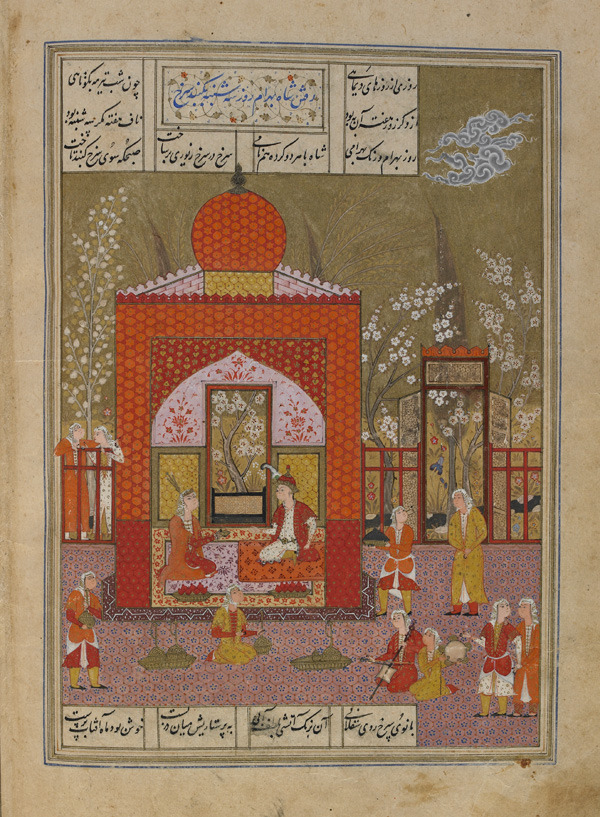
The inhabitant of the Golden Pavilion of the Sun is a golden-haired princess from Byzantium. She tells Bahram Gur a story of a king who did not trust women. The king, to avoid being cheated and betrayed by the wife, spent his time with slave girls, having a new one brought to the palace every day, but he was not happy at all, because while the girls could provide pleasure, they did not provide companionship. One day a merchant passed through the city, and people instantly started talking about one of his slaves, a legendary beauty from somewhere in the East. Instantly taken with her, the king offered to buy her, but the merchant refused to sell. The king offered an unresistable amount of gold, and the merchant agreed; but after the deal was struck he admitted that the reason why he did not want to sell was that whenever he had sold her before, she was always returned to him. He did not know what was wrong with her, and did not want to cheat the king. The king decided to take his chances.
The slave girl, while she was very polite to the king, refused to let him touch her. He spent days and days wooing her, but she resisted, with a sadness on her face. The king finally took her out on a picnic, and told her a story in order to convince her to talk to him and tell him what was wrong. The story itself is also interesting, it is about King Solomon and the Queen of Sheba, who had a child that could not walk. An angel told King Solomon in his dream that the child will only be cured if he and his wife talk openly about their deepest secrets. Once they both opened up and confessed what they had been hiding, the child was cured. The king explained to the girl that he wanted to understand what was bothering her. She finally admitted that she liked him, but she had long ago resolved never to be with a man, because every woman in her family dies in childbirth. The king, in turn, told her he would marry her despite that, and be content with her as his wife.
(Now here in the original story she still refuses him, after which he gets a bunch of other slave girls to make her jealous, and she gives in in the end. But I don't think that part is either good or fun to tell, and it has no point to the story at this point, so I usually leave it out.)

I like this story because I believe in the importance of talking in a relationship (and all relationships in general). And I like it how the king learns some respect for women in the end. Sounds similar to the frame of the Arabian Nights, which is probably no coincidence either.

Monday, April 28, 2014

X is for Xanadu, the color not the movie

So, there is exactly one color that starts with an X. Xanadu, the color is named after Xanadu, the philodendron plant, which in turn is named after Xanadu, the city (not Xanadu, the movie). Following so far? Good.
Xanadu was Kublai Khan's first capital, founded in the 13th century, and we all know it from Samuel Taylor Colridge's poem. And that is pretty much all I am going to tell you about it, because everything I could say I would be copying from Wikipedia since I only read up on the details like 5 minutes ago. Also, I spent the entire weekend at a storytelling conference, so I have an excuse for not being human shaped right now.
I am also not going to tell you the story of Marco Polo, who visited the court of Kublai Khan, because he wrote a book about it and you can go read it, he tells it better than I do. However, he does tell us one particular story that I would like to introduce you to, and that story is about Kublai Khan's niece.
(Color-plant-city-ruler-writer-niece, still following?)
Khutulun, more commonly known as "that Mongolian warrior princess I heard about," was the favorite child of Kaidu Khan, and accompanied her father to battles where she proved to be an excellent fighter. Story says she decided that she was only going to marry a man who could defeat her in wrestling; but if they lost, they had to give her their horses. She ended up single, and the owner of 10.000 horses, before rumor started to spread that she had a relationship with her father, and she resolved to marry (without wrestling) in order to put an end to them. When her father died he intended to leave her the rule, but her male relatives stopped her from the succession. She died soon after, fighting in a legacy war against the guys in the family.

Just to go full circle: Aromaleigh, a cosmetics company that has an entire line of eyeshadow colors named after badass historical ladies, has an eyeshadow named after Khutulun - and it is a dark, grey-green color, just like the xanadu plant.

Ta-da!

Saturday, April 26, 2014

W is for the White Princess

The month of April is coming to the end, and so is the line-up of the Seven Wise Princesses of Nizami. But we are not quite done yet! Today's princess lives in the White Pavilion of Venus. She is Persian, from Bahram Gur's homeland, and as such, she is naturally gifted at storytelling.
(I have a thing for Persian stories, can you tell?)

The tale of the day tells us about a young man who owned a marvelous garden where he spent most of his time in serenity. However, one day he decided to leave the garden and go for a walk; and when he returned some time later, he found the garden locked from the inside. Oops. On top of that, he could hear music and laughter from within the garden, which is a dead giveaway that someone is squatting on your property. He took an axe to the fence and got inside... just to be confronted and beaten by a bunch of women until he could get the words out and tell them he was the owner of the place. Oops again. As an apology, the women led him to the wall in his attic and through a crack they showed him the neighbor's property (these women knew their way around the neighborhood) where a bunch of women were swimming in a white marble pool. The man fell in love with one of the beauties, who in turn (when they met) fell in love with him. But wherever they went to consummate their passion, something always botched the mood. In the bedroom the floor collapsed under them, on a tree (hey, desperate measures) the branches broke under them. Finally they got the message: They were not meant for a night of passion, they were meant for marriage. Once the union was blessed, they could... do whatever they wanted to do. Finally.
(I am unreasonably entertained by this story.)

(And now I feel personally insulted that Andrew Lang does not have a White Fairy Book. The post feels unfinished. So there.)

Friday, April 25, 2014

V is for Violet, Violante, and Violetta

Since I have used the Vermilion Bird of the East under Cinnabar, I will have to choose another color for V. (We are almost done, people!)
V is for Violet. It is a lovely deep shade of purple, and also (once again, after Lilac and Heliotrope) a flower. There are, of course, violets of other shades. My grandmother's garden is often full of white-and-purple violets in the spring that all stemmed from a rare plant that "escaped" from the local botanical garden and took over the roadsides.
Violet is also a girl's name (in Hungarain it is Ibolya). It is close to my hears because it is the name of one of my favorite historical figures: Queen Violant of Hungary, or, as she was known in her second home, Aragón, Violante de Hungría (in Hungarian we call her Jolánta). She was a Hungarian princess in the 13th century who got married off to Aragón to Jaime I, the Conqueror, one of the most famous sovereigns in Spanish history. It was an arranged marriage, but it became a famous and passionate love union, and Violante became a beloved queen, an equal partner to her husband, and a mother of many children. If you read Spanish, definitely read Albert Salvadó's historical novel trilogy of the amazing couple.

As for folktales: One that comes to mind is a tale from the Pentamerone. It features three sisters, aptly named Rose, Pink and Violet, and seems to be the origin of all "love-hate" romantic chick flicks. It starts out with a handsome young prince who walks by the house of the sisters and greets them politely, hoping he would get a similarly polite answer. Instead, what he gets from Violet is "Good day to you, prince! I know more than you do." Chick's both smart and sassy. That's enough to piss the prince off. Eventually the father, afraid for his daughter, sends her to live with her aunt. The prince makes a deal with the aunt to arrange for her to be alone with Violet, but she slips out of the situation and goes home; what ensues after is an elaborate series of practical jokes between Violet and the prince where they take turns having the last laugh. In the end, Violet triumphs, and the prince admits that he has been defeated. With that question settled, they can get married.

Purple Power, girls.

For more stories check out Andrew Lang's Violet Fairy Book (I swear, that guy had a book for all the colors...)

Thursday, April 24, 2014

U is for Umber, Umbra, and Wolves

Umber is an earth tone, ranging from dark yellow-brown (raw umber) to dark red-brown (burnt umber). It has been used in paintings since the Renaissance. While the pigment itself was named after the soil in Umbria, it is also related to the Latin word for Shadow, umbra (something White Wolf gamers are probably familiar with).
Umbria is not a land of shadows - in fact, it is quite a beautiful place. Venturing into the world of stories, one doesn't have to reach far: Assissi is located in Umbria, and it gave the Catholic Church one of its most famous saints. On a related note, Gubbio is also located in Umbria, and it gave said saint one of his most exciting stories.
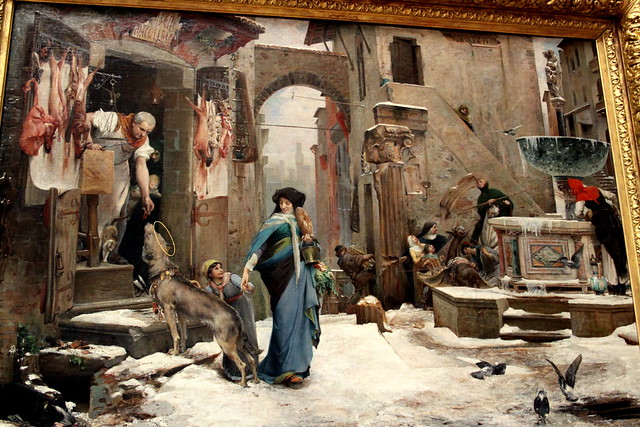
According to legend, while St. Francis was living in Gubbio a ferocious wolf descended on the lands of the town, hunting livestock, and killing everyone that tried to stop it. The situation got so bad that the people of Gubbio did not dare to leave their houses anymore; the wolf was even known to venture inside the town. Finally the people turned to Francis, who promised to put an end to the terror. He walked out of town and into the woods where the wolf's den was; he was followed by a number of people too curious to be scared. When the wolf appeared from its den, baring its fangs and ready to pounce, Francis calmed it with the sign of the cross. The Francis talked to the wolf; he promised the beast that if it stops killing animals and people, the citizens of Gubbio will make sure he never goes hungry again. The wolf put his paw into Francis' hand as the sign of agreement, and then followed him back to town. For the next few years, the wolf was one of the citizens of Gubbio, and people took turns feeding him and caring for him.
The moral of the story, according to St. Francis: How can you not be afraid of the jaws of Hell, if you are scared of a beast of nature?
The moral of the story, according to storytellers: ... you'll have to figure that out for yourself ;)

Note: There is a children's book (this probably should be on my other blog since it's a Hungarian curiosity...) written by Katalin Varga that features a place called the Umbra, an alternative universe where many things can happen. In the book, the main character uses the Umbra to travel in time and make friends with people like King Tut. I loved that book as a kid.

Wednesday, April 23, 2014

T is for Turquoise, and Crafty Old Men

Turquoise is a precious (albeit unspellable) stone with a lovely blue-green hue (the pavilion of the Blue Princess mentioned early on is usually called the Turquoise Pavilion). There are many tales attached to it, especially in indigenous cultures in the Americas. You can read a Hopi legend here, and a Navajo legend here (this latter one associates turquoise with the female spirit).

There is a folktale from Bhutan about an old man who finds a huge piece of turquoise on his land one day. He cheerfully walks down the road with it, and then quickly exchanges it for a horse, then the horse for an ox, then the ox for a sheep, sheep for a goat, goat for a rooster, and finally, exchanges the rooster for a song, and walks home singing to himself, perfectly content and happy. I label this story "old man destroys capitalism." It reminds me of some Jack tales, except the song makes more sense to me than magic beans. Some bands nowadays wish they could buy a song for a rooster...

Anyhow. Another story, this one from Tibet, also features an old man and a turquoise. In this one, an old man is left alone with his two daughters-in-law who use him as a slave. He manages to get a message to his daughter, who sends him a turquoise stone. The old man tricks both women in the house into believing that he will leave the stone to the one who treats him better, and lives out the rest of his life in peace. Before he dies, he hides the stone, and sends another secret message to his daughter, telling her where to look for it. A lovely father-daughter tale, but not a very good story for in-laws.

On MopDog today: Túró Rudi, Hungarian candy that tastes like heaven and unicorns.


Tuesday, April 22, 2014

S is for Sandalwood

And here we are once again, meeting one of Nizami's Seven Wise Princesses (for those of you keeping track, we have just visited the Red Pavilion, and the Green, Ebony and Blue ones before her). S stands for Sandalwood. The color of sandalwood can range from dark reddish-brown to neutral beige hues, through a series of different softer shades of brown. In addition, sandalwood is a scented tree, often used in many Eastern cultures, which is probably why the Thursday pavilion is called the Sandalwood Pavilion, rather than just plain Brown.

The Chinese Princess (actually the text calls her "Chinese Turk" and in some translations "Tartar") in the Sandalwood Pavilion tells Bahram Gur the following story:

Once upon a time two men, called Good and Bad, traveled together across a desert. After a while Good ran out of water, and as the day grew hot he begged Bad to give him some from his own. Bad would not take any of the jewels Good offered as payment, claiming that water was life, and life deserved something more important. Finally he got desperate Good to offer his eyes in exchange for water. After giving him a drink, he carved his eyes out, stole the jewels, and left Good in the desert to die.
Fortunately for Good, a Kurdish tribe happened to pass by, and the chief's daughter found him. She put his eyes back and healed his wounds, and the Kurds took him in, slowly nursing him back to health. He married the girl that saved his life, and started a family of his own. One day he came across a sandalwood tree, and gathered some leaves, knowing they could cure many diseases. He kept the medicine a secret until he heard that a king nearby had a daughter on the verge of death; healing the daughter, he received her hand in marriage as a second wife. Healing with sandalwood proved to be a lucrative business: He did not only end up with three wives (two of them princesses he saved and one that saved him), he also became a king in his own right, and ruled over a country for many years. One day Bad showed up to pay the court a visit, not knowing who the king was; when he found out he begged for forgiveness, and Good forgave him for his crime.
The Kurdish father-in-law, however, did not. When Bad left the court, he followed him, and cut off his head.
The story ends with stating that Good, when he became king, wore sandalwood-colored clothes only, and decorated his palace with the soft colors of the sandalwood, to remind himself and everyone of the healing power of the tree, and the adventures he lived through.

If you are keeping count: Two more princesses coming up before the end of the month (White and Yellow). Stay tuned!

Monday, April 21, 2014

R is for Red, and not just Riding Hood

And once again we are on solid ground. R is for Red, and the many folktales associated with this color.

First up, we have yet another one of the Seven Wise Princesses (if you are keeping track, we have met Blue, Green and Ebony so far). The Red Princess is from Russia (or, rather, the historic Rus), and lives in the Red Pavilion dedicated to Mars. The tale she tells to Bahram Gur is probably my favorite out of the seven.  It is about a Russian princess who did not want to get married, but her father pressured into agreeing that she can set whatever task she wants to set, as long as she marries the man who completes it. In turn, the princess built a fortress surrounded by killing machines and traps, and declared that whoever can sneak in an meet her in the inner courtyard, and answer her riddles after that, can marry her. As stories usually go, after a while a hero shows up who is capable of sneaking in, and also capable of solving the riddles. Whatever. I like this story mostly because of the active part the princess plays in shaping the hero's task, and because all the riddles are pretty much constructed in a way that there is only a right answer to them if she accepts is as a right answer. Plus, she does magic. Very cool.

Other tales that include the color red are:

Little Red Riding Hood (I don't think I need to introduce this one)

Snow White and Rose Red (Much more entertaining than Snow White if you ask me, and also masterfully adapted in the Fables comics)

The Red Shoes (A classic Andersen story, gruesome and depressing in true Andersen fashion. A little girl loves her red dancing shoes and doesn't pay attention in church, therefore an angel curses her to dance forever, a sentence she only gets away from by having her feet chopped off, and then she prays until God takes pity on her and lets her die. This, boys and girls, is why I don't tell Andersen.)

The Red Dwarf of Detroit (one of the most entertaining urban legends in the USA)

The Little Rabbit who wanted red wings (a cute Southern folktale that children especially like, about a little rabbit that wishes for bits and pieces of other animals to be more like them)

For more folktale goodness, check out Andrew Lang's classic Red Fairy Book.

Saturday, April 19, 2014

Q is for Queen Blue, Royal Blue, and Brother Blue

There is not a single color that starts with Q, other than Queen Blue, a medium tone of Royal Blue. But since I have already used up all my Blue stories for the letter B, I'll take the opportunity today and remember Brother Blue.

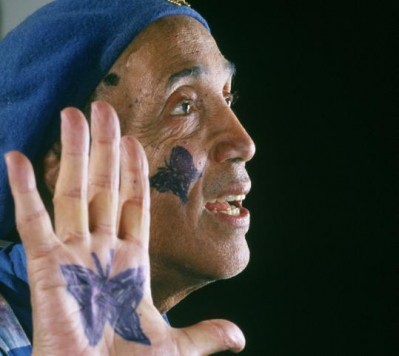
Blue is definitely royalty, at least to the storytellers of the world. He is one of the most incredible people I have ever met. He is one of those people who were born not only to tell stories, but to live them. People walking the streets of Boston would run into him, dressed all in blue, telling stories in an engaging voice and style, a mix of song, rap, recital, and everyday street speak. If you ever so him, you would never walk past him.
Here is an excerpt from his telling of King Lear, to give you a taste:


I am not going to give you the entire amazing biography of Brother Blue. You can find it here. I personally only met him once, at a storytelling conference in 2008, a year before he passed away. I was presenting a workshop on Hungarian stories, one of the first ones I have ever done, and I was super nervous. People pointed Blue out to me in the crowd, and I knew he was a storytelling superstar of some sort, but I was too preoccupied with getting ready for my workshop to walk up and talk to him. But then, I walked into the classroom assigned to me, and there he was, together with his wife Ruth, sitting in the first row with a big grin on his face. And at that point I found out another amazing thing about Blue: He was the greatest audience ever. He came right into every story with me, he enjoyed them with a spark in his eyes, he was engaged body and soul in everything I said on stage. His attention was undivided, inspiring, and made me forget anything I had ever been nervous about. Listening like that, if you ask me, is an even rarer gift than telling well.
(I still have the feedback sheet he wrote for my workshop. It is covered in little blue stars.)

If you search for Blue on YouTube, you can find quite a few videos. Take a moment and enjoy them :)
I'll see you all on Monday for the next color!

Friday, April 18, 2014

P is for Pretty (and dead) in Pink

Today's letter is Pink, which could stand for Pink or Purple, but since I have already done shades of purple for Lilac and Heliotrope, I'm going to do Pink now. Not the singer, the color. Duh.

Honestly, there are not that many folktales about the color pink. One of the more entertaining ones I found is aptly titled Pink, and is a folktale (or more of an urban legend) from Florida. The story tells us about a woman who loves gardening and the color pink, and plants the entire garden full of pink flowers. The husband, feeling his masculinity threatened by the onslaught of pink, takes offense at her hobby, but despite repeated warnings, she keeps on gardening in pink. Eventually she even takes on a young man to help her with the garden chores. The husband, suspecting that the young gardener is cultivating more than just flowers, accuses her of cheating, and in a rage of passion he accidentally kills her. Scared at his crime, he buries the body under a bunch of pink flowers in the garden, and skips town. A few years later he returns, just to find out that the new owners of the house found the body and buried her in the local cemetery. Visiting the grave he finds it covered in pink flowers; the stress is too much for him, and he collapses dead. Legend says the grave is still there, completely covered in pink, except for the man-shaped empty space in the middle.

This story, apart from the entertaining use of the color pink, has a lot in common with the Lilac story I recounted earlier, and also a classic Grimm tale known as the Juniper Tree. The tale type is 720, cheerfully referred to as Mother Killed Me, Father Ate Me. It usually revolves around an unpunished murder within the family, and the soul of the dead returning in the shape of a plant or a bird to warn people of the injustice that happened to them.
I find it all kinds of fascinating that such an old story type (it exists in Greek mythology) is still alive and well, and was transplanted to the US as an urban legend.

For more pink, check out Andrew Lang's classic Pink Fairy Book.


Thursday, April 17, 2014

O is for Orange, and Surplus Fairy Maidens

Say what, men of the world? We have an ACTUAL COLOR this time? Why yes, indeed we do.

The color orange is named after the fruit orange (surprise!) and its main claim to fame is the fact that no other English word rhymes with it. It is a warm, cheerful color, and a fruit full of vitamin.

The folktale most often associated with orange comes from Italy, and it is aptly titled "The Love for Three Oranges." In this story, a prince sets out to find the perfect wife for himself, a woman who is "white and red" (I always assumed he meant a redhead, but it's up for interpretation). After many adventures an ogress hands him three oranges, warning him to only open them near a source of water. When he arrives to a fountain, he cuts the first orange open, and out pops a fairy maiden, crying for water. He is, however, not quick enough on the uptake, and the fairy maiden dies (oops). So does the second one, which brings the prince's mental facilities into question, but he does manage to give a drink to the third orange fairy on time, and she survives.
At this point I always wondered: What would have happened if all three lived? Would he end up with three wives? Or was he supplied with a surplus of instant maidens because of the assumption that he would botch the job?...
Anyhow, the third orange maiden lives, and the prince promises to marry her... then he promptly abandons her outside town, telling her to wait until he is finished with the proper preparations. In the meantime an ugly servant woman comes across the maiden, attempts to kill her (the maiden turns into a bird and flies away) and takes her place, claiming to the baffled prince that the sun and the waiting turned her old and ugly.
(Side note: The original version of this tale is one of the most racist folktales anyone can ever read. The servant woman is not ugly, she is black. Storytellers with any shred of sentiment change it to ugly and evil.)
When the bird attempts to reclaim her prince (of questionable mental qualities), the new bride has her cooked. But when they throw the cooking water out into the garden, a new orange tree sprouts up, reminding the prince of the original bride. He cuts the oranges open, looses two maidens as usual (but... whatever), reclaims his true bride, and has the servant executed.
Happy Ending.

This folktale exists in many versions, and with a number of different kinds of fruit. I have read it with apples, pomegranates, figs, citrons, and walnuts. I am sure there is some important meaning behind all of them. This particular version is featured in Giambattista Basile's Pentamerone.

Wednesday, April 16, 2014

N is for Nadeshiko Pink, and what that actually means

So, N is not an easy letter to start a color with. We have Navy and Neon,  and neither of them is going to help in my quest for folklore and mythology. So, once again I have to resort to linguistic sleight-of-hand.
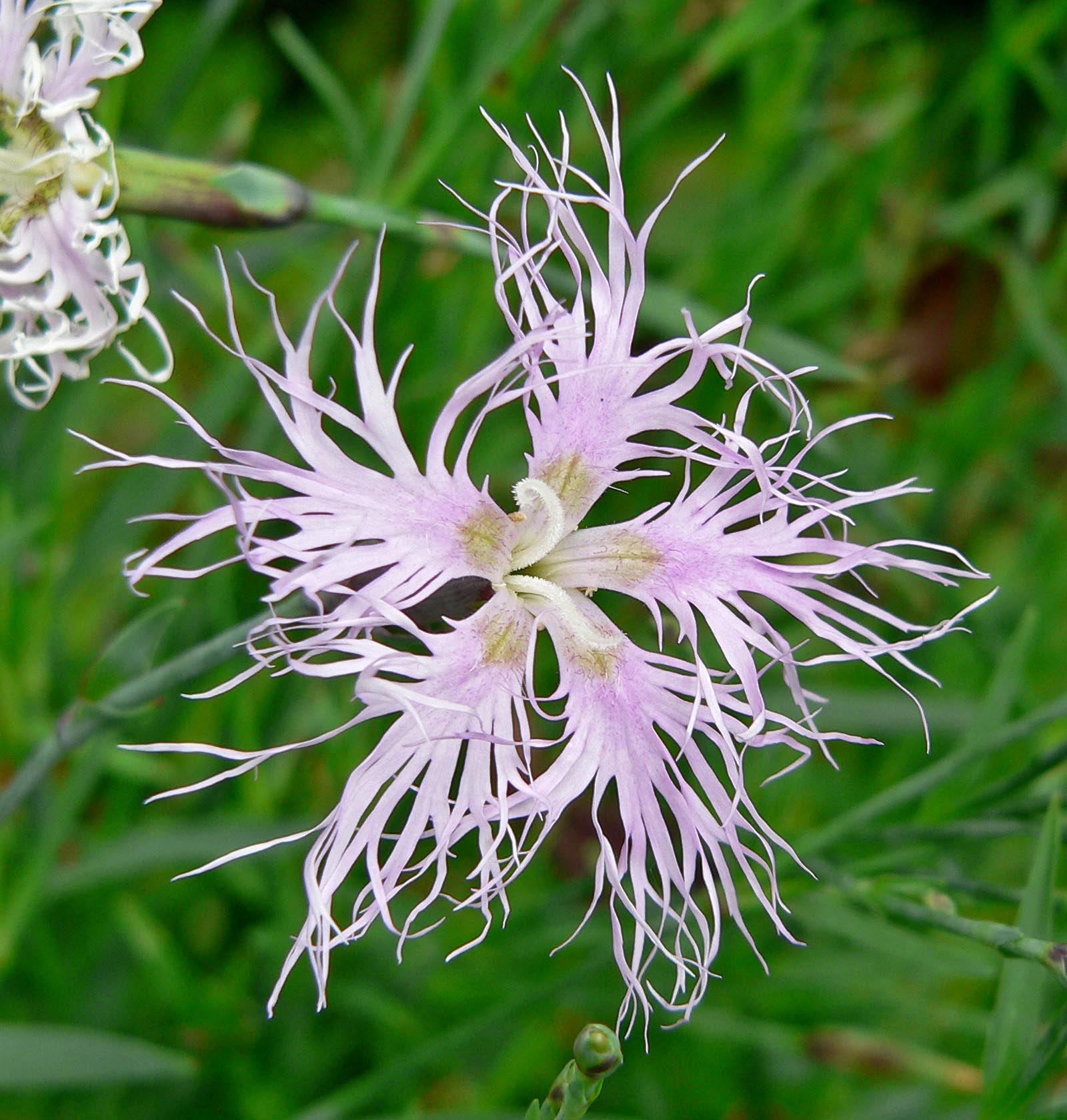
Looking at my trusty list of color names, I came across a shade called Nadeshiko Pink. It is a soft pink color named after the Japanese word for carnations. It has a very important place in Japanese flower symbolism: Yamato nadeshiko is the term they use for the ideal Japanese woman, for the ultimate delicate feminine beauty.
Sadly, my search for a tale that explains the connection did not yield any results.

BUT!
I do have a story that involves carnations.

Szegfűhajú János (János Carnation-hair) is a Hungarian folktale with one of the most peculiar heroes I have ever seen. I came across the story when I was doing research for my book, and ran into a problem (much like with the letter N) with finding folktales about telepathy. After scouring the whole world for a story, I found it right under my nose, in Hungary. Duh.
We never did figure out why János is called Carnation-hair; we just know that his hair is somehow peculiar and important. I asked a bunch of people, including folklorists, and got a bunch of answers. Some said his hair must be red (red carnations are common in Hungary), or pink, or purple, or wavy, or fragrant, or smooth, or just straight up made of flowers. It was a delightful poll to do.
The story itself is very long, and full of fascinating imagery. It tells about a boy who is raised by a fairy in a castle under the sea. His stepmother repeatedly cuts him into pieces and puts him back together, giving him more and more superhuman powers every time, including telepathy and astral projection (this is probably related to early Hungarian shaman beliefs). Eventually he sets out to find the Diamond Princess he saw in a dream, and adventures his way across the kingdoms of Copper, Silver, and Gold, breaking other princesses' hearts and being hanged for it more than once (yeah you read that right). I like this story for the deadpan tough love of the fairy godmother ("and then she killed him and cut him into pieces, and put him back together again"), the various personalities of the metal (heh) princesses, and just the overall weirdness of a telepathic fairy tale hero.
You can find the full English translation and notes in my book.
For those of you who read Hungarian, here is the Hungarian version online (of the story, not the book).

Tuesday, April 15, 2014

M is for Mint, and love in the Underworld

The first M colors that came to mind were Maroon and Magenta, but neither of them yielded any exciting stories. And then I remembered Mint.
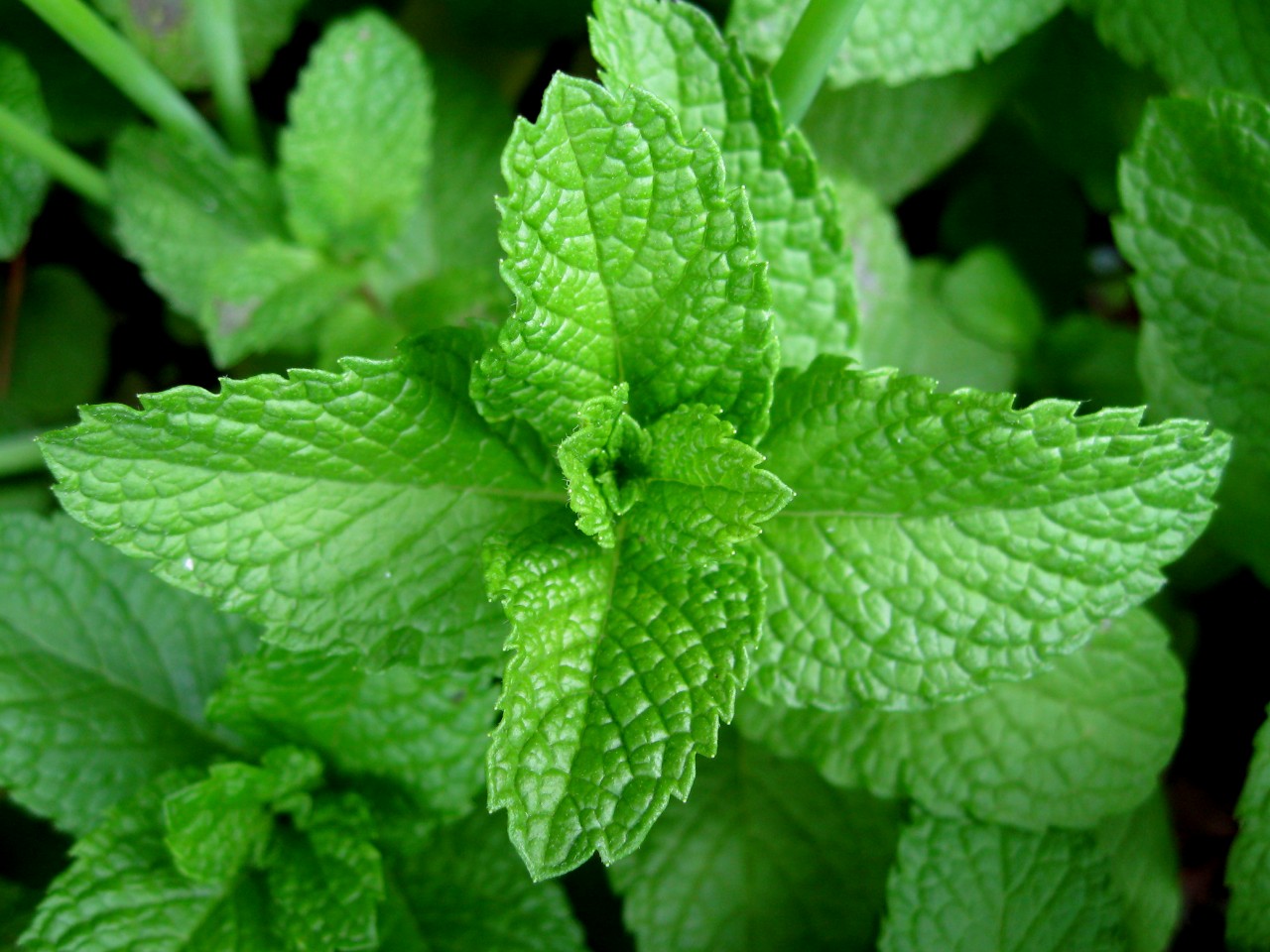
Mint is a soft, light green color named after a plant with a very specific, strong scent, usually associated with freshness and chewing gum. When I was little, I remember rolling around in a mint patch during a class hiking trip, enjoying the scent.

The story associated with mint comes from Greek mythology. It tells us about Minthe, a nymph from the river Cocytus (one of the five rivers of the Underworld), who was in love with Hades, the Lord of the Dead. They were lovers for a while, but unfortunately Hades also happened to be (un)happily married to Persephone, who found out about the affair, and was not thrilled. She turned the nymph into a small, plain green plant and walked away. Hades, who could not reverse the transformation, have the gift of divine scent to Minthe to soften the blow.
In ancient Greece mint was associated with funeral rites, along with other spices and herbs that had a strong enough scent to mask the smell of a dead body.

As simple as this story is, I kind of like it for a few reasons. One of them is that I have never been crazy about Hades and Persephone. The whole "kidnap my niece and force her to marry me" just sounded disturbing to me. On the other hand, I kind of find it adorable that someone can have a crush on the Lord of the Dead. In some versions of the story I have found Minthe watched Hades from far away before she approaches him with her feelings. There is someone out there for everyone.

For one of my favorite literary characters, Minty Fresh, see the books A Dirty Job and Coyote Blue by Christopher Moore.

Monday, April 14, 2014

L is for Lilac in its many shades

It's getting closer to the time when lilacs start to bloom. Somewhere. Not around here, but somewhere.
Thinking about a color for L, lilac was the first one that came to mind. In Hungarian, our world for purple is "lila." Also, I love the flower; it has an amazingly sweet scent.

As for the stories: One that pops up a lot is the Telltale Lilac Bush, a version of a folktale type that is favored by ghost story tellers around the world. In this tale, a man's wife mysteriously disappears, yet he does not seem distressed at all - in fact, he is having the time of his newly bachelor life. But one day some of his guests notice that the lilac bush next to the house is beating furiously against the windows, even though there is no wind. Thoroughly disturbed by the aggressive plant, they dig up the lilac bush, and discover the wife's corpse buried beneath.
(Plants growing on graves revealing injustice about one's death is a very common motif in folklore. This version was collected in Virginia. See the book on the link).

Another lilac episode can be found in the old French fairy tale Blondine. I have a visceral dislike for French fairy tales written in the 18th and 19th centuries - they are literary tales, which makes them too long and too convoluted to tell, and most of them are just too sugary sweet for my taste, with pretty princesses fainting all over the place, and princes crying rivers. Ugh. Anyway, this tale includes Princess Blondine getting lost in the Forest of Lilacs, which is a nice image. You can read the story on the link if you want to.

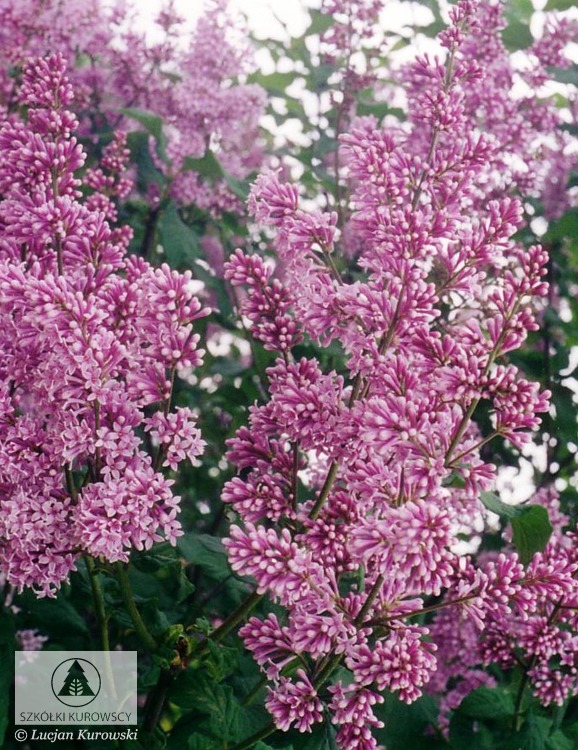
Lilac also has a Hungarian relation: One specific kind of lilac, Syringa Josikaea, was first discovered in Hungary and named after Countess Rozália Jósika. A lot of sources just call it Josika's Lilac. You can see it in the picture above.

For more lilac, check out Andrew Lang's classic Lilac Fairy Book.

For more Hungarian curiosities, check out my other blog (also participating in A to Z): MopDog - The crazy thing about Hungarians...

Saturday, April 12, 2014

K is for Kadmos, dragon teeth, and earth tones

Watch my hands.
K might turn out to be the trickiest letter in the color alphabet. Most lists had exactly one entry for it: Khaki, which is not only a "meh" color, it also has no good stories attached to it. So I decided to go the alternate route and look at colors in Hungarian (hey it's not cheating if you're bilingual!). This is how I ran into cadmium colors, and from there it was only a step further to spell them the Greek way.

Cadmium is an element. Combined with other elements it can produce pigments of different hues, such as cadmium yellow, cadmium orange, and cadmium green. Back when it was discovered they named it after a common zinc ore generally known as "cadmean earth."
In turn, cadmean earth, first found near Thebes, was named after the city's founder and first king, Cadmus, or rather, Kadmos (Greek spelling).
Ta-da! Story.

Kadmos was not Greek. He was Phoenician, and also happened to be the brother of Europe, the girl that was kidnapped by a very horny Zeus and gave her name to a continent. While being the mother of Zeus' children is usually presented as an honor in Greek mythology, parents rarely ever approve. In this case, they sent big brother Kadmos to bring Europe back home.
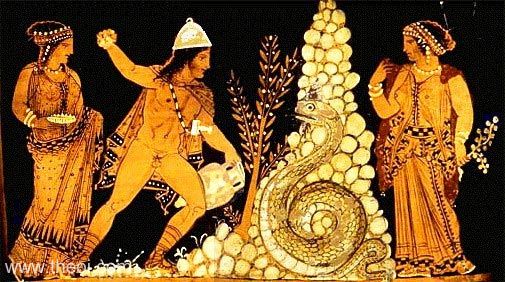
Kadmos, however, did not find his sister; he had another destiny. Consulting the Oracle of Delphoi, he was told to follow a cow with the sign of the moon on its flank, and build a city where it lay down. The spot was found in Boeotia, but when Kadmos' companions went to fetch some water for a sacrifice, they were all devoured by a giant snake-dragon that lived in a nearby spring. Kadmos, being a true hero, killed the dragon. Athena (who runs a counseling program for heroes) instructed him to take the dragon's teeth and sow them into the ground; from the dragon teeth sprang an army of warriors. Kadmos threw a rock in their midst and they started fighting (not the brightest) until only 5 remained; these five helped him build the legendary city of Thebes.
In the process, however, he managed to piss off Ares, god of war, who happened to be fond of that dragon in particular. Kadmos ended up serving him for several years before he was granted forgiveness, and Ares and Aphrodite's daughter, Harmonia. But even then, misfortune followed him till the end of his life, until he cursed the entire dragon thing over and over. The gods, who have a wicked sense of humor, turned him (and his wife) into dragons.

Kadmos is obviously tied to the earth with many threads in these stories (building a city, growing warriors from the ground, slaying a dragon and then becoming one). No wonder they credit him with cadmean earth (and also minding gold for his kingdom). Incidentally, they also credit him with bringing the Phoenician alphabet to Hellas.

Friday, April 11, 2014

J is for the Jade Rabbit on the Moon

J was for Jasmine last year, and even though Jasmine is also one of the few color shades that start with a J, I'm not going to repeat myself. You can read about the Jasmine Princess here.
The second runner-up was Jazzberry Jam, but sadly that search did not produce any folktales. Go figure.
So that leaves us with Jade.

Jade is a pale green gemstone especially popular in Chinese and Japanese culture and mythology. The Jade Rabbit is a mythical creature that lives on the moon; the markings on the full moon's surface reminded the Chinese of a rabbit with a mortar and a pestle, and this is the story that came out of it.
The Jade Rabbit is the companion of Chang'e, the moon goddess. He is making the elixir of life in his mortar. The story doesn't exactly tell us how he got there; but we do learn about Chang'e.
Chang'e and her husband Houyi the Archer were immortals. But one day ten sons of the Jade Emperor turned into ten suns (get the pun there?) and threatened to scorch the earth. Houyi shot nine of them, which saved the earth, but ticked off the Jade Emperor, who banished the couple to live as mortals. In order to regain their immortality, Houyi went on a quest and acquired a pill of immortality from the Queen Mother of the West. While he was not home, however, Chang'e accidentally took the entire pill. You know what happens if you overdose on immortality? You become light and fly up to the sky, apparently. That's what happened to Chang'e and she has been living there ever since, with the Jade Rabbit to keep her company.

Fun fact: The Chinese moon rover Yutu (Jade Rabbit) landed on the Moon last year. The mission was aptly named Chang'e. Love it when old stories and new discoveries align.

Thursday, April 10, 2014

I is for Ivory, Castles and Dreams

(For those of you who are not avid Blackmore's Night fans, the title is a reference to this song.)

Ivory is a material that comes from the tusks and teeth of various animals (most often elephants and hippos). It also stands for the pale white-yellow color of these teeth. While a lot of people associate ivory with pure white, is is more of the pastel shade.

One of my favorite stories involving ivory is the Greek myth that says that dreams arrive to people through two doors: One made of horn, and one made of ivory. Horn stands for true dreams, while ivory stands for illusion and deception. In the Aeneid it is stated that the gates of horn are the passage for true shades that have messages for the living, while the gates of ivory are where the haunting spirits go through.

Ivory is also featured on a later Greek folktale call The Son of the Hunter. I swear I am not doing this on purpose, but this one is also included in my book, filed under Geokinesis, because it involves a character that can make the earth shake and tremble. The tale itself is about a young hunter who is given impossible tasks to accomplish by his king, who is tricked into messing with him by his evil adviser. One of the quests he has to accomplish is building a palace solely made of ivory. The young hunter learns from his mother that his father knew a place where elephants go to drink. He fills the pond with alcohol, gets the elephants drunk, and harvests all the ivory he needs. Later on, the king tasks him with retrieving a princess who just happens to be the little sister of forty dragons. In the end, and with the help of a team of people with various superpowers, he finds the princess, falls in love, wins her hand, and the villain gets punished for his intrigue.

Here is the thing about telling this story: The ivory trade has been and is still known for endangering several species, and is often judged for poaching, animal abuse, and various other sins. For that reason, I usually change this folktale when I tell it. I either change it to the mother telling the young hero about an "elephant cemetery," skip the scene, substitute for another material, or add a side note about the history of the ivory trade in the end (in educational settings). I wrote about this in detail in my notes on the story. Keep the issue in mind, and tell the way you are most comfortable with.

Still on the topic of ivory: If you have not read Michael Ende's The Neverending Story yet (watching the movie does not count!), go read it. Trust me on this.

Wednesday, April 9, 2014

H is for Heliotrope, and blaming the other woman

Yet another flower that saves me from using colors like "hooker green" or "hot pink."

Heliotrope is both a color and a flower, in a nice deep shade of purple. The name literally means "turn after the sun," which is what this flower tends to do (much like a lot of other plants). If anyone, I can most definitely relate to trying to follow the sun's heat. In fact, I have been seriously debating about installing a heat lamp over a large rock instead of a couch in my living room.

The myth of the heliotrope comes from Greece. It tells us about Klytia, an Oceanid (ocean nymph) who fell in love with Helios, the sun god. He returned her feelings for a while, but then quickly grew bored (as gods do) and moved on to another sea goddess, Leukothea. Klytia, mad with jealousy, told Leukothea's father, who took revenge on his promiscuous daughter and buried her alive (talk about blaming the other woman). Klytia probably thought that taking out the competition would get her back into Helios' bed, which was not the case (it really never is). Instead, she was all alone and abandoned, so she just sat on the sun-warmed rocks on the beach, following Helios with her eyes as he passed across the sky for several days. In the end, she transformed into a purple flower that still favors sunlit rocks, and still turns after the Sun.

In many translations of the myth, heliotrope is translated as "sunflower." This is, however, false, since ancient Greeks did not know sunflowers, which are a much later import from the Americas. Some version of the myth actually specifies the purple color of the heliotrope.

Read more about this story and the language of flowers here.