Showing posts with label superpowers. Show all posts

Tuesday, December 7, 2021

StorySpotting: Madrigal magic powers (Encanto)

StorySpotting is a weekly or kinda-weekly series about folktales, tropes, references, and story motifs that pop up in popular media, from TV shows to video games. Topics are random, depending on what I have watched/played/read recently. Also, THERE WILL BE SPOILERS. Be warned!


I watched Encanto in the movie theater and then went and immediately watched it again. It is a stunning, deeply moving film. It also emotionally knocked me on my ass for a whole day.

Where was the story spotted?

Encanto (Disney, 2021.)

What happens?

The main characters of the movie, the members of the Madrigal family, all have special supernatural powers (except for Mirabel, our hero). They gain their powers from a magic candle, gifted once upon a time to the family's matriarch.

What's the story?

All the powers granted to the Madrigal family have their counterparts in folklore and legend. Since this is one of my areas of interest (or nerdiness) as a storyteller, I couldn't pass up blogging about them. Let's see in order:

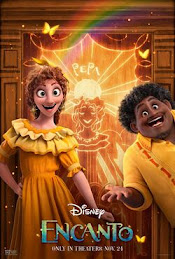
Pepa Madrigal - Weather control

In a folktale from Cape Verde two girls encounter three fairies, with vastly different results. Similarly to the Frau Holle story the hard-working girl is rewarded, while the lazy girl is punished. Both reward and punishment, however, are unusual. Good Maria gains powers so that "when she laughs the rain may fall, and when she smiles the weather thickens", while Bad Maria gets powers so "when she smiles, a strong wind blows, and when she laughs, a tempest uproots all the trees on the shore and wrecks all the ships at sea." Their mood, just like Pepa's, directly affects the weather.
There is also a queen who controls the weather in a Transcarpathian folktale I published in English a while ago.

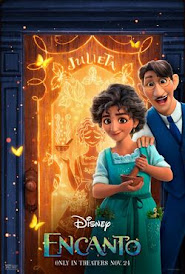
Julieta Madrigal - Healing

Julieta, Mirabel's mother, has the magic power to heal people with the food she cooks. It is one of the loveliest symbolic powers in the movie. She is one in a long line of legendary women, both of folklore and history, who knew the secrets of folk remedies and healing herbs. In European folklore, we have famous ladies such as Biddy Early or Anne Jeffries, or Hungary's lesser known but endlessly fascinating Macska Róza (Rose of the Cats). There is a lovely folktale from Tajikistan about a brave girl who sets out to find a magic plant, and learns the art of healing in the process. From the Maya South America, there is a story about a wise old woman who cures toothaches and thus saves her village.

Bruno Madrigal - Visions of the future

Seeing the future is not exactly rare in folklore and mythology. Practically everyone is doing it, from queens to strange old beggars on the roadside. But Bruno's story has two components: the fact that he sees the future, and the fact that his family basically exiles him for it. And that, in itself, is also a folktale type. It's numbered ATU 725 ("The Dream"). In it, a boy usually sees a dream or a vision of how in the future he will be a great sovereign, and his father/parents will bow down to him (Joseph, anyone?). In anger, the family kicks him out, and he has to go through a whole lot of ordeals until the vision inevitably becomes reality. (The Motif Number for this is L425). Interestingly, this tale type also exists with a female hero in a Greek collection.

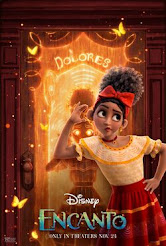
Dolores Madrigal - Sharp hearing

Dolores can hear a pin drop from a mile away. Unusually sharp hearing, actually, is not at all unusual in folktales. It even has it's own motif number: F641, Person of Remarkable Hearing. These heroes usually appear in the folktale type ATU 513, Extraordinary Companions, and they are a staple member of the team in almost every variant of the story. They can hear the grass grow, ants walk, or a feather fall halfway across the world. They usually aid the tale's main hero by telling him of impending danger.
(You can find a long list of these folktales in my thesis online.)

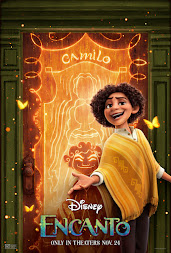
Camilo Madrigal - Shapeshifting

Continuing with the cousins: Camilo can take on the appearance of other people, and change his body at will. Now, while shapeshifting is quite common in folklore, taking on other humans' appearances is more of a rarity. In general, human shapeshifting is reserved to... people who are not quite human. In a Roman myth, for example, Vertumnus, minor god of the changing seasons turns into various attractive men to seduce a reclusive nymph. In another myth (also from Ovid's aptly named Metamorphoses) a girl named Mestra gains the power to change her shape at will, and she uses it to get away from her abusive father. In the medieval ballads about Robin Goodfellow (a.k.a. Shakespeare's Puck) he is half mortal, half fae, and can change his shape into whatever he wants to be, including humans and animals. Since Camilo has a trickster nature in the movie, Robin is probably closest to him in personality. Another shapeshifting trickster spirit that appears as various humans is Rübezahl, the goblin king of the Silesian mountains.

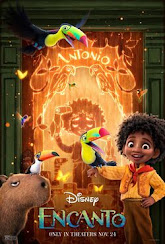
Antonio Madrigal - Animal speech

Antonio, the youngest of the Madrigal children, has the power to talk to animals. Once again, this is a classic. The motif number is B216 (Knowledge of animal languages) or B217 (Animal language learned). There are too many tales to list, although unfortunately many of them involve wife-beating or even murder. So I'm only highlighting some that are better. The legend of the Da-Trang crabs from Vietnam tells of a man who gains a magic pearl that helps him understand the language of all animals. He uses his powers for good in various creative ways (until one day he loses the pearl, and his senses with it). The Italian tale where a clever boy named Bobo learns animal speech ends better: he uses his gifts to help people, and is eventually elected Pope with the help of a pair of doves. A boy named Jack from the Traveller tradition also puts his knowledge to good use, and grows rich from the secret he learns from the birds (about how to find hidden treasure while the trees go dancing). Finally, a personal favorite: in a Japanese tale an old man receives a listening hood that allows him to hear the speech of animals and plants. He uses this knowledge to help them, and also the people who don't realize the damage they are doing to nature.

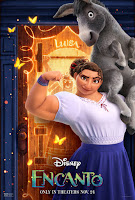
Luisa Madrigal - Super strength

Super strength in folklore is as common as dirt, but it becomes a tad more interesting when we talk about super strong women. Many people might be familiar with the picture book Three Strong Women, which is based on a Japanese folktale. In it, a three-generation family of brawny ladies teach an important lesson to a sumo wrestler. It took me a while to track down the original story, about a strong girl named Oiko, in this folktale collection. She also trains a sumo wrestler to be stronger, and also teaches a lesson to villagers who try to mess with her.


Isabela Madrigal - Flower power

Isabela makes flowers grow everywhere (as well as "a hurricane of jacarandas, strangling figs, hanging wines", which is a line from her song I adore). She reminded me of a princess from Hungarian folklore: The Princess Who Makes the Forests Green and the Meadows Bloom. Wherever she walks, she brings nature to life. An Indian princess has similar abilities in a tale titled A story in search of an audience - here, she receives her gift because her pregnant mother listens to a legend no one else is willing to hear. In another, even more beautiful tale from India, a girl has the power to turn herself into a Flowering tree, providing fresh flowers for her family to sell. In the same collection we can also read about The Princess of Seven Jasmines, from whose lips jasmine flowers drop when she laughs. By the way, flowers blooming from a girl's laughter, footprints, or hair is a common motif in folklore (numbered H71.4 or D1454.2.1 in the Motif Index). It is usually a blessing that distinguishes her as a "good bride" or a "kind sister."

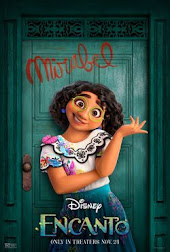
Mirabel Madrigal

Isn't it the entire point of the movie that Mirabel doesn't have a superpower? Well, yeah, it is. But her story is not without parallels anyway. There is a dark prophecy about her, one that everyone thinks means she will wreck the family. This reminded me of an Icelandic folktale, titled Hild, the Good Stepmother. While it is about the No. 1 rule of folklore that a prophecy always come to pass, this story goes in the opposite direction. A princess is foretold to bring ruin to her family before she turns 18: burn down the palace, get pregnant out of wedlock, and kill a man. Her stepmother, however, helps her figure out ways to bypass all three on technicalities, and in the end, she lives happily ever after with her family. (Find another version here.)

Encanto

And since the house and the home of the Madrigal itself is a character in the story, I can't miss mentioning the Encante of Amazonian legends: a hidden, magical city full of magical creatures. It is usually believed to be the home of the encantados, shapeshifter people that like to appear as Amazon river dolphins. People who are lucky enough to make the journey to the Encante usually return wiser, and kinder, than before.

Conclusion

I have a soft spot for superpowers in folklore (I even wrote a book about it). And Encanto does an excellent job of using them.
Saturday, June 29, 2019

StorySpotting: Tag, you're it (Avengers: Endgame)

StorySpotting is a weekly or kinda-weekly series about folktales, tropes, references, and story motifs that pop up in popular media, from TV shows to video games. Topics are random, depending on what I have watched/played/read recently. Also, THERE WILL BE SPOILERS. Be warned!


I feel like sufficient time has passed now since the premiere of Endgame so that I won't get dragged for talking about the plot. If you think otherwise, please stop reading now.

Where was the story spotted?

Avengers: Endgame (2019)

What happens?

In the epic final battle against Thanos and his army, the Avengers all team up to save the world. Their goal is to dismantle the Infinity Gauntlet, or at least keep it away from Thanos, who wants to use it to snap the entire universe out of existence (and start a new, better one, probably with blackjack and hookers). In order to get the gauntlet from point A to point B (and away from Point Thanos), they pass the important object from one person to the next. In the moment when one of them is about to drop it, or be overwhelmed by the enemy, someone else swoops in and carries it on. They continue tagging in and out of the chase, passing the gauntlet along in a relay race, until the story reaches its final climax.


What's the story?

TEAMWORK, people! It was not invented by coaching experts. The world-saving relay race does appear in some very old traditional stories which are really fun to research and tell. They usually have to do with the theft of fire.
Fire theft, a popular motif in folklore and mythology, has its own motif number, A1415. Within this large group of narratives, there is a sub-type, numbered "A1415.2 - Theft of fire by animals." If you dig even deeper, you will eventually arrive to "A1415.2.2. - Coyote Steals Fire."

This Native American story exists in several versions from various nations. The basic idea is always the same: The world needs fire, but fire is hoarded and guarded by some powerful beings who are not willing to share. Coyote, being a Trickster, comes up with a plan to steal fire with the help of other animals. He makes the initial theft, then passes the fire on to the next animal. The enemy pursues the stolen fire, but every time they come close, and the carrying animal tires or stumbles, someone else jumps in and picks up the flame. They eventually get to a safe place, or manage to hide the fire somewhere the powerful beings can't get it back from.
Picture from here
The stories vary in terms of animals and enemies. One version from the Pacific Northwest has Coyote-Wolf-Squirrel-Frog, stealing fire from monster-beings called Skookums. A story of the Salishan from Nicola Valley has Coyote-Antelope-Fox-Wolf, and "all the good runners" running away from the Fire People (and being killed one by one). In the Shoshone version, Coyote is helped by Stinkbug, Porcupine, and Packrat. In the Karuk version, fire is stolen from the Yellow Jacket Sisters with the help of Eagle, Frog, Turtle, Fox, and Mountain Lion.
This tale type, interestingly enough, also appears in the Philippines. Among the Ilocano people, it is the human trickster and culture hero Lam-ang who initiates the theft of fire from the giants (read the story here or here). He is helped by Frog, Cat, Dog, and Lion, among others.

Conclusion

The life-or-death relay race for the saving of the world is a narrative trope that is full of tension and excitement. When used well, it can channel a sense of epicness as well as a strong idea of teamwork and community. I'm not going to lie, it's one of my favorite folktale motifs, and I was delighted to see it in a modern adaptation in Endgame.

Wednesday, April 11, 2018

J is for János and Rózsa (WTF Hungary - Weird Things in Hungarian Folktales)

Welcome to this year's A to Z Challenge titled WTF Hungary - Weird Things in Hungarian Folktales! You can find all other participating blogs on the A to Z Challenge main blog.

This tale of the adventures of two extraordinary brothers comes from a book of Transylvanian Roma folktales, collected by Nagy Olga. The storyteller was a 52 year old man named Dávid Gyula. I included half of the story, the adventures of the younger brother János, in my book of Tales of Superhuman Powers, under Superhuman Strength; but that is not the only remarkable part of that story. Here are some others:

1. Rózsa (Rose, yes, but here it's a man's name) sets out to work as a swineherd to support his old father. He trains the king's (talking) pigs to march in order, and give reports in the morning before they head out to the fields to exercise. Military training for pigs.

2. Rózsa also rides the talking magic pig when he goes off on his adventures. The pig is secretly a wizard.

3. When János sets out on his own adventure, he ends up at the Red King's Tavern. There he orders light breakfast: A two year old cow, and approximately 1500 gallons of wine. And some sides.

4. János soon makes friends at the tavern: The Iron Knight, the Son of the Wind, Son of the Sun, and the Son of the Golden King. At this point, the story is beginning to sound like the opening of a D&D campaign.

5. In true D&D fashion, soon enemies show up at the tavern: Three devils, and also the Bone Knight, the Mold Knight, and the Wooden Knight. The kill the devils first with one slap each (apparently the devils are the Redshirts in this story), and then all the heroes except János.

6. In the middle of all this, János goes out back to pee, and pees enough to threaten the whole town with a flood. Just because.

7. Eventually János grows tired of the antics of the bad guys. He creates a steel dome over the tavern (so that they can't escape), and commences to beat them up. They eventually are forced to revive everyone (even the devils), and then János tosses them all the way back home to their mothers.

8. When János visits the Golden King, the king tries to get his two daughters to seduce the hero. However, János pulls up the same steel dome around his bedroom, and the princesses can't get in. Steel dome means no.

9. János rescues a princess his friend, the Son of the Golden King, is in love with. She also has superhuman strength, and he has to defeat her first, before she lest him rescue her from a witch.

The story goes on for a long time, and it is full of fascinating details. Eventually, both János and Rózsa marry enchanted bird (duck)-princesses, and live happily ever after.

Some folktales are more complex than others.

Wednesday, April 16, 2014

N is for Nadeshiko Pink, and what that actually means

So, N is not an easy letter to start a color with. We have Navy and Neon,  and neither of them is going to help in my quest for folklore and mythology. So, once again I have to resort to linguistic sleight-of-hand.
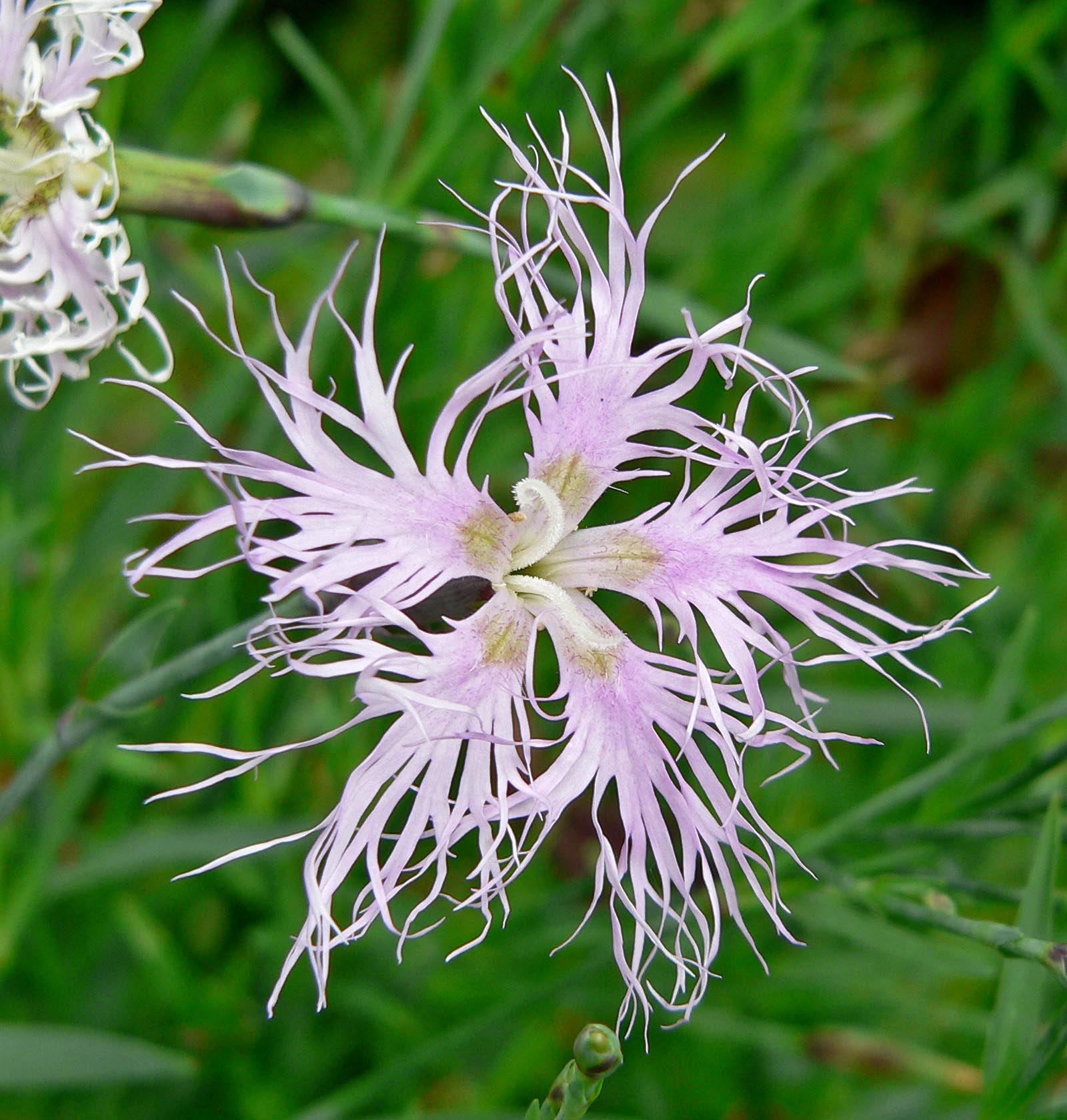
Looking at my trusty list of color names, I came across a shade called Nadeshiko Pink. It is a soft pink color named after the Japanese word for carnations. It has a very important place in Japanese flower symbolism: Yamato nadeshiko is the term they use for the ideal Japanese woman, for the ultimate delicate feminine beauty.
Sadly, my search for a tale that explains the connection did not yield any results.

BUT!
I do have a story that involves carnations.

Szegfűhajú János (János Carnation-hair) is a Hungarian folktale with one of the most peculiar heroes I have ever seen. I came across the story when I was doing research for my book, and ran into a problem (much like with the letter N) with finding folktales about telepathy. After scouring the whole world for a story, I found it right under my nose, in Hungary. Duh.
We never did figure out why János is called Carnation-hair; we just know that his hair is somehow peculiar and important. I asked a bunch of people, including folklorists, and got a bunch of answers. Some said his hair must be red (red carnations are common in Hungary), or pink, or purple, or wavy, or fragrant, or smooth, or just straight up made of flowers. It was a delightful poll to do.
The story itself is very long, and full of fascinating imagery. It tells about a boy who is raised by a fairy in a castle under the sea. His stepmother repeatedly cuts him into pieces and puts him back together, giving him more and more superhuman powers every time, including telepathy and astral projection (this is probably related to early Hungarian shaman beliefs). Eventually he sets out to find the Diamond Princess he saw in a dream, and adventures his way across the kingdoms of Copper, Silver, and Gold, breaking other princesses' hearts and being hanged for it more than once (yeah you read that right). I like this story for the deadpan tough love of the fairy godmother ("and then she killed him and cut him into pieces, and put him back together again"), the various personalities of the metal (heh) princesses, and just the overall weirdness of a telepathic fairy tale hero.
You can find the full English translation and notes in my book.
For those of you who read Hungarian, here is the Hungarian version online (of the story, not the book).

Thursday, April 10, 2014

I is for Ivory, Castles and Dreams

(For those of you who are not avid Blackmore's Night fans, the title is a reference to this song.)

Ivory is a material that comes from the tusks and teeth of various animals (most often elephants and hippos). It also stands for the pale white-yellow color of these teeth. While a lot of people associate ivory with pure white, is is more of the pastel shade.

One of my favorite stories involving ivory is the Greek myth that says that dreams arrive to people through two doors: One made of horn, and one made of ivory. Horn stands for true dreams, while ivory stands for illusion and deception. In the Aeneid it is stated that the gates of horn are the passage for true shades that have messages for the living, while the gates of ivory are where the haunting spirits go through.

Ivory is also featured on a later Greek folktale call The Son of the Hunter. I swear I am not doing this on purpose, but this one is also included in my book, filed under Geokinesis, because it involves a character that can make the earth shake and tremble. The tale itself is about a young hunter who is given impossible tasks to accomplish by his king, who is tricked into messing with him by his evil adviser. One of the quests he has to accomplish is building a palace solely made of ivory. The young hunter learns from his mother that his father knew a place where elephants go to drink. He fills the pond with alcohol, gets the elephants drunk, and harvests all the ivory he needs. Later on, the king tasks him with retrieving a princess who just happens to be the little sister of forty dragons. In the end, and with the help of a team of people with various superpowers, he finds the princess, falls in love, wins her hand, and the villain gets punished for his intrigue.

Here is the thing about telling this story: The ivory trade has been and is still known for endangering several species, and is often judged for poaching, animal abuse, and various other sins. For that reason, I usually change this folktale when I tell it. I either change it to the mother telling the young hero about an "elephant cemetery," skip the scene, substitute for another material, or add a side note about the history of the ivory trade in the end (in educational settings). I wrote about this in detail in my notes on the story. Keep the issue in mind, and tell the way you are most comfortable with.

Still on the topic of ivory: If you have not read Michael Ende's The Neverending Story yet (watching the movie does not count!), go read it. Trust me on this.

Saturday, April 5, 2014

E is for Ebony

Ebony is a kind of wood known for its shining black color. Because we already used B for Blue. Also, ebony sounds better!

And with this letter we return once again to the palace of Bahram Gur, the Persian King with the Seven Wise Princesses. After visiting the Turquoise Pavilion in B for Blue, we no visit the Black Pavilion of the Ebony Princess.
The Ebony Princess is from India. She tells a tale about a king who comes across a town during his travels, a town where everyone is dressed all in black, but no one is willing to tell him why. Finally, after spending a year there and gaining the trust of a butcher, he is show in secret to the ruins outside the city, from where he is transported to the realm of the fairies. There he falls in love (or, rather, desire) for the fairy queen, but is refused; when he finally tries to force himself on her, he gets kicked out, returns to the city, and dresses all in black in mourning for his stupidity (poetically called "unrequited love").

A less rape-y and more delightful tale, one of my favorites, is that of the Ebony Horse from the Arabian Nights. It is about a Persian magician that invents a mechanical flying horse, just to have it stolen by the king's son, who goes on all kinds of adventures before he learns how to steer the creature. I also included this tale under Technomancy in my book, Tales of Superhuman Powers (a collection of folktales with superpowers in them). A lot of fun to tell.

(Incidentally, the Ebony Horse is also a Magic: The Gathering card, from the time they did an Arabian Nights run)

Friday, April 26, 2013

W is for the Wind Princess

Again from Hungary.

Wind Princess is actually called Szelike, and is not translated "wind" because she is some kind of a weather fairy - she is translated "wind" because she is faster than the Flash on caffeine. Anyone who wants to marry her has to outrun her in a race, and of course the odds are stacked against them. I like this folktale because Szelike is not also a fast runner, but apparently she also has a childish, impatient and hasty personality that goes very well with her supernatural powers.

Did I just say powers?

Heck yeah, this story is also included in the upcoming book!

(I swear we are almost done)

I would like to take a moment here to muse about the many princesses in tradition who have to be outrun. There is Atalanta and the trick with the golden apples, then there is Camilla and her divine gift of speed (also included in the book), and then there is Szelike and her sisters, a whole array of folktale princesses who run as fast as the wind.
First things first: mind you, these princesses are not running to get caught. They have to be outrun, and a goal reached first, be it the water of life or just a shiny stone on a nearby mountain. It is not a tale of chasing the girl, it is a tale of keeping up with her.
There is a slight but important difference when the suitors have to complete some unrelated task to win the princess, and when they are pitted against the princess herself. Many people complain that folktales are "outdated" because women are given as nameless-colorless prizes for heroic deeds. While that is true in many cases, let's not skip over the fact that many times it is the princess herself who has to be outwitted, outrun, or wrestled down (we have seen all of those before through A to Z). Many times it is even stated in the tale that it was the princess' choice to set those challenges. To make sure whoever married her could hold his own.

Just something to think about.

Monday, April 22, 2013

S is for the Silver Princess

And the gold, and the copper, and the diamond. But since they are all in one story, might as well put them into one post.

This is another Hungarian folktale, and also another teaser for my upcoming book, so bear with me!

Given one very strange youg man called János. They call him Carnation-hair, whatever that means, I am open to interpretations, but whatever it is (red, curly, silky, etc.), it is obviously very pretty, because princesses seem to fall in love with him a lot. János is also a telepath on the side, he learned that trick from his fairy godmother.
Intrigued yet?

János sets out on a journey across the world to find one particular princess he has seen in his dream: the Diamond Princess. But in order to get to the Diamond Kingdom, he has to travel through the lesser kingdoms: Copper, Silver, and Gold. In each kingdom a princess falls for him, and in each kingdom the Queen tried to kill him various ways. The Silver Princess, in particular, is very kind to him, but alas, she is no Diamond, and gets her silvery heart broken by the mortal.

In Hungarian folktales precious metals often represent "kingdoms" in the sky: Moon, Sun, Stars, and sometimes even Mars, for its fiery red. If this idea is right, then these princesses are not only a striking image of wealth, but also beings that represent celestial bodies. Silver Princess or Moon Princess... has a nice ring to it!

The full story will be included in my book of Tales of Superhuman Powers, under the chapter on Telepathy.

Happy Last Full Week of A to Z! Keep on typing!

Saturday, April 20, 2013

R is for the Rainbow Princess

Marriage equality for princesses? Whaaaat?

Maybe later.

Today's princess is once again brought to you from Hungary.

Given is one queen who has a very special talent: she can change the color of her skin every hour of the day, into seventy-seven different shades. Now, Rainbow Queen has a son (who obviously did not inherit this gift) that she raises alone (!). When he is old enough to marry she only has one small request to make: he is only allowed to marry a princess that can also change her color into all the shades of the rainbow.
(Talk about a hard-to-please mommy in law...)
The prince sets out to find such a princess, and as folktales usually go, he goes through a whole series of ordeals until he manages to find one. He is, among other things, aided by a faithful zombie servant.

That is all I am telling you right now.
*shameless self-promotion*
This story is also included in my book that will be published later this year! Together with 54 other folktales that include supernatural powers such as invisibility, super strength, and eye beams.
Stay tuned for more details!

(Sorry about the image, I couldn't resist...)

Tuesday, April 9, 2013

H is for the Hawkeye Princess

Today's princess is, once again, brought to you from Hungary, but also from other places.

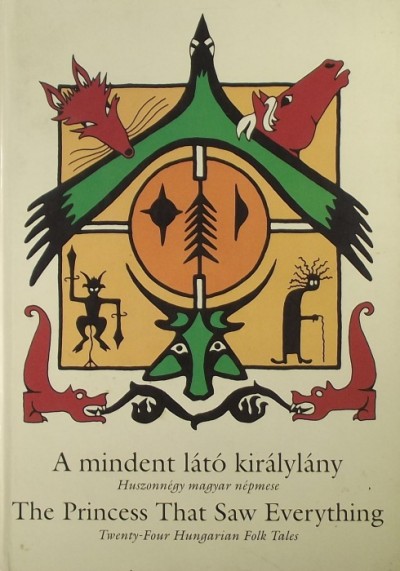
The Hungarian tale is called "The Princess that Saw Everything", while the Grimm version is known as "The Sea Hare" (the whut now?)

The basic idea is the same: There is a princess with such keen eyes that she can see everything in the world. The quest is to hide from her - whoever manages to do so (one time out of three) can marry her. All right, so this is not exactly all that different from damsel-in-distress tales, BUT, at least the princess is taking active part in the decision - by eliminating all possible suitors. Where would you hide from someone who can see through the SUN?!

Of course, in the end, there will be someone to figure out how to hide in plain sight: the closer you are to the damsel, the less likely she is to notice you. Talk about taking advantage of being friendzoned!

This tale also has a Hungarian cartoon version from the same series as the dwarf princess story. You can find it on YouTube here.

If you want to read the Hungarian version, see the book above.

This tale is also included in my upcoming book "Legendary Powers" that includes folktales that feature superpowers - like superhuman sight. *shameless self-promotion*

Stay tuned for details!

Saturday, April 21, 2012

S is for Ship, of the Land-and-Water kind

Once again shhort post, I am not even blaming it on the thesis this time, because it is about my thesis.

One of the stories featured in my thesis in Folktale Type AaTh 513 - The Extraordinary Companions. This is the folktale where the hero (who usually is either poor, dumb, rich and spoiled, lazy, or simply a jerk) sets out on a quest and ends up running into people with strange magical abilities who then help him out until he kills the giant, saves the princess, gets the treasure, etc.

In the past few weeks I have collected 23 versions of this folktale from many countries around the world: Italy, Sweden, Thailand, Korea, Iceland, USA, France, India, Mongolia, Hungary, Czech Republic, Ireland, Germany, Norway, Ukraine and Russia - and I have no doubt that there is more of it hidden in story collections and folklore articles.

What really fascinating though, apart from the universal nature of this story, is the variety of superpowers that are featured in it. In my 23 versions I found 28 (!) different abilites, from overkill ones like "he can run as fast as lightning" and "he knows everything" down to weirdness like "he can pee a waterfall". I made a list of these,  and also made a list of quests that need to be accomplished, from "rescue princess from evil sorcerer" to "defeat crickets that are as big as elephants".

Fun!

What seems really interesting to me is that literature claims this story type is directly related to the myth of the Argonauts - a ship full of people with magical abilities with a useless leader going to get rich and ending up rescuing a princess. Pretty accurate if you ask me (yes, I don't like Jason, but then again I don't really like Medea either). Seems legit to me, especially because the story almost always features a magical flying ship.

It is also a great story to teach teamwork, and talk about finding ways to use your special talents effectively. I'll muse about it later.

Not I have to go watch Legend of Korra...
... I mean, continue working on my thesis.