Showing posts with label Eswatini. Show all posts

Tuesday, April 13, 2021

Tarot Tales: K is for Kings and Knights

Welcome to the 2021 A to Z Blogging Challenge! My theme this year is Tarot Tales. I am making a selection of folktales, legends, and other traditional stories that correspond to tarot cards. Storytelling and tarot go well together. Do other stories come to mind? Let me know in the comments!

This post is the first one about the Minor Arcana. So, instead of one card, I'll be focusing on eight: four Kings, and four Knights. Comments will be shorter, but since Kings and Knights are very common in folklore, the selection process was also a lot easier. 
(If you have suggestions for Kings and Knights from more non-European cultures, let me know!)


CUPS (emotions, water)

King of Cups: Zal (Persia)

The King of Cups is emotionally mature, compassionate, caring, and kind. He is diplomatic, intuitive, warm-hearted, and an excellent mentor. For these reasons I chose my favorite hero from the Persian Book of Kings, Zal. Born with white hair, Zal was put out into the mountains by his father to die, but the mythical Simurgh bird raised him. As an adult, he returned to his kingdom and became a wise, level-headed and diplomatic ruler - and a kind and loving father to one of the greatest Persian heroes, Rostam. He also has a gorgeous love story.

Knight of Cups: Oisín (Ireland & Scotland)

This is my favorite guy in the deck. Romantic, creative, charming, and on top of that just as caring, kind, and compassionate as the King. He is all about beauty and love, all heart and imagination. He is the downright knight in shining armor. I chose another old favorite of mine: Oisín (or Ossian), the famous bard of Irish and Scottish legends. Oisín is the son of the legendary hero Fionn Mac Cumhail, part human, part fae. He is the odd one out of the rowdy warriors of the Fianna, more a musician and a diplomat than a fighter (although he can definitely hold his own in an adventure). He is most famous from the love story where he runs away with the Queen of the Land of Youth.


WANDS (action, fire)

King of Wands: Setuli, King of the Birds (Eswatini)

This king is THE King. He is a true leader, a great role model. He takes on challenges, defeats obstacles, makes dreams into reality. He is a visionary, all energy, action and innovation. If I was going to put Arthur in the deck, this would be him - but I wanted to pick someone less obvious. So, let me introduce you to Setuli, King of Birds, from the tales of Eswatini. He is born deaf and mute, but when his magician brother takes him into the wilderness, he meets a wise old woman and she helps him gain magic powers through his own bravery and determination. Setuli then uses his new powers to turn birds into people, and sets out on a journey. He ends up breaking a curse on another kingdom, and those people join him too; he defeats monsters and makes daring plans, and in the end he lives happily ever after as the ruler of a prosperous land. 

Knight of Wands: Astolfo (Italy)

This Knight is daring, enthusiastic, and passionate. He has a lot of energy to go around: he gets into spontaneous adventures, sweeps damsels off their feet, helps out friends, goes on quests, makes magic happen. He has as much charm as Cups, but in a less dreamy and more adventurous way. For these reasons I chose Astolfo, one of the heroes of the Italian epic Orlando Furioso. He is an English prince, one of Charlemagne's paladins, most famous for riding the first hippogriff recorded in legends! After rescuing the magic steed from a wizard, he flies it to the Moon to find the lost wits of his friend Orlando. It is quite an adventure story!


SWORDS (intellect, air)

King of Swords: Solomon (Jewish, Christian & Muslim traditions)

This King is all about wisdom, knowledge, and intellect. He makes good, impartial judgment, he is respected and trusted by everyone, and he always finds the truth. He follows logic instead of emotions, and he is good at what he does. He is also a strong authority figure. I thought the legendary King Solomon would be a good fit for this card. Recently I was doing some research on Solomon's judgment (the baby-cutting-in-half thing), and it is a lot deeper than most people realize.

Knight of Swords: Mercury Ali (1001 Nights)

Knight of Swords is a bundle of energy and intellect. He is unstoppable, always up for a challenge, good with words, and usually the smartest person in the room (sometimes annoyingly so). He is all about action and winning (I love it that Telluric Tarot symbolizes him with the coffee plant). Now, I could have picked a lot of heroes for this one, but I wanted to highlight the intellect part. So instead of a knight I chose a trickster: the infamous Mercury Ali from the 1001 Nights. He is a legendary rogue from Cairo, who travels to Bagdad and gets into an endless prank war with a clever lady named Zaynab. He goes through many adventures, sometimes fighting with wits, and sometimes with a magic spear, until he can marry his lady love.
(CW: this story has a few seriously problematic parts, but in my opinion none of them are essential to the plot, and can be easily skipped.)


PENTACLES (material things, earth)

King of Pentacles: Laurin (Germany)

This King symbolizes wealth, abundance, and material security. He is grounded, respected, traditional, and successful in making his domain flourish. He is also kind of a fatherly figure and a family man. I immediately thought King Laurin would be a good fit. In German legends he is the Dwarf king of the mountains of Tyrol. He reigns over a wealthy underground kingdom full of treasures, and has a beautiful rose garden in the mountains. He features into a long and amazing legend about the struggle between humans and Dwarves.

Knight of Pentacles: Kay the Senechal (Britain)

He is not a very knightly Knight. This guy is about hard work, planning, and practical things. He is patient, responsible, reliable, persistent, and honorable. He is also, to me, one of my favorite knights from Arthurian legends: Sir Kay the Senechal. Kay is generally known for his sharp tongue and grumpy demeanor (and for being King Arthur's mean foster brother), but behind the scenes, he is the one that keeps the lights on in Camelot. In the old Welsh legends he literally keeps everyone warm by the heat radiating from his body. He might not be a good fighter, or a romantic hero, but he keeps all of them housed, clothed, and fed. You're welcome. 

Who are your favorite heroes, kings, and knights in shining armor?
(And don't worry, we'll get to the queens too!)

Thursday, June 4, 2020

The three little eggs (Feminist Folktales 19.)

Another Thursday, another post for Feminist Folktales! It's a series of traditional stories from around the world that display motifs that reflect feminist values. I am not changing any of the stories, merely researching and compiling them, and posting them here as food for thought. You can find the list of posts here.

Origin: Eswatini (Swaziland)

The story

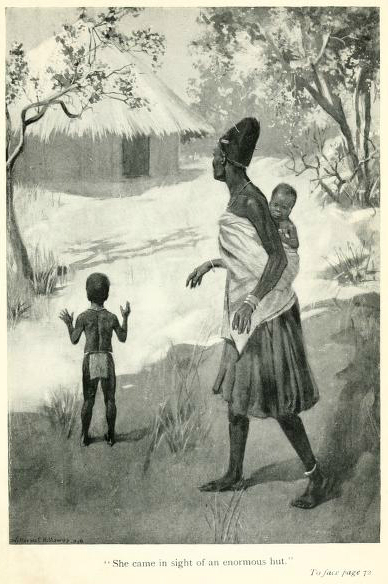
A woman is beaten and abused by her husband regularly until she decides to run away. She takes her two small children and escapes into the wilderness. By a river they find a nest with three little eggs in it, and they carry it safely with them. For the rest of the journey the little eggs whisper advice to the woman about which road to take, where to find shelter. She has to face and defeat various monsters, keeping her children safe in the wild. In the end she breaks a curse on a kingdom, she is elected their queen, finds true love (in a prince who had been transformed into an egg), and lives happily ever after.


What makes it a feminist story?

I loudly support any folktale where the abusive partner is not "saved" or "fixed" but rather escaped and left behind (there are not many of these). This story highlights the fact that the abusive, violent husband is bad for the wife, and the best solution for her is to leave him.
However, the story also clearly shows that such an escape is very hard and full of danger. Sometimes the travelers find shelter that turns out to be a den of monsters; sometimes they get lost in the woods and the only way through is forward. The mother cares for her children, feeds them, sings to them, helps them climb trees to be safe. She is not a "selfish woman" who "destroyed her family" (women fleeing abuse are often told by people that they should have "tried harder, for the sake of the children", which is, frankly, bullshit). We see a brave and caring mother who literally faces man-eating monsters to make the life of her children (and herself) better and safer.
It is also important to note that the mother needs help and encouragement on this road, which she gets from the eggs. This symbolism can be explained in many ways, as internal or external help. At the end of the story we find out that the eggs were princes under an enchantment. But whether the help comes from without or within, it is important to see that the brave hero needed encouragement, advice, help - as in real life survivors of abuse also need a lot of these things to escape a bad situation, especially with children. At the end of the story the hero becomes queen, a queen who has the power to help others. Getting help from others does not diminish her heroism. Quite the opposite.

Things to consider

This story can be triggering to some audiences (esp. survivors of abuse). The storyteller should consider carefully the context of the telling, and make sure there will be time and space to deal with the feelings that might surface.

Sources

E. J. Bourhill & J. B. Drake: Fairy tales from South Africa (MacMillan, 1908.)

Notes

I included this story in my upcoming book (in Hungarian), about "non-traditional" families.

Monday, November 18, 2019

Many kinds of transformations (Following folktales around the world 131. - Eswatini)

Today I continue the blog series titled Following folktales around the world! If you would like to know what the series is all about, you can find the introduction post here. You can find all posts here, or you can follow the series on Facebook!

Fairy ​tales from South Africa
E. J. Bourhill · J. B. Drake
Macmillan & Co., 1908.

This book contains 20 stories, out of which 12 are Swazi folktales (the others are from the Zulu and other neighboring traditions). It is more than a century old, and it shows; for one, it consistently calls all black people "Kafir" (which is an outdated term), and also uses eurocentric translations for many things - among them, referring to anything supernatural as "fairy" or "ogre" (e.g. "fairy bird" instead of "magic bird"). It is a book written for (European) children, therefore the introduction is a short and easy read about local customs, life, and storytelling traditions. The stories are enchanting and entertaining, and they are accompanied by elegant illustrations.

Highlights

Setuli, King of the Birds is an epic tale about a deaf boy who becomes the king of the birds through his own courage and curiosity. With his bird-army he discovers new lands, fights monsters, saves people from curses, and settles in a new homeland in a journey that reminded me of European hero sagas. Transformed birds were also the protagonists of The cock's kraal, in which warriors wandered into a village full of hens; their chief, a golden rooster, revealed that they had been cursed into fowl until they can defeat a chief stronger than themselves. Later on, when a chief heard about the hen-village and thought it would be easy to conquer, the rooster and his people soundly defeated his armies, and won their human forms back. Transformation was also at the center of The enchanted buck. In this story a bull slaughtered for a girl's wedding magically turned into a man and then a buck, and ran away; the girl got accused of witchcraft and sent home, since no one wanted her as a wife anymore. She eventually found the buck in the wilderness, and helped him regain his human form for good.

The story of The unnatural mother, despite the horrible title, actually took a very nice turn. A woman was chased away from home by her son, because she secretly put on his clothes and ate his food. He told her to bring water from which no animal had ever drunk - but in the end it was the animals who helped her and saved her. I also loved the ending of The three little eggs, where a woman ran away from her abusive husband with her two little children, and after going through various adventures she killed a monster, and became queen.
The tale of Semai-mai, the cannibal king, was both dark and fascinating. A cruel tyrant was turned into a supernatural dog by a fairy, doomed to stay in that from until he loyally served someone. He kept eating human flesh in a cannibal king's court, until he actually became friends with a prince, helped him escape... but when he tried to start a new life, Semai-mai became jealous and ate him. At the end of the story a wise chief defeated the dog, who lost all his supernatural powers, became an ordinary canine, and returned to the other cannibal king to live as a pet for the rest of his life...

Connections

The story of the Fairy Frog reminded me of the European tales of the Frog Prince, except here the frog rescued the girl multiple times when her sisters, and a later a monster, tried to kill her. He even carried her around in his stomach for a while to keep her safe. The moss-green princess reminded me of the Frog Bride folktale; it was a lovely variant where a father got a monster skin to cover his unloved daughter in, and where the two sisters were not rivals but friends (and even the favorite daughter got her own happy ending). There was once again a false bride folktale with a man-eating monster with a carnivorous tail under her skirt.

Where to next?
Botswana!