Showing posts with label history. Show all posts

Monday, April 20, 2026

The Queen's Buttocks (Small Town Legends A to Z)

This year my A to Z theme is Small Town Legends. I am exploring folklore from villages and small towns around Hungary, bringing you the most entertaining bits. You can plan your next visit around them!

There is no Q in the Hungarian alphabet, therefore there was no town name I could find. But I did find a legend that features a queen. So here we go.

THIS POST CONTAINS AN ADULT JOKE

This story has actually been collected from multiple villages in and around Hungary, including Fúlókércs, Sajórecske, and Ada.

Here it is:

One day, Queen Maria Theresa (Habsburg empress and queen of Hungary 1745-1765) was walking in her palace gardens when a soldier, who did not recognise the lady, passed by behind her and decided to slap her buttocks hard. As the queen turned around, the soldier was horrified to discover he had assaulted Maria Theresa herself. Fearing for his life, he blurted out:

"Your majesty, if your heart is as hard as your buttocks, I am a dead man!"

Amused, the queen looked him over and replied:

"Well, if your **** is as firm as your hand, I might keep you."

(Story referenced in the Catalog of Hungarian Historical Legends)

Note: There are several folk legends about Maria Theresa and her appetite in men. A lot of these were told to make fun of a powerful woman. But there are also many folk legends about Maria Theresa being a just and wise queen who took care of people, and appreciated a clever joke.

(Not that slapping a woman's butt has ever been okay)

Tuesday, April 14, 2026

Lickóvadamos: A Village of Feral Squirrels (Small Town Legends A to Z)

This year my A to Z theme is Small Town Legends. I am exploring folklore from villages and small towns around Hungary, bringing you the most entertaining bits. You can plan your next visit around them!

Mukucsfalu today is part of the town of Lickóvadamos in Zala County, Western Hungary. The entire place has less than 200 inhabitants, out of which about 10 live in Mukucsfalu. The name comes from 'mókus' (squirrel) and 'falu' (village), so it is literally called Squirrel Village.

And there is a legend to explain the name.

The story takes place during the Ottoman wars of the 16th and 17th centuries. It says that when the inhabitants of the village found out that the Turkish army, under Hasan Bey, was fast approaching, they gathered to come up with a defense plan. They sent the judge as envoy to talk to the bey. The envoy carried an offering for peace: a bag full of two hundred squirrels. The villagers believed that the Turks had neved seen (or tasted) these animals... but they also had ulterior motives. The judge explained that the village is not worth pillaging since all the inhabitants are squirrels. The bey, not entirely sure what to do with the news and the offering, ordered his servants to tie up the squirrels to his tent posts.

The next morning, the villagers found the Turkish camp empty... except for the bey, who was lying dead in his tent. Mauled by sqirrels. Crisis averted.

Sources for the story here and here.

Saturday, April 11, 2026

Ják: The Devil Goes to Rome (Small Town Legends A to Z)

This year my A to Z theme is Small Town Legends. I am exploring folklore from villages and small towns around Hungary, bringing you the most entertaining bits. You can plan your next visit around them!

Ják is a municipality in Vas County, Western Hungary, with about 2,500 inhabitants. It lies fairly close to Szombathely, the Savaria of Roman times, and the Amber Road that facilitated trade between the Baltics and the Mediterranean for millennia. No wonder that there are Roman ruins scattered in the area - including the large broken columns that were known to locals as Devil Stones.

The story has dozens of variants, but here is the gist:

In Ják there was a potter who had a young son. The boy kept accidentally breaking the pottery until his father said "The Devil take you!" in anger. The Devil did show up to take the boy - but the father begged him until he promised to return in 20 years. In that time, the boy grew up and became a priest. When the Devil showed up to take him again, he was about to conduct mass in the church in Ják. Devil and young priest made a bet: if the Devil could bring a stone from Rome before mass was over, he could take the priest's soul.

The Devil then flew to Rome and was returning with the stone soon enough. The priest saw him from the window, turned around, and spoke the closing words really fast. Thus, the mass ended, and the Devil was so angry he threw the stone at the church. By divine intervention, the church was undamaged, and the stone broke in two, just as it is today (the Devil Stones are indeed two parts of the same column). Legend says one can even see the marks of the Devil's claws on them.

There is one variant that also mentions that the Devil's shoes were filled with sand/pebbles along the way. He either emptied the pebbles around Ják, or he flew to Egypt and emptied the sand there, creating the Sahara. There was even one storyteller who claimed an Egyptian person visited the town once, and confirmed the latter story.

Source here. Image from here (the column is now a WWI memorial)

Ják does have a beautiful church from the 13th century. Image from here.

Tuesday, April 7, 2026

Fényeslitke: Women vs Invaders (Small Town Legends A to Z)

This year my A to Z theme is Small Town Legends. I am exploring folklore from villages and small towns around Hungary, bringing you the most entertaining bits. You can plan your next visit around them!

Image from here

This legend tells of the time of the Tatar invasions - which is the term we use for the Mongolian invasion of 1241, and other attacks during the times of the Ottoman Empire later on. The town the events took place is Fényeslitke, a small municiplaity of about 2,200 inhabitants in Szabolcs-Szatmár-Bereg county, northeastern Hungary.

Legend says that at the time when the Tatars were invading, there were no men present in the village to defend it. A brave woman named Máté Klára, who was heavily pregnant, took it upon herself to organize the defense of the town. She gathered the women, and together they lined up all the beehives at the edge of town in a field. In additionl, all of them hid pots of red paprika under their aprons, and picked up the heaviest mangles and rolling pins they had. Thus armed, they went to fight the incoming army. 

Seeing all the women, the Tatars got off their horses and approached them, hoping for an easy win (and, according to the text, they were seduced by the women's, especially Klára's, good looks). When they got close, the women threw red paprika in their eyes (a very Hungarian move). Blinded, the soldiers ran around in the field, overturning the beehives and getting stung. The women used the mangles and rolling pins to beat down any survivors.

The village was saved, and Máté Klára gave birth to twin boys the next day.

(Legend collected in Ajak, from Votyku Imre in 1954. Found in this book.)

Monday, April 6, 2026

Ecsed: A Very Strong Woman (Small Town Legends A to Z)

This year my A to Z theme is Small Town Legends. I am exploring folklore from villages and small towns around Hungary, bringing you the most entertaining bits. You can plan your next visit around them!

Image from here

Ecsed or Nagyecsed is a town of about 6,000 people in Szabolcs-Szatmár-Bereg county, northeastern Hungary. In the local folklore there is a very memorable figure: that of the strong woman Csáky Julcsa.

Here is the story:

Csáky Julcsa lived around 1870; she was the daughter of a teacher. On her wedding day she ran away with her groom's best man Bába Szántó János, and lived with him for the rest of her life. He had the reputation of quite the strong and clever man (he spoke several languages) but Julcsa ruled the household anyway with an iron fist. She was quite the strong and large woman; allegedly, she easily lifted about 300 lbs of grain.

It happened once that Count Károlyi who lived nearby wanted to open up a road for his cattle so they would not have to walk through the village. He prepared to take part of everyone's plots of land along the way. Everyone was afraid of the count's power, and the 200 Austrian soldiers he mustered to take the land by force. Since Bába Szántó's land was also in the way, he went out to confront the soldiers, to show resistance. He was strong enough to yank the captain off his horse and throw him to the ground - but in the next minute the rest of the soldiers had him captured and tied up. A child who saw the whole thing ran to tell Julcsa.

Julcsa ran out after the soldiers with a big knife tucked into her boots. She stood in their way and yelled at them. She was so loud and so strong that no one dared stop her when she cut her husband free and marched him home. In the end, the cattle road was marked out in a way that it avoided their plot of land.

(Collected from Szűcs Lajos in 1954. Source in this book)

Thursday, April 2, 2026

Bágy: Walnut Body Armor (Small Town Legends A to Z)

This year my A to Z theme is Small Town Legends. I am exploring folklore from villages and small towns in and around Hungary, bringing you the most entertaining bits. You can plan your next visit around them!


Bágy (Bădeni) is a village in Hargita county, Romania, with about 200 inhabitants. Up until the 19th century there used to be a castle on the hill by the village, but its ruins have long been mined out for building materials. Yet, the castle still exists in legends. Here is one of them:

During a Tatar invasion in the 1640s, people fled from the neighboring villages up to the Bágy castle. However, the castle was besieged, and with that many refugees provisions were beginning to run low. Bágy and its area were known for walnut trees and fruit orchards. People used to spread out their harvest to dry in the attic of their houses.

It is said that there was a teacher from Bágy up at the castle who had a lot of children. When everyone began to starve he convinced the captain to let him out at night for food. He managed to sneak down into the village and up to the attic of his own house. He tied his shirt and pants at the ankles and wrists, and filled all his clothes with walnuts; he wanted to move fast so he didn't plan on carrying a bag. Once he was all stuffed up with walnuts, he started back up to the castle... but he was caught by a Tatar patrol. They attacked him, but when they hit him, all the walnuts made an eerie rattling sound - and the man did not go down. This made the Tatars think he was some sort of a supernatural creature. They started yelling "Djinn! Djinn!" And they ran away. The teacher got back to the castle safely with all the walnuts.

Legend says the Tatars were so scared of djinn guarding the village that they gave up the siege and left.

(Story from this book)


Saturday, July 20, 2019

StorySpotting: Moon Landing Special

StorySpotting is a weekly or kinda-weekly series about folktales, tropes, references, and story motifs that pop up in popular media, from TV shows to video games. Topics are random, depending on what I have watched/played/read recently. Also, THERE WILL BE SPOILERS. Be warned!


Today's post is a little bit different from the usual, but it had too great a topic to miss.

Where was the story spotted?

Today is the 50th anniversary of a human being first setting foot on the Moon.

What happens?

A human being walks on the moon.
Also, a pop culture connection: I am a big fan of the Changeling: The Dreaming role-playing game, where July 20th, 1969 marks the Resurgence, the moment when so many people experienced wonder at the same time that the gates of the Dreaming opened again, and magic and belief returned to our world.

What's the story?

Since the whole Moon Landing is the culmination of millennia of dreams and stories, I decided to celebrate today by spotting some of my favorite tales about people (or, occasionally, animals) visiting the Moon.

The Prince of the Dolomites: A prince, raised by his widow mother, dreams about going to the Moon from an early age. One night he sees a princess in the moonlight and falls in love with her; after that, he becomes Prince Moonstruck, and admires the Moon every night, wishing to travel there to meet the princess. Luckily, he befriends a group of Dwarfs who help him ascend to the Moon - but they warn him that if he stays too long, he will go blind. Prince and princess fall in love, but when the prince starts to lose his sight, they decide to move back to Earth. To ease the princess' homesickness, the Dwarfs paint the Dolomites with the shining colors of the Moon, and they have been like that ever since.

Shooting the Moon: A Yao folktale about how long ago there was a fiery, burning moon in the sky. The archer Ya La and his wife Ni Wo worked together to assemble a magic bow and arrow to shoot it down. When chipping stars off the fiery moon was not enough, they shot up Ni Wo's embroidery that covered the Moon's surface, and cooled it down - but it also sucked the wife herself up to the sky. Not wanting to live apart from his wife, Ya La called to Ni Wo, who let her long braid down so that her husband could climb up to her. Ever since then, they have been living on the Moon in a little hut with a cassia tree and a flock of sheep - all of which you can see in the dark shapes on the surface.

Matanako and the Moon: A folktale from Tuvalu about a boy who has a special connection to the Moon. As a baby, he only sleeps in moonlight, and when he learns to talk, he says he wishes to go to the Moon. He convinces his father to take him, and they board a ship together, sailing for the place in the East where the Moon rises from the sea. On the way they pass various spirit islands, and lose some of their crew to spirit diseases. When they reach the horizon, the father throws Matanako at the Moon, and he has been living up there ever since. The dark shapes on the surface are the shape of his body.

Why the Skunk Lives Underground: A Quechua folktale about a skunk and a fox who are unlikely best friends. Fox's biggest dream is to go to the Moon, while Skunk would like to feast on the worms that live underground. When the Moon lets down two ropes for them, they decide to climb up together. Skunk doesn't really want to go, but he agrees to accompany his friend. In some versions, a guinea pig chews Skunk's rope through and he falls back down; in others, he decides that going to the Moon is not for him after all, and comes back down to live comfortably underground. Fox makes it happily to the Moon, and thus both friends fulfill their own dreams.

The Fox who was in Love with the Moon: Another Quechua story, and a very cute one. A fox falls in love with the Moon, and wants to reach her, but no matter how many mountaintops he climbs, he can't get any closer. Eventually he climbs the highest, most daunting mountain, and from the top, he jumps into Moon's arms. He's been cradled there ever since.

True History
: Lucian of Samosata wrote this piece in the 2nd century AD as a parody of the "true stories" of ancient travelers. He claims to have sailed to the Moon on a ship picked up by a whirlwind. The Moon, he says, is inhabited by Vulture Riders, people riding giant vultures into battle, ruled by Endymion, the Moon Goddess' mortal lover. They are waging a war against the Ant Riders of the Sun over who gets to colonize the Morning Star. The Armies of the Moon have 80,000 Vulture Riders, 20,000 Cauliflower Riders, Garlic Warriors and Millet Slingers. They are joined by 30,000 Flea Archers (archers riding giant fleas) and 50,000 Wind Runners. Lucian describes the whole war in great and elaborate detail. He also shares wild tales about the Moon society, including how they harvest babies from trees that grow from men's testicles planted in the ground, how their rich people dress in glass clothes, and how they have honey instead of snot.

Orlando Furioso: In one of my favorite epic moments, the knight Astolfo borrows a hippogriff (and then Elijah's chariot) to fly to the Moon, where all lost things can be found, to search for the wits/sanity of his friend Orlando, who lost them due to his love for a woman. Among the great collection of lost things on the Moon there are such curiosities as lost fame, lost desires, lost tears, lost kingdoms, wasted efforts, lost favors, unhappy marriages, lost charms... and lost time, which is the only thing one cannot claim back. Astolfo is shocked to find a bottle with his own name on it: it contains a portion of his own lost wits, which he never even realized was missing.

Conclusion

There are countless other folktales and legends about traveling to the Moon; most cultures seem to have at least one. This is what made the actual Moon Landing so fascinating in the eyes of the storyteller: Humanity achieved something that it has collectively been dreaming of for millennia.
So, which dream should we tackle next?

Monday, July 23, 2018

Sleeping knights, vigilant devils (Following folktales around the world 75. - Poland)

Today I continue the blog series titled Following folktales around the world! If you would like to know what the series is all about, you can find the introduction post here. You can find all posts in the series here, or you can follow the series on Facebook!

Alvó lovagok
Lengyel regék és mondák
Jerzy Snopek
Móra Ferenc Könyvkiadó, 1988.

This book contains 94 Polish legends, tales, and histories from various sources, ranging from folklore collections all the way to medieval chronicles. Jerzy Snopek, the editor of the volume, is a writer, translator, and literary historian - as well as Polish ambassador to Hungary since 2016. He divided the stories into chapters by theme: There are separate categories for historical legends, local legends, devil tales, sleeping knights, and folk beliefs. There is an introduction about Polish oral tradition, and at the end of the book each tale gets notes, complete with original sources. While some of the stories read like literary re-tellings, the book paints a detailed and unique picture of Polish tradition, including some remnants of their pre-Christian mythology.
For Polish tales and legends in English, I recommend this book, or this one or this one.

Highlights

Among historical legends the first one right away grabbed my attention; it was about Wanda, queen of Poland, who broke tradition at her beloved husband's death, and ordered that no queen, servant, or even animal should go to the grave with a king. Also among the well known legends was that of the Wawel Dragon, which Krak the hero killed not with a sword, but by tricking it into eating sulfur. There were several legends about Saint Kinga, Hungarian princess and Polish queen, and her kindness to ordinary people. In one, she gave her golden shoe buckle to a stonemason, and in another, she threw her ring into a cave to claim salt mines for her people. And talking about legendary women: There was one story about Jurata, pre-Christian Queen of the Baltic Sea, who loved a mortal man, and for that Perkun destroyed her underwater palace with lightning. Ever since then, the amber shards of her palace keep washing up to the shore... 
The story of Popiel was both terrifying and memorable. He was an awful king, tormenting people and poisoning his relatives - as punishment, his palace was overrun by a flood of mice that eventually devoured him and his evil wife alive. This story appeared in the book twice, in different variants; in one, he even built a glass dome underwater to get away from the mice, but they broke the dome and killed him anyway.
I have always loved legends about knights and kings sleeping under mountains, waiting to return. This book has a whole chapter of them! They are usually found in a cave accidentally by a blacksmith or a shepherd. In some, people lose years of their life while they venture into the cave, while in others the knights come out periodically to try to find at least one good soul worth returning for. In one story, a pig kept sneaking into the cave to eat the oats put out for the sleeping stallions...
Among the folktales, my favorite was the one about Jesus Christ and the Bandits (also makes a great indie band name). Jesus and Saint Peter accidentally got caught by bandits, and became their servants. While traveling together, they saw the bandits helping the poor, but eventually they got caught, and the bandits sentenced to death for their crimes. Jesus then stood up, bore witness to the good deeds, and also revealed that most wrongs the bandits had to right were done by the judges themselves...
Devil tales were especially fun because of their world view. Apparently, every nation, and every Polish city, has its own devil. Among Polish devils, the most popular were the bear-like and clever Boruta, and his companion and sidekick Rokita. The latter did not fare well in most stories; in one, the Wide Woman (a.k.a. Virgin Mary) killed him with a lightning bolt. Whoa.
Among folk beliefs they listed werewolves, blood-sucking spirits, baby ghosts with wings and double teeth (sweet dreams), mermaids, and giants. The most interesting creature was definitely the Basilisk, which had to be hunted and killed with various tricks. My favorite was the one where someone had to enter the basilisk-infested building in an armor made of mirrors.

Connections

I once again encountered a fern flower legend, in which a man who accidentally had one in his boots became invisible to everyone else. The legends on Master Twardowski were similar to many other wizard stories, Faust among them - incidentally, the two of them met face to face in one of the stories. My favorite was the one where Twardowski got stuck halfway between heaven and earth, and now lives on the moon (hence the dark spots). He has his student with him in the form of a spider. Said student used to chop Twardowski up and then revive him for eternal youth; as a spider, he sometimes comes down to earth to gather news for his master. Imagine being a TA forever...
I was reminded of Odysseus by the story in which the devil gave a mag od wind-seeds to a poor man. Sadly, the man's son ate a seed, and such a hurricane blew forth from his mouth that it destroyed the entire village. And of course you can all guess whom I was reminded of by the golden spear of King Boleslaw that flew back to his hand every time he threw it...

Where to next?
The Czech Republic!

Wednesday, March 14, 2018

Where in the world is Juanita Harrison?

She had me at the title, really.
I love reading travel journals; the older, the better, and extra great if it was written by a woman. I came across Juanita Harrison's book by accident, but even before I clicked on the free ebook, the title already sold it:


There is so much love and joy in that title, there was no question whether I was going to like this book.
And then it got better.

Here is what we know about Juanita Harrison: She was born around 1891 in Mississippi, she was a woman of color, she worked various jobs in the US and Cuba, until in 1927, at the age of 36, she decided to travel around the world, so she packed up a suitcase, got on a ship, and set out on a 7 year adventure.

And then it gets even better.

Here are some things I absolutely adore about Juanita:
(Yes, this book is the grammar pedant's worst nightmare, which makes it even more awesome)

1. She is not a rich lady waltzing around the world. She calls herself a "rover"; she freelances wherever she goes, taking odd jobs to earn money. Whenever she has enough for the next leg of the journey, she quits immediately, and "loafs around", enjoying her vacation, until the money runs out.

2. She values fun over objects. She regularly gets rid of her entire suitcase (once she gifts it to a maid at a house she works at), and she only ever mentions buying two frivolous things: Postcards, and books. See why I like her yet?

3. Talking about books: Wherever she goes, Juanita visits the local library to read about the places she is visiting. She also spends time in various libraries for fun.

4. In general, she spends on adventures rather than things:

"I left New York with a ten dollar hat on my head but it rained so often in London and Scotland that it have taken all the life out of it I thought of buying another but for that money I can go into so many grand old castles and manisons that I can still see beauty in it."

She runs to save the taxi money for the opera, and when she finds some coins on the ground, she goes back to the world fair a second time to look around. She takes dance lessons in Spain, goes to public baths in Japan (and shows off her pink bra), visits cabarets and festivals, and especially enjoys crashing local weddings and funerals to see what they are like...

5. She claims her space and she does not apologize for it.

"I got a passage on the Orient Line on a lovely boat and they say the 3rd Class are as good as the second on the other lines. I gave my likes and dislikes a Cabin without children and uper berth, and will be ready to fight to get what I want once on boad so no one need piety me."

6. She sets her boundaries and sticks to them.

"I dont want anyone fooling with my room rent, my room is my personal self they can give me my food or little presents but I dont want any one to be able to come to my room."

7. She decorates her spaces, even when she only lives in them for a few days; she hangs curtains, buys flowers, and scrubs the floors. The short time while she works at a mental institute for children in Spain, she makes sure they get new, nicer pots.

8. She has a great deal of common sense. She sews pockets to her "bloomers", never lets her passport out of her hand, scrubs washing basins before she uses them, shops at local markets, and always pretends to stay at a hotel when someone walks her "home."

9. She punches men who try to hit on her too aggressively. Apparently, she has a mean upper cut.

10. She does not hate men, however, and is also not afraid of them. In fact, she enjoys flirting, and makes comments about the men of various countries, especially the really hot ones.

"I like best to tease with the handsome blue caped policeman, because when I have heard enough I can step away from his beat which he can not leave."

11. She takes deep, absolute, and pure enjoyment in everything she does. She walks barefoot in the grass around the Taj Mahal, and takes a nap in the shade. She drinks fresh milk in the Netherlands while watching the sunrise. She takes everything as an adventure; she climbs a lamppost to get a look at the Spanish Queen, laughs herself silly on a ship tossed around by a typhoon in Japan, and seriously considers getting arrested in Germany just to see what that's like. Even seasickness is registered as "fun" in her journal.

12. She is perfectly happy and content with traveling alone. She turns down several traveling companions (men and women alike), and does everything on her own time, in her own way, and exactly as long as she wants to.

13. She never has a bad word about any nation or culture. She calls most of them "gentle and kind," and goes out of her way to spend time with people, even when they try to put her with the "European" passengers. She prays, but she always prays in whatever church, temple, synagogue, or mosque is the nearest; she is open to learning about other people's ideas.

"another Gentlean a Very smart Professor and a strong Buddish He talked for 2 hours to me on that faith and I was so thankful it was just what I wanted to hear I sat very quiet and took it all in he spoke about it said I was a good listner as most Christians argue."

14. In 1935, she settles down in Hawaii. Her way of settling down involves buying a tent (grandly named Villa Petit Peep) that she can carry in a bundle on her head, and moving around whenever she feels like it. This is what she says about settling down:

Well never in all my life have I slept so wonderful as in my Tent the 4 holes in each of the windows where the ropes drow up the Shade make 12 holes and when the light is out and the door and Windows closed the lights of the street shine through the holes and on to the Top of my Tent and it look just like the Stars. I'll get a serfe boad and Take a few Hula lessons just to add gayness to that list of things the check bought. 
 I want alway to be where wealth health youth beauty and gayness are altho I need very little for myself I just want to be in the midst of it. 1 have reversed the saying of Troubles are like Babies the more you nurse them the bigger They grow so I have nursed the joys.

***

Just as she appeared on the stage of world literature, Juanita gracefully stepped off of it. We don't know what happened to her after the book was published. We don't even have a picture of her. She wandered the world for 7 years between the two world wars, seeing it as the most beautiful place to be, living every day as the most beautiful day to be alive.

We should be teaching this, for so many reasons. Juanita Harrison should be on reading lists everywhere. We should be talking about a world traveler who did not discover, research, or exploit; we should be talking about a woman (of color) who traveled alone by choice and was not ashamed or afraid for one minute of it. We should be talking about how she had no grammar or punctuation, and yet she lived for libraries and the opera. We should celebrate her empathy and her friendliness, her confidence, her sheer joy and her insatiable curiosity.
Or, at the very least, some Literature major should look into what happened to her after she landed in Hawaii. I would love to know.

Let's remember Juanita Harrison.

Thursday, June 1, 2017

The Road of the Warriors - Archaeology Day storytelling, 2017.

Once again, I just got back to Hungary in time for Archaeology Day (the last weekend of May). Following the tradition of the past two years, I was invited to the Damjanich János Museum in Szolnok, to participate in their weekend events with a brand new storytelling program tailored to this year's theme. After Sarmatians in 2015, and Gepids and Goths last year, 2017 was the year of the nomadic cultures of the steppe - Scythians, Sarmatians, Huns, Avars, Hungarians, Cumans, and the Jász people. 

I love dressing up for museum gigs, and this one was no exception (after the past 2 years, I felt kind of obligated to keep up the trend). Luckily, I already had a Hungarian conquest era (9th century) outfit lying around with all the necessary accessories (from my days as a traditional archery reenactor). I left the bow and arrows at home, but the final appearance was pretty complete anyway. The belt ornaments, pouch decorations, and the braid disc in my hair were all replicas of actual conquest era archaeological finds. The traditional belt pouch was also great for storing such authentic items as my cellphone, room keys, and lipstick. 

After last year's scramble to find Gepid stories, this year I had the opposite problem: I had a wealth of folktales, legends, and traditions to pick from. I made sure that I had at least one story for every culture listed above - while some were easier than others, I still ended up with a colorful and rich lineup of tales to tell (and once again, I had tons of fun with the month-long research). There were two sets of storytelling on Saturday afternoon, one for younger kids and families, and one for adults and older children. 

The first set was titled Treasure of Griffins. I filled it out with traditional Hungarian folktales that preserved a lot of the motifs and symbols of our pre-Christian, shamanistic world view and traditions. I told the story of the Winged Wolf (one of my all-time Hungarian favorites), the tale of the Seven-legged Horse (this one has a female protagonist that rescues the Sun, Moon, and Stars from the Dragon King), and the story of Csorha János, a folktale hero from the Jász region of our country, who has magic powers and uses them to hide from a princess who can see everything. It was great to see how these old, formulaic stories work wonders in live telling with an audience - especially with children. There was a little boy in the front row who kept muttering out what will happen next in the story, and then nodded sagely when he turned out to be right... Event the adults rewarded certain plot twists with laughter or gasps. 

I was happy to see that several people returned for the second set as well. This one bore the title Footprints on the Road of the Warriors (the Road being our name for the Milky Way), and it was my chance to tell the longer, more complex historical legends of my repertoire. In chronological order, I started with the Scythians, telling the tale of Arsakomas and his blood brothers from Lucian of Samosata's Toxaris, or Friendhsip. It is a story of adventure, where a Scythian warrior proves that friends are more valuable than money or land, and his two blood brothers help him elope with his love, and win a war. It was tons of fun to tell. Next up came the Huns. For them, I told my version of Attila and the Comedians, a tale that I crafted and fleshed out from a medieval chronicle. It was both familiar and new for a Hungarian audience, and got great reactions from them (we do love our King Attila). For the Avars, I told the legend of the Csörsz ditch (Csörsz-árok), a system of Roman era fortifications that people later made up stories about. Since it is very close to Szolnok, it played well with the local audience. In the end, since I had time left over, I added the Ossetian Nart legend of Alimbeg's daughter to the lineup - one of my favorite Nart sagas, and also a story that features intriguing representations of gender.
This second set was especially lovely. People stayed and listened, allowing me to take my time fleshing out and delivering each story without a hurry. Some of them specifically showed up to the event for the storytelling, and they stayed to talk afterwards. I also loved the fact that I was telling these stories inside the museum, surrounded by archaeologists knowledgeable of all these cultures, and artifacts that represented them. If there was ever a perfect setting for telling these age-old tales, this was definitely it.

I am looking forward to what next year's Archaeology Day may bring!

Monday, April 17, 2017

N339.5. Uxorious king is burned to death while taking an alcohol bath (WTF - Weird Things in Folktales)

Welcome to my A to Z Challenge blog series titled WTF - Weird Things in Folktales! Find the introduction post (explaining the theme) here. Find all other participating blogs in the comments of each day's post on the main blog! You can also follow us on Twitter and Facebook.

N in the Motif Index stands for Chance and Fate. It includes wagers and gambling ("N2.5. - Whole kingdom as wager"), treasure troves, divine helpers... and what I personally like to call the Folktale Darwin Awards. Behold an example:

N339.5. Uxorious king is burned to death while taking an alcohol bath 

For those of you like me, who never heard the word before: Uxorious means "having or showing an excessive or submissive fondness for one's wife." Which is totally NOT what is happening in this story. 

Although it is marked as a folktale motif, this story comes from the Novellas of Matteo Bandello, a 16th century Italian writer. His stories, just like other books of novellas such as the Decameron, are based on older tale types, anecdotes, and other folk genres. In this case, a very popular medieval legend about the death of Charles II of Navarre.

Bandello paints a none-too-kind picture of King Charles. He claims that he was a "man of very ill fashions and very cruel" - sins including siding with the English against the French, rebelling against the dauphin Charles (later Charles V) and killing many Parisians, sacking and burning towns and slaughtering people, ruling Navarre in terror by massacring men and ravishing women, and beheading envoys who were pleading with him to lower taxes. So, not a nice person.

Of course there is a painting
Legend says that Charles was "very old and decrepit", but still lustful and "never without a concubine." Shortly before his death he lusted after a woman of twenty-two years, and after a hard day of beheading envoys, he wanted to sleep with her - but alas, he "felt himself wax very feeble." In order to get his strength back up, he had himself wrapped in sheets soaked in spirits of wine (alcohol), and stood in a room, surrounded by copper vessels filled with red-hot coals. On top of this brilliant idea, he ordered his servants to blow on the coals with bellows, to keep them burning. As one would expect, sparks flew from the fire, alighted on the king, and promptly burned him to a crisp in his alcohol-soaked cocoon.

Bandello labels this as "an express judgment from God."
I'm surprised we have not seen this on Game of Thrones yet.

(Read the story here.)

Runner-ups
N2.3.5. Intestines wagered
N7. Trained rat upsets pieces in gambling game: trained (or transformed) cat chases it away
N56. Wager: woman to turn somersault in middle of public square
N119.1. Dog tries to catch its fate in its own tail
N125.2. Luck determined by whether a crooked-necked demigod is looking at one
N211.2. Unavailing attempt to get rid of slippers; they always return
N228. Leopard tied in bag in water floats to shore and finds a mate
N271.9. Tree follows murderer
N314. Persons fall asleep on rock, which magically shoots upward
N318.2. Princess accidentally elopes with wrong man
N334.3. Practical joker asks doctor to castrate him
N335.2.1. Sick queen lying under red satin carried off by bird who thinks it is red meat
N340.3. Woman wrongly condemned for drunkenness when seen to take one drink
N383.1. Man falls dead when he realizes that he has been riding over frozen sea
N542.2. Treasure to be found when three-legged cat shrieks over the burial place
N684. Naked soldier becomes general

Wednesday, July 20, 2016

Meanwhile in Spain, television history is STILL happening

I will keep saying this until my head explodes: WATCH. THIS. SHOW.

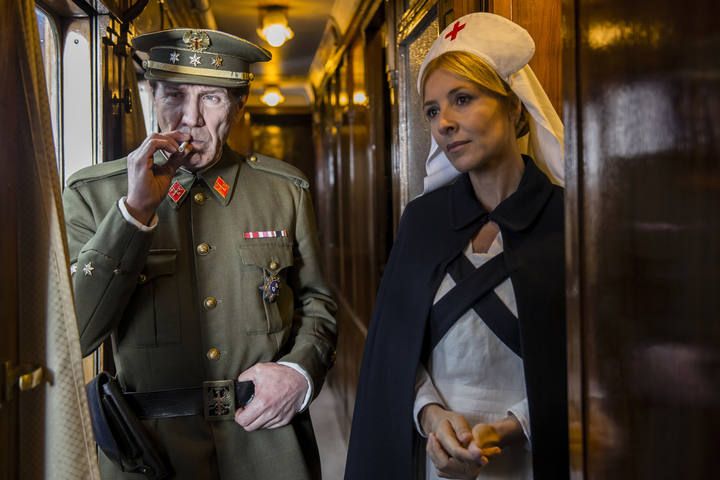
A lot of things happened since I last blogged about El Ministerio del Tiempo (The Ministry of Time), Spain's new hit TV show:
- The second season concluded, with 13 stellar episodes
- A book was published, containing 3 additional episodes from the second season (because transmedia storytelling is a thing)
- The rights for the show have been bought/optioned by several other countries, including China, Portugal, and France

They also broke out the wigs
By the second season, the show has found its footing and its audience - not that the first one wasn't amazing, but this time, every single episode delivered quality TV that you rarely ever see, especially when it comes to historical topics. The show navigates between entertainment, historical authenticity, emotional impact (without crossing over to melodrama), and presents an admirable sobriety when it comes to facing Spain's own history with all its ups AND downs. 

Here are some things that I absolutely loved this season (with minor spoilers):

1. THEY STILL HAVE CULTURE SHOCK.
26 episodes into a show, the main characters, who have been working for the Ministry and traveling in time for years, still have problems adjusting to the modern era, and their own sentiments and values still show at odd places. For example, Amelia, the team's history-savvy, early feminist leader fights for women's rights at every turn, BUT since she comes from the 19th century, sentences like "only women can be kleptomaniacs, it is in their nature" still fall out of her mouth occasionally. Alonso, our 16th century softie of a soldier, gets told halfway through Season 2 that maybe he should start bathing (even though he's just mastered the microwave). Pacino, the new guy on the team from the 1980s, is as amazed by modern technology as the medieval guy is (and the 19th century lady explains to him what a flash drive is). The show is FULL of small details like this, highlighting that these characters, time travelers as they may be, still have ingrained habits and values that can't just be flushed out from one day to the next.
A 19th century lady, Diego Velazquez, and a 16th century soldier
watch Terminator 2


Evil Americans trying to buy the
manuscript of Don Quixote
2. The Americans are evil - and have bad accents
Okay, so I don't think Americans are evil, but GOD IT IS REFRESHING to watch a show where a (badly done) American accent means that someone is an evil businessman who wants to make time travel into a source of wealth. The show takes several hilarious jabs at Americans and their knowledge of European history; and I am pretty sure that having a Spanish actors portray J. Edgar Hoover and Charlton Heston is one of these intentional jabs... Why hire a native speaker if one of our actors can do a passable accent, riiiiight?

3. The ministry works about as well as any ministry would
Disaster is usually only avoided because the people working there are bending the rules into pretzels - otherwise, the Ministry has some serious issues with its logistics. It is not perfectly equipped with high tech, or operating in complete secrecy. Things leak all the time, and they have to scramble to mitigate the situations; funding is cut all over the place, and they don't have enough agents to cover all their bases, which repeatedly leads to security breaches and administrative problems. The new boss they get knows nothing about history, but has 3 online degrees... All in all, they take at least as many jabs at their own administration as they do at the Americans.
They even get audited by the IRS. And spend an episode doing paperwork. (And still make it exciting)

There are entirely too many guns in this  "Ministry of Public Transport"

4. They definitely had more budget this season
Still not as much as HBO, obviously, but they ventured into larger concepts, compared to Season 1. We saw larger sets, more costumes, more extras, war camps, castles, and even part of New York City in the 1920s...

5. They go into WHAT IF stories and alternate history
New this season, we actually see the modern world change a couple of times due to historical events being altered. Some of them are minor, while the season finale delivers a whole alternate world - excellently done and heartbreaking at the same time. I don't want to spoil it, but I'll tell you that it was an amazingly well done episode, and it put our GOOD protagonists through internal struggles between their own privilege and the suffering of others. If you do alternate history, this is how you do it.

+1. Hungary was briefly featured!
Okay, so only Hungarians are gonna get excited about this, but the characters briefly visited Hungary at the end of the 19th century - and, unlike the American characters, the actress speaking Hungarian in this episode had no accent at all. And was singing an actual Hungarian song. It was perfect.

All in all, Season 2 presents El Ministerio del Tiempo at the height of its potential. It is entertaining, educational, exciting, and LOVABLE. And it shows no sign of slowing down. I can't wait to see what they come up with for Season 3.
(They still owe me some Romans. Apart from the ones they locked into the bathroom during inspection, that is.)

Eat both your hearts out, Doctor.


Thursday, June 9, 2016

Folklore Thursday: We really need to talk about the "Female Drakula"

Today is Folklore Thursday on social media! If you want to find out more, follow this link, or click on the #FolkloreThursday hashtag on Twitter! Hosted by @FolkloreThursday.

This weekend we went on a family trip to Slovakia to do what we enjoy doing best: Visit medieval castles. We do this periodically, once or twice a year, and since every hill and mountain sports a jaw-dropping view and a ruin on top, we can hit three or four of them in a day trip.

This weekend the first stop on our journey was the castle of Csejte (Cachtice), a scenic ruin in the Vág valley that was made (in)famous by Erzsébet (Elisabeth) Báthory - most commonly known in legend and pop culture as "the Monster of Csejte" or simply "the Blood Countess." Many foreign books, movies, websites, and other sources tag her as the "female Drakula," or, in more reasonable cases, one of the most vicious female serial killers in history.
Legend says that Báthory, a wealthy widow at the turn of the 16th and 17th centuries, believed that the blood of virgins could make her eternally youthful - and therefore started murdering young women, and bathing in their blood. According to historical sources, she killed about 80 of them before the Palatine and the King brought her and her accomplices to trial. Her name today is synonymous with torture and blood.

Which is sad, because the story is bullshit.

I'll let you do the historical math: 16th century, wealthy woman with no husband, a king who owes a ridiculous debt to her family and can't pay, while the entire country is in a political and religious turmoil that makes Game of Thrones look like the Teletubbies. Oh, and by the way, it is biologically impossible to bathe in blood, in case you were wondering.
Yup, Báthory Erzsébet's trial was a political one. She got imprisoned without a sentence in her castle, walled in until she died alone 4 years later; her two female servants were tortured, maimed, and then burned alive (they confessed under torture), her male servant beheaded and then burned, and her female doctor also burned alive for witchcraft.
And somehow this story is not bloody enough for people.
Go figure.

RANT INCOMING

Here is what pisses me off: People want this story to be true. They want it to be true so bad that even in the face of facts they try to salvage it. In the castle's own museum exhibit (generously supplied with fake Halloween spiderwebs), the sign read "While it is impossible to bathe in blood since it congeals too fast, medieval books could have had secret herbs and knowledge that we know longer know about."

This was, however, not the only thing that made me want to scream in Csejte. In the doorway of the castle someone was selling "Báthory energy drinks," some kind of a canned concoction dyed blood red with cherries. The castle (gorgeous, by the way) was peppered with Halloween-style decorations such as spiderwebs, plastic skeletons, and pictures of the "Iron Maiden," a torture device that Báthory is claimed to have used. In addition, there was an archery contest happening in the castle at the time, and one of the targets set up in a dimly lit hall was in the shape of a white-skinned woman with blood-red lips, and a large red heart which you had to shoot.
And in the entire, ENTIRE exhibit (or the touristic websites I browsed before traveling) not a single word about how the story might not be true.

Now, it makes sense that a tourist destination would want to bring in people by whatever means necessary - and clearly if anyone even finds their way to Cachtice, Slovakia, they will be here specifically to be titillated by legends of torture and gore. This allure is only elevated by a much beloved patriarchal trope: The sad, middle-aged woman jealous of the beauty of younger women, and turning violent out of vanity.
But would it really be so hard to make a footnote of history? Say something like "Here is the legend in all its gory glory, but be advised that the historical events were put into motion by politics and greed." I think the real story of women being dragged through the mud, humiliated, tortured, starved to death or burned alive, for the sake of asserting dominance, is way more chilling and emotionally intense than the fancy story of Once Upon a Female Vampire.
Just, you know. Less sexy.

STORYTELLING

In order to do some justice to Báthory Erzsébet as a storyteller, a couple of years ago I have created a full-hour storytelling performance that presents both sides. It is titled "Requiem for the Blood Countess;" in the first half, I tell the classic legend of blood and jealousy, and in the second half, I tell the historical story of the trial. People can decide in the end which one is worth talking more about.

Friday, April 22, 2016

S is for Stories of Slavery

Welcome to the A to Z Challenge! My theme this year is Representation and Diversity in Traditional Stories. I am looking for rare and interesting motifs in folktales, fairy tales, and legends that add variety to the well-known canon.


How do we tell stories of slavery? Every semester, I spend a class talking about how history is told, and I usually learn 2 things:
1. That almost none of my undergraduate students know what Uncle Remus tales are, and
2. That many of my undergraduate students would "rather talk about something happy."

This is not unique to students, however. Several articles have addressed the issue recently, pointing out how the history of slavery is often:

1. Sanitized (e.g. slaves called "workers" in textbooks)
2. Focused on white saviors
3. Presented as something that "wasn't so bad."
The fact that people don't know how talk about slavery is reflected in this hilarious YouTube series by a historical interpreter who portrays a slave character at Mr. Vernon, titled "Ask a Slave." Pay attention to the questions people ask her.

So, what do storytellers have to add to all of this?
Books. The stories are there. The books are there. Here is a list of some of the best ones:

People could fly
An American black folktale, published in a gorgeous book by Virginia Hamilton. The book contains several black folktales of slavery and freedom. The story that is named in the title talks about people finding their innate powers to fly, and flying away from a plantation to freedom.
(Read it the book with the same title. I also included a version in my own book, because it beautifully illustrates why people dream of superpowers in the first place)

Old Master and John
A group of folktales about John, the clever slave, tricking the Old Master. There are several of them, in several sources, portraying the endless struggle of power between oppression and resistance.
(You can read an entire chapter full of these stories in African American Folktales)

Adventures of High John the Conqueror
High John the Conqueror is an African-American folk hero surrounded by legends, folktales, and traditions. He is a trickster figure that looks out for his people, and plays the slaveholders for fools. There are many stories about him.
(Read them in this book of the same title)

Uncle Remus tales
Usually known as cute, funny animal tales, these stories were collected from slave communities, who told them as a form of subtle resistance, keeping their traditions, and making fun of the people in power through symbolism and metaphors.
(Read the book here)

You can also find several slavery-era American folktales and anecdotes in:
An Anthology of American folktales and legends
American folktales from the Library of Congress
American Negro Folktales
African American Folktales
A Treasury of Afro-American Folklore
Monsters, Tricksters, and Sacred Cows

In addition to folktales and historical legends from America, there are also some older stories involving slaves that are worth mentioning - because they are good stories. I tell my versions of both of them frequently, and they are always a great experience.

Rhodopis
One of the earliest appearances of the Cinderella tale type takes us back to Ancient Greece and Egypt. Rhodopis was a beautiful Thracian slave girl, bought and sold multiple times until she ended up in Egypt, and became a courtesan. It is not clear that the Cinderella story that follows (an eagle stealing her sandal and the pharaoh searching for her) is about her or another Egyptian courtesan named Rhodopis... but it is still a fascinating piece of story. Added bonus that for a while Rhodopis was a slave in the same household as Aesop, one of the most famous storytellers in Antiquity.
(Read about Rhodopis here)


Dionysus and the Pirates
A group of Tyrrhenian pirates decide to kidnap Dionysus, God of Wine and Pleasure (thinking he's just a pretty boy) and sell him into slavery. The deity wreaks havoc on their ship, burying it in vines and summoning wild animals, until finally all the pirates jump into the sea and turn into dolphins.
(Read the story here)


Also, for true stories of slavery, check out the amazing Finding Eliza blog, participating in the A to Z Challenge for the past 4 years!

What other books or stories should I add to the list?

Wednesday, June 17, 2015

5 Things to Love about El Ministerio del Tiempo, and 5 I Wish to See in Season 2

I have written previously about the pilot episode of Spain's new hit time-travel TV show, El Ministerio del Tiempo (The Ministry of Time). Since then, the first 8 episode season has concluded, and the show has been renewed for a second season by clamoring popular demand. I did a lot of the clamoring. In my opinion, it was one of the best TV shows I have watched this year, and believe me, I watch a LOT of them.

Here are 5 things I absolutely loved about the Ministry:
(Mild spoilers)

1. The team
The characters I gushed about in the pilot only got better as the season progressed. Amelia, the 19th century Spanish version of Hermione Granger, got to be the official boss of the trio, which I found really cool (usually "brains" and "leader" are two separate characters). An added bonus is that she knows the most about history, even though she is not the most "modern" of the three.
Next to Amelia, the "boys" also showed their very best. Alonso, the 16th century soldier, became the heart and soul of the team - a really lovable big softy. Julián, the 21st century guy, took a graceful supporting position, respecting the higher competence of his teammates whenever the situation required it. The group dynamic was not only excellent between the tree, but also between the rest of the ministry staff.

2. The continued culture shock
Unlike in other time-travel shows (I'm looking at you, Sleepy Hollow), culture shock accompanies the characters all the way through the season, and shows up in delightful small details. Alonso never learns to open vacuum packaging, and doesn't understand why women can vote; Amelia is shocked into silence by the sight of an airplane. The writers even paid attention to which changes they would take to more easily - the 16th century soldier learns to ride a motorbike and shoot a gun fairly quick, but struggles with changes in ethics and society. Amelia adjusts well to culture, but has trouble following government policy. All in all, their adjusting to the 21st century is a work in progress that does not get handwaved away.

3. The cameos
Since there is a definite educational aspect to the show, many famous characters from Spanish history make guest appearances, from Queen Isabel (played by the same actress as in the hit show Isabel) to a slightly neurotic and very lovable Velázquez who works as the ministry's sketch artist. Each episode is full of historical Easter eggs, and characters that inspire their own memes (such as Fifty Shades of Lope de Vega).

4. The humor
The show doesn't take itself very seriously, even if it pays close attention to historical detail. It is peppered with witty one-liners and off-hand history jokes, as well as well-placed time-travel situation humor. One of my favorite scenes is the glance at the Ministy's "smoking room" - a time-gate that leads to a theater's back door where people from all historical eras can stand around smoking in their various costumes, and no one bats an eye. All episodes, even the most action-oriented ones, are balanced out by delightful writing, and the obvious fun the creators had with it.

5. The costuming
Once again, attention to detail. Time agents visiting another era have to dress accordingly - but on top of authenticity, the designers also went for fun, and each mission brings up some new surprises in the fashion department, whether they travel into the 15th century, or the 1980's.

My favorite episode of the eight was probably No. 4, which was an awesome mix of (very meta) Isabel-references, some serious jabs at the Spanish Inquisition, and a medieval Groundhog Day.
With that said, I have seen most of the show twice by now, and I plan on watching it all over again.

And here are 5 things the fangirl in me hopes to see in Season 2:

1. Jaime el Conquistador and Queen Violante
This is the Hungarian in me speaking, but I would definitely lose my mind if Queen Violante made an appearance. She was a Hungarian princess married to one of the most famous kings of Aragon in the 13th century. She was a remarkable woman, and I would love to see her cross path with the Ministry.

2. Romans
The show has not gone to the Roman era yet, but it has been established that it's possible. Clearly, as a Classics person, I would pay to see that.

3. Crossover with Carlos I
TVE is currently working on a follow-up show to Isabel, based on the life of Charles V, Isabel's grandson and Holy Roman Emperor. Since the Ministry has already crossed with Isabel as a joke, they might do it again with Carlos.

4. The other ministries 
It has been established that the Spanish government is not the only one that can travel through time. I hope they will elaborate on that. In my mind, other European countries would get their own Ministries too, and we'd end up with glorious spinoff series all over the place. *cough*Hungary*cough*

5. Moorish Spain
I would love to see an episode take place in Granada or Andalusia before the Reconquista. TVE has been known to shoot its shows inside the Alhambra and other historical sites. I could watch more of that all day, every day.

Conclusion: Watch. This. Show.
Five stars.