Showing posts with label Narts. Show all posts

Sunday, April 30, 2023

Z is for the Zygomatic bone (Body Folktales)

This year, my A to Z Challenge theme is Body Folktales. Enjoy! 

The zygomatic bone is your cheekbone; it's part of the skull. Since I have already done cheeks this month, I'm going to look at folktales about skulls.

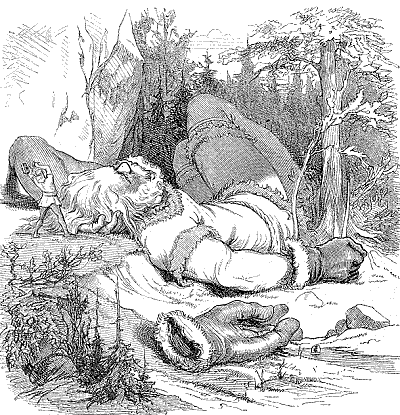
Sosruquo and the giant's skull (Abkhaz legend)

One of my favorite tales among the Nart sagas of the Caucasus. The heroes encounter a huge skull, and decide to bring its owner back to life, to ask some questions just out of curiosity. They revive the giant, who tells them of his life long ago. (In other versions, they mistake the skull for a cave, and sleep in it first.) As an archaeologist, I'd love to have this power.

Ottilia and the skull (Tyrol)

A poor girl is chased away from home by her cruel stepmother, and seeks shelter in a castle in the woods. Turns out the castle is inhabited by a talking skull, who turns out to be quite friendly. Ottilia carries it in her apron and cooks food for the both of them. At night, a skeleton appears, threatening the girl, but she holds out without fleeing, and thus breaks the curse that had turned the castle's mistress into a skull. (You can read a friendlier retelling here.)

Céatach (Ireland)

A long hero story featuring an apprentice magician who saves a girl from a giant named Steel Skull. he giant is undefeatable, because when his head is cut off, it rejoins his body and he becomes stronger. Céatach, however, finds a way to cut off the head and kick it far away, finally defeating the giant.

The wicked mendicant (India)

A prince is promised to a sinister mendicant before he is born. When he turns twelve, the mendicant comes to claim him, and takes him into the woods to a shine of Kali, to sacrifice him. The boy, however, finds a pile of skulls by the shine (the previous victims) and the skulls tell him how to survive. After he kills the mendicant, the brings the other victims back to life.

The laughing skull (India)

A banker gives out loans to people, agreeing to get repaid in the next life. Some ruffians borrow money from him with no intention of paying, and spend it on sweets. However, on the way they encounter a human skull that tells them his story: he didn't believe in next-life payments either, and yet he still could not rest in peace before his debts. The ruffians reconsider the loan.

The talking skull (Nigeria)

A hunter encounters a skull in the wilderness, and wonders how it ended up there. The skull speaks: "Taking got me here!" The hunter runs to the king, claiming he's found a talking skull. The king doesn't believe it, so he follows the hunter into the bush. The skull, however, remains silent. The king, angered by the wasted trip, orders the hunter to be beheaded. Once his head is left alone with the skull, the skull speaks: "What brought you here?" "Talking got me here!"... This motif (K1162) is typically African, and also appears in African traditions across the Atlantic.

The girl who married a skull (Efik people, Nigeria)

A girl decides to only marry a perfect man. A skull from the spirit world borrows body parts from various spirits, and turns himself into a dream husband. However, when he takes his smitten wife back home, he returns the body parts too, and she realizes too late she's married a skull spirit. Luckily, an old woman helps her escape and go back home. She even gets her a spider hairdresser. (I really like this folktale type for some reason, it has many exciting variants.)

Whew! That's the last letter done! Thank you all so much for following along, see you all tomorrow for Reflections! :)

Saturday, April 15, 2023

M is for Mustaches (Body Folktales)

This year, my A to Z Challenge theme is Body Folktales. Enjoy!


5000 rupees on a single hair (India)

A merchant in a foreign land needs to borrow 5000 rupees from a banker, but can't give any insurance. The banker asks for a single hair from his mustache. The merchant gives one, promising to return for it; the banker then asks for a better hair, saying the first one is crooked. The merchant, offended, refuses. The banker gives him the money. Later a different merchant hears this story and tries the same thing - but when the banker asks for a second hair, he nonchalantly gives one. The banker refuses payment. Moral of the story: you only win the respect of others if you respect yourself. (Or, in this case, your mustache.)

The adventure of the Narts (Ossetian legend)

The Nart heroes go adventuring, and Sirdon, resident trickster of the group goes along with them. They go through many adventures. Sirdon, in true trickster fashion, gets everyone into trouble, and then out of it. Eventually, tired of his games, the Nart heroes tie him to the top of a pine tree by his mustache - but even then, he manages to escape through trickery.

Narjkhyaw (Abkhaz legend)

This story is about a storm-hero of epic strength and weight, who sets out to marry the sister of the Nart heroes. Everyone is terrified of his might, so as he shows up at their feasting hall, the Narts decide to kill him with poison. They catch two venomous snakes and grind them into Narjkhyaw's wine. Suspicious, he makes other people drink from the poison first, and they die. Still, Narjkhyaw drinks too - filtering the drink through his mustache of steel. The wine becomes purified this way, and he later picks the snake bones out of his mustache. (The Ossetian Nart hero Khamis also has a mustache of steel.)

See also: the tale of the proud king who passes himself off as a baby with a mustache. I blogged about this story in my Feminist Folktales series.

Heroes with mustaches of steel. Yay or nay?

Thursday, April 13, 2023

K is for Knees (Body Folktales)

This year, my A to Z Challenge theme is Body Folktales. Enjoy!

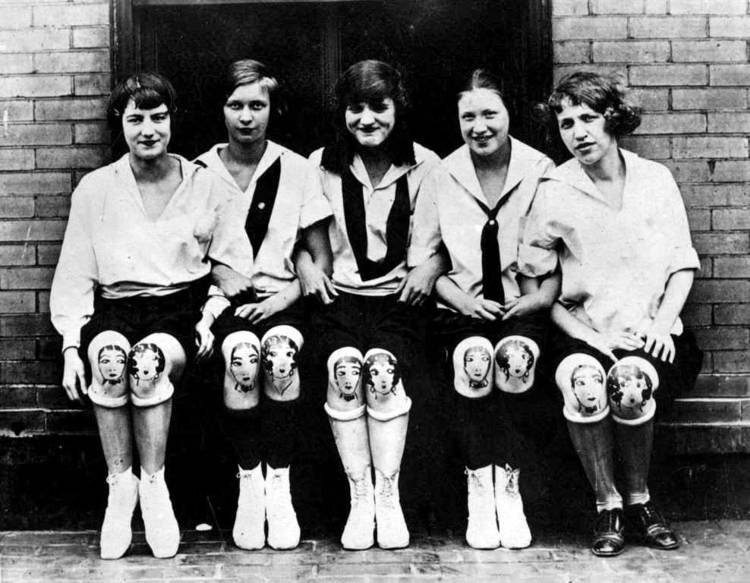
(Learn more about painted knees here)

How Sosruquo was born (Abaza legend)

One of the most famous heroes of the Caucasian Nart sagas is Sosruquo (Soslan), who is born from a stone and burns so hot that the blacksmith god has to temper him. The smith grabs the red-hot baby with tongs around his knees and plunges him in water/milk repeatedly, making his whole body strong like steel. However, his knees where the tongs covered him remain vulnerable, much like Achilles' heel. (Warning, mention of attempted sexual assault in the linked text.)

The treacherous brothers (Greece)

Three princes set out to find a magic lamp that can save their kingdom. The youngest ends up saving three princesses from three different ogres. One ogre has his strength in his knees: he kills people by luring them to lay their head on his lap (promising to de-louse them), and then crushes their skull between his knees. The prince, despite his brothers' inevitable betrayal, is victorious in the end.

Lunja (Morocco)

Princess Lunja follows some birds into the wilderness and ends up being kidnapped by a ghoul woman. When her cousin comes to the rescue, she manages to escape, but the ghoul is in hot pursuit. Lunja manages to trick her into thinking she'd run even faster if she ate her own knees. She doesn't. (The young couple has other adventures after that, but all is well in the end.)

How human beings got kneecaps (Ekoi people, Nigeria)

A woman sees a very pretty white rock in the river, and repeatedly wishes to have it. Her wish is so strong that the rock jumps out of the water and sticks to her knee; after that, she can't get rid of it anymore. And ever since, humans have had kneecaps.

The betel-nuts (Itneg people, Philippines)

This is a long mythical story about a woman who marries the sun. I am including it for a smaller detail: whenever there is a gathering of people in the story, they send out betel-nuts to invite the guests. The nuts tell those who are invited that they have to come, otherwise they grow on their knees and make them unable to walk. Some heed the warning and some don't.

"My father is a fish and my mother is a man" (ATU 705)

This is a folktale type popular in Scandinavian countries and Arab traditions. It generally involves a couple that wishes for a child, but the man accidentally eats the miracle pregnancy food (fish) instead of his wife. A daughter is then born from his knee. She later becomes queen and goes through several adventures; in the end, she is recognized by her lost husband by the riddle of her birth.

What do you think of these stories?

If you got a painting for your knee, what would it be? :)

Wednesday, April 28, 2021

Tarot Tales: X is for X of...

Welcome to the 2021 A to Z Blogging Challenge! My theme this year is Tarot Tales. I am making a selection of folktales, legends, and other traditional stories that correspond to tarot cards. Storytelling and tarot go well together. Do other stories come to mind? Let me know in the comments!

Today I once again post about four cards instead of one: the Tens (X's) of the Minor Arcana. Tens are the highest non-court cards, and thus they represent the completion or fulfillment of the symbolism of their entire suit.


Ten of Cups
This one is a lovely card (although I struggle to differentiate if from the Nine of Cups...). It is about joy, happiness, love - living a whole and harmonious life filled with nurturing and meaningful relationships. Cups represent water and emotion, therefore this is all about nice warm and fuzzy emotions.

A young man sets our from a cold and desolate village to bring the Bird of Happiness to his people. As he climbs higher and higher in the mountains he encounters various monsters that threaten him, and demand payment for letting him pass. The payment is always killing or hurting someone else from the village, so the young man repeatedly refuses, and suffers the consequences instead. Finally, blinded, starved, and bruised, he finds the Bird of Happiness. The bird heals him and carries him down to the village, singing a beautiful song that makes the sun shine, the fields bloom, and everyone's heart fill up with joy.


Ten of Swords
This is a baaad card. It is about deep pain, grief, loss, and despair. It is about hitting rock bottom, going through your darkest hour, being betrayed, hurt, abandoned. Lots of hard, painful feelings. The silver lining of this card is the proverbial "nowhere to go from here but up." 

The Nameless Son of Urizhmag (Ossetian Nart saga)
One of the most heartbreaking stories I know. The great hero Urizhmag kills his own child in a freak household accident. The child's spirit begs the ruler of the Underworld to let him return to the land of the living, to go on one adventure with his grieving father. He receives permission, and returns to his father's village. Urizhmag does not recognize him, but he decides to go on an adventure with the brave young warrior anyway. When they return, the boy has to go back to the Underworld; his mother realizes too late who he was. She runs after him, begging the sun to stand still on the horizon, giving her a few precious moments to catch a glimpse of her child before he disappears again.


Ten of Wands
As an overachiever, I relate to this card a lot. It is about taking on too much, and struggling to carry all the responsibility. It is about things weighing you down. This card usually signals that you have to learn to say no, and choose your battles carefully. The workload is too much, and something's gotta give.

The Magic Hen (Hungary)
There are many legends in Hungary about a creature called a lidérc, a kind of spirit that can be both helpful and dangerous. In one story, the lidérc takes the shape of a black hen that never stops working. It brings its owner whatever she desires - gold, silver, diamonds, food, etc. - and keeps bringing more and more of it until it is told to stop (or until the house fills up). If it doesn't get a new task, it takes the owner's soul to Hell. It is very hard to get rid of: the only way to kill a lidérc is to give it a task it cannot fulfill.


Ten of Pentacles
Another nice card. It is about long-term wealth, success, and financial security. Basically it represents achieving a place in life where you can provide safety and comfort to your own family - whether they are blood relations or otherwise. It is about an abundance of material resources that create a secure and nurturing environment. 

A version of the King Thrushbeard tale, but with a better outcome. A pasha's wise and clever daughter refuses to marry anyone she doesn't love. When she rejects a very high ranking suitor, her father grows furious and orders her to be married to the most wretched man in the city. Such a man (a fire stoker from a public bath) is selected, and married to the girl, then they are both kicked out of the palace to fend for themselves. However, the young woman, Uns-ul-Juloos, does not panic. She starts befriending her new husband, little by little, and he turns out to be a kind, trustworthy man. She sells her jewelry and begins renovating the small hovel they live in. She also helps her husband find a new job, and slowly but surely their lives turn for the better. By the end of the tale, with the help of a friendly jinn, they become a wealthy and respected couple. They live in their own palace comfortably, and even manage to make peace with the girl's parents and family.

These cards all represent great highs and lows. How are you feeling about them? 

Thursday, June 1, 2017

The Road of the Warriors - Archaeology Day storytelling, 2017.

Once again, I just got back to Hungary in time for Archaeology Day (the last weekend of May). Following the tradition of the past two years, I was invited to the Damjanich János Museum in Szolnok, to participate in their weekend events with a brand new storytelling program tailored to this year's theme. After Sarmatians in 2015, and Gepids and Goths last year, 2017 was the year of the nomadic cultures of the steppe - Scythians, Sarmatians, Huns, Avars, Hungarians, Cumans, and the Jász people. 

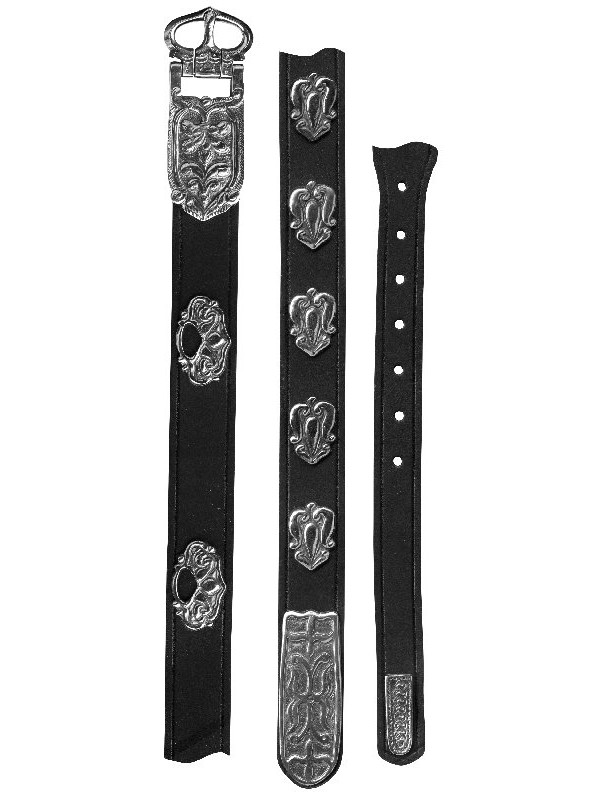
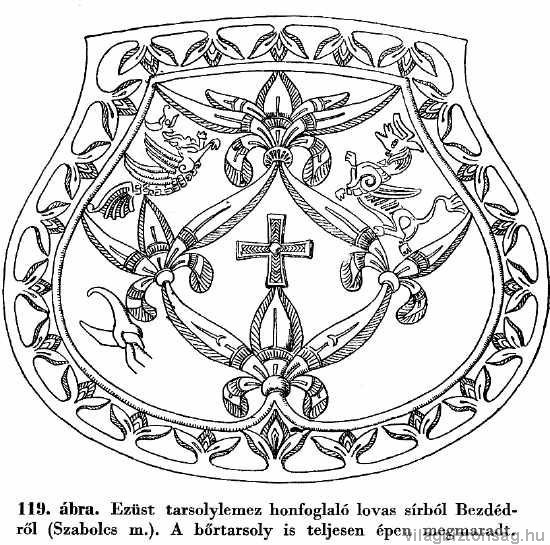
I love dressing up for museum gigs, and this one was no exception (after the past 2 years, I felt kind of obligated to keep up the trend). Luckily, I already had a Hungarian conquest era (9th century) outfit lying around with all the necessary accessories (from my days as a traditional archery reenactor). I left the bow and arrows at home, but the final appearance was pretty complete anyway. The belt ornaments, pouch decorations, and the braid disc in my hair were all replicas of actual conquest era archaeological finds. The traditional belt pouch was also great for storing such authentic items as my cellphone, room keys, and lipstick. 

After last year's scramble to find Gepid stories, this year I had the opposite problem: I had a wealth of folktales, legends, and traditions to pick from. I made sure that I had at least one story for every culture listed above - while some were easier than others, I still ended up with a colorful and rich lineup of tales to tell (and once again, I had tons of fun with the month-long research). There were two sets of storytelling on Saturday afternoon, one for younger kids and families, and one for adults and older children. 

The first set was titled Treasure of Griffins. I filled it out with traditional Hungarian folktales that preserved a lot of the motifs and symbols of our pre-Christian, shamanistic world view and traditions. I told the story of the Winged Wolf (one of my all-time Hungarian favorites), the tale of the Seven-legged Horse (this one has a female protagonist that rescues the Sun, Moon, and Stars from the Dragon King), and the story of Csorha János, a folktale hero from the Jász region of our country, who has magic powers and uses them to hide from a princess who can see everything. It was great to see how these old, formulaic stories work wonders in live telling with an audience - especially with children. There was a little boy in the front row who kept muttering out what will happen next in the story, and then nodded sagely when he turned out to be right... Event the adults rewarded certain plot twists with laughter or gasps. 

I was happy to see that several people returned for the second set as well. This one bore the title Footprints on the Road of the Warriors (the Road being our name for the Milky Way), and it was my chance to tell the longer, more complex historical legends of my repertoire. In chronological order, I started with the Scythians, telling the tale of Arsakomas and his blood brothers from Lucian of Samosata's Toxaris, or Friendhsip. It is a story of adventure, where a Scythian warrior proves that friends are more valuable than money or land, and his two blood brothers help him elope with his love, and win a war. It was tons of fun to tell. Next up came the Huns. For them, I told my version of Attila and the Comedians, a tale that I crafted and fleshed out from a medieval chronicle. It was both familiar and new for a Hungarian audience, and got great reactions from them (we do love our King Attila). For the Avars, I told the legend of the Csörsz ditch (Csörsz-árok), a system of Roman era fortifications that people later made up stories about. Since it is very close to Szolnok, it played well with the local audience. In the end, since I had time left over, I added the Ossetian Nart legend of Alimbeg's daughter to the lineup - one of my favorite Nart sagas, and also a story that features intriguing representations of gender.
This second set was especially lovely. People stayed and listened, allowing me to take my time fleshing out and delivering each story without a hurry. Some of them specifically showed up to the event for the storytelling, and they stayed to talk afterwards. I also loved the fact that I was telling these stories inside the museum, surrounded by archaeologists knowledgeable of all these cultures, and artifacts that represented them. If there was ever a perfect setting for telling these age-old tales, this was definitely it.

I am looking forward to what next year's Archaeology Day may bring!

Thursday, October 27, 2016

"If our lives be short, let our fame be great": Nart sagas at the Silk Road House

For those of you just tuning in: I have fallen in love with the Nart sagas a while ago. I worked with them for a museum program for Archaeology Day, told them for MythOff, read them for Epics A to Z, and have been waxing poetic about their greatness for quite a while.
Which is why this storytelling event at the Silk Road House in Berkeley was such a perfect convergence of passion and storytelling. 

This summer, John Colarusso's translation of Nart Sagas (the Circassian and Abkhazian sagas) got its second edition, and Tales of the Narts (the Ossetian sagas) was published in English for the very first time. Since I was in San Francisco for Epic Day just in time for 3rd Friday, the traditional storytelling day of the Storytelling Association of California, everything came together for a concert celebrating the Nart sagas. On top of all that, it turned out that John Colarusso himself also just happened to be in town, and he did not only graciously accept our invitation to the event, but even agreed to present a short opening lecture. I was more than a little star-struck. He told us about what makes the Nart sagas unique and important, talked about their connections to European traditions, and pointed out some linguistic curiosities about the languages they have been translated from. It was a fascinating glimpse behind the scenes of how these books came to be. Professor Colarusso also very patiently helped me with the correct pronunciation of Ossetian names when I cornered him in the kitchen of the Silk Road House before the performance...

Since I have been working with the Ossetian sagas for a while now, I was given the honor of filling the first half of the event with the stories of my choice. I opened with the saga that first made me fall in love with them - it is called the The Narts and the Wadmer's Bones, and it talks about the Nart heroes unearthing the giant skeleton of an ancient hunter, and bringing him back to life to ask questions. As an archaeologist, I have always loved this tale, and now that I am (finally) reading First Fossil Hunters by Adrienne Mayor, it has become even more fascinating. 
Following up the giant's story, I told a short anecdote to introduce Shirdon, the Narts' trickster. He is like Loki, except he is treated worse, and, in Colarusso's words, he is more motivated. In Who deceived whom? the Narts try to cheat him out of his one fat ram, saying the end of the world is near - but in the end, Shirdon gets the last laugh. This story led me to the longest and most elaborate tale of the evening, A Nart Expedition, in which the heroes take Shirdon along on an adventure just to bully him for entertainment... until Shirdon decides to take revenge by tricking them into mortal danger, and then saving them in the last moment. It is a fun story, but also has a lot of very human moments. I especially like the fact that it has a very close parallel in the Irish Fianna stories (The Hostel of the Quicken Trees), and I have not found a similar tale anywhere else so far.

The second half of the evening was dedicated to Shatana (or Setenaya), the great matron of the Narts, a powerful and wise woman who keeps showing up in many of the tales. She is "the mother of one hundred", the matron of the war band of the Narts. I shared this set with two amazing storytellers. First, Cassie Cushing (the great matron of the Kaleidoscope storytelling café) told the story of the hero Shoshlan's conception and birth, elaborated with a shorter story about Shatana's golden apples. She wove several versions of the tale into one, making it sound like an enjoyable piece of gossip ("Some say..."). Since that story exists in so many versions, her solution to picking one was on point... Next, Tim Ereneta told the story of Urizhmag and Shatana's divorce, the Nart variation of the well-known folktale type of the Clever Wife ("Take from the house whatever is dearest to you..."). He did it with a lot of humor, while preserving the wisdom at the core of the story, and Shatana's character. Finally, I closed the evening with the saga of How Shoshlan rescued Shatana from the Lake of Hell, another long-time favorite of mine. It is a tense story, but it has a happy ending, and says a lot both about Shatana and the Nart heroes in general.

As far as storytelling events go, this was a near perfect evening. It was also a long-time dream of mine to do a concert like this, introducing people to the Nart sagas. We had a full house, and even a film crew from a Comparative Mythology program; people seemed inspired by the stories, and several of them said they will go and read the books now. That is what I consider a true compliment to an event like this: People discovering new tales, and storytellers passing them on. 

Tuesday, June 2, 2015

Storytelling in Sarmatia: Archaeology Day in Hungary

Every year in the spring Hungary celebrates Archaeology Day: Museums and other archeo-related institutions organize events for the public to make the occupation seem less mysterious. They open up labs and storage rooms, and educate people through letting them touch things they would normally only see through glass.
(Artifacts. I mean the artifacts.)

This year, since I got home in time to participate, I landed a gig with the Damjanich János Museum in Szolnok, who were planning a Sarmatian theme for their program. The city lies in a part of Hungary that used to be Sarmatian territory back in the good old Roman times, and pretty much any time someone puts a shovel down, Sarmatian stuff starts jumping out. I have always loved Sarmatians, and I had three good reasons to be excited for the gig:
1. I already had a period dress ready, courtesy of my Sarmatian SCA persona (follow the link for an awesome blog on the topic);
2. The gig involved telling Ossetian Nart sagas, on the account of the historical, ethnic and cultural relations between the Ossetians and the Sarmatians, and I freaking love those stories;
3. One of my best friends and former Archaeology classmate works at the museum, and I got a chance to see her.

I arrived to the museum with a pretty nasty cold, but my friend and the rest of the staff took excellent care of me. I got a place to rest, and tea, and food, and volunteers to usher people in and out of the storytelling space. Everyone was super excited for the stories, and they paid a lot of compliments to my dress reconstruction, which made me feel proud, since it came from people who deal with Sarmatian things on a daily basis. My friend, who presented the "Artifact Petting Zoo" portion of the program, even invited me to show the dress off to people as an illustration.
The first round of storytelling was the program for children titled "Giants, heroes, and tricksters." Since all the kids immediately got stuck at the "archaeology sandbox" digging feverishly for finds, the program started a little late. A little boy arrived first with his grandma, and was very shy; but once I started telling him a story, other flocked in too, and eventually I had a neat little audience of 15 or 20 people.  I told my favorite Nart story, in which the heroes dig up the bones of an ancient giant and bring him back to life to learn about how people lived in the past. If there has ever been a fitting story for Archaeology Day, this one was it. I also told the tale where the Narts go adventuring and they all get stuck in magical chairs, just to be rescued by Sirdon the Trickster before a bunch of giants eat them. I love this story not only for the humor, but also because it is a clear parallel to one of my favorite Irish Fianna legends, The Hostel of the Quicken Trees.

The second round was supposed to be stories for adults, but since it was still early in the afternoon, many people brought their kids with them anyway. I didn't mind. They were very well behaved, and sat in the front row with eyes wide, reacting to the stories with gasps and giggles and noises of wonder. The adult program was titled "The Time of Heroes," and it drew an audience of at least 30-40 people, including most of the museum staff.
This time I had more time, and an audience with a longer attention span (since I was the last program, they had nowhere else to rush). I first told the Birth of Soslan, and how he was tempered in wolf's milk (the incident I mentioned here). Then I told the story of how Soslan saved his mother Satana from the Lake of Hell and how he was accepted as the greatest hero of the Narts (ironically, not for saving her, but for failing to save her, because he stopped to help people along the way who were in greater need). I told the fun little bit about Satana and her husband Urizmag getting a divorce - a folktale type when the wife can take what's "dearest to her" from the household, and she takes her sleeping husband (this one is so popular they even used it in a movie). After this we circled back to Soslan winning a wife through a dance-off (also mentioned on the link above). The kids loved this one. At this point the audience stared asking for "one more story!" every time I finished one, which is the greatest compliment a storyteller can get. I told a short funny story about Sirdon the Trickster tricking the Narts when they tried to bully him.
In the end, I decided to jump into the tale of Alimbeg's Daughter - the sex-change story I posted about last week. The audience listened with keen interest, and the lyrical nature of the tale seemed to carry everyone along. They seemed more shocked by Alimbeg having seven wives (a man even muttered "poor guy") than his daughter turning into a man, actually. I chose option 3 from my musings - but the story, when told, needed a lot less tweaking than I expected. It also probably helped with the adults that I told them Hungarians have the same story in tradition - it sounded less foreign that way.

All in all, it was a dream gig. I got to tell stories that I love to people who appreciated them, and especially children who were completely enchanted. I got to do it in a museum that holds artifacts that appear in the stories, wearing a dress that evoked the people who probably told the same tales two thousand years ago.
And Night of the Museums is only three weeks away!

Saturday, May 23, 2015

Story Saturday: The princess becomes a prince

This is me, musing out loud about representation.

I am preparing for a performance for Archaeology Day: I'm going to be telling Ossetian Nart sagas at a museum with a great Sarmatian collection (Sarmatians were nomadic people of Iranian origins who lived across the border from the Roman empire, and Ossetians are also people of Iranian origins who live in the Caucasus, hence the connection). I have a dress made and everything!
One of the stories I am working on falls into the tale type called the Shift of Sex (ATU 514), something intriguing I mentioned before when I talked about diversity in storytelling and also about LGBT+ related traditional stories. Now that I am actually working on my own version of telling it, I am doing some serious thinking about how to frame the story.

The summary
In most versions of this folktale I have encountered, the basic story is the same: Family's without a male heir, so their daughter goes out into the world dressed as a boy, and does many heroic deeds. Eventually she rises so high in the favor of the king/community that she is given a leading position/becomes heir. In order to fulfill her role, she is offered a wife, which throws a wrench in the plan, since her secret identity would be outed on the wedding night. Eventually, through blessing or curse, the girl turns into a man, marries the princess, and lives happily ever after.

The question
These folktales were told and recorded decades, often hundreds of years ago. How do I tell the story to make it ring true to people of trans/queer identities today?

The problem
In its current format the folktale suggests that the protagonist can only be accepted and happy if she physically transforms into a male body. Also, because of the different time these stories were born in, the physical transformation is necessary for the marriage to happen. In all versions the intended wife is kept in the dark, and is only presented with the resulting male body, without knowing about the transformation, or having an opinion about it.

The options
1. Build up to the sex change, suggesting it was the girl's own identity/wish/hope/goal all along. Make the male identity (and expression) a personal choice rather than a disguise out of necessity. This is not unprecedented in the tales: At least one version quotes the princess saying "men's clothes have always fit me better anyway." In this case, probably call the protagonist a boy after initially stating that they were born female.

2. Leave out the sex change / male identity and tell the tale as a lesbian love story. This would need more fiddling since the story is still set in a time and place (the Ossetian version anyway) where the protagonist couldn't come out as a girl AND marry another girl at the same time... probably. Female warriors do exist in Ossetian tradition, though.

3. Tell the tale as in option 1, but leave out the actual physical sex change. Have the protagonist come out to the chosen wife and be accepted (and loved). As far as everyone else is concerned, there is no change from what they know.

4. There are probably other options as well. I would love to hear comments and opinions on this.

Thursday, April 16, 2015

N is for the Nart sagas (Epics from A to Z)

(I have written about the Nart sagas once last year, but they are amazing enough to be featured again.)

Origins
The Nart sagas are the shared epic heritage of several ethnicities that live in the Caucasus. Some researchers suggest that the original core of this large corpus of stories was the Ossetian sagas (a group of people of Iranian roots), but now they are widely told by surrounding groups of various origins as well. There is a great English edition for many of the Circassian, Abaza, Abkhaz, and the Ubykh sagas, but the Ossetians were only available in Hungarian to me. John Colarusso seems to have been working on an English translation for a while now.

The Heroes
The Nart heroes are all one happy, magically endowed, slightly violent family. The matron presiding over it all is Satanaya, a mix of a fertility goddess and wise adviser. The male heroes include Soslan (or Sosruqo) who was tampered in wolf milk, but the milk didn't cover his knee (sounds familiar?) and because of that, he had a limp; Hamic and his son Batradz who he gave birth to because his wife was a frog princess (epics, amirite?...); as well as many other generations before and after.

The Highlights - 10 Reasons the Ossetian Nart Epics are Epic

1. Two heroes having a dance-off for the hand of a lady.
It's a refreshing change from people beating each other into the ground (which also happens a lot). Dancing happens on the blades of swords, with a bowl of water on one's head, and also on the feast tables around the food (and this was the only way I could picture it).

2. This story ending, after the hero wins the hand of a lady: "And they lived very happily for a while. But they realized that they were too different, and they decided to go their separate ways." Peaceful divorce ever after. Good for them.
3. This prophecy one hero comes by in the Underworld (which, by the way, is also a place that gives Dante a run for his laurels): "One day men and women will live peacefully as equals."
Important words from a culture where kidnapping wives was common practice at the time.
4. There is a God of Wolves called Tutir. I rest my case.
5. Sirdon the Trickster, Curse of the Narts. Dog person, single father of three. Pretty much described (accurately for a trickster) as "the Narts can't live with him, can't live without him." He is very close to Loki in attitude, but he is bullied way worse than the Norse trickster. Looks like the Narts torture him for kicks. To which he responds with nasty mischief of his own. Very layered character.
6. The practicality of the tale when Satana wants to tamper a newborn and red-hot hero baby in wolf milk (as you do), and her husband's response is: "Where the heck am I supposed to get wolf milk?!" He then goes on to ask for the help of the Mother of Dogs, and she herds a couple of hundred she-wolves into a pen. To which our hero responds: "Umm... okay, now how am I supposed to milk them?"
And really no one ever responds "Hey, we are in a mythical saga, it will just magically happen!"
Nope. He milks them with his own two hands.
7. The Nart hero Hamic has a Mustache of Steel.
And he kills a snake with it. Enough said.
8. The time the Narts got God on a technicality: God cursed them saying that no matter how much wheat they work a day, it will only amount to one bucket of grain. So they started only working a handful of wheat each day, and they still got a full bucket out of it. Sheer brilliance.
9. Smart woman moments such as "I am not marrying you, hero of the Narts, because your mother is evil" or "If you don't leave my tower right now, I will put your eyes out with my scissors." Nart women might not be equal to their heroes, but they sure do run things in the background. And they do raise a raiding army every once in a while.
10. The moment one hero explains how he learned not to hurt women: He tells his companions of a time when he was a guest in a house where only women lived (men were away) and he overheard them talking among themselves in a language they didn't know he spoke. He listened to their conversations and learned from them. In the adventure he claims that he would never hurt a woman for making a mistake (namely, even for cheating!) because he listened and now he knows better.

Thursday, September 18, 2014

MythOff Bowling Green: Newbies take the cake!

We had Bowling Green's (and, in fact, Ohio's) second ever MythOff event tonight!
And we saw that it was fun.

The venue was brand new: We have moved to Café Havana, the home of the Bowling Green Open Mic Night, and were greeted with the roaring sound of delicious fresh-made smoothies. Thus, MythOff was preceded by Smoothie Hour, until everyone had ordered all the heavenly beverages of their heart's desire, and settled down for the tales.
Our host, once again, was Tom (also, incidentally, the host of Open Mic), and he carried us with eloquence and empathy through the evening.
The lineup was as follows:

Round One: Giants!
In the Norse corner, Jamie opened the night with the tale of Thor's Jounrey to Utgard. In the Ossetian corner, bringing the Nart sagas to MythOff for a historic first time, was yours truly with the story of Soslan and the Giant's Skull (this tale, in which the Nart heroes excavate, reassemble and resurrect a giant from his skeleton, has a soft spot in my archaeologist heart).
The prize was the Stallion of Giants, a "full-sized horse" that was supposed to make you feel like a giant yourself (a tiny, tiny horse in a tiny, tiny box, obviously). It was awarded to the tale that sounded the most sexually charged when taken out of context (Tom's take on the questionable wording we both used describing giant parts and giant sounds). Jamie, a first-time MythOff participant, carried the steed home to his feasting hall.

Round Two: Love and War
This round pitted two first time MythOff tellers against each other with thundering success. They did not only brave the stage and the stormy seas of myth, but they also battled the demons of the blender and the steaming machine, masterfully subduing them and incorporating them into their tales. In the Irish corner was Flannery, an Open Mic veteran with a passion for Irish stories, who delivered the most upbeat version of Deirdre of the Sorrows that I have ever heard, until she brought it to a stunning and shockingly deep ending. In the Russian corner competed Zack, our SCA bardic champion, with the tale of Ilya Muromets and the Magic Sword, which was as unknown as it was spellbinding.
The prize for the round was the Arrow of Love and Hate, an obsidian arrowhead fashioned into a necklace. It was awarded for the story that reflected most the nature of the storyteller performing it. It was awarded to Flannery, for her feminine and thoughtful take on Deirdre.

Round Three: Resurrection
This round was, sadly and tragically, cut short because one of our storytellers, Dan, had to leave to take care of an emergency. The other teller, Clarke, a second time MythOff participant, did take the stage though, with a gruesome yet colorful Aztec myth about the origins of the human sacrifice.
The prize for the round was the Globe of Resurrection, a shining bouncy ball symbolizing the ability to bounce back from the worst. It was awarded to the storyteller who seemed to be the most present in his tale. The vote unanimously went to Clarke on that one.

In the audience, we had a shifting number (around 30) of rapt listeners who followed us into the world of myth and awarded the tales with applause and appreciation.

All in all, it was an epic night. And a really nice strawberry banana smoothie.

Friday, July 4, 2014

10 reasons why the Nart epics are epic

I spent most of last week reading the 500-page Hungarian edition of the Ossetian Nart sagas. It was a special treat for a lot of reasons.
While a huge chuck of the Nart corpus has been published in English in the wonderful translation of John Colarusso, the Ossetian sagas, which some people argue are the original Iranian core of the epics, have yet to be translated. In the meantime, archaeologists of the Sarmatian era (an Iranian people related to the ancestors of the Narts) in Hungary have presented an amazing translation.
The Nart sagas tell us about a group of legendary heroes who essentially are one big, sometimes dysfunctional, over-powered badass family. There is a matriarch on top (Satana), and about four generations of archers, lovers, fighters, and even the mandatory trickster. The stories are not less complex or engaging than any other epic from around the world - yet they are a lot less well known.
So, here is a sampling of the epic that is the Ossetian Nart sagas:

1. Two heroes having a dance-off for the hand of a lady.
It's a refreshing change from people beating each other into the ground (which also happens a lot). Dancing happens on the blades of swords, with a bowl of water on one's head, and also on the feast tables around the food (and this was the only way I could picture it).

2. This story ending, after the hero wins the hand of a lady: "And they lived very happily for a while. But they realized that they were too different, and they decided to go their separate ways." Peaceful divorce ever after. Good for them.

3. This prophecy one hero comes by in the Underworld (which, by the way, is also a place that gives Dante a run for his laurels): "One day men and women will live peacefully as equals."
Important words from a culture where kidnapping wives was common practice at the time.

4. There is a God of Wolves called Tutir. I rest my case.

5. Sirdon the Trickster, Curse of the Narts. Dog person, single father of three. Pretty much described (accurately for a trickster) as "the Narts can't live with him, can't live without him." He is very close to Loki in attitude, but he is bullied way worse than the Norse trickster. Looks like the Narts torture him for kicks. To which he responds with nasty mischief of his own. Very layered character.

6. The practicality of the tale when Satana wants to tamper a newborn and red-hot hero baby in wolf milk (as you do), and her husband's response is: "Where the heck am I supposed to get wolf milk?!" He then goes on to ask for the help of the Mother of Dogs, and she herds a couple of hundred she-wolves into a pen. To which our hero responds: "Umm... okay, now how am I supposed to milk them?"
And really no one ever responds "Hey, we are in a mythical saga, it will just magically happen!"
Nope. He milks them with his own two hands.

7. The Nart hero Hamic has a Mustache of Steel.
That he kills a snake with. Enough said.

8. The time the Narts got God on a technicality: God cursed them saying that no matter how much wheat they work a day, it will only amount to one bucket of grain. So they started only working a handful of wheat each day, and they still got a full bucket out of it. Sheer brilliance.

9. Smart woman moments such as "I am not marrying you, hero of the Narts, because your mother is evil" or "If you don't leave my tower right now, I will put your eyes out with my scissors." Nart women might not be equal to their heroes, but they sure do run things in the background. And they do raise a raiding army every once in a while.

10. The moment one hero explains how he learned not to hurt women: He tells his companions of a time when he was a guest in a house where only women lived (men were away) and he overheard them talking among themselves in a language they didn't know he spoke. He listened to their conversations and learned from them. In the adventure he claims that he would never hurt a woman for making a mistake (namely, even for cheating!) because he listened and now he knows better.

I'll have to read the sagas over again to fully savor every awesome detail. It is definitely a repeat read.