Sunday, March 20, 2022

A wake for a storyteller

Today is World Storytelling Day. And also, very fittingly, the birthday of my paternal grandfather, Zalka Ottó. He would have been 86 years old. He passed away on January 7th this year.

I have mentioned him often in interviews, books, and on social media. He was the great storyteller of my family, personally responsible for me becoming a professional one (he was never paid for his stories, although many people would have given him cash to shut up every once in a while). His funeral was well attended, but the wake ended up short, before we could bring out the stories about him. To me, storytelling is an integral part of mourning a loved one. They live on with us through their stories. And luckily, I have many about Grandpa Ottó. Not only from memory, but also in recording. In the past decade, he had more than one health scare (as the family saying goes, he died twice but survived both). After the first one, I started recording his stories and recollections on my phone.

Grandpa was always telling stories. Tales, anecdotes, memories. He was a real life trickster, always up for a joke and a prank. When I was a kid, my two cousins and I spent weeks at my grandparents', and grandpa was always in charge of our entertainment. In the evenings, when they managed to wrangle us into bed (after drinking, peeing, drinking again, etc.), grandpa told us endless bedtime stories. As an adult, whenever I visited, we were always talking, always chatting. Grandpa could make a story about anything, from last week's meeting of the Gardening Club all the way to his own childhood, or embarrassing things about the neighboring village. Sometimes he even told folktales - always dressing them up as if they had happened just around the corner. I remember when I first read Baron Munchhausen tales, I felt greatly offended that someone had stolen my grandfather's true stories... Since then, I have encountered many of those "true stories" in various places, including the Irish folklore archives and a Nasreddin hodja folktale collection. Trickster tales travel well. And real life tricksters keep them alive.

Here are some stories about Grandpa Ottó. About him, for now. I'll break our the actual tales later on.

1. It was impossible to upset grandpa. Three children close in age can do some serious damage to a household and a garden: we broke a cherry tree in half by climbing it, we fed green walnuts to the pigs, we made a mud bath in the vegetable patch. We often took Grandpa by surprise, but he always laughed about it. I don't remember him ever snapping or yelling at us for anything.

2. Children had free reign of the gardens. We could eat any fruit or vegetable, climb any tree, use anything for our games. He actively helped us with the latter: he taught us how to make horns from squash leafs, whistles from elder branches, bow and arrows from reeds, and... how to impale a potato on a sharpened stick and then fling it very far. Yep, not all our activities were child safe, to say the least, but we mostly got away unharmed. (My dad, on the other hand, managed to hit my mom with a corn cob arrow once. They have divorced since.) My husband, who works at a kindergarten, paled a little when I told him that I spent autumn days as a child sitting on a porch with a basket of chestnuts, a drill, a knife, and a box of matches, making little figurines...

3. Grandpa practiced the wisdom of Tom Sawyer, and liked to trick people into doing tasks for him by making them seem very exciting. Those people were usually us children. He would take us to the cucumber sorting machine, and we spent hours hauling cucumbers onto the conveyor belt and then squealing excitedly as we watched them fall. He also bestowed on us the privilege of accompanying him to weighing raspberries, or organizing raspberry picking contests about who got the most full buckets. (My grandparent sold produce on the side.) My favorite, however, was the time when he convinced us that you could find dinosaur bones in the backyard. There were indeed bone fragments there, from pigs long past, and as a result we dug a whole new vegetable cellar for him.

4. When I was a kid my grandparents had pigs, chickens, and ducks. The chickens gave a lot of eggs, supplying the whole family. Grandpa had a story about the secret of the abundance, and he happily told it to anyone: He claimed that all you have to do is when a hen lays an egg, you have to snatch it up quickly. The hen looks back, sees no egg, and quickly lays another one... We always wanted to try this trick, which is why it was usually our task to crawl into the chicken coop and gather all the eggs. He also told us that he fed the chickens with beets before Easter, and got red eggs. We believed him.

5. Our grandparents' garden shares a fence with  a castle on one side, and a nursery school on the other. Whenever grandpa worked in the garden, the nursery kids would run to the fence and yell his name. He goofed off for hours for them. He told Snow White often, and lined up the kids, telling them they were the Dwarfs, and naming each one from Grumpy to Bashful. Once a father complained angrily that the neighbor was calling his kid dopey... Grandpa had some explaining to do.

6. There were three basic rules for us kids: 1. "Kids are allowed everything." 2. "A kid should eat ten pounds of dirt a year." (But not at once, my poor mom pleaded.) 3. "Grandpa doesn't only look, he also sees things." It was true, he was a good observer, and taught us the same.

7. He was also good at math, and liked puzzles. Till the end, he loved to do his daily crosswords. Once, we were on a bus with him and he overheard some teens struggling with their math homework. By the time we got to our stop, he patiently and kindly explained it to them. (Anyone who tried patiently and kindly explain math to teens knows this is a memorable feat.)

8. One of the central characters of grandpa's storytelling repertoire was a man named Szabó István of Sokorópátka, the stereotypical dumb and vain local politician. There were many stories about his stupidity (and some where he was actually witty). Grandpa told the same stories to my dad and aunt when they were kids, and the whole family kind of believed he'd made them all up. Until one day my aunt walked into an exhibit, and there he was, Szabó István of Sokorópátka, a real historical figure! (Wit a Wikipedia page.) Whether he was really that dumb or not... that's another story.

9. Grandpa was also not above making a fool out of himself for our entertainment. Once we took a hike and came across a boat on a small lake. We all had to get in the boat, and then get out - but Grandpa, leaving last, tripped, and fell dramatically into the water. He walked, dripping, all the way home, and we laughed until we cried. I only realized much later that he probably did it on purpose. Similarly, whenever we were stung by nettles, Grandpa always made a show of explaining how it is very healthy, and then rubbing his arms and legs with nettles all over. It seemed liked the coolest thing at the time.

10. It was one of Grandpa's personal stories that back in his soldier days a sergeant decided to order all recruits to paint the sky. One by one they stepped forward, received the order, and decided it was impossible. When Zalka Ottó came up, he stepped forward, saluted, and asked the sergeant what color he wanted. I think this says a lot about him in itself...

Bonus: Grandpa often told us that when he died he wanted to be buried with his teeth in a bag around his neck. So that when an archaeologist finds him in a hundred years, they would be surprised to see a man who had all his teeth inside his chest. As an archaeologist, I appreciated the thought, although we did not end up complying with it.

Archaeology, on the other hand, brings me to paraphrase my favorite Roman epitaph.

He has died many times, but never quite like this.

I hope you are well in the world above.

Monday, March 14, 2022

Five gemstone stories that are sus

So, as I have announced last week, I am doing Gemstone Folklore as this year's A to Z theme! I have done an insane amount of research in the past months, and not all of it is going to make it into my final posts. So, I made some extra posts. This is the first one.

Enjoy!

Five gemstone stories that are not "ancient"

While researching gemstone lore I kept running into enticing hints of "legends" and "folktales" that I tried to track down - and completely failed. I spent a whole post ranting about this: the crystal healing community tends to pass around stories that are labeled traditional and ancient, even though they are neither. I made a list of the ones that cost me the most time and frustration.

Fluorite, the Home of Rainbows

Many, many crystal handbooks claim that "according to folklore" (no one names which one, this is usally a red flag), fluorite was believed to be "the house of rainbows." I have done a lot of research into fluorite folklore because it was Mineral of the Year in Hungary in 2018 - but lo and behold, absolutely no evidence of such folklore emerged.

Amethyst and Dionysus

This one sounds like a real Greek myth: Dionysus, god of wine, chases a maiden who prays to be rescued from persecution. Artemis turns her into pure white crystal. Dionysus, feeling regret, pours wine onto the crystal, staining it purple. You can find this "myth" all over the internet, but in reality, it is not ancient or Greek at all: it was the invention of a 16th century French poet. See the original text here.

Venus' onyx nails

Another commonly shared "ancient myth": Venus, goddess of love is taking a nap, when her son Cupid comes along, and trims her nails with his arrow. The nail clippings fall into the Indus river and turn into onyx. Now, ónyx does mean fingernail in ancient Greek, but there is no trace of this actual myth, which has several dubious elements: 1. how does one even clip a fingernail with an arrow, 2. why would Venus' fingernails be black... As far as I can tell, the story shows up in the 18th century in esoteric writings, and has been passed around without a source ever since.

Labradorite and Northern Lights

This one is allegedly an Inuit legend, about how the Northern Lights were originally trapped in rocks, until a brave warrior (or shaman) broke them free. But some of the lights still remain inside, giving labradorite rocks their special hue. I have tried my darndest to track down this story, but it does not appear to have anthropological sources listed anywhere. Once again, crystal books passing it around without reference.

Anahí's ametrines

Various online sources talking about ametrine (a mixture of amethyst and citrine) quote a legend about an Ayoreo princess named Anahí who fell in love with a conquistador named Don Felipe de Urriola y Goitia. The famous Anahí mines in Bolivia were either her dowry, or her dying gift to he husband (stories vary). Once again, no one quotes a source, and I could not track down a single info about this either in English or in Spanish, outside of gemstone websites.

+1 The Malachite Box

Generations of children have adored the beautiful tales of Pavel Bazhov, published in the volume titled The malachite box. While many people count them as "folktales from the Ural mountains", Bazhov has done serious editing and rewriting on the stories - so, they are technically not folktales, but rather, literary stories based on motifs of folklore.

Now, a few things I'd like to note

1. Just because a story is not "ancient" or folklore, it can still be a good story. I am not trying to say that tradition tales should be the be all, end all of storytelling.

2. My problem with these stories is that people keep making false claims about tradition and other cultures through them. Especially with indigenous traditions, such as the Inuit, outsiders should respect the stories and not misquote or misattribute them.

3. I would love to be proven wrong. If anyone has actual sources for any of these stories, please do share!

4. Next week, I'll be sharing some actual folk stories about gemstones, together with sources, so come back on Monday!

Tuesday, March 8, 2022

10 folktales about women in war

 It is International Women's Day. The sun is shining, flowers are blooming, and thousands of women and girls (as well as men) are crossing the borders of Ukraine, fleeing from war. They fear for their fathers, sons, husbands, friends; they are carrying their children, seeking shelter and hope as the unimaginable happens around them. On the other side of the border, women (and men) are waiting with supplies, cars, open doors, open hearts. And then there are the women who don't flee - because they can't, or because they have decided to take up arms and defend their homes. And yes, there are women on the other side too: women fearing for their loved ones, and protesting the war.

I have been struggling to put stories to this whole situation. I have looked at folktales and legends about peace, but they alt felt hollow and insensitive. But I always post folktale selections for International Women's Day, and this time, the topic felt like a given. I want to share old stories about women who live through war. They fight, they heal, they make peace, they survive, they sacrifice, they do heroic things.

Folktales hold memories, hope, and values; they have important messages for the future. 

Let's listen to them. And let's help, any way we can, so the current stories in the making can have better endings.

The king who trusted his kingdom to his daughters (Jewish folktale)

I have blogged about this one before. A princess who is kind and caring receives a magic box that turns her teardrops into diamonds. Using the diamonds, she travels her cruel father's kingdom, helping people any way she can. When the neighboring ruler attacks the country, no one is willing to fight for the cruel king - but when the princess sets out to meet the army, people are willing to follow her. The enemy is surprised by their numbers. Instead of fighting, she starts negotiations. War is avoided, and she falls in love with the neighboring prince.

The wall of pastries (Indian folktale)

A greedy king is very fond of pastries, but refuses to share any of his wealth with anyone. His clever cook, however, keeps stealing small amounts of pastry, and feeding them to the poor. When an enemy attacks the kingdom, suddenly an impenetrable wall of pastries appears, blocking their soldiers. The cook tells the king about her secret activities, and how small kindnesses saved the kingdom. The king learns generosity, repents for his greediness, and rules wiser than before.

The women of Weinsberg (German legend)

King Conrad III besieges the city of Weinsberg. The women trapped inside the walls negotiate for their freedom; eventually, the king agrees to let them walk away from the city, with as much as they can carry on their shoulders. With this promise, the women all pick up their husbands or sons, and they walk out of Weinsberg. The king keeps his word, and lets them go.

Airmed, the healer (Irish legend)

Airmed is one of the Tuatha De Danann, the daughter of Dian Cecht the famous healer. She takes part in the Second Battle of Mag Turied against the Fomorians, caring for the wounded and the dying. When her jealous father kills her brother, she cries so much that 365 kinds of healing herbs grow on his grave, watered by her tears. She collects and catalogs them, but Dian Cecht grows angry and scatters them again. Airmed's knowledge is lost, but the herbs remain to help people.

The nine daughters of Khan Afrat (Uyghur legend)

Khan Afrat goes to war with his sons and they all perish. His nine daughters take over the kingdom, dividing the duties of ruling, keeping the peace, and caring for their people. When an enemy attacks them, thinking them weak, they resist the attack, and - with the help of the Queen of Deserts - manage to defend their kingdom.

Teapots over the door (Hui legend)

In times of a rebellion a poor woman, defending an orphan girl, earns the respect of the enemy general. He promises not to hurt her, and tells her to mark her door by hanging a turnip above it. She runs home, and tells everyone in the village to hang turnips above their doors. When the enemy arrives, however, she realizes that her neighbor has no turnip. She lends them her own, and replaces it with a teapot. This way, she gives her life for her people - and in her memory, Hui people have been hanging teapots, or teapot pictures, above their doors.

Mulan (Chinese ballad)

The story well known from the Disney movie goes all the way back to a 6th century Chinese ballad. Mulan goes to war instead of her father, and serves in the army for ten years, dressed as a man. No one figures out her secret. When she returns, she puts on a woman's dress, and reveals her identity to her stunned fellow soldiers.

Puskás Klári (Hungarian legend)

The men of Gyergyószárhegy (Transylvania) are sent to war, leaving their home village behind. The Turkish sultan sends the Tatars, thinking the village to be easy pickings. Puskás Klári, however, organizes the defense of her home with the women, children, and old men left behind. They dig pots into the ground, throw beehives at the attackers, and Klári herself kills seven soldiers with various household objects. And then she walks home, lays down, and gives birth to triplets. By the way.

(Women fighting the Tatar invasion is a very common theme in Hungarian folklore. I blogged about them in Hungarian here.)

Flower Mountain (Hungarian legend)

There is a place called Virághegy (Flower Mountain) near Nagybánya. It was named after a legend: in the time of a Tatar invasion, people fled to a wise woman who lived on the mountain. She led the refugees to a valley, and transformed them all into flowers, to hide them from the enemy.

Lady Béla (Hungarian legend)

A very famous Hungarian historical legend. A girl inherits her father's castle and lands, and she lives a double life, pretending to be two sisters: one brave and strong, and one kind and friendly. When the Tatars come, she organizes the defense of her castle, and resists the siege, until - with the help of a neighboring knight - she breaks the attack and defeats the enemy.

Monday, March 7, 2022

The 2022 A to Z Challenge Theme Reveal - Something shiny!

It's that time of the year again! We are coming up on April, the month of the A to Z Blogging Challenge. I have been doing this challenge for 10 years! Wohoo! It is always great fun, and it has led me to many new stories, fabulous new blogs, and lots of discoveries.

In the past 9 years I've always had a theme:

Weird Princesses (2013)
Tales with Colors (2014)
Epics A to Z (2015)
Diversity A to Z (2016)
WTF - Weird Things in Folktales (2017)
WTF Hungary - Weird Things in Hungarian Folktales (2018)
Fruit Folktales (2019)
Folktales of Endangered Species (2020)
Tarot Tales (2021)

This year I am continuing the tradition of doing a "Mythology and Folklore" theme. (Obviously.) Drum roll, please! The theme for the 2022 A to Z Challenge on this blog is:

GEMSTONE FOLKLORE!

This one has been a long time coming, because it requires an incredible amount of research. In fact, I think this is the hardest challenge theme I have ever done! I started the research part way back in December, although some of these posts have been in the making for years.

There are a couple of things you need to know in advance:

1. The reason why research has been so hard is that there is a lot of "gemstone folklore" out there that is not properly sourced. You can read my epic rant about this here.

2. For the sake of clarity, we need to talk about definitions. Minerals are solid, naturally occurring inorganic substances. Some precious materials are, however, organic in origin - such as amber, jet, pearl, or coral. Gemstone, technically, is any mineral or petrified material that has been cut or polished, to be turned into jewelry. The posts this month will vary in that some will be about minerals, some will be about organic precious materials, and some will be about actual gems. I am using "gemstone" in the title of the series because it is the most easily accessible term to the average reader.

3. I have come to love minerals from the direction of science. We learned some gemology at the university as part of my Archaeology studies. I generally love shiny things, and I am endlessly fascinated by the chemistry of how minerals form, and the part they have played in human culture for millennia.

4. Which means, this theme will talk a lot about folklore, but not about the esoteric use of minerals. Simply because I don't believe in that. If you are interested in the stance of science and psychology on the topic of "crystal healing", I highly recommend this book.

WAIT! THERE IS MORE!

Since April is still pretty far away, I plan on posting a few stories in advance. Stories that talk about precious stones in general - and also stories that are doing the "gemstone lore" circuit, even though they are not actually folklore. So, watch this space for more :) 

Are you participating in A to Z this year? Are you doing a Theme Reveal? Share your link in the comments so I can visit you back!

Wednesday, March 2, 2022

The most beautiful folktales from Ukraine

I have been trying to put together a list of folktales about peace and war, but it all feels awkward and is hitting too close to home. So instead, I made a list of my favorite folktales from Ukraine. Some Ukrainian, some Rusyn, some Cossack, some Hungarian. It is a diverse country with many beautiful traditions. (Links in the titles)

The first pysanky

The origin story of the famous Ukrainian painted eggs. One year a harsh winter arrives early, and people collect half-frozen birds that could not migrate away in time. They care for them in their own homes throughout the winter. When the warm weather comes, the birds fly away, and bring beautiful colorful eggs as a sign of gratitude: the first pysanky. (This one also has a picture book retelling.)

The Christmas spiders

One of the most beautiful Christmas tales I know. Spiders explore a family's tree, covering it in silver thread - and, true to the miracle of the season, the threads actually turn into tinsel.

Ivan, the giant's son

A poor man chases his youngest son away, and the boy takes service in the home of a friendly giant. When he grows into a young warrior, the giant sends him out in various directions to defeat vampires. He hacks his way through cursed forests and makes deserts bloom again. He also kills a dragon and rescues a princess.

The princess who slapped a dragon

A Transcarpathian variant of a well-known tale type, but with a marvelous twist. Three superpowered brothers rescue a princess, but on the way back a shapeshifting dragon takes the place of one of them. The brother left behind has to find a way down the Glass Mountain to reveal the truth before the dragon marries the princess. When he does, the princess takes matters into her own hand. Quite literally.

The tulip soldiers

A Hungarian historical legend from Transcarpathia. A boy (who later grew up to be revolution leader Rákóczi Ferenc II) protects his mother's tulips from a sudden hailstorm. Later, when their castle is besieged, the grateful flowers transform into colorful soldiers, and protect the boy and his family.

The boy who wanted to walk on the clouds

I translated a whole collection of Transcarpathian folktales, but this one is probably my favorite story in the collection. A boy dreams of walking on the clouds while everyone believes he is a fool. He sets out on an adventure, climbs a mountain, and eventually finds his way to the Cloud Kingdom - proving that dreams do come true.

Boris, Son of Three

A boy is adopted by three brothers, who name him Boris, Son of Three. He sets out on a great adventure involving treasures, firebirds, and the Sun itself, until he finds a kingdom and a happy ending.

The poor man and the Raven Czar

A giant raven makes a man choose between his meager wealth and his son - and the poor man chooses right. In exchange the raven czar offers him a reward, and the son of the man sets out to claim it. I like this story because it subverts some old folktale tropes.

The origin of the Tisza River

A magical Rusyn legend about the river Tisza, which flows from the Ukraine across Hungary until it joins the Danube in Serbia. A kind fairy from the salt caves turns two fearsome giants into two bears - then, to protect people from the bears, but still give use to their strength, she turns them into two great rivers.

Sirko and the Wolf

An old dog is chased away from home for being useless. He befriends a wolf, who comes up with a plan to help. He pretends to steal a child, so the dog can rescue it; after that, the dog is cherished by people again. In exchange he invites the wolf to a feast in secret - and when people try to attack him, the dog helps him get away.

Foxy-Loxy

I just wanted to add here that Ukrainian folktales have a really fun female trickster, a vixen that gets back at a mean wolf in various creative ways. Yay!

Wednesday, January 19, 2022

Dear 'gemstone lore' writers

This is going to be a weirdly specific rage post. Deal with it.

So, I have been researching folktales, legends, and myths about gemstones for a few weeks now, and I have some things I need to say. To anyone who writes content (digital or print) about "gem lore."

From a professional storyteller and folklore researcher, all y'all. Listen up.

1. CITE. YOUR DAMN. SOURCES!

You might think what you are doing is not academic writing, so why cite anything at all, right? Wrong. If your entire spiel is about the ancient traditions and age-old beliefs surrounding gems, then you better be able to demonstrate that your stories are actually real traditions. Or at least that you got them from somewhere more substantial than the 'gem lore' site directly above yours on the Google hit list.

This is what happens when I search:

- "Oh, look! That sounds like a neat story. I'll look it up in Google Books." (Because I already know better than to do plain Google.)

- First 10 hits: "Crystal Healing", "Lore of Precious Stones", "Crystal Power", etc.

- "Okay, so maybe one of these actually published books cites a source for the myth/folktale/legend I am looking for?"

- No, they don't.

- "Alright, let's try searching pre-1950s, crystals were not a thing yet."

- No trace of the story.

- "Okay, there is no way I have an MA in Roman archaeology and I have never heard of this one oddly specific Roman myth before."

- No Roman primary source databases mention anything of the sort.

- I do, however, start noticing that the story's wording barely changes from book to book, or from website to website. Copy and Paste are at work.

- 4.5 hours in, still no source in sight.

- My hair is turning grey.

Please, for the love of god, or Goddess, or spirits, or angels, or anything that's holy, do your homework before you make claims no one can verify! Primary sources (Ancient Greek or Roman authors, Egyptian papyrus texts, medieval manuscripts, etc.) are best, but sure, I'll take any other publication in a pinch. With a source.

If you don't know the source... try to find it. Or preface with "the Internet claims..."

2. IF IT DOESN'T HAVE A PLOT, IT'S NOT A STORY

The other thing that bugs me. You need to straighten out your terminology. Because most of what is listed under "Legends and Folktales" sections is usually neither.

"Ancient Romans used to believe emeralds improved eye sight" is interesting, it is even verifiable (Suetonius! Is the source!), but it is not a story. It is neither myth, nor legend, nor folktale. It is a belief. Traditionally speaking, beliefs turn into stories when they acquire a plot. Where someone does something once upon a time.

And while we are on this topic:

3. MYTH, LEGEND, AND FOLKTALE ARE NOT ALL THE SAME THING

This is for advanced learners right here, because most writers don't know the difference either. But there is a difference. All of the above belong to the large umbrella of "traditional stories", which means, they have been around for centuries. But.

Myths belong to belief systems and religions, and are (or were) generally believed to be true. Legends were originally religious stories of saints that were also believed to be true. Generally, legends were supposed to be historical - taking place in a more specific past, rather than a mythical past, an attached to historical persons, places, or events. Some languages (like Hungarian) even have separate words for religious and non-religious legends. Folktales are stories that are handed down through generations in the oral tradition. They don't have an author, they exist in many variants, and they change from telling to telling. They take place in a generic "once upon a time world" or simply the human world, and they are usually told as entertainment, rather than plain truth.

So. The tears of Phaethon's sisters turning into amber, when they cry for their brother who tried to drive the sun god's chariot: Greek myth. Polycrates, the tyrant of Samos wearing an emerald ring that is lost and recovered in a stroke of luck: Greek legend. The prince who climbs a mountain of gemstones and rescues an enchanted princess: Greek folktale.

"Fairy tales" can be a sub-genre of folktales (more accurately called wonder tales), but they can also be stories written by someone. Which takes us to...

4. LITERARY TALES ARE NOT ANCIENT

Stories. Written by someone. Are not "ancient lore." Now, I don't actually fault you for this one. Sometimes it is super hard to tell real traditional stories from written ones, especially when the Internet picks them up and throws them around without acknowledging the author. Case in point: the legend of "the maiden Amethyst and Dionysos" I keep coming across is actually not a Greek myth at all. It was invented by a 16th century French poet. It was never the part of the Greek mythical tradition.

Sometimes authors also publish their own stories as "folktales", either because they don't understand the term, or because they think it will sell better. This is how you get hundreds of fake "ancient Chinese wisdoms" and "old Native American legends" and such crap on the Internet.

Which is bad. Because then you are attributing something fake to someone else's tradition. 

Which is why you need to check your sources. Full circle!

5. YOU CANNOT BLAME EVERYTHING ON ANCIENT EGYPT

Seriously, just stop.

Whew. Okay. So now I feel better. So I'm gonna end on a positive note:

Researching stories and citing sources is a skill set you can learn. When in doubt, ask a research librarian, a folklorist, an archivist, or a storyteller. We are all happy to help with oddly specific research questions! And the good news is, those stories are out there. And they are marvelous, I promise.

Sunday, January 16, 2022

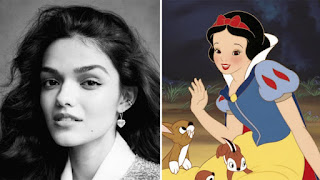
Hispanic Snow Whites do exist

Once again, for the people in the back: folktales have variants. In the oral tradition, they exist in many versions. Snow White is not a single story (even though most people only know the Grimm version). It's the name of a tale type, which exists pretty much all around the world. Therefore no, Snow White is not always white, neither literally, nor figuratively. For example, in some cases, she is orange. In the earliest Grimm manuscript, she is blonde with black eyes. And many versions don't note color at all, just that she is beautiful.

People have been getting their undies in a bunch about Disney casting a Hispanic actress for a live-action Snow White. Discussion on artificial categories aside, here is a select list of Hispanic Snow White folktales. 

You might note that the princess' coloring is the least exciting thing about them.

Blanca Flor (Spain)

Aurelio Espinosa collected some versions of Snow White, one of them called Blanca Flor (White Flower). In this one the (birth) mother tries to get rid of the beautiful girl by reading spells from a spellbook, and sinking her into a rock. She is rescued with the help of the Virgin Mary, and taken in by robbers. The mother poisons her with a silk shirt, but when a sexton takes the shirt off, she comes back to life.
In another version, from Asturias, the stepmother tries to lock the princess in to keep her beauty hidden, but doesn't succeed. She is rescued by a group of men, and in the end decides to marry the servant who revived her.

Blanca De Nieve (Dominican Republic)

Andrade's classic collection of folktales from the Dominican Republic has a whole lot of Snow White variants. My favorite is the one where the queen (named Snow) is not Snow White's mother at all; she just finds out from her mirror about the beautiful girl, and sends out a firefly to find her. Turns out, Snow White lives among the dwarfs in the woods. She is engaged to a prince, and he has ordered the dwarfs to guard her. When she is poisoned, a fairy appears and wakes her up from her death-like state so she can marry her prince.

Blanca Nieves (Puerto Rico)

There are several Snow White variants collected from Puerto Rico (link above). My favorite is the one where the queen's servants feel pity for Snow White, so instead of killing her, they drop her off in the mountains at the dwarfs' house. When she is later poisoned by her stepmother, the dwarfs simply take her to a doctor, who removes the piece of poisoned apple from her throat. She then falls in love with one of the dwarfs and marries him.
In another version in the same collection, the girl is adopted by robbers. The envious (birth) mother hires a beggar woman to stick a pin into the girl's head. The robbers find her dead; their leader pulls the pin out, reviving her, and then they go and hunt the assassin down.

Blanca (Mexico)

Also known as "the princess who studied to be a priest", collected in Los Altos. A vain queen sends out spies, strategically eliminating women who are more beautiful than her. This includes her own daughter, who manages to survive and find refuge in the wilderness, where she becomes the Queen of Thieves. Her mother manages to kill him with some enchanted slippers, and the thieves put her in a coffin and float her out to sea. Monks find the coffin, take her slippers off, and she comes back to life. They dress her as a man, and she studies for priesthood, until one day her parents come to hear her preach. She takes her father's confession, and tells him the whole story. Her father kills the mother, and restores Blanca to being a princess.
In another Mexican version, from Jalisco, the princess is chased into the woods by her stepmother. She befriends three wolves, who are actually princes cursed by the evil queen. The wolves attack the palace, kill the queen, and then the eldest asks the princess to split his head with an ax. He turns back into a prince, and they get happily married.

(Apparently, poison slippers are the preferred method in many Mexican versions.)

Blanca Rosa (Chile)

In this version, the girl exiled by her stepmother ends up in the abode of forty thieves, who worship her as the Virgin Mary. The queen finds her and sticks a poisoned pin into her head. The thieves put the dead girl into a coffin and float her out to sea. A prince finds her, but when he pulls the needle out of her head, Blanca Rosa wakes up so frantic and panicking that he just sticks it back in... He revives her again later, and asks her to be his wife. His spinster sisters try to get rid of Blanca, but of course, she survives in the end.

The envious stepmother (Argentina)

In this version, the (nameless) princess is chased into the wilderness by her (birth) mother, and a gang of robbers adopts her as their mom (!). In the end, when a kind revives her by taking off her enchanted ring, the princess only agrees to marry him if he pardons all of her robber sons.

Now, let's be real: none of this means that the Disney movie is going to be any good. (Most live action Disney films... *cough* aren't.) If you ask me, anyone would be better off if any of these awesome variants were adapted instead.

But honestly neither the whiteness, nor the European-ness of Snow White is a constant thing in folklore. Just sayin'.