So, this was my second year in A to Z, and the first time I had a theme going.
Tons of fun, people.
If you are reading this because you wandered in through A to Z: Cheers!
If you are not: Give it a thought next year. Great motivation to keep a blog going. Or two. Or three.
I did not get through even a fraction of all the princesses I have encountered so far as a working storyteller. Maybe I'll write my next book on the topic. Tales of Superhuman Powers was last year's NaNoWriMo baby, so maybe A to Z will give birth to the next...
Anyhow. In the meantime I am thinking about resurrecting a blog I started last fall under the name StorySpotting, you can find it here. It's a blog for hunting traditional stories in modern media.
As a summary for A to Z this year, similar to last year, here is a little something about female characters who did not get mentioned this year, but I love'em anyway.
Aicha the Merchant's Daughter, Demon-Slayer and adveturer (Algeria) (included in the upcoming book)
Blossom, a poor girl who befriends a dragon fond of flowers (China)
Circe, descendant of the Sun, sorceress with a vengeance against men (Greece)
Dalila the Trickster, thief extraordinaire (Arabian Nights)
Eithne, faery maiden turned mortal nun (Ireland)
Flame, or Miss Flame, Anansi's one-time fiery lover (Ghana)
Green Princess, a lady who can make flowers bloom and forests grow from the ground (Hungary)
Hiiaka the Monster-hunter, little sister to the goddess Pele (Hawaii)
Ilona, Fairy Queen of Hungary, equal parts royal and petty (Hungary)
Joan of Arc (obviously) (France)
Katamari's wife, a fisherman's daughter who fights a dragon with a single knife (Japan)
Lynet, the brave maiden in Sir Gareth's legend (Arthurian)
Maledisant, the Sassy Lady in Sir Breunor's legend (Arthurian)
Nang Sida, the Thai version of the princess Sita, from the epic Ramayana (Thailand)
Ogomiebunmielayo, the daughter of the Sky God, whose name suitors have to guess (good luck!) (Ghana)
Princess Mouse, the princess with the silkiest coat and the shiniest eyes (Finland)
Queen Anait who taught her husband what hard work is, and it saved his life in the end (Armenia)
Rhodope, the ancient Greek version of Cinderella who happened to be a prostitute (Greece)
Sarolt, wife to Chief Geza, who drank and rode like men and once killed a guy with one punch (Hungary)
Three Strong Women, a tall tale that might not be Japanese but is awesome anyway (Japan)
Urdr, Verdandi and Skuld, the Norns (Nore mythology)
Violetta, the girl who runs a series of practical jokes on a prince and gets away with it (Italy, Pentamerone)
Wanda, warrior princess and then queen (Poland)
Xiangu the only woman in the group of the Eight Immortals (China)
Yhi th Sun, main character in the prettiest creation myth ever (Australia)
Zaynab, daughter of Dalila, thief and trickster of the best kind (Arabian Nights)
See you all next year!
Showing posts with label weird princesses. Show all posts
Showing posts with label weird princesses. Show all posts
Friday, May 3, 2013

Tuesday, April 30, 2013
Z is for Zzzzzzz, or, the many stories of Sleeping Beauty
As an archaeologist, I have always been drawn to the story of Sleeping Beauty. I mean, finding a castle that has been fully magically preserved for a century? Heck yeah.
Anyhow, every once in a while you hear people mentioning "the real Sleeping Beauty" story just to illustrate how dark and gruesome the Grimm tales really are. There is, in fact, a less child-friendly version of the tale - but it is not Grimm.
The tale is called Sun, Moon and Talia, and it is from Italy, included in the collection called the Pentamerone. The basic idea is about the same as the well-known and Disneyfied story, with one small but significant exception: instead of prince finds girl, prince kisses girl, girl wakes up, it is prince finds girl, prince kisses girl, girl fails to wake up, prince tries for a while, prince goes home. Nine months later the still sleeping princess gives birth to twins. Well, that'll wake a girl up.
(Anyone having flashbacks to Almodovar's Habla con ella?)
I have told this story in high school, it was great fun.
Another version of the tale comes from the Arabian Nights. In this one we have a very twisted version of the "childless queen makes a wish" story motif: She says "I wish I would have a daughter even if she was allergic to flax!" What the heck, lady.
Anyhow, Sittukhan is born and she is indeed allergic to flax. Her condition, however, is actively used in the story to smuggle her out of her castle and into a prince's garden who, like a real gentleman, wakes her up first and then proposes to her. Things go right, things go wrong, and in the end of the story, it is the prince who has to fake his own death to win her back since now she is rich and independent. Go princess.
And with this interesting tidbit, we conclude this year's run of the A to Z challenge. It has been great fun! Thank you all for visiting and sticking around. The blog will keep going as usual, with more stories and some musings along the way.
Happy Z!
Anyhow, every once in a while you hear people mentioning "the real Sleeping Beauty" story just to illustrate how dark and gruesome the Grimm tales really are. There is, in fact, a less child-friendly version of the tale - but it is not Grimm.
The tale is called Sun, Moon and Talia, and it is from Italy, included in the collection called the Pentamerone. The basic idea is about the same as the well-known and Disneyfied story, with one small but significant exception: instead of prince finds girl, prince kisses girl, girl wakes up, it is prince finds girl, prince kisses girl, girl fails to wake up, prince tries for a while, prince goes home. Nine months later the still sleeping princess gives birth to twins. Well, that'll wake a girl up.
(Anyone having flashbacks to Almodovar's Habla con ella?)
I have told this story in high school, it was great fun.
Another version of the tale comes from the Arabian Nights. In this one we have a very twisted version of the "childless queen makes a wish" story motif: She says "I wish I would have a daughter even if she was allergic to flax!" What the heck, lady.
Anyhow, Sittukhan is born and she is indeed allergic to flax. Her condition, however, is actively used in the story to smuggle her out of her castle and into a prince's garden who, like a real gentleman, wakes her up first and then proposes to her. Things go right, things go wrong, and in the end of the story, it is the prince who has to fake his own death to win her back since now she is rich and independent. Go princess.
And with this interesting tidbit, we conclude this year's run of the A to Z challenge. It has been great fun! Thank you all for visiting and sticking around. The blog will keep going as usual, with more stories and some musings along the way.
Happy Z!
Monday, April 29, 2013
Y is for the Yellow Princess
Before anyone assumes that I am being racist here, I'll let it be known that today's princess is not from China. Or any part of Asia. And actually it is not one princess, once again, as much as a type.
This is another Hungarian thing, people. Bear with me, we are almost done...
In many Hungarian folktales the traveling prince/princess/random peasant boy goes through a series of symbolic kingdoms. Some of them are kingdoms such as Ice or Fire, while others are simply designated by colors. One could assume they are the hues of the rainbow, and indeed, depending on who the audience is, sometimes I do go down the list from red to lilac (kids love it). In the stories, however, the most common are black (usually cursed), and green (fertile). Sometimes there is also red.
Another person, however, who could qualify as a princess and definitely has a connection with the color yellow is the Sun. In Hungarian tales and folklore the Sun is female (most of the time) and sometimes mentioned as "the woman dressed in sun" - great image. She is usually the helper of the hero, either by advice, or by action, but she is always definitely treated with respect fit for royalty.
That's all folks, I am still zonked out from the weekend's storytelling conference. Stay tuned for the report with steampunk, D&D, and other fun stuff.
This is another Hungarian thing, people. Bear with me, we are almost done...
In many Hungarian folktales the traveling prince/princess/random peasant boy goes through a series of symbolic kingdoms. Some of them are kingdoms such as Ice or Fire, while others are simply designated by colors. One could assume they are the hues of the rainbow, and indeed, depending on who the audience is, sometimes I do go down the list from red to lilac (kids love it). In the stories, however, the most common are black (usually cursed), and green (fertile). Sometimes there is also red.
Another person, however, who could qualify as a princess and definitely has a connection with the color yellow is the Sun. In Hungarian tales and folklore the Sun is female (most of the time) and sometimes mentioned as "the woman dressed in sun" - great image. She is usually the helper of the hero, either by advice, or by action, but she is always definitely treated with respect fit for royalty.
That's all folks, I am still zonked out from the weekend's storytelling conference. Stay tuned for the report with steampunk, D&D, and other fun stuff.
Saturday, April 27, 2013
X is for Xenia, a Greek Princess With Questionable Morals
Not Xena. Xenia. Two entirely different people, and only one of them comes from mythology.
Xenia (a Greek word for gift) is a mortal princess that has an interesting way of meeting men. Well, one man in particular. His name is Daphnis, and he is one of those merry shepherd boys the Greeks were so fond of, frolicking around and playing music, raised by nymphs, loved by the gods of the countryside. Daphnis apparently also has an ego on him, because he loudly claims he will never fall in love. He should have known from Greek mythology that it's not safe to flaunt that in Aphrodite's face, who goes ahead and makes him fall hard for a nymph called Nais. The nymph eventually agrees to marry him, but only is he swears he will never look at another woman again. That is how marriage works, people.
BUT. Along comes Xenia, a mortal princess, who fancies Daphnis, and fancies him enough to get him drunk and drag him to bed. Sounds like a teenage soap opera yet? Good. Wife finds out, strikes Daphnis blind, who eventually wanders into a river and the nymphs, out of sister solidarity, let him drown.
Don't cheat, peeps. Especially not with a princess called "gift".
Xenia (a Greek word for gift) is a mortal princess that has an interesting way of meeting men. Well, one man in particular. His name is Daphnis, and he is one of those merry shepherd boys the Greeks were so fond of, frolicking around and playing music, raised by nymphs, loved by the gods of the countryside. Daphnis apparently also has an ego on him, because he loudly claims he will never fall in love. He should have known from Greek mythology that it's not safe to flaunt that in Aphrodite's face, who goes ahead and makes him fall hard for a nymph called Nais. The nymph eventually agrees to marry him, but only is he swears he will never look at another woman again. That is how marriage works, people.
BUT. Along comes Xenia, a mortal princess, who fancies Daphnis, and fancies him enough to get him drunk and drag him to bed. Sounds like a teenage soap opera yet? Good. Wife finds out, strikes Daphnis blind, who eventually wanders into a river and the nymphs, out of sister solidarity, let him drown.
Don't cheat, peeps. Especially not with a princess called "gift".
Friday, April 26, 2013
W is for the Wind Princess
Again from Hungary.
Wind Princess is actually called Szelike, and is not translated "wind" because she is some kind of a weather fairy - she is translated "wind" because she is faster than the Flash on caffeine. Anyone who wants to marry her has to outrun her in a race, and of course the odds are stacked against them. I like this folktale because Szelike is not also a fast runner, but apparently she also has a childish, impatient and hasty personality that goes very well with her supernatural powers.
Did I just say powers?
Heck yeah, this story is also included in the upcoming book!
(I swear we are almost done)
I would like to take a moment here to muse about the many princesses in tradition who have to be outrun. There is Atalanta and the trick with the golden apples, then there is Camilla and her divine gift of speed (also included in the book), and then there is Szelike and her sisters, a whole array of folktale princesses who run as fast as the wind.
First things first: mind you, these princesses are not running to get caught. They have to be outrun, and a goal reached first, be it the water of life or just a shiny stone on a nearby mountain. It is not a tale of chasing the girl, it is a tale of keeping up with her.
There is a slight but important difference when the suitors have to complete some unrelated task to win the princess, and when they are pitted against the princess herself. Many people complain that folktales are "outdated" because women are given as nameless-colorless prizes for heroic deeds. While that is true in many cases, let's not skip over the fact that many times it is the princess herself who has to be outwitted, outrun, or wrestled down (we have seen all of those before through A to Z). Many times it is even stated in the tale that it was the princess' choice to set those challenges. To make sure whoever married her could hold his own.
Just something to think about.
Wind Princess is actually called Szelike, and is not translated "wind" because she is some kind of a weather fairy - she is translated "wind" because she is faster than the Flash on caffeine. Anyone who wants to marry her has to outrun her in a race, and of course the odds are stacked against them. I like this folktale because Szelike is not also a fast runner, but apparently she also has a childish, impatient and hasty personality that goes very well with her supernatural powers.
Did I just say powers?
Heck yeah, this story is also included in the upcoming book!
(I swear we are almost done)
I would like to take a moment here to muse about the many princesses in tradition who have to be outrun. There is Atalanta and the trick with the golden apples, then there is Camilla and her divine gift of speed (also included in the book), and then there is Szelike and her sisters, a whole array of folktale princesses who run as fast as the wind.
First things first: mind you, these princesses are not running to get caught. They have to be outrun, and a goal reached first, be it the water of life or just a shiny stone on a nearby mountain. It is not a tale of chasing the girl, it is a tale of keeping up with her.
There is a slight but important difference when the suitors have to complete some unrelated task to win the princess, and when they are pitted against the princess herself. Many people complain that folktales are "outdated" because women are given as nameless-colorless prizes for heroic deeds. While that is true in many cases, let's not skip over the fact that many times it is the princess herself who has to be outwitted, outrun, or wrestled down (we have seen all of those before through A to Z). Many times it is even stated in the tale that it was the princess' choice to set those challenges. To make sure whoever married her could hold his own.
Just something to think about.
Thursday, April 25, 2013
V is for the Vampire Princess
Yes. I went there.
Vampires are in this year, right?
(Also known to werewolves as "hunting season")
Today's princess is brought to you from Hungary, and before you ask yes, this is a real folktale.
Tragedy strikes the royal families. Two brothers, competing for the hand of the same princess, end up destroying each other, and the princess, who by the way was in love with one of them, dies of grief. Every night after that she crawls out of her crypt and tears whoever is nearby to ribbons and shreds. And there is always someone nearby, not just for dramatic effects, but also because the King ordered guards to stand outside the crypt all day and night. A waste of money and good fighting men if you ask me.
Well, a young man comes along and offers to stand guard for a bushel of gold a night. That's a lot of money, but the King agrees none the less, because keeping his word about the guards has cost him too many good men already, so he is open for volunteers.
The young man soon realizes he is in over his head. Fortunately for him he finds an old beggar who offers to help him survive the night if he is willing to split the spoils.
What ensues from here is three nights of very creepy things. Every night at eleven the princess crawls out of her coffin and goes shrieking through the cathedral looking for someone to kill. Every night the young man finds a hiding place and barely escapes with his life when the clock strikes midnight and the princess has to go back to being dead. The third night he hides in her coffin, and when she has to go back into it he just yells "occupied!" until midnight has passed, and lo and behold, she turns human (and alive) once again.
Ta-da!
Great story for Halloween. Read it in English here!
Vampires are in this year, right?
(Also known to werewolves as "hunting season")
Today's princess is brought to you from Hungary, and before you ask yes, this is a real folktale.
Tragedy strikes the royal families. Two brothers, competing for the hand of the same princess, end up destroying each other, and the princess, who by the way was in love with one of them, dies of grief. Every night after that she crawls out of her crypt and tears whoever is nearby to ribbons and shreds. And there is always someone nearby, not just for dramatic effects, but also because the King ordered guards to stand outside the crypt all day and night. A waste of money and good fighting men if you ask me.
Well, a young man comes along and offers to stand guard for a bushel of gold a night. That's a lot of money, but the King agrees none the less, because keeping his word about the guards has cost him too many good men already, so he is open for volunteers.
The young man soon realizes he is in over his head. Fortunately for him he finds an old beggar who offers to help him survive the night if he is willing to split the spoils.
What ensues from here is three nights of very creepy things. Every night at eleven the princess crawls out of her coffin and goes shrieking through the cathedral looking for someone to kill. Every night the young man finds a hiding place and barely escapes with his life when the clock strikes midnight and the princess has to go back to being dead. The third night he hides in her coffin, and when she has to go back into it he just yells "occupied!" until midnight has passed, and lo and behold, she turns human (and alive) once again.
Ta-da!
Great story for Halloween. Read it in English here!
Wednesday, April 24, 2013
U is for the Unfair Princess
Or Unkind, or Utterly Annoying. Take your pick.
We are talking about a type of princess here, rather than one particular person. The folktale type is known as King Thrushbeard, the original cautionary tale for shallow girls who want a perfect prince based on looks alone. I have always enjoyed this story and its numerous variations as a child. Of course growing up gives one a different perspective of publicly humiliating royalty in order to make a point, but a point is definitely made: If you judge people by their looks, don't expect them to accept them as you are either.
Another tale takes it to the next level: Cannetella wants gold from her suitors. Specifically, gold teeth and golden hair. Well, she gets it, and then some, because the only one who can pull it off happens to be an evil magician who abuses her and locks her up, and comes after her even when she manages to escape. Actually very dark and depressing for a folktale. But teaches you a lesson not to run off with someone just because he looks good.
(Or wait for the nonexistent Perfect Prince who has to look just so)
(We all know that girl)
One step up from this and we are straight on Bluebeard's doorstep - the cajun version of the tale, Marie Jolie, is still one of my favorite creepy stories to tell.
And while we are on the topic of shallow and utterly annoying princesses, I'm shamelessly gonna plug Teh Book again: The tale of the Princess of Tomboso, also known as The Three Soldiers, features a princess who shamelessly cheats and beats a poor boy out of all his magical items, and does not even feel bad about it, not even a little. She ends up getting her just desserts, obviously, and even gets dumped in the end. I included the story in my book because one of the items the boy has gives him (and the thieving princess) the ability to teleport. Hilarity ensues. Stay tuned.
We are talking about a type of princess here, rather than one particular person. The folktale type is known as King Thrushbeard, the original cautionary tale for shallow girls who want a perfect prince based on looks alone. I have always enjoyed this story and its numerous variations as a child. Of course growing up gives one a different perspective of publicly humiliating royalty in order to make a point, but a point is definitely made: If you judge people by their looks, don't expect them to accept them as you are either.
Another tale takes it to the next level: Cannetella wants gold from her suitors. Specifically, gold teeth and golden hair. Well, she gets it, and then some, because the only one who can pull it off happens to be an evil magician who abuses her and locks her up, and comes after her even when she manages to escape. Actually very dark and depressing for a folktale. But teaches you a lesson not to run off with someone just because he looks good.
(Or wait for the nonexistent Perfect Prince who has to look just so)
(We all know that girl)
One step up from this and we are straight on Bluebeard's doorstep - the cajun version of the tale, Marie Jolie, is still one of my favorite creepy stories to tell.
And while we are on the topic of shallow and utterly annoying princesses, I'm shamelessly gonna plug Teh Book again: The tale of the Princess of Tomboso, also known as The Three Soldiers, features a princess who shamelessly cheats and beats a poor boy out of all his magical items, and does not even feel bad about it, not even a little. She ends up getting her just desserts, obviously, and even gets dumped in the end. I included the story in my book because one of the items the boy has gives him (and the thieving princess) the ability to teleport. Hilarity ensues. Stay tuned.
Tuesday, April 23, 2013
T is for the Táltos Princess
Once again from Hungary. I sense a trend here.
Oh wait, I'm Hungarian.
Táltos is our word for a person with supernatural knowledge (probably our old word for shaman from back in the day before we became Christian). There are táltos people, táltos horses (the kind that can fly and talk), and there are táltos princesses as well. At least one.
A Táltos Princess is, obviously, the daughter of the Táltos King. Said king is strong and powerful and versed in many arts - except for one, healing, which is especially lame since his own daughter is desperately in need of some. She is missing an arm and a leg. The King is really upset about this, and after long years of desperate searching he finds a possible solution: there is a fish that grants wishes, but only to people who has never killed anyone - and only once a year.
As it happens, the day before Fish Wish Day the princess gets kidnapped (a princess is a princess is a princess), and her father slays the intruder on his way out.
Good news: Princess is alive and safe. Bad news: No fish.
Story moves on. Some time later a mysterious stranger appears in court who turns out to be the Prince of the Cloud Kingdom. He falls in love with the princess and marries her, and two things happen: She learns to fly even though she can't walk, she learns to use her powers to command the rain and the storm, and she has a son. Well, that's three, but you get the picture.
This folktale was collected from a storyteller called Anna Pályuk about a hundred years ago. The entire book containing her tales is magical. She had a sense for coloring folktales and piecing them together in new ways, and also telling stories about princes, princesses and kings that behave suspiciously like real life people.
Oh wait, I'm Hungarian.
Táltos is our word for a person with supernatural knowledge (probably our old word for shaman from back in the day before we became Christian). There are táltos people, táltos horses (the kind that can fly and talk), and there are táltos princesses as well. At least one.
A Táltos Princess is, obviously, the daughter of the Táltos King. Said king is strong and powerful and versed in many arts - except for one, healing, which is especially lame since his own daughter is desperately in need of some. She is missing an arm and a leg. The King is really upset about this, and after long years of desperate searching he finds a possible solution: there is a fish that grants wishes, but only to people who has never killed anyone - and only once a year.
As it happens, the day before Fish Wish Day the princess gets kidnapped (a princess is a princess is a princess), and her father slays the intruder on his way out.
Good news: Princess is alive and safe. Bad news: No fish.
Story moves on. Some time later a mysterious stranger appears in court who turns out to be the Prince of the Cloud Kingdom. He falls in love with the princess and marries her, and two things happen: She learns to fly even though she can't walk, she learns to use her powers to command the rain and the storm, and she has a son. Well, that's three, but you get the picture.
This folktale was collected from a storyteller called Anna Pályuk about a hundred years ago. The entire book containing her tales is magical. She had a sense for coloring folktales and piecing them together in new ways, and also telling stories about princes, princesses and kings that behave suspiciously like real life people.
Monday, April 22, 2013
S is for the Silver Princess

This is another Hungarian folktale, and also another teaser for my upcoming book, so bear with me!
Given one very strange youg man called János. They call him Carnation-hair, whatever that means, I am open to interpretations, but whatever it is (red, curly, silky, etc.), it is obviously very pretty, because princesses seem to fall in love with him a lot. János is also a telepath on the side, he learned that trick from his fairy godmother.
Intrigued yet?
János sets out on a journey across the world to find one particular princess he has seen in his dream: the Diamond Princess. But in order to get to the Diamond Kingdom, he has to travel through the lesser kingdoms: Copper, Silver, and Gold. In each kingdom a princess falls for him, and in each kingdom the Queen tried to kill him various ways. The Silver Princess, in particular, is very kind to him, but alas, she is no Diamond, and gets her silvery heart broken by the mortal.
In Hungarian folktales precious metals often represent "kingdoms" in the sky: Moon, Sun, Stars, and sometimes even Mars, for its fiery red. If this idea is right, then these princesses are not only a striking image of wealth, but also beings that represent celestial bodies. Silver Princess or Moon Princess... has a nice ring to it!
The full story will be included in my book of Tales of Superhuman Powers, under the chapter on Telepathy.
Happy Last Full Week of A to Z! Keep on typing!
Saturday, April 20, 2013
R is for the Rainbow Princess

Maybe later.
Today's princess is once again brought to you from Hungary.
Given is one queen who has a very special talent: she can change the color of her skin every hour of the day, into seventy-seven different shades. Now, Rainbow Queen has a son (who obviously did not inherit this gift) that she raises alone (!). When he is old enough to marry she only has one small request to make: he is only allowed to marry a princess that can also change her color into all the shades of the rainbow.
(Talk about a hard-to-please mommy in law...)
The prince sets out to find such a princess, and as folktales usually go, he goes through a whole series of ordeals until he manages to find one. He is, among other things, aided by a faithful zombie servant.
That is all I am telling you right now.
*shameless self-promotion*
This story is also included in my book that will be published later this year! Together with 54 other folktales that include supernatural powers such as invisibility, super strength, and eye beams.
Stay tuned for more details!
(Sorry about the image, I couldn't resist...)
Friday, April 19, 2013
Q is for the Questions of the Princess

If the name sounds familiar then you must be familiar with the Puccini opera that made it famous.
The original story and the princess(es) in it come from the Persian tradition, from a collection creatively titled "Thousand and One Days" (betcha you didn't know this was a thing). It is originally titled "Prince Calaf and the Princess of China", among various other titles.
It is a looooong story filled with delicious, delicious details.
Long story short, however: Princess Tourandot is a monster. She hates men and enjoys violence, and she has tricked her father into making an oath that if a suitor of hers does not answer all her questions on the spot, without hesitation and correctly, they will be publicly beheaded. Of course this does not frighten underage royalty, and a blood bath ensues, since Tourandot happens to be not only breathtakingly beautiful, but also embarrassingly smart for a woman in her day and age. Of course eventually a prince shows up who has been around the block (the block meaning Central Asia) and is determined to win her no matter what (really, what the heck do they like about her so much?). He answers all three questions correctly. Tourandot, unlike other fairy tale princesses, throws a major hissy fit and plots to have him assassinated in true Chinese spoiled princess fashion. But Prince Calaf still lurvs her, so he gives her a way out: it is her turn to answer a question, and if she does so, she can walk away from the wedding.
The question is embarrassingly easy, and genius at the same time: Calaf asks her with a smug little smile to say his name out loud.
(Eat it, Bilbo Baggins)
Oops: Tourandot never bothered to learn any of her suitor's names, since she did not expect them to live.
Prince : Princess
4: 0
Wedding.
Of course the entire story is a lot more complex and pretty. It also includes an alternative princess who lives as a slave in the Chinese court; guess what, she is pretty AND smart AND kind, and tried to have Calaf run away with her instead of being assassinated by Princess Predator. And then we observe a brutal scene of friendzoning on the prince's part, the reason for which can only be explained through one classic example:

Well, to each his own.
Thursday, April 18, 2013
P is for the Pirate Princess

Today's princess is brought to you from the amazing world of Hasidic Jewish folkales - particularly, from this very entertaining book.
I love this story because, although it does present certain classic elements, it generally does not follow the fairy tale course. It is full of miscommunications, misunderstandings, and good old-fashioned screw-ups on everybody's part. The lovers, princess and prince (princess being the daughter of an emperor!) are destined for each other since before they were conceived by their parents, yet they have to go through hell to get to the happy ending. They lose each other, they find each other, they lose each other again. Not everything is neatly arranged.
Okay, so technically this lady is not a pirate per se, but she does steal more ships during the course of the story than Captain Jack Sparrow in three movies, so I decided she does qualify. Deal with it. Also, even though most versions of the story are titled "The King and the Emperor" many popular re-tellings call it "The Rebel Princess" or "The Pirate Princess" (see the story collection above).
Close enough.
Side note:
Hasidic folktales are amazing. They are beautiful, full of adventure and miracles and vivid images. Once at the Sharing the Fire storytelling conference I have heard master storyeller Rabbi Rachmiel Tobesman tell a full hour of these tales. It was magical.
Wednesday, April 17, 2013
O is for the Old Princess

Because this princess, kids, is Badass with a capital B. In fact, I should have put her under B and not O. But O will be important too. Whatever.
So, in the beginning of the story we have one ordinary princess and one overprotective king who builds a glass mountain and declares that whoever can climb the mountain can have the princess. I guess it's the trendy thing to do for royalty when they get bored with arranged marriages.
Anyhow, there is one prince who loves the princess and volunteers to climb the slippery slope - and guess what, the princess volunteers to climb with him and "hold him if he falls."
Brownie points for the princess!
Apparently there are no rules about helping the contestants, so they begin to climb... but it is the princess who slips, and the mountain opens and swallows her up. She ends up in a cave with a nasty looking little man who has a long beard and makes her do chores around the house, threatening to kill her if she doesn't.
And no one comes to the rescue.
No, really. No king, no prince, no nothing.
The princess grows Old doing her chores and now she is called Mother Mansrot.
...
I know right?! Way to be depressing, Brothers Grimm.
But the story does not end here! The Princess (or, rather, Mother Mansrot now) gets fed up with being a slave and rescues herself in quite a genius way. No spoilers, read the story.
When she gets home, the prince is still waiting for her, and they can finally get married.
Ta-da!
No, seriously, how many princesses grow old in their fairy tales?! Even Sleeping Beauty is preserved as eternally sixteen after a hundred years. So, here is some realistic storytelling for ya, straight from the Grimm Brothers who brought you half of the Disney princesses...
The illustration for the storybook comes from here. Check it out it's really cool!
Tuesday, April 16, 2013
N is for the Nun Princess
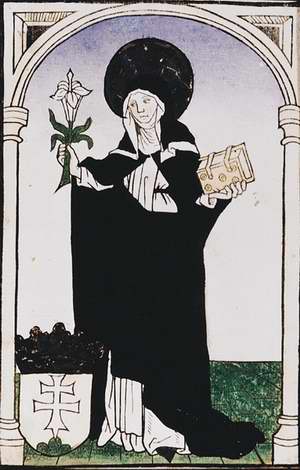
About a real princess who was also a nun. And a saint.
St. Margaret of Hungary was born as the daughter of King Bela IV in 1242, just months after the Hungarian army was beaten and the kingdom devastated by the Mongolian invasion. The king and his family fled to Klis in Croatia - the baby princess was born in that castle. The king offered her to God in exchange for liberating the kingdom from the Tartars.
The Mongolian invasion ended. The royal family returned home. Princess Margaret was raised from the age of three to become a nun. She spent most of her life on the island that was later named after her - Margaret Island on the Danube, now the green heart of Budapest.
Everyone in Hungary knows about St. Margaret. We learn about her in school. She was devout, religious, humble, and apparently, more than a little bit overachieving when it came to torturing herself. To pray for her country and her father she offered herself to God, in all kinds of disturbingly painful ways, ranging from whips and beatings to hedgehog-skin belts. She did not wash, she did the dirtiest jobs in the monastery, and she never knew anything in life except devotion.
The King himself tried to marry her off more than once, but she always refused. She remained a nun until she died at the young age of 28.
The process to make her a saint of the Catholic church was put in motion practically at the moment of her death; testimonies were collected and written. She was beatified in 1276, but she only became a saint in 1943.
My personal reason for including this princess is because her legend has the only mention of a namesake of mine. Csenge, although very old, was not a popular name through the ages - but apparently there was one noble girl who was a nun the same time as Princess Margaret who bore this name. My infamous namesake was recorded in the saint's legend for one reason only: she beat the princess in the face with the dishwashing rag.
Go figure.
Monday, April 15, 2013
M is for the Myrtle Princess

But today, we shall talk about the Myrtle Princess.
The first thing you will note if you read this story is that this girl is actually not a princess. I took a liberty with this choice. My mother told me this story countless times when I was little, over and over again, long before I ever discovered the written version, and she always calls it "Myrtle Princess" so this is how it is stuck in my head. Plus, in the end, she does marry a prince. If that counted for Princess and the Frog, it counts for me.
All in all, this story is pretty similar to the Apple Princess: A woman wishes for a child, and instead of giving birth to one, she gives birth to a sprig of myrtle. The prince, passing by, smells the sweet scent of the flowers, and begs the mother to let him take the flowerpot to the castle.
Just like the Apple Princess, Myrtle comes out of the flowers every night and walks around. Of course, eventually, she finds her way to the prince's bed. Jealous people might try to destroy their love, but all is well in the end.
The image of the Myrtle Princess lived vividly in my mind from the childhood stories. She is tiny, like a fairy, wears a pink dress and a crown of pink flowers. My grandmother used to have myrtle growing in flowerpots, and I remember sitting by, touching the silky petals carefully, and collecting the drops of sweet nectar in little syringes (I was not allowed to eat them, but that was the closest I ever got to feeling like a butterfly).
Myrtle Princess is a sweet story, if not particularly earth-shattering.
Let a new A to Z (or, rather, M to R) week begin!
Saturday, April 13, 2013
L is for the Loquacious Princess

Today's princess is once again brought to you from Hungary, and the title of the folktale actually translates into "The loquacious princess," I did not make this one up, people.
Well, Princess Loquacious has a minor problem: she talks. A lot. So much, in fact, that no one can get a word in edgewise. And she does not only talk - she also swears and curses, which is very un-princess-like (but awesome fun to tell to the right audience). Finally we end up at the usual place: King declares that whoever can leave his daughter speechless can marry her.
Princess agrees this is a good idea: she would not want to marry someone who can't hold his end of the conversation. Finally, a princess after my own heart...
As the story goes on, three brothers set out to out-talk the princess. After the first two fail, the youngest decides to give it a try - he has fallen behind on the road because he picks up everything he sees, including eggs, rusty nails, and cowpies. Once he is in front of the princess a hilarious exchange ensues in which he has an answer to everything, and the banter results in the princess breaking down in tears of laughter... and marriage.
Who doesn't like a good banter between people destined for each other? TV shows run on that stuff. I also like the idea that the guy can keep up because he keeps his eyes open along the road and picks up random things that come in handy later. That's the way to go through life, people.
Have a nice A to Z free Sunday! See you all next week!
Friday, April 12, 2013
K is for the Killer Princess
I have read a lot about her in the past months. I did a version of her tale at MythOff USA (see below) for Slavic mythology - in that version, she was the goddess of the Underworld, who, very appropriately, escaped with Koschei, the god of the underworld.
In folktales, however, Maria Morevna turned into a princess. The first time we see her in one of the tales is across a battlefield full of dead soldiers - when Ivan tsarevits, the hero, inquires about the massacre, he is told that Maria Morevna, a princess, killed all those men.
Well then.
Maria Morevna is clearly a warrior. I especially enjoy the fact that this story is the opposite of the Bluebeard tales: the prince is left home while the princess goes to war, and opens the one room he was not supposed to open, which leads to a whole world of trouble.
The princess' warlike nature is never quite explained in the stories. She just happens to be a warrior that can slay an entire army, and still look attractive when a prince visits her tent after.
This tale was recently turned into an amazing mythic fiction book called Deathless by Cathryn M. Valente. Check it out, it is a gorgeous book!
Thursday, April 11, 2013
J is for the Jasmine Princess (and a Prince)
The princess of the day is called The Princess of the Seven Jasmines. She earned that name by weighing as much as seven jasmine blossoms, no more, no less. Also, similar to our previous cat-eyed princess, she also has the ability to laugh flowers - in this case, guess what, jasmine flowers. But there is a catch: this princess never laughs. Talk about teenage angst...
I like this story in particular because it also features a smart and environmentally conscious prince. When his kingdom is plagued by snakes, he eventually figures out that curing the Snake King (and making sure he keeps his subjects in line) is better than killing every single one of them. In order to do that, he needs some special jasmine flowers (ever had jasmine tea for a headache? Uncle Iroh knows his stuff!). So the quest is on: locate princess, marry princess, make princess laugh. Not necessarily in that order.
I have a soft spot for tales about making princesses laugh. They show the importance of laughter in a relationship. And in the world in general.
The type is AT 559, in case anyone is interested in reading more.
The other tale that I want to mention here is called The Jasmine Prince. It is about a prince who fills the air with the scent of jasmines when he laughs - but it has to be a true, heartfelt laugh. Of course sooner or later someone will try to force him, and it will not go well. For the rest, read the story. And then go on and read the entire book. One of the best folktale collections I have read.
And then go drink some jasmine tea.
Happy J day!
PS: If you are interested in Indian tales about flowers and plants, I also highly recommend this book.
Wednesday, April 10, 2013
I is for the Invincible Princess

She is from Mongolia.
Khutulun was the niece of Kublai Khan, and famous for her skills in wrestling. Apparently she was quite big and strong for a woman, and accompanied her father into war. Besides wrestling she was also skilled in other aspects of a warrior's training, including horseback riding and archery (let's note that this is Medieval Mongolia here, if you can't ride and shoot you don't live, so her own family probably did not see it was impressive as we do). She refused to marry anyone unless they could defeat her in wrestling - but no one ever did. All her suitors went home beaten and she remained unwed, even when her parents begged her to fake a fall for a particularly qualified man.
(This is very folktale-y; there are many stories where suitors can't marry the princess unless they can outrun/outwit her, see the Hawkeye Princess yesterday)
Khutulun remained unbeaten all her life - when she finally married, it was by her own choice, to a man she did not wrestle at all. Guess who wore the pants in that household...
I have read plenty of stories about strong and independent women in my career as a storyteller, but surprisingly enough Khutulun's story is not as well known as it should be. So. Here.
Full story in the link above, Wiki wisdom here.
Tuesday, April 9, 2013
H is for the Hawkeye Princess
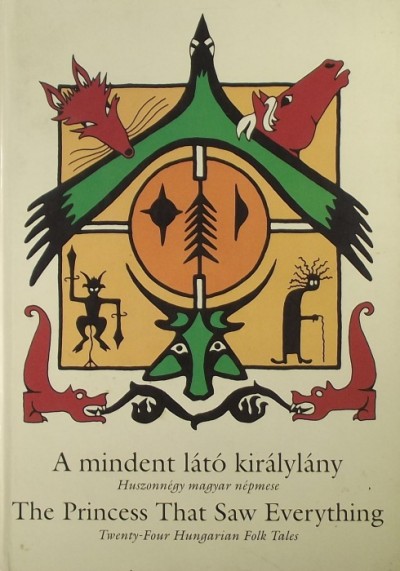
The Hungarian tale is called "The Princess that Saw Everything", while the Grimm version is known as "The Sea Hare" (the whut now?)
The basic idea is the same: There is a princess with such keen eyes that she can see everything in the world. The quest is to hide from her - whoever manages to do so (one time out of three) can marry her. All right, so this is not exactly all that different from damsel-in-distress tales, BUT, at least the princess is taking active part in the decision - by eliminating all possible suitors. Where would you hide from someone who can see through the SUN?!
Of course, in the end, there will be someone to figure out how to hide in plain sight: the closer you are to the damsel, the less likely she is to notice you. Talk about taking advantage of being friendzoned!
This tale also has a Hungarian cartoon version from the same series as the dwarf princess story. You can find it on YouTube here.
If you want to read the Hungarian version, see the book above.
This tale is also included in my upcoming book "Legendary Powers" that includes folktales that feature superpowers - like superhuman sight. *shameless self-promotion*
Stay tuned for details!
Subscribe to:
Posts (Atom)


 Posts
Posts