Showing posts with label Nigeria. Show all posts

Thursday, April 10, 2025

I is for Inyan Olugu (Women's Epics A to Z)

This year my theme for the A to Z Blogging Challenge is Women's Epics. My goal was to read 26 traditional epics from around the world that have women as their heroes. Because epics like this do exist, and they are fascinating! Read the intoduction post here.

Inyan Olugu

Igbo

This is an epic song collected from the Ohafia Igbo of the Cross River are of Nigeria. Officially it is categorized as a historical epic, to distinguish it from longer, more mythical romantic epics. The epic was collected from a master bard named Nna Kaalu Igirigiri in the 1970s. The translation is about 200 lines long.
I read the English translation and analysis of the epic in this book. There is more analysis about Igbo epics, and Inyan Olugu, in this dissertation available online (it also includes two shorter war songs about Inyan Olugu).

What is it about?

TL;DR: Inyan Olugu is shamed because her husband is a coward. So she goes out and takes some heads, intent on giving him the credit for bravery.

Inyan Olugu is married to a man named Itenta Ogbulopia. He is a coward; he refuses to go out on head-hunting raids like the other men (head-hunting is an integral part of this epic tradition; their people are at war with the neighboring Nkalu people, so raids are frequent from both sides). With this, he brings humiliation to himself and to his wife: Inyan Olugu is publicly shamed, and stripped of any valuable clothes and adornments.

Inyan Olugu tries to rectify the situation. She sends her husband out with some brave warriors, and pays them handsome money to take some heads and give them to Itenta Ogbulopia. All he has to do is poke some enemies with his machete, and the other warriors will do the actual head-chopping. But the husband is too afraid to do even that, so he returns with no heads at all, and his reputation as a coward solidified.

Inyan Olugu goes out to pick palm fruit one day - all the way to the forest in Nkalu territory, as if it is no big deal. There, she has an idea. She returns home and tells her husband that he should accompany her to pick palm fruit. Hearing that she is headed to the Nkalu forest, her husband vehemently refuses. Inyan Olugu gets angry, packs up her things, and leaves him. Without a wife to cook for him, Itenta Ogbulopia grows hungry; he begs food from people, but no one is willing to feed a coward. Finally he returns to Inyan Olugu. She gives him an ultimatum: if he accompanies her to pick palm fruit, she'll return to him.

Husband and wife arm themselves with a gun and machetes, and head to the Nkalu forest. Before Itenta climbs a palm tree, he hands the gun to Inyan Olugu, telling her that if she sees any enemies, she should fire it. At the sound of the gun, he promises, they will run for safety, to avoid being killed. Inyan Olugu sits and keeps watch under the palm tree.

The Nkalu people hear the sound of the cutting, and realize there are intruders in their forest. They set out to kill them. However, when they appear, Inyan Olugu shoots four of them, and then tells her husband the real reason for their trip: she was intent on winning some heads for him, so he can return to town victorious. Inyan Olugu wants him to take credit (and carries the basket of heads home for him on her head).

However, when they arrive home, and Itenta is greeted with respect and admiration, he tells the people they should honor Inyan Olugu instead, as "Killer-that-gave-the-honor-to-her-husbad." Inyan Olugu is celebrated as a hero.

The highlights

The moment where Inyan Olugu invities her husband along to the Nkalu forest is a crucial and interesting one: the husband accuses her of wishing for his death so she can marry someone else. He says "you will have to marry someone else in my lifetime", because he would very much rather keep on living.

In one of the war songs (which tell the story in a shorter version), Inyan Olugu kills five men, not four. Once she is done packing the heads in her basket, she calls to her husband "Will you please come down now, so we can go home?" In another war song, it is she alone who brings the gun and weapons along for the trip, instead of the husband handing them to her. But in all versions, it is made clear that she should be celebrated and not her husband.

FUN FACT: The same tradition also has another epic about another female hero, named Nne Mgbaafo. She is known for rescuing her captive husband from the enemy. I couldn't fit that story into this challenge, but it is worth reading.

EPICS CARRY THE VALUES AND TRADITIONS OF THE CULTURES THEY CAME FROM.

But they also carry emotions and human traits that are universal.

Do you see similarities to stories that you are familiar with?

Sunday, April 30, 2023

Z is for the Zygomatic bone (Body Folktales)

This year, my A to Z Challenge theme is Body Folktales. Enjoy! 

The zygomatic bone is your cheekbone; it's part of the skull. Since I have already done cheeks this month, I'm going to look at folktales about skulls.

Sosruquo and the giant's skull (Abkhaz legend)

One of my favorite tales among the Nart sagas of the Caucasus. The heroes encounter a huge skull, and decide to bring its owner back to life, to ask some questions just out of curiosity. They revive the giant, who tells them of his life long ago. (In other versions, they mistake the skull for a cave, and sleep in it first.) As an archaeologist, I'd love to have this power.

Ottilia and the skull (Tyrol)

A poor girl is chased away from home by her cruel stepmother, and seeks shelter in a castle in the woods. Turns out the castle is inhabited by a talking skull, who turns out to be quite friendly. Ottilia carries it in her apron and cooks food for the both of them. At night, a skeleton appears, threatening the girl, but she holds out without fleeing, and thus breaks the curse that had turned the castle's mistress into a skull. (You can read a friendlier retelling here.)

Céatach (Ireland)

A long hero story featuring an apprentice magician who saves a girl from a giant named Steel Skull. he giant is undefeatable, because when his head is cut off, it rejoins his body and he becomes stronger. Céatach, however, finds a way to cut off the head and kick it far away, finally defeating the giant.

The wicked mendicant (India)

A prince is promised to a sinister mendicant before he is born. When he turns twelve, the mendicant comes to claim him, and takes him into the woods to a shine of Kali, to sacrifice him. The boy, however, finds a pile of skulls by the shine (the previous victims) and the skulls tell him how to survive. After he kills the mendicant, the brings the other victims back to life.

The laughing skull (India)

A banker gives out loans to people, agreeing to get repaid in the next life. Some ruffians borrow money from him with no intention of paying, and spend it on sweets. However, on the way they encounter a human skull that tells them his story: he didn't believe in next-life payments either, and yet he still could not rest in peace before his debts. The ruffians reconsider the loan.

The talking skull (Nigeria)

A hunter encounters a skull in the wilderness, and wonders how it ended up there. The skull speaks: "Taking got me here!" The hunter runs to the king, claiming he's found a talking skull. The king doesn't believe it, so he follows the hunter into the bush. The skull, however, remains silent. The king, angered by the wasted trip, orders the hunter to be beheaded. Once his head is left alone with the skull, the skull speaks: "What brought you here?" "Talking got me here!"... This motif (K1162) is typically African, and also appears in African traditions across the Atlantic.

The girl who married a skull (Efik people, Nigeria)

A girl decides to only marry a perfect man. A skull from the spirit world borrows body parts from various spirits, and turns himself into a dream husband. However, when he takes his smitten wife back home, he returns the body parts too, and she realizes too late she's married a skull spirit. Luckily, an old woman helps her escape and go back home. She even gets her a spider hairdresser. (I really like this folktale type for some reason, it has many exciting variants.)

Whew! That's the last letter done! Thank you all so much for following along, see you all tomorrow for Reflections! :)

Thursday, April 13, 2023

K is for Knees (Body Folktales)

This year, my A to Z Challenge theme is Body Folktales. Enjoy!

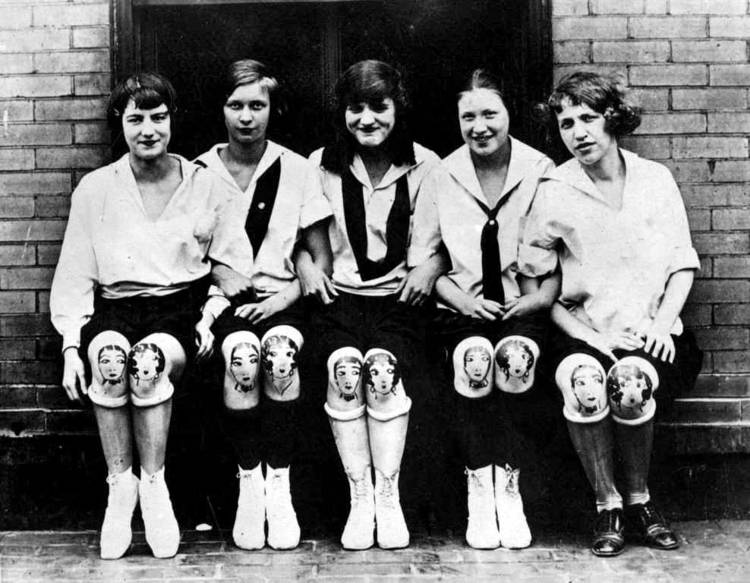
(Learn more about painted knees here)

How Sosruquo was born (Abaza legend)

One of the most famous heroes of the Caucasian Nart sagas is Sosruquo (Soslan), who is born from a stone and burns so hot that the blacksmith god has to temper him. The smith grabs the red-hot baby with tongs around his knees and plunges him in water/milk repeatedly, making his whole body strong like steel. However, his knees where the tongs covered him remain vulnerable, much like Achilles' heel. (Warning, mention of attempted sexual assault in the linked text.)

The treacherous brothers (Greece)

Three princes set out to find a magic lamp that can save their kingdom. The youngest ends up saving three princesses from three different ogres. One ogre has his strength in his knees: he kills people by luring them to lay their head on his lap (promising to de-louse them), and then crushes their skull between his knees. The prince, despite his brothers' inevitable betrayal, is victorious in the end.

Lunja (Morocco)

Princess Lunja follows some birds into the wilderness and ends up being kidnapped by a ghoul woman. When her cousin comes to the rescue, she manages to escape, but the ghoul is in hot pursuit. Lunja manages to trick her into thinking she'd run even faster if she ate her own knees. She doesn't. (The young couple has other adventures after that, but all is well in the end.)

How human beings got kneecaps (Ekoi people, Nigeria)

A woman sees a very pretty white rock in the river, and repeatedly wishes to have it. Her wish is so strong that the rock jumps out of the water and sticks to her knee; after that, she can't get rid of it anymore. And ever since, humans have had kneecaps.

The betel-nuts (Itneg people, Philippines)

This is a long mythical story about a woman who marries the sun. I am including it for a smaller detail: whenever there is a gathering of people in the story, they send out betel-nuts to invite the guests. The nuts tell those who are invited that they have to come, otherwise they grow on their knees and make them unable to walk. Some heed the warning and some don't.

"My father is a fish and my mother is a man" (ATU 705)

This is a folktale type popular in Scandinavian countries and Arab traditions. It generally involves a couple that wishes for a child, but the man accidentally eats the miracle pregnancy food (fish) instead of his wife. A daughter is then born from his knee. She later becomes queen and goes through several adventures; in the end, she is recognized by her lost husband by the riddle of her birth.

What do you think of these stories?

If you got a painting for your knee, what would it be? :)

Saturday, April 8, 2023

G is for Genitalia (Body Folktales)

This year, my A to Z Challenge theme is Body Folktales. Enjoy!

CW: Adult themes incoming! Obviously.


You didn't really think I was going to do a theme like this without addressing the obvious, did you?

(Note: Some of these tales say 'vagina' instead of 'vulva'. It may be factually incorrect, but I didn't want to mess with the translations.)

Wandering genitalia (Saora people, India)
This story claims that in the old days genitalia could detach themselves and go wandering at night. One evening, the creator Kittung accidentally stepped on a vulva which made a squealing sound. Feeling sorry, he put the small creature into the river, where it turned into a turtle (the head is the clitoris). He then made non-detachable parts for people.

Clitoris legends (India)
This collection from India contains a whole collection of amazing stories about the clitoris. One creation myth claim that lightning was born from Earth Mother's clitoris, therefore it "flashes and sparkles as the clitoris does." Another story says a woman was fishing in a stream one day when a crab pinched her vulva; a deity told her to cut off the claw, and she will have as much pleasure from it as she had pain. A third story tells of a girl who was so busy working that she misplaced her clitoris; she borrowed one from a bird and never gave it back.
My favorite, however, is another tale that claims that body parts used to go wandering on their own. One day, the breasts picked a fight with the vulvas, and chased them all away into the mountains. Dismayed, men set out to bring the vulvas back, but they are skittish creatures and hard to find. By the time they got back, some old women died, and people were left with extra vulvas. They divided them up equally in smaller pieces - creating the clitoris.

The wandering vagina (Mehinaku people, Brazil)
Yet another story that claims that in days of old, genitalia could wander around. A woman named Tukwi had an "especially foolish" vagina that crawled around the floor at night, looking for something to eat. It got into the porridge and started slurping, awakening a man in the house who went to see what it was, and accidentally scorched it with a torch. The vagina fled back to Tukwi, who then warned everyone not to let their vaginas wander around.

Vagina dentata
If there is one folklore trope that a lot of people are (painfully) familiar with, it's this one: vaginas with teeth (F574.1.1). There are entire books written about the folklore and mythology of this trope, so I'm not going to get into it. But I'm going to highlight some favorites. 
One is a Khond legend from India about a woman who used to have shiny, fiery teeth in her vagina until her husband took them out with a cord. After a long life, when their children were grown, she found the teeth again, buried in the garden - and they turned into fireflies. Ever since, they have been allowed to take shelter in people's houses.
The other story is a Mongolian legend about the death of Genghis Khan. It claim that the great khan desired a gorgeous woman named Gürbeljin Ghoa (Lizard Beauty). He put her husband to death and forced her to marry him. On her wedding night, she hid blades in her vagina - and thus murdered Genghis Khan. (Source here.)
An origin story from the Makka people in Paraguay claims that in the beginning, no one could have sex with women because they had piranhas in their vaginas. A wise shaman organized a dance party where he made women dance so much that all the piranhas fell out. Or rather, almost all - the smallest one stayed in and still gnaw, which is why periods exist.

Penis and Testicles are best friends and they go fishing together. On the way back they meet Vagina who asks for some of their fish. Penis is happy to share, but Testicles are stingy. Later on, in the hot season, Vagina happily offers shelter from the sun to Penis, but not Testicles. The latter still try to get as close as possible. (A similar tale is told in Ghana about Penis and Testicles sharing ground nuts with Vagina, and getting shelter from the rain.)

Kwazerema and helpful Ant (Kapsiki people, Cameroon/Nigeria)
A man has two wives, but treats one of them very poorly, making her fetch water from the river every day. The woman meets a Red And who takes pity on her, and gives her medicine to put into her water jar. The husband has a habit of urinating in her jar - but this time, as he does, his penis gets stuck in it. Not only can no one break the jar, it also keeps singing a mocking song. Eventually he begs his wife to undo the curse, and decides to treat her better. She thanks Red Ant for the help.

In Hawaiian mythology, Kapo of the Flying Vagina is the sister of the volcano goddess Pele. In one legend, the pig-god Kamapua'a pursues Pele and tries to rape her, but Kapo comes to her rescue: she uses her detachable vagina to distract the pig, leading him away from the goddess. (This story is reflected in Hawaiian place names. Other source here.)

The vagina girls (Jicarilla Apache legend)
The hero Killer-of-Enemies goes through many adventures, battling monsters and shaping the world. On his journey he defeats a monster and meets his four daughters in a house full of vaginas. The four girls are themselves vaginas in human form, and they use their teeth to devour people. The hero feeds them medicine, taking the teeth away, and they lay down the ground rules of how vaginas shall work. He picks two from their collection and takes them home to two girls; people experiment with where to put them on the body until they settle on their current placing. The four girls go on to live good lives among the humans.

The three wishes (1001 Nights)
A man earns three wishes - and immediately uses the first one to wish for a larger penis. His penis grows to a gigantic size, at which point he panics and wishes for it to go away. It does, and now he has to use his third wish to get it back.

The four champions (Hausa tale)
Four friends acquire grain together: they break the corn on one's head, thresh it with one's penis, winnow it with one's mighty farts, and carry it home with one's scrotum. The question of the dilemma tale is: who was the most heroic of the four?

(14th century illustration)

I am somewhat worried about the comments section now. Also, my general search history and upcoming Facebook advertisements.
Have a nice Sunday break, everyone!

Wednesday, April 5, 2023

D is for the Digestive System (Body Folktales)

This year, my A to Z Challenge theme is Body Folktales. Enjoy!

For today's topic, I researched folktales that feature the stomach, intestines, and the digestive system in general. Things, as expected, did get delightfully weird.

CW: intestines and bowels and whatnot

Hair's Revenge (Nigeria)

Back in the beginning of time, Hair and Stomach lived in the same town. However, while Hair went on a business trip, Stomach slept with all of his wives. When Hair found out, he started chasing Stomach, who begged a traveler on the road to shelter him inside his body. When Hair caught up, and heard Stomach shivering inside the man, he decided to guard the man's orifices so Stomach could never come out again. Ever since then humans have had hair around all their... exits. And ever since then, swallowing a hair makes our stomach revolt.

Kenkebe and the ant (South Africa)

A man named Kenkebe has an unfortunate habit of exchanging his body parts with animals. Once he exchanges his stomach for the stomach of an ant - which his wife discovers because he spills most of his dinner under the table since the ant stomach can't hold it. The wife orders Kenkebe to get his own body parts back.

A man's stomach (Lithuania)

This is a folktale type marked as 716 in the Lithuanian tale type index. It's about three men who go out into the woods and complain about always being hungry, and having to spend money on food. An old man shows up and offers to take their stomach out, hanging them in a tree. The men go home happily, with their problem solved - but they soon discover that life is no fun at all without eating, and return to the woods. They find their stomachs shriveled up, but the old man helps them undo the damage so they can eat again.

The Taoist in the otherworld (China)

There is an old Chinese legend about a Taoist who travels into the Otherworld and participates in a delicious feast. The fairies living in that world remove all his digestive organs, and that grants him eternal youth - so when he returns into the world of mortals, he finds himself younger than his grandchildren.

The kings of Madur Maskut (Khasi people)

The small but fierce kingdom of Madur Maskut constantly threatens its neighbors with invasion. Its greatest warrior is U Niang Raja, who goes around without bodyguards and is rumored to be impossible to kill. He is attacked and chopped up multiple times, but always returns. Finally, a neighboring king hires a beautiful woman to seduce the raja and find out his secret. It turns out that the prince keeps his soul in his intestines; when he bathes in the river, he takes the intestines out and washes them, then dries them on a rock. She betrays his secret, and the next time he goes swimming, assassins burn his intestines, killing him.

Which story is the weirdest? Did any of them sound familiar?

Don't forget to leave your links in the comments so I can visit back! :)

Saturday, February 4, 2023

Folktale Selection: Sometimes you just have to let toxic people go

Folktales and other traditional stories carry a community's values. They teach us about important things such as empathy, forgiveness, acceptance, teamwork, and more. They are not always as black and white as one may think: heroes can make mistakes and learn from them; villains can be forgiven.

But every once in a while, forgiveness is not the answer. Just like in real life, abusive relationships cannot be mended by second, third, fourth chances; no matter how well you communicate your feelings, you can't negotiate with an abuser who doesn't care if they hurt you. In these cases, the pressure to "forgive and try again" only results in more hurt. In these cases, even folktales know that the best course of action is severing ties with the ones that keep hurting you.

I have encountered many folktales that have a "happy ending" that involve people returning to spouses or parents that hurt - or even tried to kill - them, without the other party showing any sign of remorse. To balance out the scales, I made a selection of folktales about people who walk away from toxic relationships, and never look back.

Links in the titles, as usual.

Holua-Manu (Hawaii)

This is a very strong story. A boy's parents have magic powers and solely use them to torture their child for fun. He wants to go and play, but there are always more chores to do, and he can never do them well enough to please his parents. When he makes a decision to go do something for himself anyway, his parents grow furious and attack him. In the end, he manages to get away, and makes a decision to leave for good. The gods, as punishment, take away the parents' powers.

Three orphan sisters (Tu/Monguor people)

A couple wants a son, but instead they have three daughters. With the birth of each child, they resent each other and the children more and more, for not having a son. In the end, they take the girls out into the wilderness and abandon them. The girls are found by hunters and taken to a good home; eventually, they marry good men and live happily. One day they return to visit their parents, hoping to reconcile... but they find their parents still busy praying for a son and showing no remorse. So the girls leave without a word.

Youngest Brother Returns Favors (Tu/Monguor people)

Four orphan brothers each pursue different trades; the youngest goes to school and studies for examinations. When he wants to travel to take the exam, only one brother lends him support, the others mock him and turn him down. In the end, the boy becomes emperor - but when his cruel brothers come to him for favors, he turns them away. Later drought hits the lands, and he makes sure to help the brother that had been kind to him.

Nisang shamaness (Daur people)

This is a long and fascinating epic about a brave shamaness who descends into the underworld to save the soul of a young man. On the way back she encounters the soul of her late husband, who berates her for not saving him too. She tries to explain that she can't, but he gets violent and threatens her - so Nisang summons spirits to lock him up and leaves him behind. It is implied that he had not been a good husband while he was alive.

The king and the weaver bird (Nigeria)

A king marries a woman he loves, despite the warnings that women in her family often give birth to twins (an offense traditionally punishable by death). When she does indeed have twins, the king decides that his family is more important than what people think, and they all leave, transforming into weaver birds to live in the forest.

My Beauty (Haiti)

A girl is tortured by her cruel stepmother in the absence of her (grown-up) brothers. The stepmother eventually promises her to the Devil. In the last moment the brothers come to the rescue and take their sister away. Years later they return, only to find the stepmother telling lies and the father claiming that he did not notice anything at all. They all leave again, to live happily elsewhere.

A woman and the king's treasury (Syria)

A kind and little simple woman is abused by her husband, until one day he throws her out of the home. She wanders away, and accidentally witnesses two thieves dividing up treasure they stole from the King. She tells her husband, who takes the treasure, covers his tracks, and threatens her into silence. She decides to stand up for herself, and goes to report it all to the King - the thieves and the husband are arrested, the woman gets half the treasure, and she can live in wealth and peace for the rest of her life.

I also wrote a blog post about folktales that feature divorce, among them stories where people leave abusive spouses. You can find that post here.

Monday, August 26, 2019

Spirits and tortoises (Following folktales around the world 119. - Nigeria)

Today I continue the blog series titled Following folktales around the world! If you would like to know what the series is all about, you can find the introduction post here. You can find all posts here, or you can follow the series on Facebook!

Folk Stories from Southern Nigeria 
Elphinstone Dayrell
Longmans, Green & Co., 1910.

This is a fairly old book from British colonial times. It contains forty folktales from Southern Nigeria, collected by a colonial officer. The introduction was written by Andrew Lang himself, who also made notes for some of the stories, comparing them to European fairy tales. Many of the tales come with footnotes explaining certain cultural and historical elements, and sometimes they even come with an expressed moral at the end - although the moral is not always what one would expect from the story.

Highlights

Among the more mythical tales my favorite was the one that explained why Sun and Moon live in the sky. According to the story, they invited their friend the Sea over as a guest, but when the Sea appeared with all of his volume and residents, Sun and Moon had to flee to the roof first, and then to the sky, where they have been ever since.

The long and elaborate story of The king and the ju ju tree was especially great. In it, a king tried to cut down a magic tree to clear space around his favorite bathing place, but a splinter got into his eye, causing horrible pain. A man appeared to cure him, but asked for his daughter in exchange - of course the man was a spirit, planning on eating the girl. The princess, however, managed to get away from him with the help of a talking skull, and after many adventures found her way out of the spirit world and back home.
As for the animal tales, the one that stuck with me the most was the ominous story that explained why worms live underground. It was the story of a great battle between the worms and the terrifying driver ants, obviously won by the latter.
The story of the fat woman who melted in the sun, despite the strange title, was a story of beauty. Women were traditionally fattened up before marriage, and this one big beautiful lady was very popular - but also made of oil, so she was forbidden from going out in the sun. A jealous co-wife, however, tricked her into going to the fields, and the lady melted, down to her big toe. Luckily, she managed to pull herself together after a while.
The story of the king and the 'nsiat (weaver) bird, on the other hand, was a tale of breaking with traditions. The king married the beautiful daughter of the bird, despite the warning that women in her family give birth to twins - and offense traditionally punished by death. When the twins were born, however, the king loved his family so much that they ended up moving to the wilderness together to live with the bird family - and they have been living as weaver birds ever since.

Connections

I was reminded of the Cajun story of Marie Jolie by the tale of the disobedient girl who married a skull. The skull came from the spirit world, borrowing body parts from other spirits to form the perfect man, and the girl was helped by a friendly old woman in her escape back home before the spirits would have devoured her.
The pretty stranger who killed the king carried the internationally popular motif of a beautiful new wife (in this case, an old witch in disguise) beheading a king while he was asleep, thus bringing down the entire kingdom.
This Nigerian tortoise is more than
 300 years old!
The local trickster is, once again, Tortoise. He had many adventures, such as finding out the hippo's secret name (and thus exiling him into the waters), or playing tug-o-war with Elephant and Hippo. The latter story had a nice twist in the end: both animals decided they wanted Tortoise to be their friend. Tortoise moved to the water with Hippo, and sent his son to live with Elephant - that's why we have turtles and tortoises now. Tortoise also played the leading role in the story of the king's magic drum that created food out of nowhere. The trickster managed to get the drum from the king, but broke the taboo associated with it, so instead of food the drum now summoned people who beat everybody up. Using this new ability, Tortoise managed to get a second deal, and acquire a tree that grew foo-foo... until his sons broke that taboo as well, and the entire family had to move to the prickly bushes out of shame.

Where to next?
Cameroon!