Today is Folklore Thursday on social media! If you want to find out more, follow this link, or click on the #FolkloreThursday hashtag on Twitter! Hosted by @FolkloreThursday.
Today I continue the theme of the Peasant Bible, a collective term for Hungarian folktales based on biblical topics. This story comes from the popular tradition of tales about Jesus' missing childhood years. It is one of my favorites Peasant Bible folktales to tell (and, incidentally, the only one that ever got me into trouble with religious parents).
Toys and candies
The workshop of Joseph the carpenter was at the edge of the village. One day, little Jesus decided he was old enough to help his mother Mary in any small way he could, and volunteered to take Joseph's lunch to the workshop by himself. Carrying the pot very carefully, he met a group of older boys who immediately decided to beat him up. Little Jesus could not outrun them with the pot, and was not willing to fight - so, as a last resort, he leaned down, picked up a handful of dirt, and threw it at them. The dirt turned into candies and toys; the boys stopped to pick them up, and little Jesus got safely away.
This story is as adorable as it is short, and it resonates really well with children. Parents have complained before that it is not in the biblical canon (they probably missed the "folktale" part of the intro), but the way I see it, the messages of this short little tale are actually pretty applicable:
1. If little Jesus himself can get bullied, that means you don't have to do anything wrong for people to pick on you.
2. Little Jesus could probably have called down fire and brimstone on all bullies - but he didn't.
3. It is okay to run, and it is okay to tell your parents. Also, smarts win over force.
Showing posts with label Jesus. Show all posts
Thursday, November 26, 2015
Thursday, October 15, 2015
Folklore Thursday: Jesus Christ is a Showoff
Today is Folklore Thursday on social media! If you want to find out more, follow this link, or click on the #FolkloreThursday hashtag on Twitter! Hosted by @FolkloreThursday.
Continuing our weekly selections from the Peasant Bible, a collection of Hungarian folk legends featuring biblical themes. This short little story comes from Ortutay's collection of Hungarian folktales. I personally like this one for two reasons: One, my great-grandfather was a blacksmith, so it is close to home, and two, Jesus is kind of a showoff in this one.
The Master of Masters
In the days when Jesus Christ walked the earth, he once came upon a blacksmith's workshop. The sign above the door said in big bold letters:
Jesus smirked quietly, then walked in, and got himself hired as an apprentice.
Soon after, a rich man stopped by to have his horse shod. The blacksmith ordered Jesus to do the job. Jesus went outside, cut a leg off the horse, took it inside the workshop, nailed the horseshoe on it comfortably, and then put the leg back on the horse. He did the same thing with the other three legs, and the rich man rode away, satisfied with the work.
Three days later, Jesus left his apprenticeship and moved on. Just after he left, another rich man stopped by to get his horse shod. The blacksmith thought "if an apprentice could do it, so can I," and cut a leg off the horse, nailed the horseshoe on it, and then tried to put it back... but no matter how he tried, it could not be reattached. Scared that the rich man would have him punished for hurting the horse, he sent a boy running after Jesus, begging him to come back and fix things. Jesus returned, reattached the leg in one swift move, then turned to his former master:
"And now" he said, smiling "Please take down that sign that says 'Master of Masters,' and put up one that says 'Blacksmith.'"
And then he probably dropped the mic.
Continuing our weekly selections from the Peasant Bible, a collection of Hungarian folk legends featuring biblical themes. This short little story comes from Ortutay's collection of Hungarian folktales. I personally like this one for two reasons: One, my great-grandfather was a blacksmith, so it is close to home, and two, Jesus is kind of a showoff in this one.
The Master of Masters
In the days when Jesus Christ walked the earth, he once came upon a blacksmith's workshop. The sign above the door said in big bold letters:
THE MASTER OF MASTERS
Jesus smirked quietly, then walked in, and got himself hired as an apprentice.
Soon after, a rich man stopped by to have his horse shod. The blacksmith ordered Jesus to do the job. Jesus went outside, cut a leg off the horse, took it inside the workshop, nailed the horseshoe on it comfortably, and then put the leg back on the horse. He did the same thing with the other three legs, and the rich man rode away, satisfied with the work.
Three days later, Jesus left his apprenticeship and moved on. Just after he left, another rich man stopped by to get his horse shod. The blacksmith thought "if an apprentice could do it, so can I," and cut a leg off the horse, nailed the horseshoe on it, and then tried to put it back... but no matter how he tried, it could not be reattached. Scared that the rich man would have him punished for hurting the horse, he sent a boy running after Jesus, begging him to come back and fix things. Jesus returned, reattached the leg in one swift move, then turned to his former master:
"And now" he said, smiling "Please take down that sign that says 'Master of Masters,' and put up one that says 'Blacksmith.'"
And then he probably dropped the mic.
Labels:
blacksmith,
FolkloreThursday,
folktales,
Jesus,
legends,
Peasant Bible
Thursday, October 1, 2015
Folklore Thursday: Jesus creates puli dogs
Today is Folklore Thursday on social media! If you want to find out more, follow this link, or click on the #FolkloreThursday hashtag on Twitter! Hosted by @FolkloreThursday.
Continuing the theme of the Peasant Bible, Hungarian folk legends about how various things came to be. On today's menu: Puli dogs.
Puli dogs are a "hungarikum," which is the word we use for typically Hungarian things. For more of those, you can visit my other blog... incidentally named MopDog.
Now, on to the story.
Jesus creates the puli dog
(Originally published in this book in Hungarian - folktales from Bács-Kiskun, Heves and Pest counties)
Jesus always loved shepherds; they were the first one to greet him when he came into the world, and they brought him a lamb and cheese and other gifts. In the days when he walked the earth he liked to stop and converse with them; of course they usually didn't know who they were talking to.
One day Jesus stopped to ask for a drink of water from a shepherd. The sheep were running all over the place, the man was chasing after them, and his water skin was empty; and yet he dropped everything and hurried to bring some fresh water for the weary traveler. When Jesus drank his fill and thanked him, the shepherd was ready to lunge after his wandering sheep again... but Jesus stopped him.
"Pick up that bone" he pointed, and the shepherd picked up a leg bone from the ground.
"There you go" he tried to hand it over to the stranger and go after the sheep who were quickly getting away, but Jesus stopped him again.
"Now throw it" he ordered, and the shepherd threw the bone away. The moment it hit the ground it bounced up and turned into a small dog, all fur and all bark, and the dog scampered after the sheep, herding them together in no time at all.
Jesus loved shepherds so much that he created the puli to do the herding for them.
In case you want visual proof, here is a video:
Continuing the theme of the Peasant Bible, Hungarian folk legends about how various things came to be. On today's menu: Puli dogs.
Puli dogs are a "hungarikum," which is the word we use for typically Hungarian things. For more of those, you can visit my other blog... incidentally named MopDog.
Now, on to the story.
Jesus creates the puli dog
(Originally published in this book in Hungarian - folktales from Bács-Kiskun, Heves and Pest counties)
Jesus always loved shepherds; they were the first one to greet him when he came into the world, and they brought him a lamb and cheese and other gifts. In the days when he walked the earth he liked to stop and converse with them; of course they usually didn't know who they were talking to.
One day Jesus stopped to ask for a drink of water from a shepherd. The sheep were running all over the place, the man was chasing after them, and his water skin was empty; and yet he dropped everything and hurried to bring some fresh water for the weary traveler. When Jesus drank his fill and thanked him, the shepherd was ready to lunge after his wandering sheep again... but Jesus stopped him.
"Pick up that bone" he pointed, and the shepherd picked up a leg bone from the ground.
"There you go" he tried to hand it over to the stranger and go after the sheep who were quickly getting away, but Jesus stopped him again.
"Now throw it" he ordered, and the shepherd threw the bone away. The moment it hit the ground it bounced up and turned into a small dog, all fur and all bark, and the dog scampered after the sheep, herding them together in no time at all.
Jesus loved shepherds so much that he created the puli to do the herding for them.
In case you want visual proof, here is a video:
Labels:
FolkloreThursday,
folktales,
Jesus,
Peasant Bible,
puli
Thursday, September 10, 2015
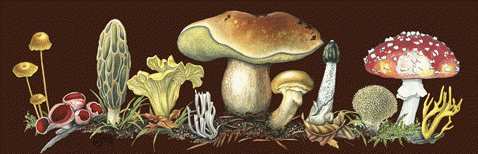
Folklore Thursday: Introducing the Peasant Bible, and the Origin of Mushrooms
Today is Folklore Thursday on social media! If you want to find out more, follow this link, or click on the #FolkloreThursday hashtag on Twitter! Hosted by @FolkloreThursday.
I have been looking for a coherent theme for Folklore Thursday for a while now, and I think I finally found one! It's called the Peasant Bible.
I am borrowing the term from the title of a book (Parasztbiblia), published in Hungarian in 1985. It's a folklore classic. Essentially, it is a collection of folk legends and tales that are based on stories from the Bible. People heard the stories in church, then went off and told and re-told them, and thanks to the oral tradition, some of them took on quite hilarious shapes. The book also includes folk beliefs about the creation of things (animals, plants, the male and the female body, etc.), bits of older lore that became Christianized, as well as a huge number of those "When Jesus and St. Peter walked the earth" type legends everybody loves.
I have mentioned this collection, and these types of stories, to several storytellers around the world, and they always expressed a lot of interest in them. Since there is no English version of most of these tales, I decided that I will post translations for some of them. If you like them, go and have fun!
(Note: Not all the stories will be selected from the book above. When not, I will note the sources. Also, while the stories are the same, the text will be my own re-telling in English, not a mirror translation.)
For starters, here is a short story I love:
The Origin of Mushrooms
(One version collected in 1912, found in online archive here)
Once, when Jesus Christ and St. Peter walked the earth, they came to a small village, and decided to rest there. Sitting under a walnut tree they noticed that one of the houses had the oven fired up; they were making flat bread. The Lord Jesus sent Peter to ask for a bite to eat. Peter asked politely, and took three pieces - one for Jesus, and two for himself, one of which he hid under his cloak.
Jesus and Peter both ate their piece of flat bread, and even though they were not full, they started on their journey again. Peter remained respectfully a step behind the Lord. Thinking that Jesus wouldn't notice, he started breaking pieces off the hidden bread, and eating them... but the moment Peter put a piece of bread into his mouth, Jesus spoke to him, without turning around:
- How long do you think we have to go before the next town, Peter?
Peter, scared that Jesus would hear he was chewing, quickly spat the bread out, and answered. They walked on a little ways, and Peter put another piece in his mouth.
- Peter, aren't we having just an especially warm day today?
Peter spat the bread out again, and answered. And so it went the entire way; every time Peter tried to eat a bite, Jesus asked a question, and he had to spit the mouthful out. Eventually, all the bread was gone, and none of it had made it into Peter's belly.
Then, Jesus turned around.
- Peter, how many pieces of bread did yo receive at the house?
- Two, my Lord.
- Don't lie to me, Peter.
St. Peter was ashamed of himself, and confessed what he had been doing.
- Now look - Jesus said with a smile, pointing at the side of the road - Even if you have been taught a lesson, the Lord doesn't allow food to go to waste.
Every mouthful of soft bread that Peter had spat out turned into mushrooms along the side of the road.
That is why we have mushrooms.
(Shrooms pre-masticated by a saint, anyone?)
I have been looking for a coherent theme for Folklore Thursday for a while now, and I think I finally found one! It's called the Peasant Bible.
I am borrowing the term from the title of a book (Parasztbiblia), published in Hungarian in 1985. It's a folklore classic. Essentially, it is a collection of folk legends and tales that are based on stories from the Bible. People heard the stories in church, then went off and told and re-told them, and thanks to the oral tradition, some of them took on quite hilarious shapes. The book also includes folk beliefs about the creation of things (animals, plants, the male and the female body, etc.), bits of older lore that became Christianized, as well as a huge number of those "When Jesus and St. Peter walked the earth" type legends everybody loves.
I have mentioned this collection, and these types of stories, to several storytellers around the world, and they always expressed a lot of interest in them. Since there is no English version of most of these tales, I decided that I will post translations for some of them. If you like them, go and have fun!
(Note: Not all the stories will be selected from the book above. When not, I will note the sources. Also, while the stories are the same, the text will be my own re-telling in English, not a mirror translation.)
For starters, here is a short story I love:
The Origin of Mushrooms
(One version collected in 1912, found in online archive here)
Once, when Jesus Christ and St. Peter walked the earth, they came to a small village, and decided to rest there. Sitting under a walnut tree they noticed that one of the houses had the oven fired up; they were making flat bread. The Lord Jesus sent Peter to ask for a bite to eat. Peter asked politely, and took three pieces - one for Jesus, and two for himself, one of which he hid under his cloak.
Jesus and Peter both ate their piece of flat bread, and even though they were not full, they started on their journey again. Peter remained respectfully a step behind the Lord. Thinking that Jesus wouldn't notice, he started breaking pieces off the hidden bread, and eating them... but the moment Peter put a piece of bread into his mouth, Jesus spoke to him, without turning around:
- How long do you think we have to go before the next town, Peter?
Peter, scared that Jesus would hear he was chewing, quickly spat the bread out, and answered. They walked on a little ways, and Peter put another piece in his mouth.
- Peter, aren't we having just an especially warm day today?
Peter spat the bread out again, and answered. And so it went the entire way; every time Peter tried to eat a bite, Jesus asked a question, and he had to spit the mouthful out. Eventually, all the bread was gone, and none of it had made it into Peter's belly.
Then, Jesus turned around.
- Peter, how many pieces of bread did yo receive at the house?
- Two, my Lord.
- Don't lie to me, Peter.
St. Peter was ashamed of himself, and confessed what he had been doing.
- Now look - Jesus said with a smile, pointing at the side of the road - Even if you have been taught a lesson, the Lord doesn't allow food to go to waste.
Every mouthful of soft bread that Peter had spat out turned into mushrooms along the side of the road.
That is why we have mushrooms.
(Shrooms pre-masticated by a saint, anyone?)
Labels:
FolkloreThursday,
folktales,
Jesus,
mushrooms,
Peasant Bible,
St. Peter
Subscribe to:
Posts (Atom)