Showing posts with label historical fiction. Show all posts

Tuesday, May 19, 2015

Top Ten Tuesday: Favorite Historical Fiction Authors

It's Top Ten Tuesday again, hosted over at The Broke and the Bookish! Go check out the blog hop, and join the fun!

Historical fiction seems somehow underrepresented these days. Or is it just me? A lot of what I see being talked about falls into the following categories:

1. Historical Romance
2. Historical YA lit
3. Historical fiction of specific popular eras - 20th century, mostly

While there is absolutely nothing wrong with any of these, I do have a lot of classic favorites that don't fall into any of the three. So, since this week's Top Ten Tuesday is YOUR PICK, I decided to make a list of my favorite historical fiction authors, the masters of the genre.
Here we go!

Mika Waltari
An undisputed god of historical fiction. I read Sinuhe on the beach when I was in middle school, and it left a print on my rib cage as I propped it up, but I could not put it down. Some parts of it gave me nightmares, and those were not even the parts about mummification. I also loved Turms the Immortal, and the Mikael and Mikael Hakim series.


Maurice Druon
His Accursed Kings series is insanely well researched. He knew all the details that were to know, down to what tapestry hung in what castle hall. He's been to the depths of archives and came out with an amazing series, likable characters, and even more likable villains. (His mythic fiction Zeus' Diary is also pretty fun)

Gene Wolfe
He is on this list for his Soldier in the Mist series. It is the most challenging historical fiction I have ever read, and I enjoyed the heck out of it. The narrator of the story has amnesia, 50 First Dates style: he forgets every night everything about himself. Hence, he writes a journal to remind himself what happened so far - and that's the journal we are reading. The book, accordingly, is inconsistent, often confusing, but full of genius "aha!" moments - and also Greek place names that have been translated to English, as an extra puzzle to Classics enthusiasts. It was a challenge to read and I loved it.
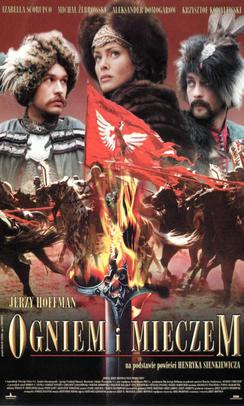
Henryk Sienkiewicz
Polish author of Quo Vadis (of old Hollywood fame) and other historical classics such as With Fire and Sword and Teutonic Knights. He wrote characters who well not without fault, but especially likable because of that, and great, big epic historical stories worth following through.

Graham Shelby
Remember that Kingdom of Heaven movie where Orlando Bloom pretended to be a blacksmith and Eva Green pretended to be slightly less terrifying than usual? Well, it was supposed to be based on Shelby's Knights of Dark Renown series, telling the story of the Crusades. Except the books are infinitely better, full of adventure and awkward love, and great storytelling.


Edward Rutherfurd
Unlike the others on the list, Rutherfurd is here for one book only: London. He wrote an awesome epic telling of the history of one city through dozens of generations of a handful of intertwined families - and then he tried to do it again and again and again, and repeated the success, but never the quality. I tried some of the other books, and gave up pretty fast. London is a masterpiece, though.

Robert Merle
I grew up reading his Fortunes of France series in Hungarian, and was excited to find out that they just started publishing them in English. Fortunes of France is a swashbuckling adventure through religious wars, court intrigue, and a great exciting time of French history, peppered with a cheeky roguish hero and a lot of gratuitous sex.

Mary Renault
I already mentioned her on my list last week: The lady took Greek historical fiction to a whole new level. In addition, she also wrote the most adorable, touching same-sex romance about Alexander the Great in The Persian Boy. My favorite of hers is The King Must Die in which she brought Minoan Crete to colorful and breathtaking life.


Robert Graves
I love Graves for so many reasons. While his work with mythology is criticized a lot in Classics, he knew how to lift mythology into historical fiction. My favorite book of his is probably The Golden Fleece, but he became most famous with I, Claudius (a book largely responsible for me ending up with a degree in Roman archaeology).

Bernard Cornwell
Also mentioned last week: He is a recent new favorite of mine for his Saxon Stories series. An extremely prolific author with a good sense of historical realities, and very likable, human characters. Also, the best battle descriptions I have read in a long time.

There you have my list. Do you have favorite historical fiction?

Saturday, December 27, 2014

2014 - The year in books

It's that magical time of the year again: Time to look at my Goodreads list and see what all I consumed over the course of 2014. The challenge I set for myself was 52 books (one per week) - not counting school readings and an industrial amount of comics, I still made it by this week. Here are some of the highlights:

Something old, something new
Cress, the next installment of the Lunar Chronicles by Marissa Meyer, came out this year, and it was everything we wanted it to be. Lovable characters, both old and new, exciting action with the fate of the world in the balance, and delicious Easter eggs for folktale-savvy people. In addition, the free short story The Little Android was also posted by the author online, and this is the first and only incarnation of The Little Mermaid I actually liked.
My favorite discovery for the year was Bernard Cornwell's Saxon Stories series. I am currently on book seven. I am a sucker for quality historical fiction, and this series has everything going for it: A little known yet crucial part of English history, Vikings, Saxons, epic battle scenes ("SHIELD WALL!"), a likable and complex protagonist, and - going against the worn stereotypes of the "dark ages" - strong, independent, and likable female characters. It combines the epicness of history with characters you really care about, and none of the corny mushy romance that flooded the internet this year thanks to the Outlander craze. Also, it will soon be a BBC show!
Another good reading experience was some of the books by the Strugatsky brothers I discovered for myself this year. Monday Begins on Saturday is pretty much the Russian take on what would have happened if Terry Pratchett wrote Harry Potter. Delightfully sarcastic, and surprisingly applicable to modern-day bureaucracy (and, khm, academia), the book and its sequel, Tale of the Troika, was a very entertaining read for someone like me who likes folklore, magic, and sarcasm.
My end-of-the-year Christmas reading also brought a discovery: Lesley M. M. Blume's Modern Fairies, Dwarves, Goblins and Other Nasties was a treat. I don't usually like people writing fakelore, but this book captivated me for many reasons: One, the author obviously knows her fairy folklore really well, and applies it ingeniously to the setting of modern day New York City. The stories are enjoyable and whimsical, but they don't shy away from the dark corners, and the one with the mermaid especially delivered some emotional punch. It is exquisitely written, and proves that fairies do live on in the modern world.

Folktales and Legends
As a storyteller, it is part of my job to read a lot of these. Instead of an all-inclusive list, I'll just mention some of the highlights.
One of the topics I got into this year was the folktales of minority cultures in China (see my previous post for an example). There are not many collections specifically on the topic in English, but I managed to find some good ones; The Seven Sisters was my favorite, with a lot of exciting and surprising stories.
Another area that I dug into was Bavarian folktales, on the occasion of the "500 new fairy tales discovered" Schönwerth collection has been finally partially published in English. The Original Bavarian Folktales volume is a treat (and bilingual), and there is an upcoming book from the same selection titled The Turnip Princess that I can't wait to read.
The series of the year for me was the World Mythologies Series. The first volume, one I found by accident in a used book store was Fabled Cities, Princes & Jinn, the Arabian installment, and it was love at first sight. Lots of original materials, stunning illustrations, captivating stories. I put the rest of the series on my wish list, and I already received the Central American and the African volume. Yay!
Another reading and research craze of mine this year was Caucasian Nart sagas. Some of them have been published in English, while others I found in Hungarian translation at home over the summer. I now have a serious soft spot for Ossetian Nart sagas.

In Spanish
In order to prepare myself and my vocabulary for the Tenerife storytelling festival, I spent most of my year alternating between English/Hungarian and Spanish readings. I did not only improve my language skills, but I also discovered a great many new books, and got to dive into Spanish historical fiction, a genre they are clearly very fond of. Some of the best were Antonio Soler's Boabdil and Eduardo Mendoza's Pomponio Flato - the latter a very entertaining murder mystery involving a Roman philosopher and a snotty little brat called Jesus.
I also read a ton of Spanish language folktale collections, and all of them were enchanting. I dug into Basque folklore (Leyendas de Euskal Herria), myths of Costa Rica (Las semillas de nuestro rey), the legends of the Canary Islands (Cuentos antiguos de Gran Canaria), and Spanish historical legends (Leyendas españolas de todos los tiempos). I plan on reading more of all of those. I especially recommend the Gran Canaria collection (by my friend Ana Cristina Herreros and María Jesús Alvarado), because it was such a fascinating collection project.


Comics
I read a lot of them. Without going into much detail, here are some of the series I really enjoyed this year:
Fables - always and forever. Breaks my heart that it's ending, but it is going out with grace and good storytelling.
Fairest - see above
Hawkeye (or, rather, Hawkguy) - for artwork and for storytelling
Ms. Marvel - for cultural commentary, teenage antics, and adorable artwork (WINGED SLOTH!)
All-New X-Factor - for character design, colors, artwork, and classic X-men team banter
X-Force - solid story, dark places, and a team that involves both Domino and Doc Nemesis, what's not to love?

What I could have done without
Divergent and Maze Runner were both meh, and they both made better movies than books (although I gave up after the first volume in both). The new Bridget Jones was better than the previous two (it did good to Bridget to care for people other than herself sometimes), but still nowhere near as good as Adrian Mole was. R.I.P. Sue Townsend.

All in all, a year rich in discoveries and great reading adventures. I wish all of you the same for 2015!

Thursday, August 28, 2014

Read some quality historical fiction today!

I found out big news today: Robert Merle's Fortune de France series, one of the great reading adventures of my youth, is finally being published in English! I wanted to share this with you English-speaking readers, and make a case for adding this book to your shelves.
Not too long ago I wrote a post about 6 Books that Need an English Translation a.s.a.p. My prayers (or whining?) seem to have been answered, and Pushkin Press is proudly presenting us the first volume of one of them this September: Robert Merle's The Brethren.
Fortunes of France (or, as I knew it growing up, French History) is a captivating, exciting and adventurous series of historical fiction that takes place in late Medieval France. The whole series is 13 volumes long, enough to take you through several decades of turbulent 16th century French history, and well into the early 17th century, the world of Louis XIII and Cardinal Richelieu so well-known from... other books. In the midst of struggle between royal houses, religions, and nations, our hero Pierre de Siorac works his way through France (and most of the lovely ladies of his time). Adventures, gallantry, some plague, lots of rapier fighting, complicated politics, generous amounts of love, dark tones, likeable characters, and a quite accurate picture of life in those times makes these books an experience that stays with you permanently.

This is not really a book review. The books have been out for a while, they are a proven classic, and people who have read them already know that they are amazing. Hopefully they will be even more popular now that they are available for the English-speaking bookworm crowd.

(...Who am I kidding? I am willing to hit you over the head until you read them.)

Friday, April 25, 2014

V is for Violet, Violante, and Violetta

Since I have used the Vermilion Bird of the East under Cinnabar, I will have to choose another color for V. (We are almost done, people!)
V is for Violet. It is a lovely deep shade of purple, and also (once again, after Lilac and Heliotrope) a flower. There are, of course, violets of other shades. My grandmother's garden is often full of white-and-purple violets in the spring that all stemmed from a rare plant that "escaped" from the local botanical garden and took over the roadsides.
Violet is also a girl's name (in Hungarain it is Ibolya). It is close to my hears because it is the name of one of my favorite historical figures: Queen Violant of Hungary, or, as she was known in her second home, Aragón, Violante de Hungría (in Hungarian we call her Jolánta). She was a Hungarian princess in the 13th century who got married off to Aragón to Jaime I, the Conqueror, one of the most famous sovereigns in Spanish history. It was an arranged marriage, but it became a famous and passionate love union, and Violante became a beloved queen, an equal partner to her husband, and a mother of many children. If you read Spanish, definitely read Albert Salvadó's historical novel trilogy of the amazing couple.

As for folktales: One that comes to mind is a tale from the Pentamerone. It features three sisters, aptly named Rose, Pink and Violet, and seems to be the origin of all "love-hate" romantic chick flicks. It starts out with a handsome young prince who walks by the house of the sisters and greets them politely, hoping he would get a similarly polite answer. Instead, what he gets from Violet is "Good day to you, prince! I know more than you do." Chick's both smart and sassy. That's enough to piss the prince off. Eventually the father, afraid for his daughter, sends her to live with her aunt. The prince makes a deal with the aunt to arrange for her to be alone with Violet, but she slips out of the situation and goes home; what ensues after is an elaborate series of practical jokes between Violet and the prince where they take turns having the last laugh. In the end, Violet triumphs, and the prince admits that he has been defeated. With that question settled, they can get married.

Purple Power, girls.

For more stories check out Andrew Lang's Violet Fairy Book (I swear, that guy had a book for all the colors...)

Friday, January 10, 2014

6 Books that need an English translation

Every once in a while I ask English-speaking people if they have heard of a book and only realize that it has not been published in English after I get a bunch of blank stares. At first I was shocked that "not published in English" is a phrase that exists, but apparently it does, and people who don't read all those other languages are missing out of some of my favorite books I have ever read. To try to correct this awful mistake, here is a list of some books that are very dear to my heart, and they need an English translation, a.s.a.p.

The Eternal Love of Khodja Nasreddin, by Timur Zulfikarov 
For everyone who loves the stories of Hodja Nasreddin, this book is the most gorgeous of all. Zulfikarov is a Tajik writer and poet who created an origin story for the Trickster like no other. Before he becomes the wise fool everyone loves, before he is smart and loud and well-known around the world, Nasreddin is just a teenage boy who was found on the Silk Road and raised by an old couple, a teenage boy who dreams about flying, and gardens filled with quince trees. His life changes when one day he saves the life of the local bey and as a reward he gets admitted into his harem for a night, where he meets his daughter, Suheil, a love he was never meant to have...
Original language: Not entirely sure, Tajik or Russian

Gelsomino in the country of liars, by Gianni Rodari
One of the favorite books of my childhood. Gelsomino is born with an unusually loud voice that breaks things if he speaks above a whisper, and ultimately makes him an outcast. Leaving his home he wanders into the strange Land of the Liars where it is mandated by law that no one shall ever speak the truth. Not a good place to be where everyone can hear you whisper from a mile away. But even in this weird upside-down world, Gelsomino makes some friends, just as weird as he is: A three-legged graffiti cat that his voice brings to life, a painter who can make anything he paints become real, and an old man called Benvenuto who only ages when he is not standing up, but then with alarming speed. It is one of the greatest children's books ever.
Original language: Italian

The Moment, by Magda Szabó
In my opinion one of the best books ever written in Hungarian. It is a female Classics author's take on the Aeneid. Consider this: While Troy is burning, Aeneas, son of Aphrodite, runs from the city with his son and his old father, and his wife kinda sorta just... gets lost and dies. To which Szabó asked the obvious question: What mother would possibly let go of her child in the middle of the burning of Troy?! So she added a twist to the tale: Aeneas (who is pampered and annoying, just as the son of a love goddess would be) dies, and his wife, Creusa, puts on his armor and helmet and goes on... to do the entire Aeneid out of sheer determination. It is a smartly written book, at the same time funny and deep, from someone who understands mythology as thoroughly as she understands the female soul.
Original language: Hungarian

Fortune de France, by Robert Merle
I cannot believe this one has never been published in English. Seriously, people?! It is quite possibly that greatest historical fiction series ever written. Merle is a master writer, and Fortune the France has been one of my favorites. Starting in the middle of the 16th century, the 13-book series follows a family through many turbulent decades of French history, through religious conflict and plague and war. Unlike a lot of historical fiction, it actually has likable characters, and a lot of humor added to the adventures. Fascinating to read (and learn history from).
Original language: French

Jaime I el Conquistador, by Albert Salvadó
Another historical series worth reading. It tells the story of Jaime I of Aragon, one of the most influential and famous kings in Spanish history, from birth to death, in 3 volumes. Since I have not been familiar with this part of Spanish history, it was a fascinating read. Especially because the entire second book is about Violante de Hungría, Jaime's Hungarian wife and queen consort of Aragon for many years. The book is written in an easily readable Spanish, and is as entertaining as exciting.
Original language: Spanish

Escanor (original language: Medieval French)
This one only exists in Old French and in German, and it's killing me, so please please please, some bored Medievalist please translate it. It is an Arthurian romance (I read English excerpts and summaries) that seems like a lot of fun, and, more importantly, contains the only Arthurian story where Sir Kay, Arthur's grumpy foster brother, falls in love-hate with a lady and then they spend most of the romance yelling at each other. It sounds vastly entertaining, and I would love to tell it. But I don't read old French. Meh.
Original language: Old French