Showing posts with label Grimm. Show all posts

Sunday, January 16, 2022

Hispanic Snow Whites do exist

Once again, for the people in the back: folktales have variants. In the oral tradition, they exist in many versions. Snow White is not a single story (even though most people only know the Grimm version). It's the name of a tale type, which exists pretty much all around the world. Therefore no, Snow White is not always white, neither literally, nor figuratively. For example, in some cases, she is orange. In the earliest Grimm manuscript, she is blonde with black eyes. And many versions don't note color at all, just that she is beautiful.
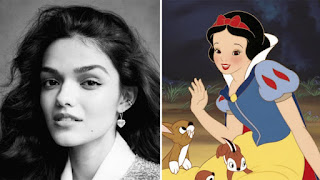
People have been getting their undies in a bunch about Disney casting a Hispanic actress for a live-action Snow White. Discussion on artificial categories aside, here is a select list of Hispanic Snow White folktales. 

You might note that the princess' coloring is the least exciting thing about them.

Blanca Flor (Spain)

Aurelio Espinosa collected some versions of Snow White, one of them called Blanca Flor (White Flower). In this one the (birth) mother tries to get rid of the beautiful girl by reading spells from a spellbook, and sinking her into a rock. She is rescued with the help of the Virgin Mary, and taken in by robbers. The mother poisons her with a silk shirt, but when a sexton takes the shirt off, she comes back to life.
In another version, from Asturias, the stepmother tries to lock the princess in to keep her beauty hidden, but doesn't succeed. She is rescued by a group of men, and in the end decides to marry the servant who revived her.

Blanca De Nieve (Dominican Republic)

Andrade's classic collection of folktales from the Dominican Republic has a whole lot of Snow White variants. My favorite is the one where the queen (named Snow) is not Snow White's mother at all; she just finds out from her mirror about the beautiful girl, and sends out a firefly to find her. Turns out, Snow White lives among the dwarfs in the woods. She is engaged to a prince, and he has ordered the dwarfs to guard her. When she is poisoned, a fairy appears and wakes her up from her death-like state so she can marry her prince.

Blanca Nieves (Puerto Rico)

There are several Snow White variants collected from Puerto Rico (link above). My favorite is the one where the queen's servants feel pity for Snow White, so instead of killing her, they drop her off in the mountains at the dwarfs' house. When she is later poisoned by her stepmother, the dwarfs simply take her to a doctor, who removes the piece of poisoned apple from her throat. She then falls in love with one of the dwarfs and marries him.
In another version in the same collection, the girl is adopted by robbers. The envious (birth) mother hires a beggar woman to stick a pin into the girl's head. The robbers find her dead; their leader pulls the pin out, reviving her, and then they go and hunt the assassin down.

Blanca (Mexico)

Also known as "the princess who studied to be a priest", collected in Los Altos. A vain queen sends out spies, strategically eliminating women who are more beautiful than her. This includes her own daughter, who manages to survive and find refuge in the wilderness, where she becomes the Queen of Thieves. Her mother manages to kill him with some enchanted slippers, and the thieves put her in a coffin and float her out to sea. Monks find the coffin, take her slippers off, and she comes back to life. They dress her as a man, and she studies for priesthood, until one day her parents come to hear her preach. She takes her father's confession, and tells him the whole story. Her father kills the mother, and restores Blanca to being a princess.
In another Mexican version, from Jalisco, the princess is chased into the woods by her stepmother. She befriends three wolves, who are actually princes cursed by the evil queen. The wolves attack the palace, kill the queen, and then the eldest asks the princess to split his head with an ax. He turns back into a prince, and they get happily married.

(Apparently, poison slippers are the preferred method in many Mexican versions.)

Blanca Rosa (Chile)

In this version, the girl exiled by her stepmother ends up in the abode of forty thieves, who worship her as the Virgin Mary. The queen finds her and sticks a poisoned pin into her head. The thieves put the dead girl into a coffin and float her out to sea. A prince finds her, but when he pulls the needle out of her head, Blanca Rosa wakes up so frantic and panicking that he just sticks it back in... He revives her again later, and asks her to be his wife. His spinster sisters try to get rid of Blanca, but of course, she survives in the end.

The envious stepmother (Argentina)

In this version, the (nameless) princess is chased into the wilderness by her (birth) mother, and a gang of robbers adopts her as their mom (!). In the end, when a kind revives her by taking off her enchanted ring, the princess only agrees to marry him if he pardons all of her robber sons.

Now, let's be real: none of this means that the Disney movie is going to be any good. (Most live action Disney films... *cough* aren't.) If you ask me, anyone would be better off if any of these awesome variants were adapted instead.

But honestly neither the whiteness, nor the European-ness of Snow White is a constant thing in folklore. Just sayin'.

Wednesday, May 20, 2020

The Queen Bee (Feminist Folktales 18.)

Another Thursday, another post for Feminist Folktales! It's a series of traditional stories from around the world that display motifs that reflect feminist values. I am not changing any of the stories, merely researching and compiling them, and posting them here as food for thought. You can find the list of posts here.

Today is World Bee Day, so I decided to post about one of my favorite bee-related folktales :) 

Origin: Germany (Grimm)

The story

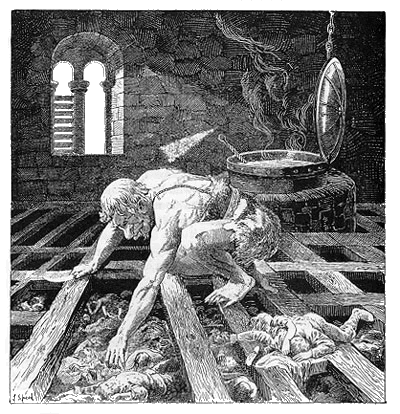
Image from here
The two eldest of three brothers fall into a "decadent way of life" and go out adventuring. Their youngest brother, nicknamed Simpleton, goes to find them and tags along on the adventure, despite their claims that he is useless, and they are much smarter. Along the way the brothers encounter various animals the two eldest try to hurt: an anthill they want to destroy for fun, ducks they want to kill, bees they want to smoke out. Simpleton stops them from doing so every time, feeling sorry for the animals.
The three brothers eventually end up at an enchanted castle, where a little grey man gives them three tasks to break the spell. They have to gather a thousand pearls from the moss in the woods, retrieve a golden key from a lake, and select the youngest out of three identical princesses. The two elder brothers fail, but the youngest gets help from the grateful animals, completes the tasks, and wins a princess for his kindness.
(And his disenchanted brothers marry the two other princesses.)


What makes it a feminist story?

This is the first story that comes to my mind when someone talks about "feminist male heroes." I had a post in this series earlier about a hero whose strength is empathy. Here, we see the same thing, except said hero is male. On top of that, he is not just casually kind to someone on his way to kill dragons or whatever, but rather, the entire story revolves around his kindness. His main power is empathy.
Simpleton starts out from a disadvantaged position. His brothers believe that he is stupid and useless, and has no business seeking his fortune. An early English translation calls him an "insignificant little dwarf." Simpleton is not strong, masculine, or dashing, and because of this, his brothers look down on him. Since his main virtue is kindness, his brothers, who follow toxic patterns of masculinity, believe that he is weak. This is a common phenomenon: if a man shows traits that are traditionally deemed "feminine", toxic masculinity labels it as a sign of weakness and ridiculousness (think of all the jokes about male nurses or kindergarden teachers - caregiving is traditionally seen as a "woman's job").

The two elder brothers are the textbook example of violent, toxic, destructive behaviors. They want to destroy an anthill just to laugh about the scared ants scurrying around. They want to eat the ducks. They want to steal the honey. They don't need to do any of this, but they enjoy exercising their power over defenseless creatures. They feel like they are entitled to their enjoyment at the expense of others, and to fulfill their wants without any regard for the pain they cause to those who are weaker. On top of that, they base their ego on thinking they are stronger and smarter than their victims. This is pretty much the definition of toxic masculinity. 
(For those in the back: "toxic masculinity" is one form of masculinity. NO ONE is saying that masculinity is bad in general.)

Simpleton, in his own quiet way, is actually very strong character. He is kind and has empathy - he cares for what happens to defenseless, small creatures like ants, bees, and ducks. Also, and this is a crucial part of the story, he stands up to his brothers to defend their victims. "Leave those animals alone! I won't let you hurt them." He doesn't wait to quietly clean up the mess later, but rather stands up and stops his stronger elder brothers from causing harm in the first place. This is what we call bystander intervention. A man with healthy masculinity does not only avoid causing harm, but also actively works to keep others from doing harm either. The former is passive, while the latter is active behavior. It is a whole new level of male role model when he doesn't just avoid "ever doing that" himself (which is indeed good), but actively intervenes when something is not okay. "Hey, that joke was sexist." "Dude, don't talk like that about her." "Hey. No means no." Even when it makes him a target of ridicule.
(Also, this is not unique in the world of folktales, but it is an important and attractive trait that he accepts help when he needs it. It doesn't bruise his ego to solve the tasks with the help of the animals.)

Simpleton is a likable, empathetic, strong character, who doesn't think he is better than others, and stands up for those who are defenseless. This is what makes him a feminist role model.

Things to consider

As a storyteller I feel like Simpleton should earn himself a better name at the end of the story.
The Grimm tale is beautiful, but it is worth digging up and reading other variants of the same tale type. I got into researching African versions, and some of those were equally gorgeous, featuring a wide variety of animals. I ended up including a Malagasy variant in my upcoming feminist folktales book.

Sources

This story is in the Grimm collection under KHM 62, and belongs to tale type ATU 554 (Grateful animals). It has many versions around the world.

Read an older translation here.
Jack Zipes: The Original Folk and Fairy Tales of the Brothers Grimm: The Complete First Edition (Princeton University Press, 2016.)
Oliver Loo: The 1810 Grimm Manuscripts (2015.)

Notes

According to research notes, the story was contributed to the collection by Albert Ludewig Grimm (who was not actually related to the Grimm brothers). 

Thursday, May 24, 2018

Snow White was originally rescued by her father (and other surprises from the 1810 Grimm manuscript)

(Disclaimer: In the case of folktales, there is no such thing as an "original" version. We can speak of "earliest known" or "earliest collected" instead, but those are usually preceded by centuries of oral tradition)

People have been pointing out that the 1812 first edition of the Grimm fairy tales is drastically different from the stories we know from later versions. This very first, "uncensored" collection has recently been given a shiny new full English translation by Jack Zipes. It is the book where Rapunzel still gets pregnant, where Snow White is still persecuted by her biological mother, and so are Hansel and Gretel.

The 1812 first edition, however, is still not the earliest version we have for the Grimm tales.

In 1810, while working on collecting stories, the brothers were asked by their friend, Clemens Brentano, who also had an interest in folklore, to send him the manuscript of the 50 stories they already had. And then, in true friend fashion, he forgot to give them back. Ever.
The manuscript, full of neatly hand-written pages by Jacob and Wilhelm, was re-discovered in the library of a monastery in the early 1920s. A hundred years later, in the form of a Kickstarter project, Oliver Loo created a full English translation for it. It is available on Amazon Kindle for about $2. and it is well worth the read.

Even at this point, between the first hand-written notes in 1810, and the 1812 print edition, several changes can be observed in the tales. Oliver Loo makes sure to point all of them out, along with translation mistakes and inconsistencies later English editions were likely to make. His translation is painstakingly true to the German original (to the point of leaving the German word order intact), and it re-translates both the 1810 and the 1812 versions of every story, side by side. It is a marvelous resource, and it helped me make a few shocking discoveries about the Grimm collection.

Here are some of my favorites:

1. The 1810 version Snow White is a trip. She is blonde, with "eyes black as ebony." The evil queen is her biological mother, who takes the girl into the woods to pick roses, and abandons her there (drives away in her carriage). Snow White, after eating the poison apple, is rescued and revived by her father (!), returning from a trip abroad. No prince.
(Also, the queen's question is "Who's  the fairest one in England?")
Also, there are other texts the Grimms used for the tale, including one where Snow White is abandoned in a dwarf cave (makes a lot more sense than a quaint little cottage), and one where Mirror is the name of her dog. In many of them Snow White comes back to life because a servant grows tired of caring for her dead body, and hits her, making her spit out the apple. Romantic.

2. The girl in Rumpelstiltskin can actually spin gold (!!). No one appreciates it, though, until the little demon helps her find a royal husband who knows what gold is worth. Is it just me, or this this a whole different story?!

3. Hansel and Gretel had no names in 1810. They were listed as Brüderchen und Schwesterchen (Little Brother and Little Sister). Originally, Jacob named them Hansel and Gretchen, and Wilhelm changed to to Gretel so it would rhyme better.

4. The birth of Sleeping Beauty is prophesied by a randomly appearing crayfish. Also, the fairy's prophecy is fulfilled on her 15th birthday (the last day of her 15th year), which often gets mistranslated as her 16th.

5. King Thrushbeard is a whole different story, put together from two separate tales. In one, the king in disguise takes the princess home, and then reveals himself and apologizes (!) for scaring her. In the other, she goes to steal food by her own volition, not because her husband tells her to. Both tales feel more like the princess was taught a lesson for despising poverty, rather than for being picky about a husband.

6. In the Three Ravens, the Glass Mountain (Glasberg) is actually a Glass Castle (Glasburg), which the girl lock-picks with a chicken bone. Makes a lot more sense than using the bone to climb the mountain...

7. In Thumbling's Travels, the famous line "Too many potatoes, too little meat" was not a part of the folktale at all. Wilhelm heard it from a kitchen maid, and he thought it would be funny to put into the story.

8. In Three Feathers, the two wives trying to copy the magical feats of the Frog Princess end up horribly dying. Wilhelm took this out by the 1812 print edition. (Also, in another early version of the same tale, there is no bride at all, magic items just literally fall from a tree into a hero's lap).

9. The name on Foundling Bird in the 1810 version is Karl.
(KAAAAARL!)

10. In Allerlei-Rauh (All-Kinds-of-Fur), it is the stepmother who chases the girl away from home. The girl had been engaged to a prince, and it is to his castle she flees in disguise (not to some random royal household).

11. In The Golden Duck, the girl who can cry pearls and roses accidentally dies, and then her stepmother decides to replace her with a false bride. The prince immediately notices the exchange. This tale also has an unexpected ending: The prince falls in with bad company, and is stabbed to death in a knife fight. The girl lives happily with her brother ever after.
(This one was delegated to a footnote in the 1815 print edition)

12. There is a tale called Murmeltier (Marmot) that was also delegated to a footnote in the 1812 book. It is basically Frau Holle on steroids. Or LSD. It involves a girl that is locked in a snow globe, fights a bear, has a trusty beaver, and meets a miller married to a male earth spirit. Among other things. Apparently it is originally a French fairy tale that someone told Jacob in a scrambled version. Nonetheless, it is delightful.


I highly recommend reading this collection. You will never think of the "Grimm" tales the same way again.

Thursday, February 11, 2016

Folklore Thursday: All the Dancing Princesses are dead

Today is Folklore Thursday on social media! If you want to find out more, follow this link, or click on the #FolkloreThursday hashtag on Twitter! Hosted by @FolkloreThursday.


I have been doing some background research for my upcoming folktale collection; among other things, this week it involved reading all the Hungarian versions of the Twelve Dancing Princesses folktale type (ATU 306) that I could get my grabby little hands on. It has always been one of my favorite fairy tales, and I love the international collection for it, but this time I was specifically interested in how Hungarian folk storytellers through the ages have interpreted it.
TL; DR: Horribly.


Contrary to the popular Grimm version, Hungarian dancing princesses can number anywhere from 1 to 12; most often there are 3 of them, and in many cases they shred more than one (6-12) pairs of slippers each night. The male protagonist is most often a shepherd or swineherd boy, although the occasional former soldier also appears.
Here is the rundown of how most Hungarian versions go:

1a. The king executes anyone who cannot solve the mystery of the disappearing princesses and shredded shoes. 99 people already have their heads on pikes by the time the protagonist comes along.
OR
1b. The princesses are (all or mostly) evil, and they poison anyone who tries to spy on them.

2. The princesses most often sneak out with older witches, evil fairies, or the Devil himself.

3. They also often dance on razor blades, thus shredding their shoes.

4. There are several versions where (some or all of) the princesses already have children in the Other World, or are pregnant - underlining the assumption that "dancing" is not the only thing they do on their illicit nightly adventures.

5. Once the truth is revealed, almost all tales end with the princesses being executed - most often burned (in cases of witchcraft), beheaded, or torn apart by oxen. Sometimes their bastard children are dragged along with them as well.
(In the few cases where they survive, they are either imprisoned, exiled, or simply not mentioned at all)

6a. Sometimes the youngest (and purest) princess survives and gets to marry the male protagonist (occasionally against her will),
ALTHOUGH
6b. In a surprising number of cases, the guy refuses to marry a "whore" (kurva) and asks for money instead.

There are only 2 versions that I could find where the little princess is actually in love with the shepherd boy before he solves the mystery.

7. The story type often occurs intertwined with the Princess in the Shroud, where the accused princesses die, turn into man-eating vampires, and have to be "redeemed" by same male protagonist. Marriage, once again, is encouraged by optional (on the guy's side, duh).

Yuuup.

Some fairy tale researchers note that "shoes" can be symbolic for sex and sexuality. Add that to the pregnant princesses and the father's (and the male protagonist's) violent judgment, and it is clear what these stories were told about: Girls overstepping their boundaries and "dancing" with men in secret, out of wedlock.

There is also a mythical/religious element to all this - secret trips into the Other World slowly turning from alluring fairy dances to witches' Sabbaths or journeys to Hell, and girls being punished for the mentorship of older, "sinister" female figures in the art of breaking free of the palace at night.

It is important to note that most of the 15+ versions I read were told by male storytellers (the ones that named the teller, anyway), with three exceptions - including the one that will be featured in my book, because she had a wildly different, more empathic, and girl-friendly take on the whole thing.

With that said: This fairy tale is never going to be the same again.

Friday, January 22, 2016

So, about those Bronze Age fairy tales

The Guardian has gone and done it again: Fairy tales are Internet front page news, with Beauty and the Beast in the headline picture. I have not had my friends and acquaintances share a fairy tale - related article on my wall this many times since the notorious "Five hundred new fairy tales discovered in Germany" in 2012. And since I ended up blogging about those back in the day, I feel like this one deserves a post as well.

This time, the viral headline reads:
"Fairy tales much older than previously thought, say researchers"

The article is based on a study done by Sara Graça de Silva and Jamshid J. Tehrani, much less sensationally titled "Comparative phylogenetic analyses uncover the ancient roots of Indo-European folktales." Using methods evolutionary biologists apply, they traced common folktale types along the family tree of Indo-European languages to determine how old they really are, and came up with some surprising numbers: about 4000 years for Beauty and the Beast and Rumpelstiltskin, 5000 for Jack and the Beanstalk, and a staggering "Bronze Age" 6000 for the Smith and the Devil (6000 before today would actually put them pre-bronze age, btw).

While the numbers are really impressive, and storytellers around the world are happy to see tales in the news once again, here are a couple of things I have been musing about since I read the study and the article:
(DISCLAIMER: I am not a folklorist. I am a storyteller, trained in archaeology, who works with traditional tales, and learned to research them through methods used by folklorists)

1. The researchers state that they based their study on the Aarne-Thompson-Uther folktale catalog, everyone's favorite go-to fairy tale research tool. From the 2000+ folktale types listed, they narrowed their sample down to Tales of Magic (ATU 300-549) - commonly known as fairy tales -, claiming that they are the most widely shared folktale types, and have been in the center of the debate about how old traditional tales really are. 
While this is a completely valid way of choosing a sample, it also brings up some questions:

- ATU is far from complete. Most countries have their own folktale catalogs, using the same numbering system, some of which have been incorporated into the 2004 edition, but still, this volume doesn't represent the entirety of the European folktale corpus. Since the researchers coded their sample as "present/absent" for each tale type for each society, it is important to note that in their study, "absent" doesn't mean that tale type never existed in that tradition - it just means that it was never recorded, or it may have been recorded but never made it into the ATU.

- As a storyteller, I'd contest the idea that Tales of Magic (a.k.a. fairy tales) are the most commonly shared folktale type. They do have a prestige in most cultures - known as the "big tales" or "real tales" - and they are definitely the stars of popular culture and children'd literature (thank you Disney), but that doesn't mean they are the most widespread. Trickster tales, for example, most often fall under Animal Tales or Anecdotes and Jokes, while some well-known "fairy tales" can actually be found under Realistic Tales. Especially trickster tales seem to be wildly popular around the world in very similar forms, and they are also believed to be very old (e.g. the Panchatantra and the Jataka tales from India). I would love to see a similar study done with them.

2. The study states that they wanted to focus on the vertical transmission of tales (over time) as opposed to the more often researched horizontal transmission (exchange between contemporaneous cultures). They allow that both can happen at the same time, but very correctly raise the point that it is still interesting to see what tale types neighboring cultures might adopt or reject from each other. With that said, horizontal transmission is still a factor, and given how fast popular tales can spread, it is really hard to completely factor horizontal transmission out of the study. I would have to go back and read it again to fully understand how they did that, but it's definitely worth considering.

3. Archaeologically speaking, 4000-6000 years is not that old. Human societies existed way before that. And since storytelling is a very human trait, we can assume that tales were told way back then as well. Now, given the almost complete lack of written sources, we can't tell if they were the same tales at all, or whether the tales we know and love today already existed such a long time ago. 
Here is an interesting distinction between being a folklorist and being a storyteller: Storytellers generally (and enthusiastically) assume that stories are ancient. Even if we have no proof, we treat them as a part of an age-old tradition, with the knowledge that they may have been born millennia ago. I have seen multiple storytellers on social media responding to The Guardian article with "Well, duh."
The study and its findings are still impressive, though - especially for fairy tales, because people have been contesting that they are older than the 17th century. 
However...

4. The "folktale types" listed in ATU are the "bare bones" of a story. They break tales down to their most simple plot description, the skeleton that corresponds to other similar tales. Depending on the time, the culture, and the storyteller, the fleshed-out versions of the story can be vastly different from each other. Even within one culture and time frame, versions of the same tale type can have completely different meanings to each storyteller - for example, in some Hungarian versions of the Twelve (Seven) Dancing Princesses, the princesses live with their dancers happily ever after, while in others, they get executed for witchcraft. Same language, same time frame, same tale type, vastly different morals.
Long story short: The fact that the same tale types might have existed thousands of years ago doesn't mean they looked the same, tasted the same, or meant the same.

5. Why does it matter to us how old these stories are? I am not asking myself this because I doubt that it should matter; I know for a fact it matters to me. But I am curious: Why did this become instant viral news? What do people find appealing in the knowledge that Beauty and the Beast was told 4000 years ago?
(As for me, as a storyteller, I enjoy knowing that I am passing on a tradition that extends back thousands of years. I like the idea that someone, who might or might not have been one of my very distant ancestors, sat in a tent somewhere 6000 years ago and told similar stories.)

6. Hungarian is a Finno-Ugric language, in case anyone was wondering why we are a blank space on the map. I am sure you were.
(We are sitting at the cool kids' table with Finland and Estonia)

Now, hands up: Who else would love to hear what a Neolithic fairy tale sounded like?...

Saturday, November 14, 2015

Story Saturday: What does YOUR Cinderella look like?

This is an intriguing little thing that has been rattling around in my head lately. Every time I open Facebook, there is a high chance I'll run into one of those "Disney princesses reimagined as..." memes.
In case you have missed this trend, here are some things Snow White & Co. have been re-drawn as lately:

Iconic horror movie villains
Real people
Famous people
Wearing historically accurate costumes
Having realistic hair
Characters from the Walking Dead
Velociraptors
Warriors
Hipsters
Tattoo pin-up girls
Men
Different races/cultures
Fine arts portraits
Having short hair
Each other
Twisted creatures
Pop culture heroines
College students
And finally, the ultimate spoof of the trend:
Lukewarm bowls of water

The visual cues people most often associate with folk- and fairy tale characters tend to come from illustrations they see as children. This and the memes above (especially the ones that play around with the appearance of the princesses) made me wonder how much of our mental imagery is influenced by Disney. I am not one of those storytellers who scream about the death of imagination every time someone mentions the D word... but when I ask myself how I pictured these folk- and fairy tale characters before I saw the canon Disney imagery, I have some very interesting realizations.

My Little Mermaid has never been a redhead. I grew up with the Japanese cartoon instead of the Disney one (which I didn't see until college), so the Little Mermaid in my head has always been blonde (oh, and her name was Marina and she didn't wear a bra).

Talking about blondes: My Cinderella has always been a brunette. I don't remember where I got that idea; she just always sounded like a brunette to me. I also imagined her as very tiny. The dresses, however, I very clearly remember coming from a Hungarian picture book. There were three of them (duh), one pink, one blue, and one green and gold.
Some of my other iconic early fairy tale images came from the same book series. The princess of the Frog King was blonde, round-faced and curly-haired; the Nixie in the millpond was black-haired and rosy cheeked.

My Sleeping Beauty, on the other hand, was definitely a redhead (kind of a dark, coppery red) with freckles. I usually imagined her in a matching yellow dress. Since in Hungarian, her name is Csipkerózsika (Little Briar Rose), I always imagined her castle as tangled in thorny vines, but also covered in pale pink dog-rose flowers.

Snow White is pretty much a given, except in my head she has a long black braid, and doesn't wear yellow-and-blue.

Images definitely get more random once we get to stories that have never really been put to the iconic big screen. But now I am wondering: How many children get to make their own mental images of these classic characters before popular media teaches them what they should look like?

So here is the question:

Do you remember any folk- or fairy tale characters that lived in your head before you saw canonized pictures of them? What did they look like? Why did you like imagining them like that?

I would love to hear from you! :)

Monday, October 12, 2015

Storytelling Pet Peeves

If you thought storytellers were docile, merry, peaceful individuals who spend their time frolicking in meadows and consorting with fairies... you have clearly never met a storyteller. Believe me, we can be quite terrifying. Especially when someone hits the right buttons.

Every storyteller has their own, story-related pet peeves. These are mine:

1. Excalibur and the Sword in the Stone ARE NOT THE SAME SWORD. Not in most stories, anyway. Arthur pulls one sword from the stone (AND ANVIL), and gets the second one from the Lady of the Lake. This second one is the one usually named Excalibur.

2. Morgan le Fay is NOT Mordred's mother. That's Morgause. Wrong sister.

3. Pandora's box HAS ALREADY BEEN OPENED. It is not some mystical chest full of evils. The only thing left inside it is Hope.

4. Dionysus is NOT an old fat drunk man. He is a youth. In fact, he is one of the most attractive of the Greek gods.

5. Andersen stories are not "Danish folktales." In fact, they are not even "Danish fairy tales." They are Andersen stories.

6. And while we are at it, Peter Pan, Alice, or the Wizard of Oz are also not folktales.

7. Rapunzel doesn't get RESCUED from the tower by the prince. He just visits her and gets her pregnant, and then the witch throws her out.

8. Snow White was persecuted by her BIOLOGICAL MOTHER. At least in the original first edition of the Grimm tales. Stop blaming stepmoms for this one.

9. Stop with the "if the shoe fit perfectly, why did it fall off?" memes. Cinderella lost her shoe because the prince smeared pitch on the stairs. Read the story.

10. It's "the 1001 Nights," not "the Arabian Nights."

+1. Stop using "trail of breadcrumbs" as a metaphor for leaving clues. Hansel and Gretel got lost in the woods because birds ate the crumbs. The metaphor for leading someone somewhere, based on this story, should be "trail of pebbles."

Whew! I feel so much lighter now.
Back to frolicking.

Thursday, July 9, 2015

Folklore Thursday: 7 folktales I would rather watch than a live-action Prince Charming

Honestly, really?! The newest installment in Disney's "live action remake" craze is a movie about Prince Charming. Because what Hollywood needs in yet another live action movie featuring a dashing white dude.
(Unless they make a movie about a Prince Charming who is a person of color... which would be a surprising step from Disney)
What I don't understand is why Disney insists on recycling old material instead of continuing the trend of Tangled and Frozen and making new films from fairy tales that have survived been overlooked by them so far. There are so many that would be awesome on the screen.
In honor of Folklore Thursday, here is my wish list:

1. Twelve Dancing Princesses
Pretty please with cherry on top. Look, it already has the dancing and singing built in.

2. Jack and the Flying Ship
I know it would essentially turn into the Avengers on screen, but honestly, I would watch a folktale-Disney version of people with superhuman powers. Go figure. Bonus points if they do the Greek version with earthquake powers and a "plump princess" (this is one of the versions I included in my book).

3. The Frog Princess
The whole "animal bride" thing would be intriguing to watch... Plus the female protagonist and the mandatory witty Disney animal could be one and the same in this case. Doesn't necessarily need a frog - my favorite version is the Finnish story with the Mouse Princess who manages to be seductive even in her rodent form.

4. The Winged Wolf
Not just because it's a Hungarian folktale, but also because how awesome a winged wolf would be!

5. Bluebeard
Because it would be dark, and disturbing, and that fairy tale needs to be known by more people overseas. Bonus points if they do J. J. Reneaux's Cajun version, Marie Jolie.
(And maybe get Cajun culture right this time, *cough*Princessandthefrog*cough*)

6. The sea-hare
A princess that can see everything, and a hero that needs to hide from her. What an adventure and what a love story that would make... cool Hungarian version also available in my book, dear Disney, just sayin'.

7. The Daughter of the Sun
Italian folktale with a magical sassy female protagonist, some minor gore, and a whole lot of stunning visuals. Courtesy of Italo Calvino.

Come on, Disney. You can do better than Prince Charming. Don't sell yourself short.

Thursday, June 25, 2015

Folklore Thursday: A mosaic of stories

Today is Folklore Thursday on social media! If you want to find out more, follow this link, or click on the #FolkloreThursday hashtag on Twitter! Hosted by @FolkloreThursday.

One of my favorite things to do as a storyteller? Looking up several versions of the same tale, and building my own from them. It is kind of like a make-your-own ice cream thing.

One of the stories I am working with recently is most commonly known as The Black Thief and the Knight of the Glen. It belongs to Aarne-Thompson folktale type 953 ("Old robber tells three stories"), and I have managed to find about a dozen different versions of it, most of them from Scotland and Ireland. Interestingly enough the story also shows up in the Grimm Fairy Tales, but it was edited out after the 6th edition (it was No. 191 until then).

The story in a nutshell: Three young men and an old thief are caught trying to steal a king's horse. They are about to be burned alive for their crime. In order to save the lads, the old thief tells the king that he has been in a worse situation before. The king promises that if it's true, one of the lads can go free. The old thief tells outrageous stories about his close brushes with death; each story gets more hair-raising and exciting, and after each, one of the lads is let go. After the last story, which involves saving a baby from a giant, the king realizes that the child the old thief saved was no other than himself, and lets everyone go free with gifts and good wishes.

There are many things to love about this story, and it is a lot of fun to tell. In order to show some of my build-a-story process, here are some details:

1. The protagonist is known as the Black Thief, Red Conall, Conal Yellowclaw, or the Byzantine Brigand in different sources. In my version, I call him Red Conall, the Byzantine Brigand, because his red hair is an important plot point in the story, and "Byzantine Brigand" just sounds too awesome not to include.

2. In some versions the three lads are Conall's own sons whom he tries to keep away from becoming robbers themselves (Conall himself reformed in his old age). In other versions they are three princes sent on a quest by an evil queen. While both versions carry a lot of emotional weight and possibilities, I tell the second one, because an old, wandering former master-thief taking three exiled princes under his wings is just too interesting to pass up. He definitely becomes a father figure that is willing to sacrifice his own life to save the lads.

3. The three stories told by Conall are varied across the board. One of them is often a version of the "Blinding the Cyclops" episode from the Odyssey. I left that one in since it is exciting, and also intriguing that it shows up in an Irish folktale. I especially like that according to Conall, he and his companions went into the Cyclops' cave because they wanted to rob it. Conall talks about his former exploits of thieving and robbery with pride, even if they went horribly wrong in the end. He used to be the best of the best, after all.

4. You can never quite tell how much of Conall's stories are true, and how much he is making up on the spot. The last story usually includes a physical sign - he saves the baby's life by cutting off a little finger, and that's how the king knows it was himself, since he is missing a finger too. I like to imagine that Conall just looked at the king, saw the missing finger, and took a chance on it. It is never said in the story when I tell it, but kind of implied, that Conall is just pulling a Scheherazade, making up tales on the fly in desperation to save the princes' lives. You have to be an awesome storyteller to get away with that three times in a row.
(Scheherazade at least always had a day to think ahead...)

Anyhow, fun story, many possibilities. I really enjoyed assembling my favorite version.

Here is a short list of some of my sources:

Johannes Bolte & Georg Polívka: Anmerkungen zu den Kinder- u. Hausmärchen der Brüder
Grimm, 1913. (Der Rauber und seine Söhne)
Italo Calvino: Italian folktales, 1992. (Three Tales by Three Sons of Three Merchants)
J.F. Campbell: Popular Tales of the West Highlands Vol. 1, 1890. (Conall Cra Bhuidhe)
J.L. Campbell: Stories from South Uist, 1961. (The Byzantine Brigand)
Wilson M. Hudson: Tire Shrinker to Dragster, 1968. (An Gadaí Dubh: The Black Thief)
Joseph Jacobs: Celtic Fairy Tales, 1892. (Conal Yellowclaw)
Andrew Lang: The Red Fairy Book, 1890. (The Black Thief and the Knight of the Glen)

William Thackeray: The Irish Sketch Book, 1843. (The Black Thief of Sloan)


Friday, November 14, 2014

Yes, Grimm fairy tales are dark, and we like them that way

News about a new edition of the Grimm fairy tales have been circling the Internet and popping up consistently on my Facebook wall. Headlines include:

Grimm Brothers' fairy tales have blood and horror restored to them in new translation (The Guardian)

New Translation of Grimm's Fairy Tales Restores the Gore and Horror (io9)

First Edition of all the Original Grimm's Fairy Tales will leave in all the gnarly parts (The Mary Sue)

Too Grimm for Disney: Original editions of classic fairy tales offer darker side of Brothers Grimm stories - including self-mutilation in Cinderella and Rapunzel getting pregnant in her tower (The Daily Mail Online)

These Grimm fairy tales are not for the kiddies (USA Today)

Brothers Grimm: Fairy tales restored & there are no "happy endings" (Hollywood Life)

So, what's up with all of this? Are we excited? Yes.
Is this good news? Yes.
DID YOU KNOW THAT IN CINDERELLA...
YES, I KNEW.

Professional storytellers generally know. We might not always be allowed to tell the stories that way (especially in the USA), but trust me, we know. It's really the only party trick a storyteller has: "Did you know that Rapunzel originally gets pregnant in the tower?" "Did you know that Cinderella's sisters cut their toes and heels off to fit the shoe?" "Did you know that Snow White is strangled, stabbed in the head, and then poisoned?"
Yes, yes, and yes.

When I was little, back in Hungary, I had picture books that told the stories that way, and no one thought about it twice. I went to puppet shows where they poured red glitter out of the stepsisters' shoes to indicate the dripping blood. The firs time I saw the Disney version of some of these tales I was not entirely sure what the heck was up with them.

So, what is the fuss exactly about? Why is all the media talking about the new edition? And, most of all, what I am trying to prove here?

It's not about the stories. The Grimm tales are dark, and they have been known to be dark for a long time. I mean, who ever thought that The Pied Piper of Hamelin is a cheerful, goofy children's story? (Apparently every children's book illustrator ever). The news is not the fact that Grimm is dark. The news is that people are excited about this.

Stories can use some darkness. They don't hurt children. I (like most kids in Europe) knew the original versions when I was little, and I turned out fine (and a storyteller). And yet, these versions are regarded as something strange and new and sensational. If you work in education or entertainment, you know why. Every storyteller could talk to you for hours about parents and teachers (but never kids!) complaining about a story being "too dark" or "too gory" just because the villain dies in the end. Stories get censored left and right. What, it is okay to murder Snow White once, but not three times? (The dwarves manage to save her the first two times, in case you were wondering). Is it okay for Rapunzel to be sold by her mother and thrown from a tower, but pregnancy is a taboo?

Yes, the Grimm tales are dark, and you know what else? It's not just Grimm, either. A 17th century Italian version of Sleeping Beauty gets raped in her sleep and wakes up when she gives birth to twins. The original Red Riding Hood is torn apart and devoured by a wolf. A Swiss version of Snow White is a girl forced into slave labor by seven bandits. The ancient Greek Cinderella is a prostitute. The Hungarian Dancing Princesses don't wait for their suitors to fall asleep - they poison them dead and then go to a witches' Sabbath. I could go on.

Shiny, happy, kid-friendly tales are a product of 19th century romantic ideals of childhood. They are not the norm. Grim(m) was the norm. And some of them were never intended for children. And now while we are talking about it, hopefully we will take another look at what these stories tell us about human nature, and to what extent they need or don't need to be censored.
We might want to talk about what the villain's death means to children listening to a tale. We may want to talk about what Rapunzel can tell us about the need for sex education. We might have a discussion about Cinderella's sisters and the body image of young girls. We might talk about Sleeping Beauty and issues of consent. We might even venture to discuss Snow White and the question of taking authority figures' words at face value. And why stop there? Maybe we will even talk about censorship in other media.

Did you know that...? Yes. I did. And I am glad I do.

Monday, April 21, 2014

R is for Red, and not just Riding Hood

And once again we are on solid ground. R is for Red, and the many folktales associated with this color.

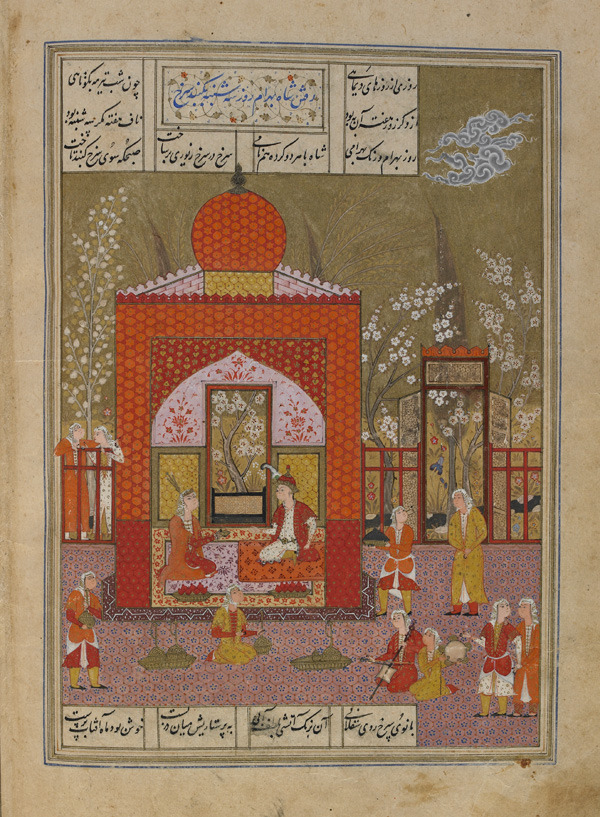
First up, we have yet another one of the Seven Wise Princesses (if you are keeping track, we have met Blue, Green and Ebony so far). The Red Princess is from Russia (or, rather, the historic Rus), and lives in the Red Pavilion dedicated to Mars. The tale she tells to Bahram Gur is probably my favorite out of the seven.  It is about a Russian princess who did not want to get married, but her father pressured into agreeing that she can set whatever task she wants to set, as long as she marries the man who completes it. In turn, the princess built a fortress surrounded by killing machines and traps, and declared that whoever can sneak in an meet her in the inner courtyard, and answer her riddles after that, can marry her. As stories usually go, after a while a hero shows up who is capable of sneaking in, and also capable of solving the riddles. Whatever. I like this story mostly because of the active part the princess plays in shaping the hero's task, and because all the riddles are pretty much constructed in a way that there is only a right answer to them if she accepts is as a right answer. Plus, she does magic. Very cool.

Other tales that include the color red are:

Little Red Riding Hood (I don't think I need to introduce this one)

Snow White and Rose Red (Much more entertaining than Snow White if you ask me, and also masterfully adapted in the Fables comics)

The Red Shoes (A classic Andersen story, gruesome and depressing in true Andersen fashion. A little girl loves her red dancing shoes and doesn't pay attention in church, therefore an angel curses her to dance forever, a sentence she only gets away from by having her feet chopped off, and then she prays until God takes pity on her and lets her die. This, boys and girls, is why I don't tell Andersen.)

The Red Dwarf of Detroit (one of the most entertaining urban legends in the USA)

The Little Rabbit who wanted red wings (a cute Southern folktale that children especially like, about a little rabbit that wishes for bits and pieces of other animals to be more like them)

For more folktale goodness, check out Andrew Lang's classic Red Fairy Book.

Wednesday, April 2, 2014

B is for Blue Princesses, Blue Oxen, Blue Coats, Blue Belts, Blue Roses...

Two by two, tales are blue.

When I revealed my theme for this year, a surprising number of people indicated in the comments that they have a special place in their heart for the color blue in its many shades. I can't really argue with that. I love blue as well. And guess who else loves blue?
Stories!
Instead of telling one selected story today, I will just make a squirrel pile of all the blue tales I can think of. Everyone is happy. Here we go.

The Blue Princess
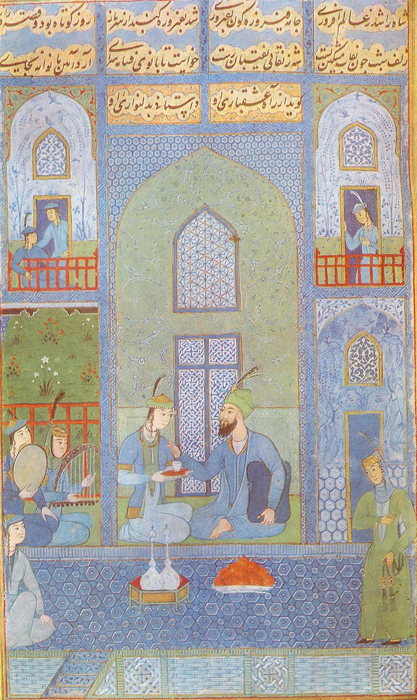
Today is also the first stop on our journey into the tale that gave the theme to my challenge: Nizami's enchanting Persian epic poem, Haft Paykar (known in English as The Seven Wise Princesses). Barham Gur, the King of Persia, is courting seven princesses who live in the seven pavilions he built for them, each in a different color. He visits one princess every day of the weak, and each princess in turn tells him a story related to the color they chose for their pavilion. I will get to all of them in time by the end of April.
The resident of the Blue Pavilion (sometimes called the Turquoise Pavilion) is Piruza, a princess from... well. Some sources say Morocco, some sources say Maghreb, some sources say Khwarezm. She has blue eyes, and her pavilion is dedicated to Mercury. She tells a tale to the king about a young man who was lazy and a drunkard, until one night he was lured on a mysterious journey to an enchanted garden that turned out to be the lair of demons. After miraculously escaping for this predicament, he vowed to wear only blue, the symbol of clarity and salvation from evil.

Babe the Blue Ox
I adore Babe the Blue Ox. I realize that Paul Bunyan stories are generally considered "fakelore," but they are still tons of fun to tell. Especially to audiences outside the US who have never heard them before.
I love asking my audiences (American and non-American) if they know what made Babe blue. Do you?
(Also, the Jack of Fables comic book series did wonders with Babe's character.

The Blue Rose
A Chinese folktale that says a lot about the nature of Love. A princess vows to only marry a man who can bring her a blue rose. I love this story because it is a creative take on how fairy tale quests can be manipulated by a clever princess who wants to pick her own husband...

The Blue Light
A classic Grimm fairy tale. I remember loving it when I was little, especially because of the dogs with eyes of various sizes guarding the treasure underground. Lovely tale to tell.

Bluebeard
He does not need an introduction. Although, sadly, we never find out why the beard is blue...

The Blue Belt
Norwegian folktale. Giants. Need I say more.

The Blue Coat
A Jewish folktale that storytellers adore. Nothing is ever completely useless.

The Blue Lily
A very creepy Hungarian folktale where a girl accidentally flirts with the devil. Oops. Once she finds out who the handsome stranger at the ball really is, she tries to get away, but it is too late. The devil keeps showing up at her house until she dies from the curse. A blue lily flower grows on her grave; the lily is picked by a prince, whose love will eventually transform the girl back into her original form. This folktale also exists in Russia.

The Blue Jackal
A folktale from India, included in the Panchatantra. A jackal falls into a pit full of indigo dye, and then passes himself off as a divine being. A very entertaining story to tell.

Okay, that's enough blue for one dye. I mean, day.

Wednesday, April 24, 2013

U is for the Unfair Princess

Or Unkind, or Utterly Annoying. Take your pick.

We are talking about a type of princess here, rather than one particular person. The folktale type is known as King Thrushbeard, the original cautionary tale for shallow girls who want a perfect prince based on looks alone. I have always enjoyed this story and its numerous variations as a child. Of course growing up gives one a different perspective of publicly humiliating royalty in order to make a point, but a point is definitely made: If you judge people by their looks, don't expect them to accept them as you are either.

Another tale takes it to the next level: Cannetella  wants gold from her suitors. Specifically, gold teeth and golden hair. Well, she gets it, and then some, because the only one who can pull it off happens to be an evil magician who abuses her and locks her up, and comes after her even when she manages to escape. Actually very dark and depressing for a folktale. But teaches you a lesson not to run off with someone just because he looks good.

(Or wait for the nonexistent Perfect Prince who has to look just so)

(We all know that girl)

One step up from this and we are straight on Bluebeard's doorstep - the cajun version of the tale, Marie Jolie, is still one of my favorite creepy stories to tell.

And while we are on the topic of shallow and utterly annoying princesses, I'm shamelessly gonna plug Teh Book again: The tale of the Princess of Tomboso, also known as The Three Soldiers, features a princess who shamelessly cheats and beats a poor boy out of all his magical items, and does not even feel bad about it, not even a little. She ends up getting her just desserts, obviously, and even gets dumped in the end. I included the story in my book because one of the items the boy has gives him (and the thieving princess) the ability to teleport. Hilarity ensues. Stay tuned.

Wednesday, April 17, 2013

O is for the Old Princess

Okay, so today's princess is brought to you from the most underrated Grimm fairy tale, like, ever.

Because this princess, kids, is Badass with a capital B. In fact, I should have put her under B and not O. But O will be important too. Whatever.

So, in the beginning of the story we have one ordinary princess and one overprotective king who builds a glass mountain and declares that whoever can climb the mountain can have the princess. I guess it's the trendy thing to do for royalty when they get bored with arranged marriages.

Anyhow, there is one prince who loves the princess and volunteers to climb the slippery slope -  and guess what, the princess volunteers to climb with him and "hold him if he falls."

Brownie points for the princess!

Apparently there are no rules about helping the contestants, so they begin to climb... but it is the princess who slips, and the mountain opens and swallows her up. She ends up in a cave with a nasty looking little man who has a long beard and makes her do chores around the house, threatening to kill her if she doesn't.

And no one comes to the rescue.

No, really. No king, no prince, no nothing.

The princess grows Old doing her chores and now she is called Mother Mansrot.

...

I know right?! Way to be depressing, Brothers Grimm.

But the story does not end here! The Princess (or, rather, Mother Mansrot now) gets fed up with being a slave and rescues herself in quite a genius way. No spoilers, read the story.

When she gets home, the prince is still waiting for her, and they can finally get married.

Ta-da!

No, seriously, how many princesses grow old in their fairy tales?! Even Sleeping Beauty is preserved as eternally sixteen after a hundred years. So, here is some realistic storytelling for ya, straight from the Grimm Brothers who brought you half of the Disney princesses...

The illustration for the storybook comes from here. Check it out it's really cool!

Friday, April 20, 2012

R is for Rapunzel and Rudaba

I wonder if there is at least one professional storyteller out there who likes Disney's Tangled.
I mean, apart from me.
I think it's awesome.


I have had problems with Disney movies in the past, but usually not because of the good old "that-is-not-how-the-original-story-goes" argument. Stories change, adapt, and modernize, that is very natural in oral tradition, nothing wrong with creatively playing around. If it is done well, I'm all for it.
And Tangled, in my humble storyteller opinion, was done really well.
The surprising part?
It is not even as far from the original as other Disney movies.

For one, the original Grimm story (as well as its many variations) raises a whole series of questions that will come up when you tell it to children. What happened to her original parents? What did she do in the tower all day? How did the witch get her into the tower in the first place? Why did the prince leave her there after they first met? (in fact, in the Grimm version, he leaves her there and just keeps visiting until she, um, realizes her dresses are too small around the waist). Disney found clever and humorous ways of explaining all that, and I know that folktales do not need to be explained, but try telling that to fourth grade, because they will want to know.

As for the characters, Rapunzel was cute, and the guy... well. I'd take a rogue over a paladin any time. Bring it.

Talking about that, by the way: one of my favorite tales to tell is the Persian legend of Zal and Rudaba, wich is generally seen as the earliest known version of the Rapunzel tale (also known as AaTh 310 for those folklorically inclined). The whole story is utterly fascinating (trying not to go off on a fangirlish tangent here), but my favorite part is the classical image: when the lady, Rudaba, lets down her long (black!) braid from her balcony, the hero just kisses the braid and says: "I wouldn't hurt you, I brought a rope." Hell yeah.

All in all, I never liked Rapunzel as a child - I was just not interested. I would probably have never read so many different versions of it if I had not seen the Disney movie and experienced how it echoed across the storytelling world last year. I still don't tell the Grimm tale, ony the Persian legend - but I learned that some good humor and creativity can make a good story that is modern and at the same time true to the original.