Showing posts with label princesses. Show all posts

Thursday, April 8, 2021

Tarot Tales: G is for the Green Goddess ( The Empress)

Welcome to the 2021 A to Z Blogging Challenge! My theme this year is Tarot Tales. I am making a selection of folktales, legends, and other traditional stories that correspond to tarot cards. Storytelling and tarot go well together. Do other stories come to mind? Let me know in the comments!

The card: The Empress

Meanings: The Empress is a card about fertility and femininity. It is about nature, nurture, beauty, abundance, creativity, birth, and motherhood. It also has connection to comfort, pleasure, sensuality, health, love, and romance. It is an all-around lovely card.

Selection process: Obviously, this story had to be about a woman. Preferably one who is also royalty or divinity. World lore is full of mother and fertility goddesses, so there was a lot to choose from. The easy route would have been to pick one of the big names, such as Demeter, but I wanted to dig a little deeper, and shine a light on less well-known stories.

The story: The princess who made the forests green and the meadows bloom

Origin: Hungary 


Summary:
A young prince decides that he will only marry the Princess Who Makes the Forests Green and the Meadows Bloom (Erdőzöldítő és Mezővirágoztató Királykisasszony). His parents try to hold him back, since no one actually knows if such a princess exists, but he sets out on a quest anyway. On his way he arrives to a dying kingdom where nothing grows. He finds out that the king had unwittingly promised his child to the Devil, but the refused to give the baby up, and in revenge the Devil turned the whole kingdom into a desert. The only way to break the curse is for the PWMFGMB to find her true husband, and travel across the land.
The prince meets an old beggar, who tells him that the princess can only marry a man who was a late child, and who wanted to marry her even before he knew she existed. When he finds out that the prince fulfills both, he grants him a magic wand that summons anything one draws with it. Using the magic wand the prince travels to the PWMFGMB's lush, thriving kingdom, and attends the royal ball two nights in a row. The princess falls in love with him, they get married, and on their way home they cross the desert kingdom. Wherever the princess passes, everything turns green, flowers bloom, vegetation grows, and nature comes to life.

Sources & notes: Hungarian text online here.

Runner-ups: A similar fertility blessing appears in the Indian tale of A story in search of an audience, where a newborn girl is blessed with magic nature powers. I also considered including the Lady Tree of the Narts, an actual world tree goddess from the Caucasus who holds magical knowledge (and has a baby with a hero).

Do you like green things? Are you a gardener? What are your favorite plats?

Thursday, April 1, 2021

Tarot Tales: A is for Adjustment (Justice)

Welcome to the 2021 A to Z Blogging Challenge! My theme this year is Tarot Tales. I am making a selection of folktales, legends, and other traditional stories that correspond to tarot cards. Storytelling and tarot go well together. Do other stories come to mind? Let me know in the comments!


The card: Justice (a.k.a. Adjustment)

Meanings: Justice (obviously), fairness, law. Making impartial and objective decisions, finding the truth, staying true to your principles. It also symbolizes critical thinking and responsible action. 

Selection process: Justice and fairness is one of the staple motifs of folktales, so there was a lot to choose from. One thing I wanted to pay attention to was that in the RWS card the figure is usually a woman, so I wanted to find a tale where justice is upheld by a woman. 

The story: Princess Learned-in-the-Law

Origin: Myanmar

Summary:
A clever and well-educated princess' necklace disappears while she is bathing in the garden. The guards accuse the old gardener, and bully him into an admission of guilt. The princess, however, suspects that something is wrong. She listens to the trial from behind the scenes, while the gardener and various courtiers accuse each other of theft to shift the blame. Eventually the princess devises a clever test to find out the truth: the necklace had been stolen by monkeys. She collects a bunch of monkeys, gives them fake jewelry, and sets them free. The monkey that stole the pearls brings them out from their hiding place to show them off to her companions, and the princess manages to recover the necklace, proving the old gardener's innocence. In the end, the gardener is redeemed, but the courtiers are exiled for dishonesty. 
(Princess Learned-in-the-Law is a recurring character in the folklore of Myanmar, famous for making clever judgments.)

Sources & notes: Read it in this book. There is also an entire book of Princess-Learned-in-the-Law tales!  

Runner-up: Catherine, Sly Country Lass (Italy). A classic Clever Maiden story (ATU 875), where a wise queen steps up when her husband makes an unjust decision, and proves he has been wrong.

Do you have a favorite Justice card, or a tale about wise judgment? Tell me in the comments!

Wednesday, April 1, 2020

The Pirate Princess (Feminist Folktales 14.)

Another Thursday, another post for Feminist Folktales! It's a series of traditional stories from around the world that display motifs that reflect feminist values. I am not changing any of the stories, merely researching and compiling them, and posting them here as food for thought. You can find the list of posts here.

Origin: Jewish tale (see Sources)

The story

A king and an emperor make a pact that if one of them has a son and the other a daughter, they will marry them when they come of age. However, both of them almost immediately forget about the pact when their children are born. Totally by accident the prince and princess go to the same school, fall in love, and decide to marry. The emperor is not keen on letting his daughter marry the prince, but that can't stop the lovers, who hop on a ship and elope together.
Landing on an island the prince and princess lose each other in the forest. The girl sleeps in a tree, and is spotted by a merchant's son from his ship. He orders his sailors to bring her to him, as he immediately wants her for a wife. She comes up with a clever plan to get away, manages to get all the sailor drunk, steals the ship and cargo, and sails away.
Soon the princess lands in a seaside kingdom, where the king also wants to force her to marry him. She manages to convince him to plan a great wedding, and while the preparations are under way she escapes along with eleven of her handmaids, steals the ship again, and sails off. Avoiding further kingdoms, they land on an island and run into pirates who - surprise - also want to marry them. The girls get everyone drunk, kill the pirates, steal their treasures, and sail on disguised as men.
The ship eventually lands in a kingdom where the king just died without an heir. Their random selection falls on the princess, who thus becomes a king. Her first order is for her picture to be put up everywhere, and for every stranger to be arrested if they look distressed when they see a picture. Soon three men are brought to her: the merchant's son (kicked out of home for losing a ship), the seaside king (exiled for losing eleven noble maidens), and her original love, the prince, who has been searching the world for her. The emperor's daughter passes judgment on the merchant and the king and sends them home, and happily marries the prince.

What makes it a feminist folktale?

Here we have a princess (an emperor's daughter) who goes to school, speaks multiple languages, sails, plays music, and in addition is also clever and brave. She finds a way out of any trouble. She sticks with her convictions, stands up for herself, chooses her own husband and doesn't cave to pressure. When she is lost in the jungle she sleeps in a tree (I have always loved tree-climbing princesses), and when she gets into trouble she makes clever plans to save herself.
She finds herself in a similar situation multiple times: a strange man sees her, and immediately wants to marry her, even by force. At the end of the story, when these men are in her power, she calls them out on their behavior: "I was in trouble, and you did not ask what I need. You didn't ask, What do you want? Let me help you with whatever you need. Are you hungry? Why did you run away?... Instead you wanted to sleep with me right away." For most men in this story the princess' appearance was her entire value, and while they pretended to be helping her (the merchant's son by "rescuing" her from the island, the king by "saving" her from the ship) all they really cared about was claiming her as a trophy. This is a red flag, in folktales as well as reality: if someone assumes he knows what is best for you, and never actually asks, they probably don't have your best interest in mind. (As a counter-example, see Kristoff from Frozen II whose first princess-saving words are "What do you need?")
Despite their behavior, the princess doesn't take revenge on the merchant's son or the king (she does on the pirates, but then again they wanted to kill her first). She calls them out on their mistakes, and sends them home instead.

Things to consider

The oldest text, by Rabbi Nachman, has some parts that are questionable to the modern reader. For one, the princess becomes king after accidentally killing the kingdom's prince (by blinding him with a mirror so he falls off the mast of his ship), taking his place as the husband of his widow. She also doesn't escape with the eleven maidens as much as gets them drunk and kidnaps them on the ship. In one version she cuts off the pirates' noses instead of killing them. This tale, while known as a story by Rabbi Nachman, has also appeared in the oral tradition in multiple variants, many of which don't include these episodes.

Sources

Tale created by Nachman Mi Breslov rabbi (1772-1810).

Rabbi Nachman of Breslov: Story tales of ancient years (Kulanu Haverim, 2011.)
Dov Noy, Dan Ben-Amos, Ellen Frankel: Folktales of the Jews I. (Jewish Publication Society, 2006.)
Jane Yolen: Not one damsel in distress (Houghton Mifflin Harcourt, 2018.)
Howard Schwartz: Elijah’s violin and other Jewish fairy tales (Oxford University Press, 1994.)
Peninnah Schram: Stories within stories: From the Jewish oral tradition (Jason Aronson, 2000.)

Notes

This is a very popular "feminist folktale" - it has even made its way to the cover of some collections (see the images above). It should be a Disney movie...

Thursday, January 9, 2020

Amaradevi (Feminist Folktales 2.)

Another Thursday, another post for Feminist Folktales! It's a series of traditional stories from around the world that display motifs that reflect feminist values. I am not changing any of the stories, merely researching and compiling them, and posting them here as food for thought. You can find the list of posts here.

Origin: Cambodia and Sri Lanka

The story

Cambodian version: Princess Amaradevi is courted by four ministers, but she chooses her own husband, a wise and noble man named Mahoseth. The four ministers frame the husband, accusing him of conspiring to assassinate the king. Mahoseth flees into exile. The moment he is gone, the four ministers begin courting Amaradevi, who sees through their plots immediately. She invites them to visit her for four consecutive dates, then has hes servants build a clever trap. When the ministers arrive, they are left alone in a room with a lot of jewelry spilled on the table. The moment they steal a piece, a trap door opens up and they are dropped into a pit filled with sticky substances. Amaradevi reveals the plot to the king, and her husband's name is cleared.

Sri Lankan version: Noble pandit Maha Bosat travels in incognito as a tailor, and encounters a girl on the road. They take a liking to each other, so he gives her a signal, which she interprets well and responds with a signal of her own. They start talking, and Maha Bosat asks her a series of questions, which she answers in riddles. He understands her meaning, and they are mutually impressed by the other's intellect, so they get married. Four other pandits steal jewels from the king's treasury, and frame Maha Bosat for the theft, forcing him into exile. All four of them try to court Amaradevi, who in turn has each one of them caught and bound. She presents evidence to the king to clear her husband's name, and they live happily ever after.

What makes it a feminist folktale?

Amaradevi
(Sharra Frank)
First off, Amaradevi lives in a happy and equal relationship of her own choosing. In the world of folktales, where princesses are often handed out as gifts or marry as a thanks for rescue, it is refreshing to meet a female protagonist who makes sure she chooses a man worthy of her. I especially like the beginning of the Sri Lankan version, which is basically a "Clever maiden and her suitors" type tale (ATU 876), ecept here the suitor understands her hidden meaning, and doesn't have to ask. They know they are meant for each other because they communicate well on multiple levels - words, signals, meanings.
Second, Amaradevi is hella smart. According to the Cambodian version she "had been educated not only in music, painting, and the fine art of poetry, but also in government, law, the sciences, and engineering." (Side note: the Kama Sutra lists mining and carpentry among the skills of a good wife. Mmmm, sexy.) She doesn't only see through the four ministers, but also designs the trap to catch them. This supposes a good deal of practical skill and knowledge, and also empathy in knowing what kind of men they are like, and how they can be trapped by their own weakness.
Third, it is important to mention Amaradevi's good relationship with the other female characters. In the Cambodian version she works together with her most loyal maid to trick the ministers, and they even spring the trap together. In the Sri Lankan version she finds out about the ministers' plot because she stops to chat with the servant girl they sent to her, asks her questions, gets to know her, and accidentally finds out. This story lacks all kinds of female jealousy and competition, which is very refreshing, because, frankly, female friendships are so rare in folklore they are almost nonexistent.

Real Cambodian Princess
Norodom Buppha Devi
Fourth, on the topic of jealousy and competition: this story has a very important message about the difference between healthy and toxic masculinity. The four ministers think that in order to get Amaradevi, all they need to do is get rid of her husband. Raise your hand if you are a woman, and you have used "I have a boyfriend" as a way of getting rid of a creep before, just to be told "but he is not here, is he?" (for higher level douchery: "and I have a girlfriend, so what?"). Here we have a smart, educated, confident princess, who chose her own husband, and the four idiots still think that if they get rid of him, she will just fall into their lap. This is textbook toxic masculinity: "there is clearly nothing wrong with me, so she would clearly be dating me if she wasn't with that guy" (or if there is no that guy, then it's clearly her fault for being a ****, and this is when things usually get violent). Unlike Mahoseth, the four ministers do not see Amaradevi as an independent, equal partner, but rather as an object that can be obtained once her "owner" is out of the way. They can't even imagine her making her own decision. This rhymes well with the fact that they can also not keep their hands off the unguarded jewelry. This is why Mahoseth ends up on the throne, and the ministers end up in the cesspit.

Things to consider

In the Sri Lankan version Maha Bosath puts Amaradevi through various tests - among them, he sends two men with a pile of money to try to seduce her, to "test her faithfulness." While it has its symbolic meaning in a traditional story (to make it explicit that Amaradevi is loyal in her relationship), testing one's faithfulness by tricks in real life is manipulative, and honestly I think the story works without it just fine.

Sources

The Cambodian version comes from the Gatiloke, a Buddhist teaching tale tradition written down in the 19th century. The Sri Lankan version is from the Ummagga Jataka, a 14th century Sinhalese collection of Jataka tales; Maha Bosat is one of the earlier avatars of the Buddha.

Kathleen Ragan: Fearless girls, wise women, and beloved sisters (W.W. Norton & Co., 2000.)
Muriel Paskin Carrison: Cambodian folk stories from the Gatiloke (Tuttle Publishing, 2011.)
Suzee Leong: Asian folk tales and legends (MPH Group Publishing, 2015.)
T. B. Yatawara: Ummagga Jataka (Luzac & Co. 1898.)
https://www.storiestogrowby.org/story/princess-amaradevi/

Notes

Amara means 'eternal' or 'immortal', and Devi means 'goddess.' Even in her name, Amaradevi is special.

Saturday, November 2, 2019

StorySpotting: Princesses ditching their own weddings (Disenchantment)

StorySpotting is a weekly or kinda-weekly series about folktales, tropes, references, and story motifs that pop up in popular media, from TV shows to video games. Topics are random, depending on what I have watched/played/read recently. Also, THERE WILL BE SPOILERS. Be warned!


Disenchantment is a Netflix show created by Matt Groening, with the usual humor and style. While this kind of humor makes my brain hurt after a few minutes, I did watch a couple of episodes, and it was definitely entertaining.

Where was the story spotted?

Disenchantment, season 1, episodes 1-2 (A Princess, an Elf and a Demon Walk into a Bar / For Whom the Pig Oinks)

What happens?

Princess Bean of Dreamland is supposed to marry a prince in a political match, but she ends up running away from her own wedding (after accidentally killing her first fiance, and being chased by the second in line). She is eventually captured and dragged back home, only to get away from her own wedding a second time.

What's the story?

Princesses running away from fairy tale weddings seems like a modern day feminist subversion of old story tropes - except, it already exists in old stories. Surprise! When you look into less well-known stories, it turns out ditching an unwanted suitor is totally in line with how some fairy tale princesses behave. And some non-princesses as well.

The most famous example would be, no doubt, Princess Gráinne, who ditched her wedding to legendary Irish hero Fionn Mac Cool to run away with a much younger warrior, Diarmuid ua Duibhne (some say she fell in love with him because he had a mark on his forehead that made him irresistible to all women, and he accidentally uncovered it during the wedding). Diarmuid doesn't want to run away with her at first, but Gráinne places him under geasa, an unbreakable bond, and essentially forces him to elope with her. Theirs is the most adventurous love-hate love story of ancient Ireland. Spoilers, though: It doesn't end well.
In the Italian folktale of The Dragon and the Enchanted Filly, a king and queen have a baby boy with a curse: if he doesn't kill his wife the same moment he gets married, he will turn into a dragon. Keeping this a secret, when he grows up they arrange for a marriage between him and the Queen of England. Luckily, the queen has an enchanted filly, her best friend, who warns her of the danger, and rides away with her from the wedding procession. The queen, just like Princess Bean, exchanges her wedding gown for a shirt and breeches, and works disguised as a stable boy until she finds love with another, non-cursed prince. The dragon is eventually killed by her and the filly (who turns out to be a girl cursed into being a horse until she kills a dragon, because this tale is epic).
In a folktale from Kashmir titled How the princess found her husband, a princess is promised to a prince, but when his father dies the engagement is broken, and her father finds a better suitor. The princess decides to run away with her original fiance, but while she is waiting for him in the darkness outside the palace, a robber comes along and she thinks it's the prince. Once she notices the mistake, she goes through a series of adventures until they are reunited.

By the way, the motif number for a princess accidentally running away with the wrong person is T92.4. You can find other tales like this here and here.

The Jewish tale of The Pirate Princess has a similar plot: A princess is engaged to someone she loves, but they are separated on a deserted island, and she is picked up by a rich merchant and forced to promise her hand in marriage. She manages to get away from him by getting everyone drunk, and then repeats the trick with a bunch of pirates, until she eventually becomes king (in disguise) over a kingdom, and manages to find her original fiance.
The Algerian tale of Aicha the Demon-killer features a clever, brave, and strong heroine, the daughter of a merchant, who kills monsters in her spare time. When a prince proposes to her, she says she will only marry him if he hunts down all the monsters in a forest. He is too much of a coward to do so, but spends a few days camping in the woods and returns, telling a lie about a job well done. Aicha, however, had been in the forest herself, and she calls the prince out on his lies in front of the whole court, rejecting his marriage proposal.

Last but not least: The Faun and the Woodcutter's Daughter is not a folktale, but it is one of my favorite love stories. It's a literary fairy tale by Barbara Laonie Picard, about the friendship and then love of a human girl and a forest faun. At the end of the story she runs away from her own wedding to a rich merchant to live in the woods with her faun.

Conclusion

Ladies, if the prince is not right for you: Remember, ditching him can also be a fairy tale ending!

Friday, April 26, 2019

W is for the Wood Apple Princess (A to Z Challenge 2019: Fruit Folktales)

The fruit known in India as bilva, bel, or bél (Aegle marmelos) was unceremoniously renamed by English colonizers as "wood apple." It is a fruit of great importance in Hindu mythology and folklore, sacred to Shiva and Parvati among other deities (more information here). In a book titled Indian Fairy Tales, collected by Maive Stokes in the late 19th century, I found a story called The Bél-Princess. For our purposes she shall be incorrectly called the Wood Apple Princess.


Once upon a time there was a king with seven sons. The six older sons were married, but the youngest wasn't, and he had a bad relationship with his six sisters-in-law. One day, they started mocking him by saying he will only ever marry a Bél-Princess - so the prince, mostly out of spite, set out to find one.

Traveling for a long time, he encountered a fakir who was asleep for six months of a year, and awake for another six. When he woke, the prince told him what he was looking for, and the fakir directed him to the land of fairies and demons, giving him a handful of dust to make him invisible. In the middle of the fairy garden was a tree, and on that tree a single bél fruit, with a princess inside. The task was to knock the fruit off the tree, catch it before it hit the ground, and then ride away, pursued by fairies and demons, without looking back. The prince failed at the first try (he looked back) and turned to stone, but the fakir revived him, and gave him a second chance. The bél fruit was successfully acquired.

The fakir also told the prince not to open the fruit until he was home in his father's house - however, he once again failed to follow instructions, and opened the wood apple in the royal gardens. A beautiful and graceful princess appeared. The prince grew tired, admiring his new bride, and fell asleep. While he slept, an ugly woman came across the princess, tricked her into exchanging clothes and jewels, and pushed her into a well. When the prince woke, he found himself with an ugly and unkind bride, and no explanation.


From this point, the story progresses through a series of transformations. The princess in the well turned into a lotus flower, but the new fake queen tore it apart. From the remains of the lotus grew a bél tree and bore a single fruit, which the queen threw away. From the fruit came a baby girl, whom the gardener adopted and raised. The queen tried to have her killed, but the girl killed herself instead, her eyes turning into birds, her body into a palace, her heart into a water tank. Eventually, the prince found the palace and spent five nights in it; at last, he found a trap door, and in a hidden room, the princess herself. The truth came to light; the fake queen was killed, and the royal couple lived happily ever after.

Transformation tales like this always carry a lot of deep symbolism - and like all traditional stories, they say a different thing to everyone. 
What meanings do you see in this story?


Saturday, April 6, 2019

F is for the Fig Fiend (A to Z Challenge 2019: Fruit Folktales)

Quick: How many figs can you eat in one sitting?

A folktale from Italy tells us about a princess who loves figs more than anything. So much, in fact, that her father announces that she will be given as a bride to the man who can provide her with more figs than she can eat. Suitors line up for the challenge, but no matter how many figs they bring, the princess devours them all in the blink of an eye.

Eventually, the three sons of a farmer decide to try their luck. The first two ignore the neighbor who asks them for a fig, and fail the challenge. The youngest, however, gives figs from his basket to the neighbor, who turns out to be a man with great magical knowledge. He receives a wand as a gift; every time the princess empties the basket of figs, he can use the want to magically refill it. Eventually she gives up, declaring: "Figs! Ugh! I never want to see another one!"

This, however, is not the end of the ordeal, because the king sets up extra challenges for the young man, trying to keep him from marrying his daughter. With the help of the magical neighbor, the young man succeeds at all of them, and wins the princess in the end.

There is no more mention of figs.

(Read the story, among many others, in this book)

In the summer, when figs are ripe, I tend to eat a whole lot of them straight from the tree.
Do you like figs? How many do you think would be too many to eat?


Friday, April 20, 2018

R is for Rosalia Lemonfarts, and Rosalia the Devilish (WTF Hungary - Weird Things in Hungarian Folktales)

Welcome to this year's A to Z Challenge titled WTF Hungary - Weird Things in Hungarian Folktales! You can find all other participating blogs on the A to Z Challenge main blog.

I was browsing the Hungarian Roma Storytellers' Folktale Catalog, when I came across an entry: "Rosalia Lemonfarts." Obviously, I needed to follow up on this name, so I went to the archives of the Museum of Ethnography, and dug up the neatly typed folktale manuscripts that have never been published (*shameless self-promotion* I did the same thing for my latest book).
And there it was.

Sadly, the lady wit the awesome name is not the hero of the story. The hero is a prince named Tulipán Péter (Tulip Peter). He gets his name from his miraculous conception: His father, the king, angry at not having an heir, leave his palace and orders his wife to produce a child by the time he gets home. She picks a tulip and smells it, and lo and behold, gets pregnant. BUT when the king gets home, he somehow still manages to be angry at her for having a bastard. So, after much commotion and obscenities, Peter is exiled from the kingdom.

The prince is put into a boat with his best friend (who lives in a hollowed-out watermelon, because why not), and eventually arrives to a kingdom where all offices are held by women. Except for the king. The king is in a bad mood, because every time he sits down to eat, two jackdaws show up and break his windows (King Phineus and the Harpies, anyone?). Péter helps him get rid of the birds, and in exchange he gets to marry the princess: Princess Rosalia Lemonfarts (Citromfingó Rozália). And just so that his buddy is not left a bachelor either, he gets to marry the princess' cousin, Rozsónia Lemonfarts.

That's pretty much it.

The "lemonfarts" part is never explained. My best guess is, it was a humorous way of saying that these are delicate, sophisticated noble ladies. Because, you know. They don't stink.

***

I promised yesterday to circle back to a girl with Death for a godfather. Her name is also Rosalia: Ördöngös Rozália. "Ördöngös" translates as "possessed" or "devilish", and is usually used for someone with abilities/powers/knowledge that are amazing and also a little scary...

We are all thinking it...
Just like the previous one, this is also a Hungarian Roma folktale. A poor man with a lot of children gets Death to be the godfather of his youngest daughter. When Rosalia is about twelve years old, she makes a bet one night to steal the boots off a hanged man. She does it (and when the corpse says "F*** you", she cheerfully says "F*** you too!"), and in addition steals a bunch of gold from twelve robbers. From this point on, most of the story is about her trying to get away from the angry robbers - usually with the help of Death, her godfather. My favorite part is when she hides in a hollow tree, and a robber stabs it with a sword to see if it comes out bloody. He does wound Rosalia in the chest, but Death appears and licks the sword clean before the robber pulls it out.
Yup.

Thursday, February 1, 2018

NEW BOOK! Dancing on Blades: Rare and Exquisite Folktales from the Carpathian Mountains

This Folklore Thursday's theme is "Your favorite folk and fairy tales" - and I am in the very lucky position that I have many of mine in one place. On a related note: My new folktale collection is out!

Dancing on Blades
Rare and Exquisite Folktales from the Carpathian Mountains
Csenge Virág Zalka
Parkhurst Brothers Publishers, 2018.
Find it on Amazon, find it on Bookdepository

This book contains 30 folktales from my favorite traditional storyteller, Anna Pályuk (nicknamed Anica, 1858-1951?). She was a Rusyn woman who married into a Hungarian family, and told her tales in Hungarian. In her stories, the magical world of the Carpathians mingles with her own boundless creativity, and eye for natural beauty. I have been telling these stories from ten years, and I am absolutely in love with them.

Here are my five favorite folklorific details about the book:

The subtitle
I was having trouble trying to encompass the "ethnic identity" of these tales. They are included in the Hungarian folktale catalog, but Anica herself was Rusyn. At the time of the collecting, the village where she lived belonged to 5 different countries within the span of 20 years, so it would have been hard to assign just one country of origin. The historic region, Transcarpathia, is too obscure to be written on a cover... In the end, I stuck with what describes the tales best: The mountains of Anica's childhood, and the backdrop of many of her tales, the Carpathians.

The cover art
The image for the cover was created by Katalin Jámbor. She hid some symbols in the skirt and the backdrop that directly relate to stories in the book.

The archives
Out of the 100 folktales recorded from Anica, only about 35 have ever been published before (and none in English). I went digging in the archives of the Hungarian Museum of Ethnography for the thick folder of hand-typed papers that contained the rest. Half of the stories in this book have never appeared in print before, either in Hungarian or in any other language. Which baffles me, because some of my favorites are among them.

The fan favorites 
I put "rare and exquisite" in the title, and I mean it. Among many others, you'll find in this book...
... a variant of Rumpelstiltskin (The Cheerful Prince) that features a compassionate female helper, a gentle and loving prince, and a smart, strong, kind mother-in-law.
... a variant of the Dancing Princesses tale type (The Shoe-shredding Princesses) which contains a slowly budding love story between the youngest princess and the shepherd boy.
... a variant of the False Bride tale type where the false bride is respected and loved (The Maiden with the Red-Gold Hair)
... a love story between a jaded mortal man, and a Fairy Queen who keeps forgetting about things (The Dream of the Fairy Queen)
... a tale about a princess who can't walk, but becomes Queen of the Cloud Kingdom in the end (The Daughter of the Táltos King), and a corresponding story about The Boy Who Wanted to Walk on the Clouds.

The permissions
I really want to see these tales known and appreciated by more people. I want them to travel and take new shapes and be a part of the international storytelling tradition. So, the book contains a blanket permission for the telling of these tales (while the publisher still holds the rights for recording or printing). My secret dream is that eventually, one day, I'll run into someone telling one of them at an event.

Monday, April 10, 2017

H506.5. Test of resourcefulness: To swing seventy girls until they are tired (WTF - Weird Things in Folktales)

Welcome to my A to Z Challenge blog series titled WTF - Weird Things in Folktales! Find the introduction post (explaining the theme) here. Find all other participating blogs in the comments of each day's post on the main blog! You can also follow us on Twitter and Facebook.

The H section of the Motif Index lists all the Tests that heroes in folktales need to go through to accomplish their goals. And none of them are standardized... You might recognize some of them (such as "H41.1. - Princess on the pea," "H36.1. - Slipper test," or "H761. - Riddle of the Sphinx"), while other are a little more obscure. Case in point:

H506.5. Test of resourcefulness: to swing seventy girls until they are tired

The tale is aptly titled How Raja Rasalu swung the seventy fair maidens, daughters of the King, and it is from Punjab. 

Raja Rasalu, "tender-hearted and strong" (a popular Punjabi hero) rescues a cricket from a forest fire, and the cricket promises to return the favor. The Raja visits a King who has seventy daughters (whew!), and falls in love with the youngest princess. The other sixty-nine get jealous, and decide to give him tasks to win their sister. First he has to separate a hundredweight of millet seed from a hundredweight of sand - which he does successfully with the help of an army of crickets. Second - he has to swing all seventy maidens in swings until they are tired.

Raja Rasalu tells the girls that he has no time to swing them one by one - if they want to be swung, they all have to get into one swing. The girls all pile in, "merry and careless, full of smiles and laughter," and the Raja fastens the swing rope to his mighty bow, shooting an arrow into the sky. The swing goes up and up and up, pulled by the arrow - and when it swings down, the Raja draws his sword and cuts the ropes. All seventy girls fall out, getting bruises and broken bones - except for the youngest, who lands on top of the pile. 
The Raja also breaks seventy drums and seventy gongs; the father of the maidens then tries to poison him, but doesn't succeed. In one version of the story, a whole lot of other adventures follow; the others end kind of abruptly. 

(Read the story here, here, or here.)

Image from here

Runner-ups
H13.2.7. Recognition by overheard conversation with stove
H35.5. Recognition by manner of throwing cakes of different weights into faces of old uncles
H71.10.3. Frogs croak at prince‘s command
H186. Hero spits twice at his wife as sign of recognition
H316.5. Expressing love by throwing little stones
H322.3. Suitor test: bringing leg that fits into dragon claw left by the beloved of the princess
H326.1.1. Suitor test: constructing automatic peacock
H328.2. Suitor test: being swung by mustache without shedding tears
H411.16. Catching salmon as proof of virginity
H412.2. Chastity ordeal: holding shaven and greased tail of bull
H413.5. Chastity test: throwing certain number on dice
H1021.4. Task: making a knot of spilled brandy
H1154.10. Task: capturing badgers
H1212.3. Prince sulks until quest is accomplished
H1212.4. Quest assigned because of longings of pregnant woman
H1331.5. Quest for marvelous goat
H1377.2. Quest for bouquet of all flowers. (Beehive.)
H1381.3.2. Quest for Glass Princess
H1521. Clam test
H1522. Killing trees threaten hero
H1536. Toboggan test. Attempt to kill hero on dangerous toboggan
H1588.1. Litter of puppies tested by throwing them one by one at hanging hide of wild beast, and keeping the one that grips hide

Monday, February 13, 2017

Visiting the warrior goddess (Following folktales around the world 12. - Samoa)

Today I continue new blog series titled Following folktales around the world! If you would like to know what the series is all about, you can find the introduction post here. You can find all posts under the Following Folktales label, or you can follow the series on Facebook!

Samoa was not an easy choice. The first two books I found were intriguing, but written by linguists and ethnomusicologists who collected tales on the side. I learned a lot from them, but they only had a few stories, and a whole lot of scientific text to dig through. The third one proved to be a lot more reader-friendly, so I chose that for today's post. 


Tala o le Vavau
The myths, legends, and customs of Old Samoa
C. Steubel & Bro. Herman
Polynesian Press, 1987.

This edition of the book claims that the stories had been completely re-written by Samoan scholars, which is definitely a plus (especially considering that aitu spirit tales are still grouped under "Demons"). The book is bilingual, presenting the stories in Samoan in the first half, and in English in the second. It contains 34 stories, and a sizable chunk of "customs" at the end (things such as weddings, social ranks, crime and punishment, etc.). It was a short read, but an interesting one.

Highlights


Picture from here
The legend of Nafanua, one of Samoa's most popular stories, is presented in two versions in the book. Nafanua is a war goddess, daughter of the lord of the Underworld, who is sent up to the islands to liberate a group of people living in slavery. It is a pretty epic story, going back to Nafanua's great-grandfather, and involving her killing not only her enemies, but also some of her allies in her frenzy... Nafanua, by the way, is one of the few Pacific women featured on Rejected Princesses, you can find her entry here.
One of my favorite stories in the book was the legend of Tiitii-a-Talaga. In this, Tiitii followed his father to see where he worked in secret, and found that his gardens were inside the mountain where the god of earthquakes lived. The boy fought the god, defeated him in wrestling, and then stole fire from him to give it to the people. Later, he also killed a giant octopus. Another intriguing story was that of King Mailetoa, a cannibal king who ate two strong young men a day, until his own son offered himself as sacrifice, changing the father's mind. The story reminded me of the Persian legend of Zahhak a little.
There were also smaller things I liked in the stories. For example, I really liked the goddess who picked a husband based on how well her name harmonized with his - she was called Mataiteite, and she chose a man named Matatalalo. Another fun moment was the one where a giant octopus spirit moved into a cave by a stream; when a pregnant woman went into labor while bathing, the spirit and all its companions fled, horrified by the sight of childbirth...

Connections

There was a part in the legend of Nafanua that reminded me of the myth of Eros and Psyche. A girl was visited at night by her husband, but he always left before dawn; one day she decided not to wake him, and in the morning light she saw that he had a cock's comb. The husband fled, and so did the girl.
It should be self-evident at this point that Samoa, like all the other islands, also has a legend about the origin of coconuts. In this one, a giant eel stalks a girl with his love, until he is finally captured and beheaded - and from the head grows the first coconut palm (no Maui involved this time). I also found a version of the popular story of the origin of the kava plant, in which people recognize the effects of kava by watching a rat chew on its roots and get drunk. And, of course, this collection, like most others from Oceania, contained a legend about where people's spirits travel after death.

Where to next?
Next week we arrive to New Zealand!

Thursday, February 11, 2016

Folklore Thursday: All the Dancing Princesses are dead

Today is Folklore Thursday on social media! If you want to find out more, follow this link, or click on the #FolkloreThursday hashtag on Twitter! Hosted by @FolkloreThursday.


I have been doing some background research for my upcoming folktale collection; among other things, this week it involved reading all the Hungarian versions of the Twelve Dancing Princesses folktale type (ATU 306) that I could get my grabby little hands on. It has always been one of my favorite fairy tales, and I love the international collection for it, but this time I was specifically interested in how Hungarian folk storytellers through the ages have interpreted it.
TL; DR: Horribly.


Contrary to the popular Grimm version, Hungarian dancing princesses can number anywhere from 1 to 12; most often there are 3 of them, and in many cases they shred more than one (6-12) pairs of slippers each night. The male protagonist is most often a shepherd or swineherd boy, although the occasional former soldier also appears.
Here is the rundown of how most Hungarian versions go:

1a. The king executes anyone who cannot solve the mystery of the disappearing princesses and shredded shoes. 99 people already have their heads on pikes by the time the protagonist comes along.
OR
1b. The princesses are (all or mostly) evil, and they poison anyone who tries to spy on them.

2. The princesses most often sneak out with older witches, evil fairies, or the Devil himself.

3. They also often dance on razor blades, thus shredding their shoes.

4. There are several versions where (some or all of) the princesses already have children in the Other World, or are pregnant - underlining the assumption that "dancing" is not the only thing they do on their illicit nightly adventures.

5. Once the truth is revealed, almost all tales end with the princesses being executed - most often burned (in cases of witchcraft), beheaded, or torn apart by oxen. Sometimes their bastard children are dragged along with them as well.
(In the few cases where they survive, they are either imprisoned, exiled, or simply not mentioned at all)

6a. Sometimes the youngest (and purest) princess survives and gets to marry the male protagonist (occasionally against her will),
ALTHOUGH
6b. In a surprising number of cases, the guy refuses to marry a "whore" (kurva) and asks for money instead.

There are only 2 versions that I could find where the little princess is actually in love with the shepherd boy before he solves the mystery.

7. The story type often occurs intertwined with the Princess in the Shroud, where the accused princesses die, turn into man-eating vampires, and have to be "redeemed" by same male protagonist. Marriage, once again, is encouraged by optional (on the guy's side, duh).

Yuuup.

Some fairy tale researchers note that "shoes" can be symbolic for sex and sexuality. Add that to the pregnant princesses and the father's (and the male protagonist's) violent judgment, and it is clear what these stories were told about: Girls overstepping their boundaries and "dancing" with men in secret, out of wedlock.

There is also a mythical/religious element to all this - secret trips into the Other World slowly turning from alluring fairy dances to witches' Sabbaths or journeys to Hell, and girls being punished for the mentorship of older, "sinister" female figures in the art of breaking free of the palace at night.

It is important to note that most of the 15+ versions I read were told by male storytellers (the ones that named the teller, anyway), with three exceptions - including the one that will be featured in my book, because she had a wildly different, more empathic, and girl-friendly take on the whole thing.

With that said: This fairy tale is never going to be the same again.

Saturday, November 14, 2015

Story Saturday: What does YOUR Cinderella look like?

This is an intriguing little thing that has been rattling around in my head lately. Every time I open Facebook, there is a high chance I'll run into one of those "Disney princesses reimagined as..." memes.
In case you have missed this trend, here are some things Snow White & Co. have been re-drawn as lately:

Iconic horror movie villains
Real people
Famous people
Wearing historically accurate costumes
Having realistic hair
Characters from the Walking Dead
Velociraptors
Warriors
Hipsters
Tattoo pin-up girls
Men
Different races/cultures
Fine arts portraits
Having short hair
Each other
Twisted creatures
Pop culture heroines
College students
And finally, the ultimate spoof of the trend:
Lukewarm bowls of water

The visual cues people most often associate with folk- and fairy tale characters tend to come from illustrations they see as children. This and the memes above (especially the ones that play around with the appearance of the princesses) made me wonder how much of our mental imagery is influenced by Disney. I am not one of those storytellers who scream about the death of imagination every time someone mentions the D word... but when I ask myself how I pictured these folk- and fairy tale characters before I saw the canon Disney imagery, I have some very interesting realizations.

My Little Mermaid has never been a redhead. I grew up with the Japanese cartoon instead of the Disney one (which I didn't see until college), so the Little Mermaid in my head has always been blonde (oh, and her name was Marina and she didn't wear a bra).

Talking about blondes: My Cinderella has always been a brunette. I don't remember where I got that idea; she just always sounded like a brunette to me. I also imagined her as very tiny. The dresses, however, I very clearly remember coming from a Hungarian picture book. There were three of them (duh), one pink, one blue, and one green and gold.
Some of my other iconic early fairy tale images came from the same book series. The princess of the Frog King was blonde, round-faced and curly-haired; the Nixie in the millpond was black-haired and rosy cheeked.

My Sleeping Beauty, on the other hand, was definitely a redhead (kind of a dark, coppery red) with freckles. I usually imagined her in a matching yellow dress. Since in Hungarian, her name is Csipkerózsika (Little Briar Rose), I always imagined her castle as tangled in thorny vines, but also covered in pale pink dog-rose flowers.

Snow White is pretty much a given, except in my head she has a long black braid, and doesn't wear yellow-and-blue.

Images definitely get more random once we get to stories that have never really been put to the iconic big screen. But now I am wondering: How many children get to make their own mental images of these classic characters before popular media teaches them what they should look like?

So here is the question:

Do you remember any folk- or fairy tale characters that lived in your head before you saw canonized pictures of them? What did they look like? Why did you like imagining them like that?

I would love to hear from you! :)

Wednesday, September 23, 2015

Back to the gardens

I did my second round of seed-and-flower storytelling at the school today. I only had two classes: 3rd grade and 2nd grade, although several other kids attempted to drag me into their classrooms as well.
I told the Pumpkin Girl in 3rd grade, because I was curious to see if it would work with a younger audience, or if the 6th grade was just particularly enthusiastic about it. Turns out that kids are very easily entertained with the thought of a talking pumpkin, and they giggled all the way through. While it is definitely a fun story to tell, it also brought up some questions from the kids that I need to consider before the next telling (if "being loved just as she was" turned the pumpkin back into a girl when why did her mother's love not break the spell? - thank you, Frozen!). I also told the Jasmine Princess again, because I was in the mood for monkeying around with the kids, and they definitely got a kick out of it. The giant's character is also a lot of fun to do.
(Background: It took me a while as a storyteller to dare to do funny voices and sounds. I don't do them a lot, but sometimes they are definitely fun)
Second grade remembered me as "the storyteller with the superhero stories," and wished to continue the conversation where we had left off last year (now there's a compliment). I told Jasmine Princess again (I am really starting to love this story, and the kids react to it really well). I also told the Magic Garden, and for some strange reason, it hit the right spot for 2nd grade. Some of them told me this was the best story they ever heard, and they seemed enchanted by the idea of birds, and seeds, and gardens, and the whole thing. When I told them that such gardens really exist, they got really excited. Also, one of the boys wanted to know what birds are made of. I passed the question off to their teacher.
All in all, the flowers and gardens theme was tons of fun to do, and I got some great new stories out of it. I wonder what the next request will be!

Thursday, July 2, 2015

Folklore Thursday: The princess who slapped a dragon

If you are a storyteller or a story-lover, chances are you are every familiar with Aarne-Thompson folktale type 301, commonly known as "The three kidnapped princesses." It is the story where three princesses are stolen by a dragon/giant/evil person, and a hero sets out to find them, usually with his brothers or companions. He rescues all three, but on the way home he is betrayed by the others and left behind (in the Underworld, inside a well, etc.). Eventually he makes his way out of there with the help of a giant bird, or some other magical creature, and arrives home just in time to save the youngest princess from her wedding. The traitors are then properly executed or exiled, and the hero becomes king.

I have never really had a close relationship with this story, even though it's Hungarian version, Son of the White Horse, is THE textbook Hungarian folktale.

But.

I was reading Rusyn folktales this week - stories collected in Transcarpathia more than a hundred years ago - and I finally found the version that I can get behind.
Here is what made it work for me:

1. The three heroes are brothers, and each has a superpower: One can fly, one has a sharp sense of smell, and the youngest is a master of sword fighting. If you have missed the memo, I do love folktales with superpowers.

2. The youngest hero is NOT betrayed by his brothers. The soul of the third dragon he kills takes on his shape, and tricks the brothers into leaving him behind.

3. The place where the youngest hero gets stuck is on top of the Glass Mountains (instead of the Underworld). He can't come down.

4. The hero finds the mothers of all three dragons and receives magic items from them. With that, he lets them live. A refreshing change from all the folktales where the enemy is tricked into giving away items, and then killed anyway.

5. The hero meets a giant bird that offers to take him down the mountain, but he has to find water first. He manages to find a tree and dig up a well. Very impressive, given that the mountain is made of glass.

6. When he gets home, the hero takes on a job as a dressmaker. He makes the wedding dresses of the two older sisters. The youngest princess shows up before her own wedding in tears: She knows her "prince" is a fake, but nobody believes her. She asks for an ugly dress, stating she is being married off against her will.

7. The hero shows up on the wedding day, and calls out the impostor as the evil soul of a dragon. He claims that he can be destroyed if he is slapped with a left hand. Hearing that, the youngest princess immediately pounces on the shapeshifter, and slaps him so hard he turns to dust.
Heck yeah.
Happy Ending.

Sunday, April 19, 2015

A Whirlwind of Stories

Sunday is Visiting Day! We take a break from writing A to Z, and catch up on visiting other blogs. If you are looking for A to Z posts, scroll on down!
In the meantime, I am going to write about an awesome storytelling gig I had earlier this week.

After a long semester of snow days and schoolwork, I finally had the time and the opportunity to return to the local school that I adopted for storytelling practice purposes. They invited me in for Right to Read Week. I was scheduled to visit 7 classrooms on Thursday, and 2 on Friday - it was going to be a whirlwind of stories!
I unleashed a full semester's worth of pent-up storytelling energy. The kids didn't know what hit 'em. I broke in three new stories:
The King's Daughter who Lost her Hair (an Akamba folktale, about a princess who is mean to a magic bird and in return she goes bald; a hero has to go out and find a magic hair tree for her)
The Red Lion (a Persian folktale, about a prince who is terrified of lions, but no matter ow far he runs, he keeps encountering them, until he learns to face his fear)
The Sisimiqui (a Costa Rican folktale that features a rabbit riding an armadillo into battle) (yeah you read that right) (5th grade actually tagged this one "Assassin's Creed: Bunnyrabbit")
All three worked great. I did the princess one multiple times, and it was not only tremendous fun to tell, but it also managed to hold the kindergartners' rapt attention for almost twenty minutes!

I told a bunch of other things as well, such as Greek myths in 4th grade (Dionysus and the Pirates, and the fable of Momus - because they asked for my favorite), Journey to the West and some Nart sagas in 6th grade (I was really not planning on the former, but they were still talking about our trickster stories from last year, and before I knew it, I was asking them "have you ever heard about the Monkey King?..."), the adventures of St. Vincent de Paul (it's a Catholic school), and the meeting of Oisín and St. Patrick (to explain how tales get written down).
One of the things I loved the most was the questions kids asked. After every story they got to ask me anything they wanted to know, and most of them had great questions (if you ask me, the education system needs to encourage all students to ask as much as they can...). The first and second graders, for example, after hearing the tale of Oisín and Niamh and St. Patrick, had a slew of fun questions, such as "Who was Oisín's mother?" and "What was the name of his friends?" and "How could the horse run on water?" and "Where did the fairies go?" and "Are the Fianna the same as knights?" and even "Why did Oisín not die when he aged 300 years?" I was happy that I have a solid background knowledge in Fianna legends - answering their questions promptly and with real information delighted both them and me.

I was completely spent by the end of the day, but it was totally worth it.

Thursday, February 26, 2015

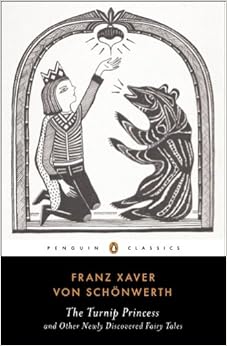
The Turnip Princess is here and it's great

So, remember that one Guardian article from 2012 that some people still post on your Facebook wall every other week? It's titled "Five hundred new fairy tales discovered in Germany!" Well, good news: the much-awaited English translation is finally here!
...
Well, actually, a bilingual German-English volume has been out since last year, but the new book, titled The Turnip Princess, adds another batch of sixty-something tales now available in English. Yay!
I have probably waited the publication of this book with more excitement than most people wait for the new Star Wars movie. My boyfriend ordered it for me as a late birthday present (because for some reason not all folktale collections are published on my birthday, which is a crying shame). I devoured the entire volume in two days, and my copy now looks like this:


In which green slips stand for stories I want to tell (14), orange slips stand for stories that are also included in the other volume (7), and pink slips stand for notable moments. I have been busy.
The edition itself is very well done. Stellar intro from Maria Tatar (Hungarian pride!), extensive and thought-provoking notes on each tale, and an appendix with archive numbers, folktale types, and places of collection. Everything a storyteller can wish for.

And now, for some of the highlights!

1. Even though Tatar claims it's "not part of the European canon," the story of King Goldenlocks is actually a version of The Golden-haired gardener, a Hungarian folktale I just told two months ago at the Tenerife storytelling festival. I have never known another version of it, so I was delighted to find one in here!
2. Similarly, The Flying Trunk proved to be another variation of a Hungarian folktale that I included in my own book (The Winged Prince), and never found another version of. It is also a Cinderfella story where a prince loses a boot...
3. I was most excited about the Dung Beetle Prince tale that was teased in some of the articles, and it turned out to be the most adorable little story. I won't spoil it, but it's great.
4. There is a great number of tales in the volume that feature wood sprites, wood nymphs, gnomes, mermaids, and other mythical creatures, and most of them seem to be on amicable terms with humans. The darker steak is reserved for the mermaids who destroy mortals by loving them; but the woodland creatures are generally helpful and friendly, and revel a less known side of German folklore.
5. There is a version of the Pied Piper in this book (The Mousecatcher, or the Boy and the Beetle) that picks up where the children disappear inside the mountain. Think about that for a moment.
6. This volume (and the other one as well) features a tale that is a full-blown prequel to the popular "Tall, Wide and Sharpsight" folktale type, explaining how the magical helpers in these stories originally received their abilities. Yup. It's a superhero origin story, and it's titled Sir Wind and His Wife.
7. There is a tale of mortal girls marrying ice giants and living happily ever after.
8. At the end of a "Valiant Little Tailor" type story the princess refuses to be given as a prize and makes plans to murder the hero she is forced to marry.
9. There is a magical procedure described for turning a dragon back into a princess. (People get turned into some weird things in this book - among others weasels, tortoises, beetles, and little fish.)
10. There are several recognizable elements of pagan mythology, such as a folktale version of Freya's necklace.
11. More than one story deals with why people should not torture animals or vandalize trees. The tree one (The Singing Tree) gets especially creative in driving the point home.

Definitely a recommended read for storytellers.

Tuesday, April 29, 2014

Y is for the Yellow Princess, and the importance of talking

Today we finally meet the last one of the Seven Wise Princesses (after Blue, Ebony, Green, Red, Sandalwood, and White). If I had to choose one favorite out of the seven, this story would be it (although the Red Princess comes in a close second). Looks like the alphabet saved the best one for last.
The inhabitant of the Golden Pavilion of the Sun is a golden-haired princess from Byzantium. She tells Bahram Gur a story of a king who did not trust women. The king, to avoid being cheated and betrayed by the wife, spent his time with slave girls, having a new one brought to the palace every day, but he was not happy at all, because while the girls could provide pleasure, they did not provide companionship. One day a merchant passed through the city, and people instantly started talking about one of his slaves, a legendary beauty from somewhere in the East. Instantly taken with her, the king offered to buy her, but the merchant refused to sell. The king offered an unresistable amount of gold, and the merchant agreed; but after the deal was struck he admitted that the reason why he did not want to sell was that whenever he had sold her before, she was always returned to him. He did not know what was wrong with her, and did not want to cheat the king. The king decided to take his chances.
The slave girl, while she was very polite to the king, refused to let him touch her. He spent days and days wooing her, but she resisted, with a sadness on her face. The king finally took her out on a picnic, and told her a story in order to convince her to talk to him and tell him what was wrong. The story itself is also interesting, it is about King Solomon and the Queen of Sheba, who had a child that could not walk. An angel told King Solomon in his dream that the child will only be cured if he and his wife talk openly about their deepest secrets. Once they both opened up and confessed what they had been hiding, the child was cured. The king explained to the girl that he wanted to understand what was bothering her. She finally admitted that she liked him, but she had long ago resolved never to be with a man, because every woman in her family dies in childbirth. The king, in turn, told her he would marry her despite that, and be content with her as his wife.
(Now here in the original story she still refuses him, after which he gets a bunch of other slave girls to make her jealous, and she gives in in the end. But I don't think that part is either good or fun to tell, and it has no point to the story at this point, so I usually leave it out.)

I like this story because I believe in the importance of talking in a relationship (and all relationships in general). And I like it how the king learns some respect for women in the end. Sounds similar to the frame of the Arabian Nights, which is probably no coincidence either.