Today I continue the blog series titled Following folktales around the world! If you would like to know what the series is all about, you can find the introduction post here. You can find all posts here, or you can follow the series on Facebook!
Fairy tales from South Africa
E. J. Bourhill · J. B. Drake
Macmillan & Co., 1908.
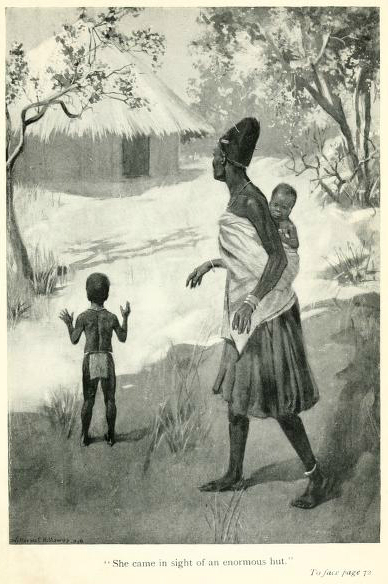
This book contains 20 stories, out of which 12 are Swazi folktales (the others are from the Zulu and other neighboring traditions). It is more than a century old, and it shows; for one, it consistently calls all black people "Kafir" (which is an outdated term), and also uses eurocentric translations for many things - among them, referring to anything supernatural as "fairy" or "ogre" (e.g. "fairy bird" instead of "magic bird"). It is a book written for (European) children, therefore the introduction is a short and easy read about local customs, life, and storytelling traditions. The stories are enchanting and entertaining, and they are accompanied by elegant illustrations.
Highlights
Setuli, King of the Birds is an epic tale about a deaf boy who becomes the king of the birds through his own courage and curiosity. With his bird-army he discovers new lands, fights monsters, saves people from curses, and settles in a new homeland in a journey that reminded me of European hero sagas. Transformed birds were also the protagonists of
The cock's kraal, in which warriors wandered into a village full of hens; their chief, a golden rooster, revealed that they had been cursed into fowl until they can defeat a chief stronger than themselves. Later on, when a chief heard about the hen-village and thought it would be easy to conquer, the rooster and his people soundly defeated his armies, and won their human forms back. Transformation was also at the center of
The enchanted buck. In this story a bull slaughtered for a girl's wedding magically turned into a man and then a buck, and ran away; the girl got accused of witchcraft and sent home, since no one wanted her as a wife anymore. She eventually found the buck in the wilderness, and helped him regain his human form for good.
The story of
The unnatural mother, despite the horrible title, actually took a very nice turn. A woman was chased away from home by her son, because she secretly put on his clothes and ate his food. He told her to bring water from which no animal had ever drunk - but in the end it was the animals who helped her and saved her. I also loved the ending of
The three little eggs, where a woman ran away from her abusive husband with her two little children, and after going through various adventures she killed a monster, and became queen.
The tale of
Semai-mai, the cannibal king, was both dark and fascinating. A cruel tyrant was turned into a supernatural dog by a fairy, doomed to stay in that from until he loyally served someone. He kept eating human flesh in a cannibal king's court, until he actually became friends with a prince, helped him escape... but when he tried to start a new life, Semai-mai became jealous and ate him. At the end of the story a wise chief defeated the dog, who lost all his supernatural powers, became an ordinary canine, and returned to the other cannibal king to live as a pet for the rest of his life...
Connections
The story of the
Fairy Frog reminded me of the European tales of the Frog Prince, except here the frog rescued the girl multiple times when her sisters, and a later a monster, tried to kill her. He even carried her around in his stomach for a while to keep her safe.
The moss-green princess reminded me of the Frog Bride folktale; it was a lovely variant where a father got a monster skin to cover his unloved daughter in, and where the two sisters were not rivals but friends (and even the favorite daughter got her own happy ending). There was once again a
false bride folktale with a man-eating monster with a carnivorous tail under her skirt.
Where to next?
Botswana!




 Posts
Posts