Showing posts with label animals. Show all posts

Thursday, September 19, 2024

Girl in the Chair: The Storyteller and the Bateleur, or, why researching animal tales is worth it

As I have mentioned before, I am busy working on my next folktale collection, focusing on animal tales. I have done a whole lot of research in the past year, making a long list of stories - and animal species - I would love to include. Right now, I am translating, retelling, and polishing the tales one by one, in writing and in telling. The latest one provided me with a bit of a research adventure, so I decided to share.

Before we get started:

1. There are a lot of animal tales out there. I could just Google "lion + folktale", find one, copy and paste, move on. Sadly, there are books on the market that do exactly that. But I do believe that the more work I put into a story, the better the book will be. And I also believe that in order to tell a story well (especially from another culture) I have to do my homework, and understand it as much as possible.

2. I set some goals for myself for this project. In order for a story to be included, it has to be enjoyable (exciting, interesting, polished), has to represent the animal in a positive way (not dumb, evil, or cursed), and the flora and fauna of the story has to match the place it comes from. The latter one is the important part for this post.

The case study

The story I am working with is a Mbaka folktale from Angola. I came across it during my Following Folktales Around the World reading challenge, and it stuck with me. It is titled The son of Kimanaueze and the daughter of Sun and Moon. The basic tale is that a great hero's son decides he wants a bride from the sky, but doesn't know how to get his letter of proposal to her. He asks various animals to help take the letter to the heavens.

The (bilingual) text mentions four animals:

Mbambi, translated as Deer,

Soko, translated as Antelope,

Kikuambi, translated as Hawk,

and Holokoko, translated as Vulture.

None of the four help the hero, actually, and they only have one line each in the tale, so I could have settled for these names and moved on. But since this whole book is about animals, I wanted to pay attention to detail, and go beyond stereotypes. 19th century British translators had a habit of labeling any bird a "pidgeon" or "eagle", and every ungulate "deer." So I looked up the book's end notes to see if these animals were really the ones they were translated into.

Obviously not. And here things got interesting.

Mbambi, according to the notes, is Cephalophus burchelii. This name, however, doesn't exist anymore. Taxonomic names can change a whole lot in a century, and it was obvious that Mbambi had swapped Latin names since 1894, but I had no idea to what. I was sure he is not a deer, given that Cephalophus refers to duikers. I also learned that the old name referenced British naturalist William John Burchell, so I started searching for terms like Burchell + antelope, Burchell + bushbuck, Burchell + Cephalophus etc. Nothing really came up, until finally I ran into an article about the catalog of Burchell's mammal collection. And there they noted the new name: Sylvicapra grimmia ssp. burchellii, common duiker. Win.

Soko was a more complicated case, given that the notes gave no Latin name at all. The translator only stated that it is some sort of an antelope, with longer horns. This was not much to go on, so I decided to look up antelop species that live in Anglola. Since Angola's borders have also changed, I looked up the regions where the Mbaka live and tried to cross-reference. Eventually I came across the Springbok (Antidorcas marsupialis), which matched the description, and also the role in the story (see below). I am not sure about this one, but decided to go with it until further notice. (Fun fact: antidorcas means "not a gazelle". Gee thanks.)

Kikuambi had a Latin name: Fiscus capelli. However, this one is also out of date. Luckily, my search came up with a very useful page, which led me to the current name, and another which helped me with names in different languages. This is how I found Lanius humeralis capelli - which is not a hawk at all. It's a small shrike (Northern fiscal). I also had to do some extra work figuring out what to translate it to in Hungarian, since we don't have a common name for it. But at least I had the species.

And then came Holokoko, Helotarsus ecaudatus. This one was pretty straightforward: Google told me that it is an older Latin name for Teratophius ecaudatus, the bateleur. Not a vulture. This bird:

This whole side quest took me about two hours, and resulted in finding out about four fascinating animals. With one line each in the folktale.

First off, I had to make decisions on how to incorporate them into the text. In a folktale, modern names can stick out like a sore thumb ("and then along came the Northern fiscal"). And yet, I like to tell the story with the accurate animals, and name them with their original names. So, I settled on "along came Kikuambi, a small shrike" - and put the rest in the Comments section after the tale. 

Why go to all this trouble?

Because the four lines in the story suddenly made sense in contet, and expanded into a small scene. The hero first tries to send the letter with the small and swift duiker, but Mbambi can't run up to the sky. Then he asks Soko, who can jump (pronk) very high - but not that high. Then he asks a bird who can perch in high places, but he can't help either. Finally he asks the bateleur, who can soar very high - but even he can only get halfway to the sky.

And now it all makes sense.

A lot of this was probably self-explanatory to people when the original text was collected. But if I am telling it to contemporary audiences in Hungary (or Europe), these things need spelling out. And yes, the story would still work if it was four random animals saying no to the hero - but with the specific species, and the background knowledge, the story gains richness, detail, and layered meaning.

And, honestly: I freaking enjoy doing this work. Hello, dopamine. I love the search, the discovery, the puzzle. And I love animals, I always have. So I enjoy finding out about interesting species, and doing them justice when telling people about them.

And now I am moving on to the second paragraph...

(Note: if you are a biologist, birder, anthropologist, or any other professional, and you see a mistake in this post, please educate me :) )

Saturday, January 21, 2023

Favorite Folktales for the Year of the Rabbit

Today marks the lunar new year, beginning the Year of the Rabbit according to the Chinese zodiac. As usual, I have collected a list of folktales and legends that feature rabbits and hares. It was a fairly easy task, since these animals often take on the role of the trickster in cultures around the world. There is an abundance of stories - I decided to cherry-pick my all-time favorites.

(Links in the titles, as usual.)

Happy New Year!

The Sisimiqui (Costa Rica)

One of my all-time favorite folktales, about a terrifying monster and a heroic little rabbit that defeats it. The rabbit in this story rides an armadillo, which makes it even better. He defeats the monster in a game of whack-a-mole (or whack-a-rabbit), popping out of tunnels that the armadillo dug, and killing the enemy with a thousand small cuts and bites. (This tale also has variants from Belize.)

Rabbit kills a dragon (St. Lucia)

Once again, a trickster character does something heroic: in this case, fights a seven-headed serpent with a knife, to rescue two girls. During the fight Rabbit occasionally loses a limb, or his head, but he always speaks magic words and sticks them back into place.

The shy quilt bird (Myanmar)

Another old time favorite of mine. In this one, the Golden Rabbit, trickster and advisor to King Lion, saves the animals from an evil serpent by teaching them how to work together as a team.

Br'er Rabbit's courtship (African-American)

I do have a soft spot for folktales where tricksters fall in love. In this case, Br'er Rabbit has a crush on the daughter of Miss Meadows. And the story has a happy ending.

Mr. Deer's Party (Cajun)

Mr. Deer announces that he'll marry his daughter to the suitor who can dance dust out of a rock. Compére Lapin, who is in love with the girl, finds a way to create an illusion and win her hand (or hoof).

The beekeeper and the bewitched hare (Scotland)

A kind-hearted young man saves a hare from a witch, with the help of his bees. In the end, it turns out the hare was not an animal at all, but an enchanted girl.

The hare and the tree spirit (Xhosa)

Trickster decides to help a young man who is in love with a mute girl. Hare manages to break the curse place on the girl by doing something so foolish and silly that she has to speak up.

Mr. Fox's funeral (USA)

In this story the rabbit-trickster is a girl: Molly Cottontail. Fox tries to outwit her by luring her to his own pretend funeral - but in the end, Molly gets the last laugh.

Hare rescues the sun (Yupik)

I did a deep dive into this story a while ago (see link). When evil beings kidnap the sun and the moon, Snowshoe Hare goes out, steals them back, and kicks them up into the sky.

How Hare got a wife for his son (Tanzania)

A fun tale about a wise hare father who helps his son win a bride. It is related to the Grimms' Queen Bee story, where the hero is kind to animals along the way and later they help him in return.

Trickster seeks endowments

This is not one tale, but rather a tale type that does not appear in the ATU catalog, and very often features Rabbit as a protagonist. It's a story type where Trickster asks God (or a supreme being) for more wits/wisdom/cleverness, and has to fulfill tasks to earn it. Usually, once the supreme being sees how cleverly Rabbit outwits anyone to reach his goal, they decide Rabbit already has more than enough wits to get by. (See a picture book version of one of these tales here.)

Honorable mention: The sea-hare (Grimm)

I am adding this as a bonus because it is alleged that "sea-hare" is a local dialect word for a rabbit, but this folktale has also been translated as "hamster" or "guinea pig". Since it features a creature that hides in a princess' hair, we can't quite be sure. But I do love this story, and it is one of the lesser known Grimms.

Thursday, June 24, 2021

StorySpotting: They don't make critters that big anymore (Love and Monsters)

StorySpotting is a weekly or kinda-weekly series about folktales, tropes, references, and story motifs that pop up in popular media, from TV shows to video games. Topics are random, depending on what I have watched/played/read recently. Also, THERE WILL BE SPOILERS. Be warned!


I finally watched Love and Monsters on Netflix, and I have things to share.

Where was the story spotted?

Love and Monsters (2020)

What happens?

"The destruction of an asteroid headed for Earth releases chemical fallout, causing cold-blooded animals to mutate into large monsters and kill off most of humanity."
The movie has some spectacularly designed giant insects, worms, frogs, crabs, and other creepy-crawlies.

What's the story?

Incidentally, the fear of gigantic creepy-crawlies is nothing new to the human imagination. Let's take them in order of appearance:

Giant ant

Large (small dog-sized) gold-digging ants might be familiar to people who read Herodotus. They don't necessarily eat people, but they do attack anyone who approaches their nest. The Irish Voyage of Mael Duin legend, on the other hand, features a whole island of man-eating ants as big as foals (by the way, the folktale motif number for those is B16.6.1). 
In a Dominican version of the "Boots and the Beasts" folktale type, the hero gains the ability to transform into various animals - among them, a monstrously large ant. In a Namibian folktale two siblings accidentally grow an ordinary ant into a giant monster. All the animals try to defeat it together, but it is finally killed by a puff adder's venom and the arrows and ax of the father of the children.


Giant toad

Probably one of the most well-known large frog stories is the Australian Aboriginal myth of Tiddalik, the frog that drinks up all the water in the world, and has to be tricked into laughing to release it. Another famous example is the Japanese legend of Jiraiya, in which the main character gains the magic ability to summon frogs and toads and grow them to enormous sizes. He uses this ability (in tandem with his wife Tsunade) to defeat the serpent magician Orochimaru. If you feel like this sounds familiar, you probably watched Naruto.
There is a Tsimshian legend about a boy who creates a clever trap to kill a giant, copper-clawed frog and take on its skin and powers. In a Macedonian folktale, eternal summer grows frogs and toads so large that they threaten to take over civilization. When the Toad King tries to kidnap St. Peter's daughter, the saint finally finds a way to end the heat wave. In a legend from the Khasi in Northeast India, the beautiful girl Ka Nam is first helped, then enslaved by a giant toad named U Hynroh. When she escapes into the sky and joins the household of the Sun, the toad wages war on her - which is what causes solar eclipses.
In more recent sources, the Wuhnan Toads of China deserve a mention. They are large, voracious albino amphibians that pursue people who disturb them. One of them allegedly even ate a camera tripod.

Giant worms

One notable story is the tale of the Giant Caterpillar from the Ivory Coast. In it, a giant and ugly caterpillar swallows a young boy, and when the men of the village fail to defeat it, the women band together and beat the monster to death. In an Inuit legend a young man named Kivio goes on an adventure and encounters an evil old woman who eats people. The woman's protective spirit is a giant worm that attacks Kivio, but the boy shoots arrows at it and manages to kill it.
In the Persian Book of Kings there is a legend about a giant worm raised by a man named Haftvad and his daughter. The worm brings good fortune, and the bigger it grows the better the luck of its owners is. However, the worm is evil, and it corrupts Haftvad as well, until he becomes drunk with power. Finally, a hero named Ardashir defeats the monster with molten lead.

Giant snail

Giant snails are somewhat less common in folklore, but we can still rustle up a few. The Sarmatian Sea Snail is a delightful specimen of medieval legends, complete with antlers and meat with curative powers. Another large snail (laconically called Snail) haunts the city of Hastingues in France.

Giant centipede


Possibly the most famous giant centipede story is the Japanese Tawara Toda Monogatari. It features a brave samurai, Fujiwara no Hidesato, who is recruited by a Dragon Queen to help her kill a giant centipede (omukade) that has destroyed many of her family. He manages to kill the monster with an arrow that he'd spit on, after saliva-free arrows don't do the trick. Monster-hunters, take note.
In a Yaqui legend the giant centipede monster (chupia) travels inside a whirlwind. It is bigger than a human, and a man chops it to death with an ax. (Centipedenado, anyone?).
There is also a Thai folktale in which a kind boy saves and raises a snake. When he later travels to take examinations in the city, the snake follows him, and saves him by battling a giant centipede that has killed many people. An even larger centipede monster is mentioned in a legend from Myanmar: this one is big enough to hunt and eat elephants, and build its lair from their ivory.
A Korean folktale (A father's legacy) mentions a giant centipede that ate thirty people. It is killed with a gun by the hero, who uses a woman as bait... Interestingly, the Korean hero Nam Yi was believed to be the reincarnation of the spirit of a giant centipede that was killed by another hero for demanding human sacrifice. Nam Yi retained some supernatural, ghost-related powers from his origins. 
On an even more disturbing note, in a folktale from Assam a man with the evil eye transforms into a giant centipede in his sleep, chasing people around. When his family is burned for their ability, they pass on their evil eye powers to those who killed them. Oops.

Giant crab

Spoiler alert: the giant crab in the movie turns out to be a friendly creature. Hands down my favorite friendly giant crab story is an indigenous legend from Taiwan, where a giant snake causes a flood, and people are saved by a giant crab that takes up the battle against the serpent. To protect it in the fight, people make a giant clay shell for it; but since time is short, the crab puts on the shell while it is still hot, accepting the pain in order to help. 
A hero of the Garo people enlists the help of a loathsome giant crab, Songduni Angkorong Sagalni Damohong, The Terror of the Sea, to threaten his grandmother into helping him defeat another monster. This creature "was a hideous loathsome-looking being. It had projecting eyes that seemed to be constantly glaring , long , flexible feelers and gigantic claws with which it used to nip its victims to shreds." On a friendlier note, the legend of Our Lady of the Barn from Guam tells of a "naked fisherman" who finds a statue of the Virgin Mary floating in the sea, guarded by a giant crab carrying two candles in its pincers.
A Haida legend tells of the giant crab of Chief Rock that served a famous chief by guarding the entrance to his harbor. Eventually it kills a lot of people, and a young man (who learns how to turn himself into a halibut) manages to kill it in an underwater battle. 
Another giant (golden) crab appears in the Kakkata Jataka, in which the Buddha is born as an elephant, and is captured by the crab that likes to eat elephants. With the help of his mate he breaks free, and tramples the monster. A giant, ship-sinking hermit crab features into an adventurous navigation legend from the Maldives. According to Moken tradition, tides are caused by a giant crab that lives under a sky-high mango world tree. There is also the giant crab from Indonesia that ferries girls across a river in exchange for a kiss...
But giant crabs are no strangers to European mythologies either: the constellation Cancer is based on a giant crab named Karkinos that tried to stop Herakles from killing the Hydra, and in the legend of Theseus the famous murderer Skeiron kicks his victims into the sea to be devoured by a giant crab (sometimes a turtle). 


Conclusion

Rule of animals in folklore: if it exists, there is probably also a giant version of it.

Wednesday, May 20, 2020

The Queen Bee (Feminist Folktales 18.)

Another Thursday, another post for Feminist Folktales! It's a series of traditional stories from around the world that display motifs that reflect feminist values. I am not changing any of the stories, merely researching and compiling them, and posting them here as food for thought. You can find the list of posts here.

Today is World Bee Day, so I decided to post about one of my favorite bee-related folktales :) 

Origin: Germany (Grimm)

The story

Image from here
The two eldest of three brothers fall into a "decadent way of life" and go out adventuring. Their youngest brother, nicknamed Simpleton, goes to find them and tags along on the adventure, despite their claims that he is useless, and they are much smarter. Along the way the brothers encounter various animals the two eldest try to hurt: an anthill they want to destroy for fun, ducks they want to kill, bees they want to smoke out. Simpleton stops them from doing so every time, feeling sorry for the animals.
The three brothers eventually end up at an enchanted castle, where a little grey man gives them three tasks to break the spell. They have to gather a thousand pearls from the moss in the woods, retrieve a golden key from a lake, and select the youngest out of three identical princesses. The two elder brothers fail, but the youngest gets help from the grateful animals, completes the tasks, and wins a princess for his kindness.
(And his disenchanted brothers marry the two other princesses.)


What makes it a feminist story?

This is the first story that comes to my mind when someone talks about "feminist male heroes." I had a post in this series earlier about a hero whose strength is empathy. Here, we see the same thing, except said hero is male. On top of that, he is not just casually kind to someone on his way to kill dragons or whatever, but rather, the entire story revolves around his kindness. His main power is empathy.
Simpleton starts out from a disadvantaged position. His brothers believe that he is stupid and useless, and has no business seeking his fortune. An early English translation calls him an "insignificant little dwarf." Simpleton is not strong, masculine, or dashing, and because of this, his brothers look down on him. Since his main virtue is kindness, his brothers, who follow toxic patterns of masculinity, believe that he is weak. This is a common phenomenon: if a man shows traits that are traditionally deemed "feminine", toxic masculinity labels it as a sign of weakness and ridiculousness (think of all the jokes about male nurses or kindergarden teachers - caregiving is traditionally seen as a "woman's job").

The two elder brothers are the textbook example of violent, toxic, destructive behaviors. They want to destroy an anthill just to laugh about the scared ants scurrying around. They want to eat the ducks. They want to steal the honey. They don't need to do any of this, but they enjoy exercising their power over defenseless creatures. They feel like they are entitled to their enjoyment at the expense of others, and to fulfill their wants without any regard for the pain they cause to those who are weaker. On top of that, they base their ego on thinking they are stronger and smarter than their victims. This is pretty much the definition of toxic masculinity. 
(For those in the back: "toxic masculinity" is one form of masculinity. NO ONE is saying that masculinity is bad in general.)

Simpleton, in his own quiet way, is actually very strong character. He is kind and has empathy - he cares for what happens to defenseless, small creatures like ants, bees, and ducks. Also, and this is a crucial part of the story, he stands up to his brothers to defend their victims. "Leave those animals alone! I won't let you hurt them." He doesn't wait to quietly clean up the mess later, but rather stands up and stops his stronger elder brothers from causing harm in the first place. This is what we call bystander intervention. A man with healthy masculinity does not only avoid causing harm, but also actively works to keep others from doing harm either. The former is passive, while the latter is active behavior. It is a whole new level of male role model when he doesn't just avoid "ever doing that" himself (which is indeed good), but actively intervenes when something is not okay. "Hey, that joke was sexist." "Dude, don't talk like that about her." "Hey. No means no." Even when it makes him a target of ridicule.
(Also, this is not unique in the world of folktales, but it is an important and attractive trait that he accepts help when he needs it. It doesn't bruise his ego to solve the tasks with the help of the animals.)

Simpleton is a likable, empathetic, strong character, who doesn't think he is better than others, and stands up for those who are defenseless. This is what makes him a feminist role model.

Things to consider

As a storyteller I feel like Simpleton should earn himself a better name at the end of the story.
The Grimm tale is beautiful, but it is worth digging up and reading other variants of the same tale type. I got into researching African versions, and some of those were equally gorgeous, featuring a wide variety of animals. I ended up including a Malagasy variant in my upcoming feminist folktales book.

Sources

This story is in the Grimm collection under KHM 62, and belongs to tale type ATU 554 (Grateful animals). It has many versions around the world.

Read an older translation here.
Jack Zipes: The Original Folk and Fairy Tales of the Brothers Grimm: The Complete First Edition (Princeton University Press, 2016.)
Oliver Loo: The 1810 Grimm Manuscripts (2015.)

Notes

According to research notes, the story was contributed to the collection by Albert Ludewig Grimm (who was not actually related to the Grimm brothers). 

Thursday, April 30, 2020

Z is for Zebras (Folktales of Endangered Species)

Welcome to the 2020 A to Z blogging challenge! This year my theme is Folktales of Endangered Species. I am researching cool traditional stories about rare, fascinating animals - to raise awareness of what we might lose if we don't get our collective shit together. Enjoy!


Species: Grévy's zebra (Equus grevyi)

Status: Endangered

How the zebra got its stripes

There are various stories around Africa about how the zebra became striped. One of the most well-known origins is a legend from the San people. According to this one, zebra used to be pure white, and lived in a land with very little water. The watering hole the animals had was guarded by a fierce baboon who claimed all the water for himself. Zebra decided to challenge the baboon to a fight, and after a long and hard duel, managed to defeat him. However, during the fight the zebra fell into the baboon's campfire, and it marked his white fur with black stripes. He has been wearing them as a mark of his bravery ever since. (And ever since then the baboon has had a bald patch on his behind, reminding him of the ass-kicking he got). 
In another, West African folktale, it's a tortoise who's guarding the well, and a zebra keeps stealing water from it. Tortoise catches him and ties him up, but zebra manages to escape - through a campfire, which marked his white fur. 
Yet another legend from South Africa claims the zebra used to have horns. The gemsbok wanted to borrow one of them, but the zebra refused; however, he put his horns down when he slept because they were heavy and awkward. One night the gemsbok stole the horns, and has been proudly wearing them ever since - and zebra, on his part, has not really been missing them. 

Sources: Read the stories here, here, here, here, or here.

How can I help?

Read about conservation efforts here, here, here, or here.

Thank you all for visiting during A to Z! It has been a great year! Which animal or story was your favorite? How did you enjoy the challenge?
See you all next week for Reflections!

(Also, in case you are interested, I'll be teaching a 90-minute online workshop in May, about researching stories! More information here.)


Wednesday, April 29, 2020

Y is for Yangtze river dolphins (Folktales of Endangered Species)

Welcome to the 2020 A to Z blogging challenge! This year my theme is Folktales of Endangered Species. I am researching cool traditional stories about rare, fascinating animals - to raise awareness of what we might lose if we don't get our collective shit together. Enjoy!


Species: Yangtze river dolphin or baiji (Lipotes vexillifer), Yangtze finless porpoise (Neophocaena asiaeorientalis asiaeorientalis)

Status: Declared "functionally extinct" in 2006 (possibly critically endangered); Critically endangered

The Goddess of the Yangtze
Chinese legend

Most legends agree that the white river dolphin was once a human woman. There are many different versions of what happened to her, but they all agree that she jumped or fell into the river and drowned. Because she was pure of spirit, she was transformed into the river dolphin, and lived on as the Goddess of the Yangtze. In many stories the evil man or hurt her/killed her also fell into the water, and became the finless porpoise or "river pig."

In some stories the stepfather of the girl tries to take advantage of her while they are crossing the river, and she jumps into the water to escape him. In others, she falls in love with a poor man below her standing, and they are forbidden to meet, so she either kills herself, or drowns while trying to cross the rived to be with him. In a third variant, she was a princess who was being forced to marry a man she didn't love, and when she refused her father drowned her as punishment. Whatever the cause, the girl was rewarded for her pure heart by turning into a beautiful dolphin goddess, while the man that tried to hurt her became a porpoise. 

Sources: Read the story here, here, here, or here.

How can I help?

While the river dolphin has been declared extinct, experts are fighting for preserving its habitat (the Yangtze River) in case new specimens are found. Read about conservation efforts here, here, or here.
Read about conservation efforts of the finless porpoise here or here.

Do you think the river dolphin is still out there somewhere? Might they come back one day?


Saturday, April 25, 2020

V is for Volcano rabbits (Folktales of Endangered Species)

Welcome to the 2020 A to Z blogging challenge! This year my theme is Folktales of Endangered Species. I am researching cool traditional stories about rare, fascinating animals - to raise awareness of what we might lose if we don't get our collective shit together. Enjoy!


Image from here

Species
: Volcano rabbit (Romerolagus diazi), a.k.a. teporingo or zacatuche

Status: Endangered (some populations are extinct)

The rabbit in the moon
Aztec myth

The Aztecs saw the shape of a rabbit in the spots on the moon - specifically, the shape of a teporingo. But how did it get there?
According to Aztec mythology, when it was time for the Fifth World to emerge (the one we are living in now), there was need for a new Sun and Moon. The gods decided two of them had to sacrifice themselves to become celestial bodies. The rich god Tecuzitecatl volunteered to be the Sun, while the poor, rugged Nanahuatzin was ordered to become the Moon. They offered sacrifices, and then the time came for them to throw themselves onto a roaring pyre, burn, and transform. In the last moment the rich and haughty Tecuzitecatl hesitated, but Nanahuatzin threw himself into the fire immediately. Ashamed, Tecuzitecatl followed suit.
Two Suns rose from the pyre, filling the world with light. However, so that the cowardly Tecuzitecatl wouldn't be as brilliant as the brave Nanahuatzin, one of the gods grabbed a rabbit, and threw it at the coward's face. The rabbit stuck, and it has been up there ever since, obscuring the light of the Moon; you can see its shape in the dark spots.

According to another Mexican legend, the other rabbits did not want to befriend the teporingo, because it is so tiny ans weak, and they chased him away to the mountainsides of volcanoes. However, when humans came along, they all started hunting the larger, fatter rabbits nearby, and did not even notice the tiny bunnies safely tucked away in the mountains.

Sources: Read about the story here, here, or here.

How can I help?

Read about conservation efforts here, here, or here. Read more about this species here.

Would you be brave enough to become a Sun or Moon? Or would you rather become another celestial body?

Friday, April 24, 2020

U is for Utah prairie dogs (Folktales of Endangered Species)

Welcome to the 2020 A to Z blogging challenge! This year my theme is Folktales of Endangered Species. I am researching cool traditional stories about rare, fascinating animals - to raise awareness of what we might lose if we don't get our collective shit together. Enjoy!


Species: Utah prairie dog (Cynomys parvidens)

Status: Endangered

The man saved by prairie dogs
Jicarilla Apache legend*

According to legend, forty-four warriors set out on a journey, forty-three died, and the last one was barely alive, dying of thirst. He finally collapsed by a prairie dog hole. The prairie dogs came out to see what happened, and asked him why he was lying there. When they learned he is dying of thirst, they took him into their home and gave him water from a small vessel - but no matter how much he drank, the vessel never emptied. They sent him on his way with the vessel. This is how people learned that prairie dogs have power over water and rain.
(One version of this story ends with "Prairie dog gave him no songs or ceremony. He just took pity on him and saved him from death.")

*Okay so I'm cheating here because the habitat of the Utah prairie dogs don't overlap with Jicarilla Apache lands, but I couldn't find any prairie dog legends that are more local. My resources are currently limited...

Sources: Read versions of the story here or here.

How can I help?

Read about conservation efforts here, here, here, or here.

Have you ever seen prairie dogs in the wild? I only ever met them in a zoo...

Thursday, April 23, 2020

T is for Tigers (Folktales of Endangered Species)

Welcome to the 2020 A to Z blogging challenge! This year my theme is Folktales of Endangered Species. I am researching cool traditional stories about rare, fascinating animals - to raise awareness of what we might lose if we don't get our collective shit together. Enjoy!


Species: South China tiger (Panthera tigris tigris)

Status: Critically endangered (possibly extinct in the wild)

Five Tiger General
Chinese folktale

This story begins with a humble woodcutter who goes out into the forest one day, and comes across a female tiger in great pain. The tigress is in labor, her intestines have come out (?), and she needs help. The woodcutter runs home and gets his mother, who is a midwife, to help. The two of them assist the tigress, and four cubs are born. Once everything is in order, the mother jokingly tells the tiger to bring a good bride for her son.
Some time later a bridal procession is traveling through the mountains, and they are caught up in a snow storm. Suddenly they hear a roar, and five tigers appear, herding the terrified procession to the woodcutter's house, where they find shelter. The woodcutter and the bride take a liking to each other, and get married.
However, the original groom's family is not pleased by this development, and they go before the magistrate to complain. The woodcutter tells them what happened, but they don't believe him. The old mother then goes to the mountains, and invites the tigers as witnesses. Once the five fully grown tigers show up, no one is contesting the marriage anymore (go figure).
Later on the woodcutter, with the help of the five tigers, fights off an invasion, and the emperor rewards him with the title "Five Tiger General."

Sources: Read the story here.

How can I help?

Read about conservation efforts here, here, or here (this last one is about Siberian tigers in China).

What animals would you choose as your companions if you were made a general?

Wednesday, April 22, 2020

S is for Singing Snails (Folktales of Endangered Species)

Welcome to the 2020 A to Z blogging challenge! This year my theme is Folktales of Endangered Species. I am researching cool traditional stories about rare, fascinating animals - to raise awareness of what we might lose if we don't get our collective shit together. Enjoy!

Partulina variabilis, image from here

Species: Lanai tree snail (Partulina semicarinata), Lanai tree snail (Partulina variabilis), Achatinellidae (tree snails)

Status: Endangered to Extinct

Kawelona and Lauka-ie-ie
Hawaiian legend

Lauka-ie-ie is a beautiful girl, raised by her aunt and uncle, who is friends with all the plants, flowers, and animals of her home in Waipio Valley. Her best friends are the singing sails; she sings along and plays with them every day. Lauka-ie-ie is protected by the goddess Hina-ulu-ohia, the red flowered ohia tree, who is also raising her brother.
When she grows up, Lauka-ie-ie sees a dream: she dreams of a handsome young chief whose face is bright like the setting sun. Her snail and plant friends all volunteer to set out to look for him together. They are aided in their search by the Wind, Lauka-ie-ie's brother, who carries the party from island to island, searching for the mysterious young chief.
Meanwhile, on the westernmost island of Kauai, young chief Kawelona also dreams about a beautiful young girl he's never seen. He sets out with the help of his friends, the iiwi birds (scarlet honeycreepers) to find her. The two traveling parties meet on the island of Lehua. They sail back to Waipio Valley on a white cloud and a giant shell, and throw an amazing wedding attended by all plants, kupua-spirits, gods, sharks in human form, and, of course, singing snails.
In some versions of the story Pupu-kani-oe, the singing snail, also falls in love along the way, and settles down on Oahu, only to return for the wedding along with her husband and daughters. 

Sources: Read the story here, here, here, or here. Read more about Hawaiian snails here.

How can I help?

Read about conservation efforts here, here, or here.

What plants and animals would you invite to your own wedding?

Image from here

Tuesday, April 21, 2020

R is for Rattlesnakes (Folktales of Endangered Species)

Welcome to the 2020 A to Z blogging challenge! This year my theme is Folktales of Endangered Species. I am researching cool traditional stories about rare, fascinating animals - to raise awareness of what we might lose if we don't get our collective shit together. Enjoy!


Massasauga rattlesnake

Species
: Massasauga (Sistrurus catenatus), Arizona black rattlesnake (Crotalus cerberus)

Status: Threatened, listed as Endangered is some states of the USA

How the rattlesnake got its fangs 
Akimel Oʼotham ("Pima") and Tohono O'odham ("Papago") legend*

According to legend, when the Creator (Elder Brother) created the rattlesnake, it was very beautiful (as it still is), but it didn't have anything to protect itself with. When people appeared, they played with the beautiful snakes, rolling them into balls, or twisting them around their neck like a scarf. Poor rattlesnake was sore and bruised. It went to the Creator to complain, and Elder Brother put fangs into the snake's mouth. The next person to try to play with it got bitten and died from the venom. EVer since then, Rattlesnake has had a way to defend itself. 
In another version of the story, it was the other animals that kept poking at Rattlesnake, because they liked to hear him rattle. They called him Soft Child (Maik Solath) because his movements were so soft. Rattlesnake went to Elder Brother to complain, and the Creator pulled out a piece of his hair and put fangs into the snake's mouth. Next time Rabbit tried to poke at him, Rattlesnake bit him. Rabbit was the first creature in the world to die. The animals, in order to burn his body, also had to learn how to make fire.

* "Pima" and "Papago" as names are not in use anymore, I included them as clarification.

Sources: Read the story here, here, or here. Read a picture book version here. Read more about indigenous snake lore here.

How can I help?

Read about conservation efforts here, here, or here.


Arizona black rattlesnake (image from here)

Monday, April 20, 2020

Q is for Quoll (Folktales of Endangered Species)

Welcome to the 2020 A to Z blogging challenge! This year my theme is Folktales of Endangered Species. I am researching cool traditional stories about rare, fascinating animals - to raise awareness of what we might lose if we don't get our collective shit together. Enjoy!


Species: Northern quoll (Dasyurus hallucatus)

Status: Endangered

Crow and Quoll go fishing
Legend from Arnhem Land

According to an Aboriginal legend from north-eastern Arnhem Land (culture unspecified) Walik the Crow and Bari Pari the Quoll ("marsupial cat") one day invented the first fish-trap together. Unfortunately, while they were not looking, a relative of Crow, Balin the barramundi swam into the trap along with other fish. While Crow and Quoll were celebrating their invention with dancing, another clan came along, speared all the fish in the traps, and ate them. Crow and Quoll returned too late, and only found Balin's bones in the sand.
Mourning for Balin, they placed the fish bones into a hollow log, and set out with their clans to take revenge. The fight, however, did not go their way, so the crows and quolls decided to flee into the sky, carrying the hollow log and the fish bones with them. They set up camp along the shores of Milnguya, the Milky Way. The twinkling of stars is actually the light of their campfires, and the bright spots on the quolls' back. In the dark spots along the Milky Way you can see the crows, and the hollow log. 

Sources: Read this story here, here, here, or here.

How can I help?

Read about conservation efforts here, here, or here.

What do you see in the dark spots of the Milky Way?

Saturday, April 18, 2020

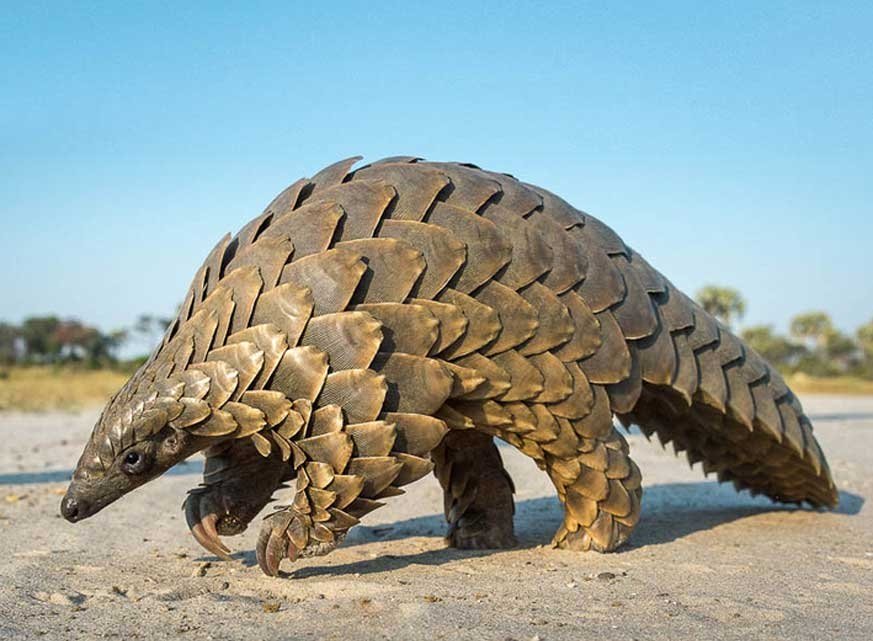
P is for Pangolins (Folktales of Endangered Species)

Welcome to the 2020 A to Z blogging challenge! This year my theme is Folktales of Endangered Species. I am researching cool traditional stories about rare, fascinating animals - to raise awareness of what we might lose if we don't get our collective shit together. Enjoy!

Image from here

Species: Tree pangolin (Phataginus tricuspis), Giant pangolin (Smutsia gigantea)

Status: Endangered

Okpwa wins Pangolin's daughter
Bulu folktale

Pangolin announces that he will give his beautiful daughter as a wife to whoever can best tell the time of dusk and dawn. Pangolin, you see, is nocturnal, and he wants to know when he can set out to eat and when he should head back home before dawn. Several animals try to tell the time correctly, but none of them succeed. Nkulengui, the rail bird, for example chatters for a while at dusk but then falls asleep, and makes Pangolin mistake the time. Nothing quite works out.
Eventually, Okpwa (scaly spurfowl, Pternistis squamatus) decides to try too. He flies up into a tree at dusk, and chatters for a short while, waking up Pangolin who heads into the forest to eat some ants. Pangolin feasts on little black ants until dawn is about to break, at which point Okpwa begins chattering again. Just as Pangolin reaches his home the first light of dawn appears - the timing was impeccable. Okpwa wins the contest and marries Pangolin's daughter; ever since then he has been marking the time of dusk and dawn for the entire forest (and especially pangolins) to hear. 

Sources: Read the story here.

How can I help?

Read about conservation efforts here, here, here, here, or here.

The spurfowl usually signals dawn between 4 and 5 o'clock in the morning. Is that a good time to wake up? Or to go to bed? Are you nocturnal like a pangolin?

Friday, April 17, 2020

O is for Otters (Folktales of Endangered Species)

Welcome to the 2020 A to Z blogging challenge! This year my theme is Folktales of Endangered Species. I am researching cool traditional stories about rare, fascinating animals - to raise awareness of what we might lose if we don't get our collective shit together. Enjoy!


Species: Sea otter (Enhydra lutris)

Status: Endangered

The girl who married a sea otter
Coos legend

There are various legends among the indigenous people of Oregon about women who marry sea otters. In one version a young woman rejects all her human suitors, and goes swimming in the ocean, after which she becomes pregnant. The boy she gives birth to keeps crying until he is given seal fat to suck on. A sea otter man comes from the ocean and takes the woman and the baby with him to the realm of the sea otters. The woman, now transformed into a sea otter, swims back up a river to visit her family. People shoot arrows at her at first, but they can't wound her, and she collects the arrows for her sun. After that, sea otters and humans live in peace; sea otters send furs to the people sometimes, and give them whales washed ashore.
In another version a girl rejects all human suitors and hopes for a sea otter lover. She gets pregnant from the sea and gives birth to a boy. A sea otter man comes from the sea and puts her to several tests, which she passes with the help of a friendly sea gull. She marries the sea otter, and her children bring valuable gifts to their grandparents as payment for them accepting the marriage. 

Sources: Find the stories in this book. Find another version in this book.

How can I help?

Read about conservation efforts here, here, or here.

If you were to live as a sea creature, what creature would you prefer to be?

Thursday, April 16, 2020

N is for Numbats (Folktales of Endangered Species)

Welcome to the 2020 A to Z blogging challenge! This year my theme is Folktales of Endangered Species. I am researching cool traditional stories about rare, fascinating animals - to raise awareness of what we might lose if we don't get our collective shit together. Enjoy!


Species: Numbat (banded anteater, Myrmecobius fasciatus)

Status: Endangered

Why is the numbat's back red?

One day Walpurti (the numbat) and Ngintaka (the perentie lizard) were camping together, and they decided to paint each other's backs with pretty patterns. Walpurti took up a stick, dipped it into paint, and painted nice yellow circles on Ngintaka's back. They have been there ever since. In turn, Ngintaka took up a stick, and painted stripes on Walpurti's back.
When they were both done, they turned to admire their new colors. Ngintaka was very pleased with the circles, but Walpurti was not satisfied with the plain dark stripes at all. He picked up a handful of red dirt and threw it over his back. The red dust stuck to his fur - and Walpurti has been wearing dark stripes on bright red fur on his back ever since.

Sources: read the story here, here, or here.

How can I help?

Read about conservation efforts here, here, or here.

What animal's colorful patterns would you choose to paint on your own back?


Wednesday, April 15, 2020

M is for Monarch butterflies (Folktales of Endangered Species)

Welcome to the 2020 A to Z blogging challenge! This year my theme is Folktales of Endangered Species. I am researching cool traditional stories about rare, fascinating animals - to raise awareness of what we might lose if we don't get our collective shit together. Enjoy!


Species: Monarch butterfly (Danaus plexippus)

Status: Status under reassessment in 2020 for the Endangered Species Act

The butterflies come for the Day of the Dead
Legend from Mexico

According to legend a group of indigenous people were migrating south from the Rocky Mountains, all the way to Mexico. On the way they met cold, harsh weather, and they had a hard time moving forward. They decided to leave the children and old people behind so they could shelter while the stronger adults found the way and a new home. To weather the cold, the children and old people covered themselves in tree pollen and resin. Their god saw their suffering, took pity on them, and changed them into beautiful butterflies so that they could make the southward journey easier, and reunite with their families.
Other legends say the butterflies are (or carry) the souls of the dead on their wings. Incidentally, they arrive to their wintering places in Mexico around November 2nd, which is the traditional Day of the Dead. According to this belief, the souls of the departed come back to visit their families for the occasion.

Sources: Read the story here, here, or here.

How can I help?

Read about conservation efforts here, here, here, or here.

What kind of an animal would you like to become after you die?