Showing posts with label Greece. Show all posts

Sunday, June 18, 2023

Folktales about adoptive fathers (International Father's Day)

It's father's day, and I felt like making another post, so here it is. 

(Everybody calm down, this is a stock photo)

We are celebrating fathers - and father figures - all around the world today. I already posted about the importance of caring fathers in folklore a few years ago. Today I decided that I want to highlight stories about adoptive fathers - because adoption is a topic near and dear to my heart, and because it is often represented in a negative way in folklore.

So, let's hear it for great adoptive fathers, both in folklore and in the real world!

(Links in the titles, as usual.)

The Flying Horse of Earthdom (Scottish Traveller tale)

One of Duncan Williamson's tales. A king's son is born with a hump on his back, and the king orders the baby to be abandoned in the woods. He is adopted by an old hunchbacked man who takes him to a secret place called Earthdom, populated by people shunned by society. The boy is raised there, and since his adoptive father teachers him archery, his back straightens by the time he grows up. He returns to court to win a series of contests. When the king finds out the young man is his son, he wants to take him back - but the boy refuses him, and returns to Earthom to the kind people who raised him.

The Wild Man's Daughter (Greece)

A king's daughter sees a dream that foretells her father bowing before her. The king grows so angry that he orders her to be abandoned in the wilderness. She ends up in the house of a Wild Man, who adopts her and cares for her, and helps her grow in confidence and find a worthy husband. Even after his death, he leaves her some magic to ensure her happiness.

Heimer and Aslaug (Iceland)

This is a sequel to the epic story of Sigurd and Brynhildr. The tragic couple has a daughter, Aslaug. After the death of her parents she is saved and spirited away by Heimer, who becomes her foster-father. He hides the baby girl inside a harp and travels with her to faraway places, disguised as a wandering musician. Eventually he is killed, but he manages to save Aslaug's life.

N'oun Doaré (Brittany)

The hero of this story (whose name means "I don't know") is found as a small child by the Marquis of Coat-Squiriou. The kind marquis adopts him and raises him. When N'oun Doaré grows up, he goes through a series of adventures, supported by his parents. Eventually he even finds out about his own origins - however, when asked, he still names the marquis and his wife as his true parents.

Boris Son o' Three (Ukraine)

A boy is kidnapped by an eagle and lost in the woods. He is found by three brothers who decide to raise the baby together; they christen him Boris Son o' Three. When he grows up, the fathers gift him a magic foal, and he goes on to amazing adventures.

The Wild Cat of the Forest (Austria)

A charcoal burner encounters a large man in the forest and invites him to baptize his newborn child. The godfather names the boy Wild Cat. Growing up, the boy keeps getting into trouble and his parents abuse him, so one night he runs away and goes to live with his godfather. The wild man teaches him a useful trade and cares for him, until Wild Cat runs away again to other adventures.

There are more stories, but this is all I had time for today. I hope I managed to demonstrate that kind adoptive fathers do exist in folklore :) 

Happy father's day!

Saturday, April 22, 2023

S is for Saliva (Body Folktales)

 This year, my A to Z Challenge theme is Body Folktales. Enjoy! 

NOTE: I am sorry I have not been visiting back. I really miss seeing all your posts! I was traveling, my phone died, and then the Internet went down at home. I will catch up as soon as I can!

I could not find a single image that was not gross,
so here's a puppy.

CW: These stories will get gross.

Spitting and saliva have long featured into all kinds of customs and folklore. This book has a long list of them. I also blogged about a Japanese legend earlier about a samurai killing a giant centipede with arrows he'd spat on. Here are some other interesting tales I found:


In this 5th century legend a saint slays a dragon by spitting into its mouth. The trick works, says the notes, because there was a long-standing belief that human saliva is scalding to serpents. In another 13th century text, people trap and kill a dragon by fasting and then spitting a circle around it.
(This is a whole D&D adventure waiting to happen...)

Juan and the Princess (Philippines)

A poor boy is challenged by a king to find his hidden daughter. He succeeds, but the king still doesn't want to keep his promise and marry him to the princess. Juan receives help from some birds, who give him a pen-point but no ink, telling him to use his saliva. Whatever the king makes him write turns to gold, proving that the boy is special.

Kvasir (Norse mythology)

In Norse mythology there is a wise being named Kvasir, who was born from a bowl of spit. The Aesir and Vanir gods once had a fight, and decided to make peace by spitting into a bowl together (try this next time you have a family fight). Thus, Kvasir was born, blessed with all kinds of knowledge. Later, two Dwarves killed him, and from his blood they made the Mead of Poetry.


Chasing a monster that has been stealing apples from the garden, the hero of this story ends up in the depths of the underworld. There, he meets a woman who is making dough with her own saliva instead of water, for her six children. She tells the hero that there is no water in their realm because a monster is guarding the well. Of course the hero manages to defeat the monster, and bring water back.

Glaucus (Greece)

Glaucus, son of King Minos of Crete, dies, and the seer Polydius brings him back to life. Against his will, Minos forces the seer to teach Glaucus the art of divination. However, when Polydius is finally allowed to leave, he asks Glaucus to spit into his mouth, and the boy forgets everything he'd learned.

The fairy midwife (Guernsey)

This is a common tale type I have blogged about before, where a woman acts as midwife to the fairies, and accidentally gets something in her eye that allows her to see through enchantments later on. In a version from Guernsey, that something is the saliva of the newborn fairy baby.

Talking spit

This is a folktale motif, rather than an individual tale. There are many stories around the world where someone escapes captivity of witches / ogres / devils / abusive parents / etc., and spits on the floor on the way out. Later on, the spit answers in their name, delaying the discovery that they'd escaped. (D1611: Magic spittle impersonates fugitives)
In the tale of Dhon Cholecha from Nepal, a girl escapes from demons by leaving spittle behind and putting charcoal in it. The motif is especially common in Blancaflor tales from Spain and Latin America (see here, here and here).

Would you tell any of these stories to your audiences? 

Thursday, April 13, 2023

K is for Knees (Body Folktales)

This year, my A to Z Challenge theme is Body Folktales. Enjoy!

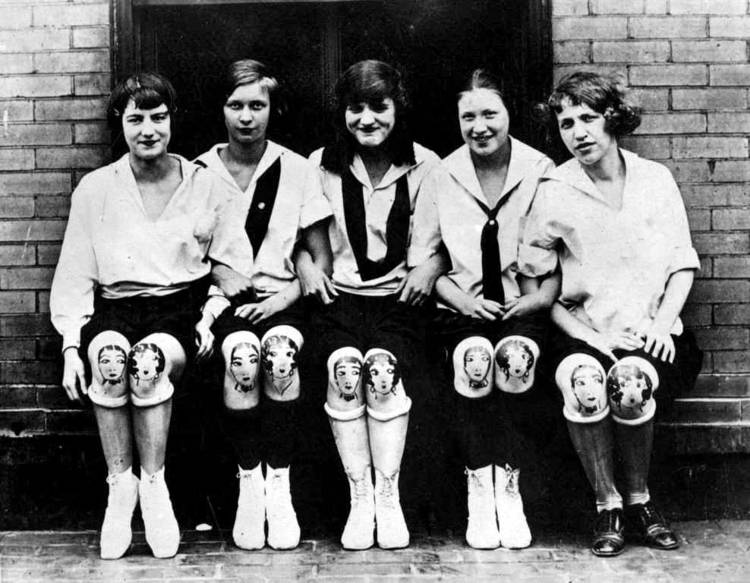
(Learn more about painted knees here)

How Sosruquo was born (Abaza legend)

One of the most famous heroes of the Caucasian Nart sagas is Sosruquo (Soslan), who is born from a stone and burns so hot that the blacksmith god has to temper him. The smith grabs the red-hot baby with tongs around his knees and plunges him in water/milk repeatedly, making his whole body strong like steel. However, his knees where the tongs covered him remain vulnerable, much like Achilles' heel. (Warning, mention of attempted sexual assault in the linked text.)

The treacherous brothers (Greece)

Three princes set out to find a magic lamp that can save their kingdom. The youngest ends up saving three princesses from three different ogres. One ogre has his strength in his knees: he kills people by luring them to lay their head on his lap (promising to de-louse them), and then crushes their skull between his knees. The prince, despite his brothers' inevitable betrayal, is victorious in the end.

Lunja (Morocco)

Princess Lunja follows some birds into the wilderness and ends up being kidnapped by a ghoul woman. When her cousin comes to the rescue, she manages to escape, but the ghoul is in hot pursuit. Lunja manages to trick her into thinking she'd run even faster if she ate her own knees. She doesn't. (The young couple has other adventures after that, but all is well in the end.)

How human beings got kneecaps (Ekoi people, Nigeria)

A woman sees a very pretty white rock in the river, and repeatedly wishes to have it. Her wish is so strong that the rock jumps out of the water and sticks to her knee; after that, she can't get rid of it anymore. And ever since, humans have had kneecaps.

The betel-nuts (Itneg people, Philippines)

This is a long mythical story about a woman who marries the sun. I am including it for a smaller detail: whenever there is a gathering of people in the story, they send out betel-nuts to invite the guests. The nuts tell those who are invited that they have to come, otherwise they grow on their knees and make them unable to walk. Some heed the warning and some don't.

"My father is a fish and my mother is a man" (ATU 705)

This is a folktale type popular in Scandinavian countries and Arab traditions. It generally involves a couple that wishes for a child, but the man accidentally eats the miracle pregnancy food (fish) instead of his wife. A daughter is then born from his knee. She later becomes queen and goes through several adventures; in the end, she is recognized by her lost husband by the riddle of her birth.

What do you think of these stories?

If you got a painting for your knee, what would it be? :)

Monday, August 8, 2022

StorySpotting: "This b*** I've never heard about before" (Canada's Drag Race)

StorySpotting is a weekly or kinda-weekly series about folktales, tropes, references, and story motifs that pop up in popular media, from TV shows to video games. Topics are random, depending on what I have watched/played/read recently. Also, THERE WILL BE SPOILERS. Be warned!


Yeah, I watch Drag Race sometimes, when my overworked brain needs the mental equivalent of a chewing gum. I am fascinated by the makeup and the sewing challenges. 
One thing I learned is that these shows are usually hilariously off the mark whenever it comes to geek culture... or mythology. And then recently I saw one thing I needed to blog about.

Where was the story spotted?

Canada's Drag Race, season 3, episode 2 (The Who-Knows)

What happens?

The runway theme for this episode was Goddesses of the Ancient World. All of the contestants would be worth a post... but I'll focus on one: Kimmy Couture, who walked the runway in a Vegas showgirl-esque orange dress and headpiece. During the critique round, this conversation happened between the judges and Kimmy:

"Tell us about your goddess."

"So, I went on Google, and I searched it, and then I found this b*tch that I've never heard before... I just really wanted to show some sun because I feel like, I'm like a ball of fire."

"Well, you nailed it. It all worked out."

Kimmy went on to win this episode.

What's the story?

Okay, yeah, it irked me that someone on TV would refer to a mythical character in this manner, and lack of attention to... basic facts, like her name. Because Kimmy herself could not tell us who the goddess was, I became curious to see if she'd just made up a generic sun deity for fun. After some searching, I found a post on her Instagam, and was surprised that she named the goddess there: her name was Alectrona or Elektryone.

So, here is what Kimmy didn't tell you:

Elektryone belongs to the Greek pantheon. She was a demigoddess venerated on the island of Rhodes, as the daughter of the sun god Helios and the island's own patron goddess Rhode (whom the locals worshiped as an aspect of Athena). Rhode herself was a sea nymph, the daughter of Poseidon. So Elektryone belonged to not one, but two illustrious divine families: that of the ocean, and that of the sun. Very fitting for an island deity. She had seven brothers, all kings of Rhodes.

According to some sources, Elektryone was the (demi)goddess of the sunrise. Her name is related to the Greek word for amber, which was always associated with the sun for its color, and its ability to create sparks. Elektryone was also a personification of youth, since according to myth she died a virgin, before she became elevated to the rank of a local deity. Youth and the sunrise go hand in hand.

By the way, the whole myth about Helios' family on Rhodes is pretty interesting. According to one story when the Greek gods divided up the world among themselves, Helios was not present, because, well, he was doing sun things in the sky at the time. So, they conveniently forgot about him, and gave him no realm. However, just at that time the island of Rhodes rose up from the sea, and Helios made his claim of that new piece of land. Other sources say Helios himself raised the island from the sea, after falling in love with Rhode.

You can read more about Rhode here, and Helios' family in Rhodes here.

Conclusion

I have a soft spot for Helios' family in mythology (going all the way back to Kerényi Károly's mythology books, and, most recently, Circe). That look Kimmy served did not read Greek, or mythical, to me at all - but then again, I'm not a fashion expert. I am happy for the chance to introduce some lesser known deities in this post, though. So... yay?

Saturday, April 23, 2022

T is for Traces of Tourmaline (Gemstone Folklore)

Welcome to the 2022 A to Z Blogging Challenge! My theme this year is Gemstone Folklore. Because I love stories about shiny things. Read the introduction to the project here.

TOURMALINE

Tourmaline is a very complex silicate mineral that comes in many colors - pink, red, yellow, green, blue, or even black. It crystallizes is long, slender prismatic columns, some of which can be more than one color - like the famous "watermelon tourmaline", which is green on the outside, and pink on the inside.

The Argonauts on the Island of Elba
Greek myth

The Argonautica is an ancient Greek myth of a group of heroes that set out on an epic journey to reclaim the Golden Fleece from faraway Colchis. Under the leadership of Jason, the ship Argo is filled with the most famous heroes of its day - including Heracles, Orpheus, Atalanta, Castor and Pollux, and many others. The most well-known iteration of the story is the epic written down by Apollonius of Rhodes in the 3rd century BCE.
In AR's version, the heroes take a very convoluted route on the way home from the Black Sea. They sail up the Danube, then cross to the Adriatic (the author thought they were connected), then sail up the Po and cross over to the Tyrrhenian Sea. At one point, they land on the island of Aethalia (Elba), and organize races on the beach. As the many heroes compete against each other in various sports, their sweat splatters on the beach, staining the rocks with dark, round spots that have been visible ever since.
The rocks on the beach below the Capo Bianco cliffs are white, stained with round, blue and black spots of tourmaline. Fun fact: the dark marks were associated with sweat stains because Greek athletes usually scraped dirt/sand and sweat off themselves with specific instruments (strigils) and flung them to the ground.

Sources: Read the text of the Argonautica here. The image below is from this article. Read a long reserch article on this myth in this book.

Other stories: Read a more recent legend from San Diego about tourmalines here.

Are you familiar with the myth of the Argonauts? 
Do you have a favorite part or character?

Saturday, January 2, 2021

StorySpotting: Swimming for love (Bridgerton)

StorySpotting is a weekly or kinda-weekly series about folktales, tropes, references, and story motifs that pop up in popular media, from TV shows to video games. Topics are random, depending on what I have watched/played/read recently. Also, THERE WILL BE SPOILERS. Be warned!


Where was the story spotted?

Bridgerton, Season 1, Episode 7 (Oceans apart)

What happens?

Daphne has a conversation with her brother Colin, who is in love with the disgraced (pregnant) Miss Thompson. Daphne is trying to convince him to give up on his love and avoid scandal:
Daphne: You cannot visit her.
Colin: Leander swam Abydos to Sestos every single night in complete darkness just to see his love.
Daphne: Leander also lost his way and drowned. So the story goes. 

What's the story?

Roman coin from Abydos,
depicting the story
Daphne is right, the Greek tale of Hero and Leandros is not a happy one. Hero is the "virgin priestess" of Aphrodite, and she lives in Sestos, on the northern shore of the Hellespont (the Dardanelles strait). Her lover, Leandros, lives on the opposite shore in the city of Abydos. In order to meet in secret, he swims across the strait every night, guided by the light of a lantern in Hero's window on top of a tower. However, one night a storm blows out the candle, Leandros loses his way, and drowns. When Hero finds out about his fate, she throws herself from top of the tower.
Yup, this really is not a love story one should strive for.  

The story echoes in a tale from the Faroe Islands about a young man from Koltur who swam across in secret to the island of Hestur to visit his lover. One day, however, the girl's father found out, and when the lad showed up on the shore, he chased him back into the water with an ax. The suitor was never heard from again; according to the legend, he drowned on the way back. 

The Pakistani legend of Sohni and Mahinwal has a similarly tragic ending. Here, the girl swims across a river every night, using an upturned pot for buoyancy, to be with her lover. One time, however, the pot breaks, and a storms sweeps both her and her lover away. 

On a more upbeat note, we have the Maori legend of Hinemoa and Tutanekai. A high-born girl falls in love with a youth who is not noble enough to be her husband. He plays his flute every night, calling to her, but her family hides all the canoes to keep her from crossing the lake to her lover. Eventually she sets out swimming, with six hollow gourds to hold her up (clever girl). She follows the music, and managed to reach Tutanekai's island. They get married, and live happily. 

In another story, from the Tuamotu islands, we learn about a girl named Hina who sets out swimming to the island of Motu-tapu, to find the perfect prince she wants to marry. She tries to enlist the help of various sea creatures, but they are either not strong enough to carry her beyond the reef, or she pisses them off one way or another (in a shark's case, literally, as she pees on him), and they all leave her floating in the ocean. Eventually, she makes her way to the island, leaving a trail of much changed (and disgruntled) sea animals in her wake, and she marries her prince. 

Conclusion

If you have to cross large bodies of water for love, make sure you have something to keep you buoyant. Or better yet, hitch a ride.

Wednesday, September 16, 2020

MythOff Aquincum: Back to the Classics

We have not had a MythOff since February, due to the coronavirus crisis. Hence, when the Aquincum Museum invited us to bring MythOff to the museum's open archaeological park, we were more than happy to oblige. Last weekend was their Roman Festival, and we didn't only prepare with Greek and Roman mythology - but we even dressed for the occasion!

MythOff took place in the afternoon (following right after the gladiator combat). Since it was very hot outside, we abandoned the open air theater and set up under a large tree so that our audience could sit in the share. It turned out to be a great idea: it created a lovely atmosphere, and about 50-60 people stuck around to listen to myths for two hours. Voting was done by dropping pieces of pottery into urns, and the prizes were antefix replicas provided by the museum.

Here is how things went down: 


Round one: Life and death
The lineup opened with Hajós Erika. She told the myth of King Erysichthon, who disrespected the goddess Demeter, and was punished by eternal hunger. The other myth was that of Aeneas' journey into the Underworld, told by Gregus László.
Voting question: Which one would you rather take on: eternal hunger, or a trip into the Underworld?
Winner: Aeneas. People would rather go to the Underworld than go hungry.


Round two: Love
This was my round, and I got to tell a brand new myth from my repertoire: that of Dea Muta, the silent goddess, who saved a nymph from being raped by Jupiter, and then became the secret lover of Mercury. Nagy Enikő told the lovely story of Philemon and Baucis wishing to leave the world in their old age together.
Voting question: Which love would you rather choose, one that is rich but has to be kept a secret, or one that is poor but you don't have to hide?
Winner: Philemon and Baucis. People would rather not hide their love. 


Round three: Troy
Stenszky Cecília told the myth of Philoktetes, the unlucky archer whose story kicks of the fall of Troy. Dala Dániel joined her with the prequel to the prequel: the death of Heracles (a story which is depicted in a mosaic in Aquincum). 
Voting question: Who would you rather have as an archery master?
Winner: Heracles. More people would rather have an angry master than a stinky one.


It was amazing to tell ancient myths among the ancient ruins. We hope to do it again sometime soon!

Sunday, November 17, 2019

MythOff Budapest: Bestiary

Fall is here, and it was time to have another MythOff in Budapest! We met at our usual place, the Premier Kultcafé, to tell myths to adults (although this time we also had three very attentive children, under parental supervision). The evening was themed Bestiary, and we all brought stories that involved legendary animals and mythical creatures. It seemed to be a popular idea: we had more than seventy people in the audience!
The emcee of the evening was Nagy Enikő, who made sure everything went smoothly and well. Here is the rundown:

Round one: Beasts in the family
This round featured myths where the creatures formed a part of the family. Varga-Fogarasi Szilvia told the story of Greek creation, from Chaos to the rise of the Olympians. Hajós Erika told a melancholy Japanese story about a kitsune and her love for a moral man. 
Voting question: Which myth would you name your music band after?
Winner: Japanese mythology, and a theoretical punk band named Fox Fur Smell

Round two: Female beasts
This round had two myths were women turned into mythical creatures - and both of them from Greek mythology. Klitsie-Szabad Boglárka brought us the story of Medusa with wit and humor, while Bumberák Maja told the lyrical, touching story of Arachne. They made a great pair.
Voting question: Which would you rather take on, fighting Medusa or competing with Athena?
Winner: Everyone would rather fight Medusa (go figure)

Round three: Beasts in the wild
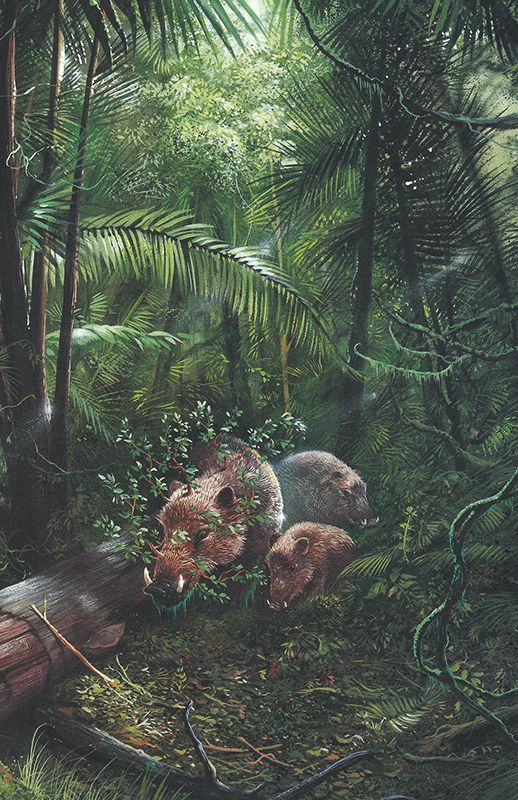
This last round had myths where people crossed over into the wilderness. First I told the myth of the Boongurunguru, Umaroa's mythical boar, from the Solomon Islands (one of my favorite mythical creatures!). Next, Stenszky Cecília told a Khanty story about a woman who died in the woods and was reborn as a bear, raised by a bear family.
Voting question: What would you rather plant in your garden, Knathy pines of ferns growing on the back of the Boongurunguru?
Winner: Solomon Islands

The tellers of the winning myths received coffee cups painted with mythical creatures (courtesy of Enikő) - the fourth mug was raffled off to the audience. The evening went great, and we are already preparing for the next one: telling love myths for Valentine's Day!

Wednesday, March 27, 2019

MythOff Athens: Mythical Firsts

The theme for this year's World Storytelling Day was "Myths, legends, and epics" - and it seemed like a perfect opportunity to organize a MythOff! With the support of the Federation for European Storytelling, six international storytellers and three artists banded together to bring my favorite myth-telling event to a new country: Greece! You can't even wish for a better setting to tell some myths.

Interestingly enough, we found out, Greek audiences are not usually that much into mythology. Mostly because the Greek myths are commonly known and taught, most Greek storytellers tend to select less often told stories. We had no idea, while working on the event, if anyone was going to show up at all, and if they did, how they would like the show.

In the end, we had almost seventy people in the audience, and an amazing storytelling evening to remember.

The MythOff took place in the Museum of Cycladic Art (one of my favorite museums in Athens), in one of their spacious presentation rooms. At the front of the room, behind the stage area, there was a long table where our artists were seated. That's right! For the firs time in MythOff history, we had artists creating illustrations for the myths, real time, while we were telling! Each story got its own picture, and the storytellers got to take them home. I'm still reeling from the awesomeness.
The voting happened at the end of the evening, with the use of small white pebbles. People dropped them in the vessels marked by the artists, to pick their stories, and placed them next to the pictures, to select their favorites. The artists insisted on being a part of the competition, but the choice, frankly, was near impossible.

An now, for the play-by-play:

Round One: Fire Thieves
I was lucky to be the first teller of the evening. I told the Abkhaz Nart saga of How Sasruquo Plucked Down a Star (and then acquired fire by tricking a terrifying giant). It is a great tale of a bullied hero, a powerful mother-goddess, and lots of funny shenanigans. To match all that, Vasileia Vaxevani told the Greek myth of Prometheus with equal humor and drama. Even Herakles made an appearance at the end.
Voting question: If you wanted to have a cigarette, and had to ask for fire, whom would you rather ask for it?
The winner: Prometheus!
The pictures: Ironically, the Fire round had watercolor pictures, and the Sea round had charcoal. Out illustrations were created by the incredible Yannis (John) Rubus (you can find his art page here), who didn't only draw incredible scenes for both myths, but also received the winner's crown (or rather, souvenir hairband) for the best art.

Round Two: Women
Since it is directly attached to the Prometheus myth, we got to hear the story of Pandora next, told by Maria Terzaki with great eloquence, and subtle hints at how many different ways that story can be understood. The other half of the duo was Mattia Di Pierro from Italy, who told the creation story of Lilith and Eve, and managed to surprise us more than once.
Voting question: If you had to ask for help creating something (or someone), whom would you rather ask?
The winner: Pandora! (or rather, her creation team)
The pictures: It is only fair that myths about women were illustrated by a woman, the wonderful Eugenia Koumaki.

Round Three: The Sea
The first storyteller of the last round, Torgrim Mellim Stene, arrived from Norway, and brought with him a story from Greenland. The story of Sedna tells about a girl who marries a sea bird, but her father tears her away from him. In the enduing battle, she is thrown into the sea with her fingers cut off, and thus becomes the mother of all three creatures, and the goddess of the waters. This story was matched by Ifigenia Kakridoni, who told the bittersweet Greek myth of Scylla and Glaukos, with a guest appearance from Circe. It seemed that the audience was less familiar with this than the other Greek stories, and they sounded both surprised and delighted.
Voting question: If you had to get a makeover, which transformation would you rather choose?
The winner: Sedna!
The pictures: This round was illustrated by Dimitrios Kasdaglis. For the last story, he set up a flip chart and we all got to watch him work onthe figure of Glaukos while listening to the myth. It was enchanting. 

The whole evening went great, and people seemed to have lots of fun both with the stories and with the setup of MythOff. They were already talking about having another one while we were counting the votes! We celebrated the event with dinner and drinks, showing off the artwork to each other and to the Internet (I already have mine framed). I am sure this was not the last time MythOff came to Athens. I can't wait to see what happens next!

Thursday, April 12, 2018

High School Mythical

We were asked by a friend if we could take MythOff to a high school, as a gift to a mythologically inclined seventh grade class. We said yes.

MythOff is a series of live storytelling events that was invented bring mythology, told live, back to modern audiences. It is generally an adult event; we do it in pubs, and coffee houses, and other similar venues. We have never had one in a school setting before - but when we were asked, some of us could not say no.

I love telling to teenagers. They make an amazing audience. In addition, when I was their age, I was a complete mythology dork: I made lists of gods, and read Graves and Kerényi, and collected magazine articles in a binder. And that was pre-Percy Jackson. I tried to imagine how I would have reacted if real storytellers came to my school to do real mythology.


So, we went.

Round One: Tricksters and creation

All three of us picked a mythology. For round one, all three of us brought stories that involved creation, or birth, or origins... and also, completely by accident, tricksters. Varga-Fogarasi Szilvia brought the birth of Maui; Nagy Enikő the story of Sif's golden hair and Loki's bet for the forging of Mjölnir; and I brought Momus, and his critique of Greek creation. I especially had fun with the Greeks when I asked the kids how many gods live on Mount Olympus (they knew). Then I asked if someone could list them... and a girl, very proudly and confidently, listed all twelve, with some enthusiastic support from her classmates. Be still, my heart.


The voting question: We never really had a MythOff with an odd number of tellers before - but we came up with a genius solution.
First, I asked the class if they knew how the Trojan War started. A guy said that someone kidnapped someone's wife; a girl added that the wife had been given to Paris by Aphrodite. Someone else added that it was in exchange for the golden apple; and yet another person pointed out that the apple had been thrown by Eris into a wedding. After the class assembled the entire story, I produced a golden apple (I painted it gold the night before, along with half the kitchen), and the voting question: If you had to pick a roommate when you go to college, which one of the three tricksters would you want as your roommate?
Szilvi brought three cups and a box of glass pebbles. Each cup represented a mythology. Each student got one pebble, which they places in the cup of their choice, under the supervision of the two guys in the front row, who enthusiastically commented on the proceedings, and monitored the fairness of the vote. Loki won by considerable majority (with Momus second and Maui last). If they wake up one day in college with their hair cut off, I take no responsibility.


Round Two: The wrath of the gods

This round involved myths where someone pissed off a deity in some way. Szilvi brought Maui back, and told about how he stole fire from the volcano goddess Mahuika (you're welcome). Enikő brought Thor, and told the story of how he was dressed up as a bride to take Mjölnir back from the giants (and then killed them all). On my part, I told the myth of King Erysichthon, and how Demeter punished him with deadly hunger when he chopped her sacred grove down.
The voting question: If you had to give the golden apple (I made two) to a god, knowing that the other two will be angry at you, which god would you want to piss of the least?
This time, the vote was overwhelming: Demeter won it by a landslide. To be fair, we were just before lunch break, so the kids were probably really feeling the hunger...

Once again it has been proven that mythology works like a charm in high school. And that high schoolers make an awesome audience. They were attentive, appreciative, creative, they made comments and asked questions, and took the vote very, very seriously (I loved hearing them discuss their decisions in line).

Bring more storytelling to high schools!

Monday, March 19, 2018

The Greeks tell great stories (Following folktales around the world 63. - Greece)

Today I continue the blog series titled Following folktales around the world! If you would like to know what the series is all about, you can find the introduction post here. You can find all posts under the Following Folktales label, or you can follow the series on Facebook!

The series is going on a short break after this week, and it will resume in May, after the end of the A to Z Challenge! In the meantime, tune in for some Hungarian folktale weirdness from April 1st!

Modern Greek Folktales
Richard McGillivray Dawkins
Greenwood Press, 1974.

This book is a classic. And a very thorough one, too. Dawkins selected 84 stories with the aim to represent the entire scope of Greek folktales. While one can definitely argue with that, it is impressive that most popular folktale types are indeed represented in the volume (and a few unique gems as well). Where applicable, Dawkins notes the ATU numbers for the tale types, and also cites all other Greek variants of the same type (which is awesome for research). All chapters are structured the same: Introduction of the tale type, discussion of the Greek variants and their differences, comparison to tales from other cultures, list of Greek variant sources, and analysis of certain symbols and elements - followed by the text (or texts, if they provide nice contrast), translated by Dawkins. In some cases, there is no text, because the Greek version did not diverge from the well-known stories (e.g. Snow White).
I did not only read the stories for fun, but also learned a whole lot about Greek folktales in general. I especially enjoyed the discussion of various motifs and symbols; among other things, I learned theories about why "open, sesame" has sesame in it, and why "three apples" fall from heaven at the end of a story.
"Complete" list of tale types or not, every country should have a collection like this.

Highlights


Showing how much I liked this book
One of the best tales in the book is The Mountain of Jewels and the Dove Maiden. It combines one of my favorite tale types, Gemstone Mountain (I wrote about it here), with a friendly ogre, and the search for a lost wife that takes the hero back to the mountain a second time (and he completely disregards the gemstones). In the end, even the ogre got his eyes back. I was also happy to encounter a variant of another favorite tale of mine, called The Magic Bird. I knew it as the Gold-spitting Prince (included in my book for the unique superpower). In this case, the powers given to the three heroes were not gold-related, but nonetheless intriguing; one of them even gained the ability to see into the hearts of people. One of the other stories in the same book came from this very collection: The Son of the Hunter, a version of the "extraordinary helpers" tale which I especially like because one helper has the ability to cause earthquakes. The three men and the umpire was a close version of "Three fastidious men" (also in my collection), all displaying keen superhuman senses and Sherlock Holmes-like deductive powers.
I really enjoyed Is it a Girl? Is it a Boy?, where a king sent a daughter, and another king sent a son, to fetch the Water of Life, in order to see whether boys or girls were more useful. The girl, disguised as a boy, won the bet, and managed to confuse the hell out of her helper, Sir Northwind in the process (but they did fall in love in the end).
One of the most fun stories in the book is the one about The young man and his three friends. It is a turducken of stories: The hero sets out to find a beautiful woman, and meets three companions on the way - Son of the Sun, Son of the Moon, and Son of the Sea. He gets wives for each of them through completing side-quests in the form of other tale types: The first, the Princess on Glass Mountain; the second, a Dancing Princess; and the third, a Silent Princess, whom they make talk through telling yet another embedded story, that of the Magician's Apprentice. The Silent Princess, yet another favorite of mine, is also represented in a separate text in the book, and contains a version of the Louse Skin tale. I like my favorite stories wrapped in other favorite stories of mine.
I also enjoyed the tale of The Quest for the Fair One of the World. Here, the hero had to find a hidden princess, who ended up helping him do so by giving secret directions. I also liked The Princess' Kerchief, in which a girl that everyone thought was "crazy" helped the princess find her lost love.
The tale of the Underworld Marriage felt distinctly mythical; a girl wandered into the Underworld, and returned with an armful of flowers, only to go back later, and marry the king of the Underworld (hello, Persephone!). A very similar thing happened in the tale about Eating Human Flesh - the King of the Underworld demanded what a girl who wanted to be his wife should eat some human flesh. In addition, his true wife found a key in his navel, and opened a door to the entire world - a great motif that Dawkins examines in detail (and we will encounter later on in Albania). And talking about the underworld: The tale of The woman who could see the Angel of Death was unique and a little sad. She asked for this as a gift from the angels, and from that point on, she could see what happened to people in the moment of their death. Less somber, and more horrifying was the tale of the Strigla, in which the hero had to fight his own sister who turned into a vampire-like creature.
Morningstar and Pleiades
Many of the tale types were familiar, but some had interesting twists on them. Little Brother and Little Sister, for example, had the stepbrother save his stepsister from their evil mother, and they eventually fled into the sky, turning into the Morning Star and the Pleiades. The Son of the Sea was very similar to Grimm's Nixie in the Millpond, except combined with the type where the hero could turn into a lion, an eagle, and an ant, and used all three of his abilities to get away from the curse.
I found the tale of The girl who had two husbands fascinating - I knew it in a Turkish version, but in this one, a girl actually killed her own mother following the manipulations of her (would-be) stepmother, and she had to do penitence for her sin by taming the Dragon Prince. The story did not have a happy end. Killing a mother also appeared in the Greek Cinderella, except it was the two older sisters who did it. Cruelty had less dire consequences in the Greek version of Love Like Salt, in which the king did not exile his youngest daughter, but instead married her off to the first poor man to pass the palace (who turned out to be a great husband).
In many tales it was the reversal of genders that was interesting. The girl who married an animal (actually, an ogre named Musk and Amber) was essentially the gender-swapped version of the Master Maid; the Boy who had a dream, according to some notes, also has a Greek variant where the dreamer destined for greatness is a girl. This boy, by the way, did not only marry the princess that saved him, but also the other one that kept sending riddles to be solved - and ended up with two wives. In an Animal Husband tale, it was the crab-prince who came out when nobody was home, and cleaned the house (yay for equality of chores). In Searching for Luck, the hero who set out to find luck was an old woman, looking for the Undying Sun. She helped others along the way, and returned home, content, but not any wealthier than she started. In the contrasting tale, however, a man tried to loosen the fountain of his fortune (literally), and broke a stick into the pipe; after that, his life was an endless series of misfortune. A note also mentioned a male "prince and the pea," but didn't include the text.

Connection


After the Ukraine, Moldove, and Bulgaria, I once again found a tale about the girl and her brothers who were kidnapped by a dragon, for their late-born little brother to save. In this case, the boy was born from his widow mother drinking her own tears. I last encountered the tale type of The Goldsmith's Wife in the USA; in this version, two princes helped a woman escape from her abusive husband.
The Magic Brothers-in-Law was a close variant of Grimm's Crystal Ball, except the villain here did not hide himself in one, but three eggs: One had his sight, one had his strength, and one had his life (hello, Voldemort). The Boy and his Guardian was a straight up "grateful dead" tale, but I liked the moment where the king threatened to have his son executed if he did not make at least one friend. The tale of The girl whose father wanted to marry her was a version of Catskins, but in this case, it was the girl who took the prince's ring at the ball, so that she could come back for him later. Three Measures of Salt was a classic case of the clever wife taunting her husband, like in the American Basil Maiden, or the Pentamerone's Violetta. The Girl who went to war was a sex-change folktale (and notes also said there are variants where the prince turns into a princess, instead of the other way around). The clever peasant girl in this case focused on speaking in riddles - called "crow language" - which a prince used to make sure his bride would be clever.

Where to next?
Malta!

Friday, July 14, 2017

MythOff Budapest 2017 - Sun, Moon, and Stars

There is no summer without MythOff in Budapest! It was Szilvia's idea to pick the theme of Sun, Moon, and Stars, in honor of this summer's upcoming solar eclipse (and the lucky people who will get to see it). Everyone really liked the suggestion, so the agreed to choose our myths accordingly.
We made some good choices.
Once again, we outgrew our venue, so this time we performed at the RS9 theater; a space of almost 100 seats, which we managed to fill to capacity! (We would like to take this time to thank our wonderful, loyal, and ever-growing audience). Behind the emcee's microphone we had Varga-Fogarasi Szilvia, who did not only suggest the theme, but also took care of the music, the prizes, the announcements, and some fiery spectacles at the end of the show.
The myths and tellers were as follows:
(Watch the videos by clicking on the names!)

Round one: Lights in the night sky
Lovranits Júlia opened the evening by telling us a myth from the Philippines about the birth of the Moon. In it, the Sun demanded a princess for a wife; the girl, defying her protective father, rose up to the sky to light up the night for the people she loved.

Next we had Hajós Erika telling the heavy yet beautiful Greek myth of Callisto and Arcas (the Big Bear and the Little Bear) - she talked with grace and empathy about Zeus' violence, Hera's vengeance, and all the topics this story tend to bring up.
Voting question: If Hera went hunting, and her prey was defended by the kind-hearted Sulamyn, who would win the confrontation?
The winner: Greece

Round two: Sunrise 

This round was all about the Sun. Bumberák Maja told the Japanese myth of the goddess Amaterasu, how she hid herself from the world, and how she was lured out of her cave by the goddess of happiness and a mirror. Her telling was graceful and poetic, and showed some of the many meanings and layers of this important story.
She was followed by Gregus László, who brought is the Chinese myth of Yi the Heavenly Archer, who shot down nine of the ten suns in the sky to save the earth from being scorched to ashes.
(I blogged about this epic earlier)
Voting question: If you had to light up a storytelling event, what would you rather use - the chariot of the ten suns, or Amaterasu's mirror?
The winner: Japan


Round three: Lucky stars

In this round, the storytellers drew cultures (or cultural regions) from a hat, and they had to find their sun-moon-star myths accordingly.
Yours truly had the luck of pulling South Africa as a region. I spent a couple of weeks reading myths and folktales from various South African cultures, especially from the San and Khoikhoi peoples. In the end, I settled for a KhoiKhoi story called Windbird and the Sun - it is a tale about a girl who was loved by the Sun and the Wind and who loved colors, so both of them tried to make the world as colorful for her as they could.
(Video here, original source here, picture book here, I got my mythical background information here and here, among other sources)
The evening concluded with Nagy Enikő, who brought us some Hindu myths about the Pleiades, Mars, and the birth of Kartikeya, the god of war. Enikő is an elegant teller, who told us the stories with grace and wonder.
Voting question: If someone wanted to start a new fashion trend, should it be based on the colors of the Khoikhoi myth, or the sparks and lights of the Hindu myth?
The winner: Khoikhoi mythology

All in all, we had a great lineup of diverse stories, and a lovely audience that supported us, voted, and asked many questions about mythology. MythOff, once again, was a special experience.

We will do it again soon!