This year, my A to Z Challenge theme is Body Folktales. Enjoy!

There are actually quite a few body parts that start with B, so I had a great time picking through some of the most interesting stories. I decided to delve into tales about two things: Beards, and Buttocks. Because I couldn't resist. Here we go.
How the White Man got his beard (Cheyenne)
A white man travels without food and, seeing rich green grass, wishes he was a buffalo so he could eat. He finds some buffalo and begs to be turned into one of them. They take pity on him, and, by running at him five times and tipping him over, they turn him into a buffalo. White-Man-Buffalo grazes to his heart's delight - but then another white man shows up and wants to do the same. White-Man-Buffalo doesn't like the idea of sharing, so he starts chasing the other man. Eventually, he tips him over... but instead of turning him into a buffalo, he himself turns back into his human form. Only the buffalo's beard remains on his face, and since that day, white men have beards.
The Cloak of Beards (UK)
Among the legends of King Arthur we find not one, but two instances of beards being symbolically important. In a fashionable sense.
Early in Arthur's reign, he is challenged by a Welsh king (giant) named Ryence who keeps defeating other rulers and sewing their beards to his cloak - a total of eleven. He demands Arthur's beard as well, suggesting he should save himself the trouble and tear it off, and promising it would have a place of prominence on the cloak. Sir Balin ends up fighting and killing Ryence and saving Arthur's honor. In some versions of the legend, Arthur himself defeats the giant, and takes the cloak - adding the giant's own beard - as his trophy.
Later on, Arthur also runs into the giant of Mont-Saint-Michel in Brittany, who has defeated 15 kings, and in homage the humiliated rulers gave him a Christmas present: a cloak embroidered with their beards and decorated with gemstones. Arthur, once again, wins the fight and beheads the giant.
The count's beard (Italy)
A village is terrorized by a witch that keep stealing cattle. The count that rules the village does nothing to stop her. The villagers turn to a small but very clever man who does some stellar investigating, Sherlock Holmes style, and figures out that the witch is actually the count himself, with his luscious beard pined up into a hairdo.
Anansi and the pharaoh's beard (Suriname)
Same story as the ears of King Midas, except in this case a pharaoh has a very long and strange beard that he tries to hide, killing everyone who finds out about it. Anansi, the spider trickster is the one who whispers the secret into a hole in the ground - and in time, a tree grows from the hole, whispering the truth.
Beware the red beard (Bosnia and Herzegovina)
A young man is warned by his dying father to beware red-bearded men. As he sets out to seek his fortune, he is soon cheated out of all his money by a red-bearded innkeeper, and a red-bearded judge refuses to rule justly. Finally the young man encounters a red-bearded hodja; and although he doesn't trust the man at first the hodja manages to help him, and set everything right. Proving that not all red-bearded people are the same.
The spatula that makes buttocks sing (Japan)
A young man, by some luck, comes into possession of a magic spatula. If he rubs his buttocks with it, they begin to sing, and if he rubs them again with the handle, they stop. He finds a way to touch the butt of a rich man's daughter with this curious item, and her buttocks begin to sing day and night. The father pays him handsomely for curing his daughter's strange affliction.
The buttocks of Conan Mac Morna (Ireland)
One of my favorite episodes in the Fianna legend cycle is "The house of the quicken trees" (Bruighean Caorthuinn). In this story, some of the heroes of the Fianna are captured by an enemy prince. He invites them for a feast under false pretenses, and casts a spell that makes them all stick to their seats, unable to move. Some of the remaining heroes, outside the hostel, fight a fierce battle to protect their friends from an invading army, and procure the royal blood that can break the enchantment. Finally, they succeed.
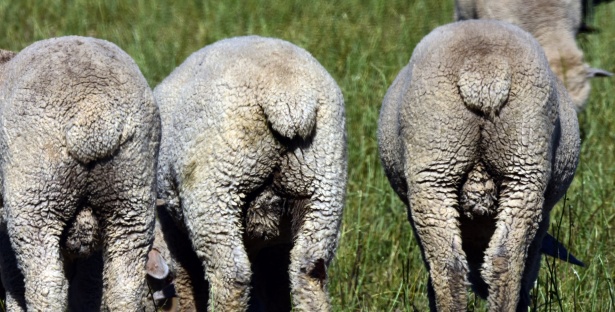
However, by the time they sprinkle the blood on everyone, it runs out. Conan Mac Morna, the team's resident grump, is last in line, and there is no way to disenchant him, which makes him even more churlish (he tells Diarmuid, the rescuing hero and famous ladies' man "you wouldn't have left me for last if I was a pretty woman"). With no other course of action, Diarmuid pulls Conan from his seat by force, tearing off the skin of his buttocks. In some versions of the legend, the Fians mend Conan's injury with sheep skin - and after that, they have to shear him every year, procuring some fine wool in the process. (Sources here, here, and here.)
There is also another Fianna adventure that ends with Conan getting sheep skin on his butt, in a slightly more heroic fashion; you can read it here.
From previous A to Z years, see my post about the Hungarian tale of Flowerbeard.
Which story is your favorite?
Which one would make for the best movie adaptation? And in what genre?


 Posts
Posts