Monday, October 12, 2015

Storytelling Pet Peeves

If you thought storytellers were docile, merry, peaceful individuals who spend their time frolicking in meadows and consorting with fairies... you have clearly never met a storyteller. Believe me, we can be quite terrifying. Especially when someone hits the right buttons.

Every storyteller has their own, story-related pet peeves. These are mine:

1. Excalibur and the Sword in the Stone ARE NOT THE SAME SWORD. Not in most stories, anyway. Arthur pulls one sword from the stone (AND ANVIL), and gets the second one from the Lady of the Lake. This second one is the one usually named Excalibur.

2. Morgan le Fay is NOT Mordred's mother. That's Morgause. Wrong sister.

3. Pandora's box HAS ALREADY BEEN OPENED. It is not some mystical chest full of evils. The only thing left inside it is Hope.

4. Dionysus is NOT an old fat drunk man. He is a youth. In fact, he is one of the most attractive of the Greek gods.

5. Andersen stories are not "Danish folktales." In fact, they are not even "Danish fairy tales." They are Andersen stories.

6. And while we are at it, Peter Pan, Alice, or the Wizard of Oz are also not folktales.

7. Rapunzel doesn't get RESCUED from the tower by the prince. He just visits her and gets her pregnant, and then the witch throws her out.

8. Snow White was persecuted by her BIOLOGICAL MOTHER. At least in the original first edition of the Grimm tales. Stop blaming stepmoms for this one.

9. Stop with the "if the shoe fit perfectly, why did it fall off?" memes. Cinderella lost her shoe because the prince smeared pitch on the stairs. Read the story.

10. It's "the 1001 Nights," not "the Arabian Nights."

+1. Stop using "trail of breadcrumbs" as a metaphor for leaving clues. Hansel and Gretel got lost in the woods because birds ate the crumbs. The metaphor for leading someone somewhere, based on this story, should be "trail of pebbles."

Whew! I feel so much lighter now.
Back to frolicking.

Thursday, October 8, 2015

Folklore Thursday: 12 things you didn't know about German dwarfs

Today is Folklore Thursday on social media! If you want to find out more, follow this link, or click on the #FolkloreThursday hashtag on Twitter! Hosted by @FolkloreThursday.

This is both my Folklore Thursday and my Dietrich Cycle post this week, because I am taking PhD prelim exams and this is all I have energy for. So.

I am reading a PhD dissertation from 1976, written by George Hans Heide, titled Dwarfs in German Folk Legend: An Inquiry into the Human Quality of these Creatures. It is a well done study; the author marked and labeled all the German dwarf legends he could find (in English and in German), and summarized all he found out about Dwarf society thematically (Appearance; Habitation; Society; Possessions; Skills and Occupations; Amusements; etc.) I am about halfway through the book, and I have found some very exciting little tidbits that I wanted to share:


1. In some occasions dwarfs might dress up in clothes that imitate the colors of songbirds. (How awesome an image is that?!)

2. Dwarfs can have a variety of skin colors, from snow white to black (take that, Tolkien fandom).

3. Dwarfs pee. (It's documented)

4. Female dwarfs ("dwarfesses," according to Heide) are pregnant for 9 days. (Good for them?...)

5. Dwarfs in German legend are a lot smaller than you think: Most often they stand about 3 spans (27 inches = app. 69 cm) or 2'4" tall - although some stories make them somewhat taller, the height of a child. They can also be a lot smaller, the size of a fir cone. Newborn baby dwarfs are the size of a human thumb.

6. There is at least one documented legend about a human nobleman cheating on his wife with a beautiful dwarfess.

7. Dwarfs can have queens!!! (This is important to me for the Dietrich research)

8. Dwarf children ("dwarflings") can play with human children, and sometimes they contract lice.

9. Dwarfs like to eat peas, grapes and raisins.

10. Female dwarf musicians play cheerful music; male dwarf musicians play solemn music.

11. Dwarfs enjoy nine-pin bowling.

12. Dwarfs enjoy storytelling. (I knew I liked them for a reason)

Thursday, October 1, 2015

Folklore Thursday: Jesus creates puli dogs

Today is Folklore Thursday on social media! If you want to find out more, follow this link, or click on the #FolkloreThursday hashtag on Twitter! Hosted by @FolkloreThursday.

Continuing the theme of the Peasant Bible, Hungarian folk legends about how various things came to be. On today's menu: Puli dogs.
Puli dogs are a "hungarikum," which is the word we use for typically Hungarian things. For more of those, you can visit my other blog... incidentally named MopDog.
Now, on to the story.

Jesus creates the puli dog
(Originally published in this book in Hungarian - folktales from Bács-Kiskun, Heves and Pest counties)

Jesus always loved shepherds; they were the first one to greet him when he came into the world, and they brought him a lamb and cheese and other gifts. In the days when he walked the earth he liked to stop and converse with them; of course they usually didn't know who they were talking to.
One day Jesus stopped to ask for a drink of water from a shepherd. The sheep were running all over the place, the man was chasing after them, and his water skin was empty; and yet he dropped everything and hurried to bring some fresh water for the weary traveler. When Jesus drank his fill and thanked him, the shepherd was ready to lunge after his wandering sheep again... but Jesus stopped him.
"Pick up that bone" he pointed, and the shepherd picked up a leg bone from the ground.
"There you go" he tried to hand it over to the stranger and go after the sheep who were quickly getting away, but Jesus stopped him again.
"Now throw it" he ordered, and the shepherd threw the bone away. The moment it hit the ground it bounced up and turned into a small dog, all fur and all bark, and the dog scampered after the sheep, herding them together in no time at all.
Jesus loved shepherds so much that he created the puli to do the herding for them.

In case you want visual proof, here is a video:


Tuesday, September 29, 2015

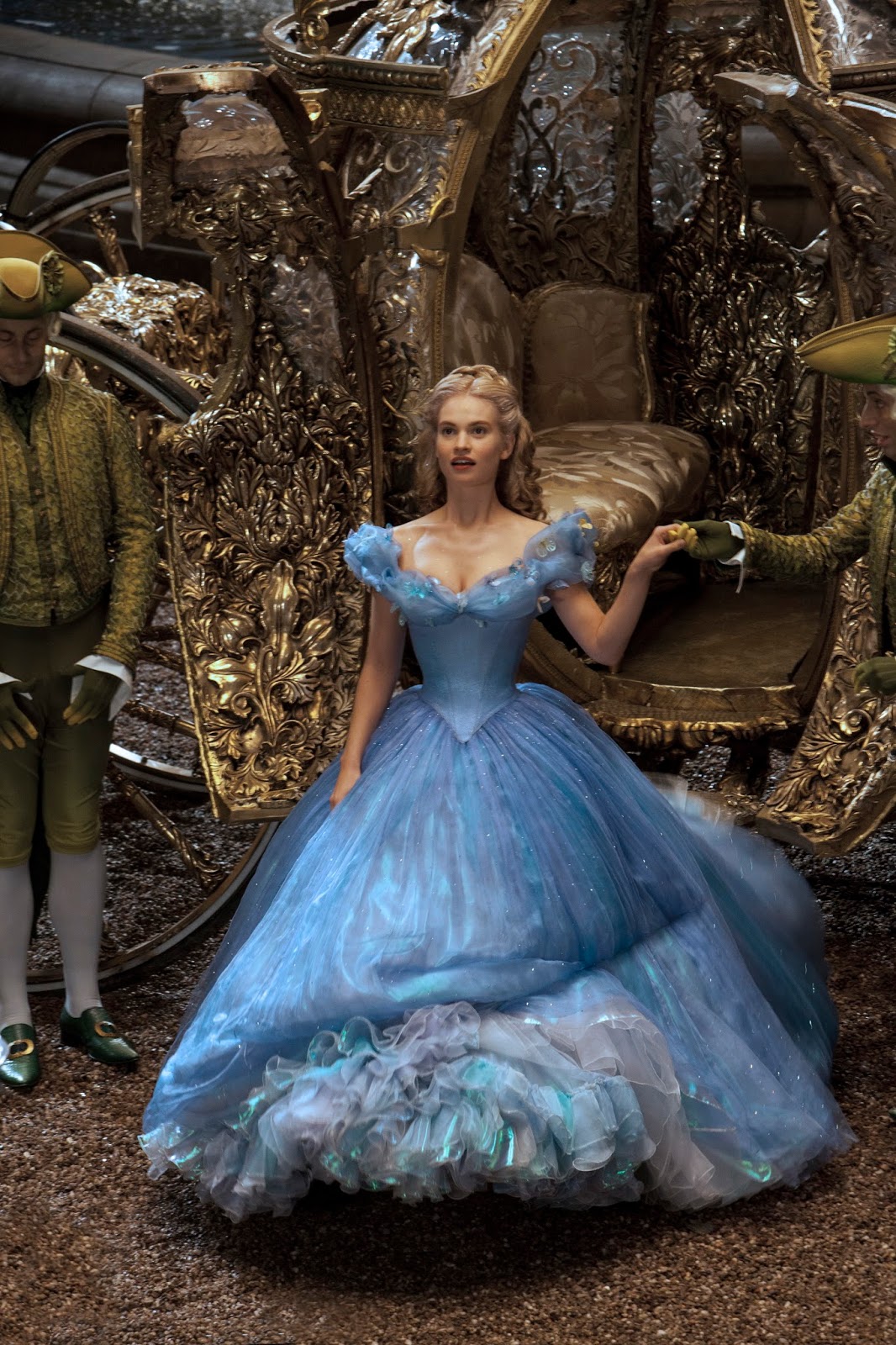
25 reasons why Ever After beats the new Cinderella movie

I watched Ever After and Live-Action Cinderella back to back. I wasn't planning on doing it that way; it just kind of happened. But the difference between Danielle and Ella, as well as their two respective movies, was so stunning that I just had to write a list about it.

So, here are all the things I think Ever After did them better:

1.
Danielle has a name.
Ella ends the film with "I am Cinderella."
(You are not Iron Man, sweetheart.)

2,
Danielle reads books.
Ella talks to mice.

3,
Ever After is situated in a consistently Renaissance-esque setting.
Cinderella is situated in some fake Barbie-like 17th-19th century.

This looks
uncomfortable
4.
Danielle recognizes the prince when she sees him, and has the appropriate frantic commoner reaction (falls to her knees and apologizes for throwing apples at him)
Ella doesn't recognize the prince, and when she finds out that her mysterious "apprentice" friend (with the entourage and the fancy clothes, duh) is a prince... has absolutely no reaction.

5.
Danielle risks her freedom and spends her money to rescue a servant and reunite him with his family.
We are repeatedly told by various characters Ella is brave and kind.

6.
Danielle protects and spends time with the servants.
Ella waves sadly after them as they leave.

7.
In Ever After, the stepsisters have their own personalities and stories. Even the "evil" one is fairly complex.
In Cinderella, the stepsisters are identical, and a comic relief.

8.
Danielle has friends who actively help her in her journey because they like her.
Ella has a one-trick fairy godmother, and a girl she giggles with over the ball invitation (this girl never appears again).

9.
Danielle and the prince talk about their opinions on the world, go to the library (!!!) together, and get into an adventure.
Ella and the prince talk about deer for two minutes, and then swing in the garden for another two.

10.
Danielle stands up to her stepmother and sisters when they abuse her. She even punches one of them.
Ella mopes around and feels sorry for herself.

11.
Danielle gets out her mother's old dress and works hard to fake being nobility.
Ella gets magic help upgrading her mother's old dress, and blends in with nobility with no effort whatsoever.

12.
Danielle has embroidered slippers.
Ella has six-inch glass pumps.

13.
Danielle gets her ball costume made by Leonardo Da Vinci.
Ella gets her costume made by Fairy Godmother CGI. Including digitally thinned waistline.

14.
Danielle has to choose between the slipper and a book, and she picks the book.
Ella never has any other choice but the slipper.

15.
Ever After deals with the fact that Danielle is a commoner and she lies about it, losing the prince's trust.
Cinderella does not care about any of that.

16.
In Ever After the prince is called Henry.
In Cinderella, the prince is called Prince. Also goes by Kit.

17.
Danielle has plans for what she will do as a queen, which mostly involve social and educational reform. She ends up building a free university.
Ella kind of stares into space and sings.

18.
Ever After deals with the consequences of the prince turning down his intended bride.
Cinderella glides over the reason why the prince had to get married in the first place (because his tiny country is surrounded by enemies) - so it is kind of implied that the day after marrying a commoner, his kingdom was probably burned to the ground.
(What would you expect from Robb Stark?)

19.
Danielle saves herself with her sword skills (or an epic bluff check).
Ella gets saved by a hesitant fat mouse.

20.
In Ever After Danielle asks her stepmother if she ever loved her, and gets a firm no, "how could I."
In Cinderella, the stepmother breaks down and accuses Ella of being "too good and pure."

21.
Ever After gives character and backstory to the stepmother, and shows her vulnerable when she loses her support with her husband.
Cinderella has the stepmother say "I'll tell you my story..." and then has her tell us everything we already know.

22.
The long-dead mother is present in Danielle's life through her legacy, and so is her father through her book.
Ella's connection is focused on her father, and it is done once he is dead.

23.
Ever After uses motifs from other folktales (e.g. the Clever Girl carrying the prince on her shoulder)
Cinderella uses motifs that are never used or explained again (Ella doing "magic" as a baby, the twig her father sends home, etc.)

24.
Danielle shows emotions like anger, desperation, frustration, embarrassment, excitement, and joy.
Ella shows sadness and joy.

25.
Ever After is a creative film adaptation of the motifs of a folktale.
Cinderella follows a cartoon based on a folktale word for word.

PLUS ONE
Anjelica Houston is a goddess and a perfect stepmother.
Cate Blachett is a goddess and a perfect stepmother.

All in all, I found Live-Action Cinderella cheesy, kitschy, and all-around boring and predictable.

To the crowds screaming "BUT IT'S A FAIRY TALE!!!": I know. I am a storyteller, believe me, I know. But what is great and well in a fairy tale told does not necessarily translate onto the big screen without looking like a lazy cliché. It still matters how it is told. 

To the crowds screaming "BUT IT'S A LIVE ACTION ADAPTATION OF THE DISNEY CARTOON!!!": I know. I don't like the Disney cartoon either.

I am sure an opposite list could also be assembled. Go ahead and have fun with it. :)


Saturday, September 26, 2015

Story Saturday: 5 Masculine Heroes Who Dressed Up As Women

Today we interrupt our regularly scheduled program of the Dietrich Cycle, to bring you the latest season of Mythology Drag Race.


Thor
One of the most fun stories to tell to any age group, the Þrymskviða tells the story of Thor's hammer Mjöllnir being stolen by the giant Thrym. He asks for the goddess Freya in exchange for the weapon, and she (dis)respectfully declines. Thor decides to take her place and dress up as a bride, with Loki as his maid, and they manage to fool the giant through the entire wedding, until the hammer is returned. Thor almost manages to give himself away by eating too much, and glaring at the giants, but Loki seems to be enjoying himself. 
(Of course it was Loki's idea.)

Hercules
At some point in his career, Herc also got a taste of women's clothing, although not exactly by his own free will. Serving as a slave to Queen (or, according to some other sources, Goddess) Omphale, he spent a year switching roles with the lady - Omphale wore Hercules' lion skin, and the hero wore a woman's dress, doing women's chores around the house. While not voluntary, apparently the change did not leave a scar on his pride - once freed from the one-year contract, he ended up marrying Omphale, and fathering some legendary children.

Achilles
(Because who wouldn't want to see Brad Pitt in drag?)
In a famous prequel to the whole Troy shebang, Achilles lived disguised as a girl for a while. Since the prophecy said he would die young, his mother tried to keep him away from fighting by dressing him as a girl, and sending him to live with the daughters of the king of Skyros, a tiny island. Achilles lived under the name of Pyrrha (Redhead), until Odysseus found out where he was hiding, and came to recruit him for the war effort. He brought jewelry and gifts for all the girls, and some weapons; then he pretended the island was under attack, and at the sound of the horns Achilles grabbed up a sword and thus gave himself away.
Story also says that while there, he fathered two sons with one of the actual daughters of the king. I am sure the girls didn't mind the dress.

Hugdieterich
I already wrote about this in my post on love stories from the Dietrich Cycle. Hugdieterich, emperor of Constantinople, not only dressed himself as a princess to get close to the love of his life, but even learned womanly arts like embroidery, in order to impress her father. She spent some time at court teaching the girls womanly arts, before giving away who he was (and fathering some heroic sons). Story doesn't tell if he kept his hobby of embroidery later on.

Arjuna
The leader of the legendary Pandava brothers of Indian mythology, the great and mighty hero Arjuna also spent a year in women's clothing (cursed into an eunuch by a woman whose advances he turned down). He took on the name Brihannala, and taught dancing and singing to a princess. He was later (after changing back) offered the hand of the princess, but declined, saying that he saw her as a student and a daughter. Princess ended up marrying his son instead.

Case in point: Wearing feminine clothing does not tarnish your chances at manly immortality.

One question remains: Who wore it best?

Thursday, September 24, 2015

Folklore Thursday: Things we can blame on Adam and Eve

Today is Folklore Thursday on social media! If you want to find out more, follow this link, or click on the #FolkloreThursday hashtag on Twitter! Hosted by @FolkloreThursday.

Continuing my weekly theme:
Even among the amusing multitude of tales from the Peasant Bible, Adam and Eve stories by far are my favorites. They carry seeds from older beliefs, and fun explanations of how things came to be the way they are. And since Adam and Eve are the archetypal Man and Woman, a lot of these stories have to do with the human body.
Let's take a look:

Boy parts and girl parts
One of my favorite tales from the Peasant Bible deals with genitalia (go figure). The story goes that originally Adam and Eve didn't eat with their mouths; there was an opening on their stomach for putting the food in, and after digesting it they could go down to the stream, turn their stomach inside out, and rinse it (yumm). Eventually they got bored with all the hassle, and wanted to eat and poop like the animals do. God gave them some money each, and sent them to the shop (yes you read that right) to buy some thread and needles, and stitch up the opening.
As it happens, on the way to the shop they passed by a pub (yes you read that right too) and while Adam walked on by, Eve decided she could get something to drink, and buy thread with the rest of her money.
Adam stitched up the opening on his stomach with neat little stitches (masculinity, yo), and he had ample thread left over dangling down between his legs, so he tied a knot on it. Eve, on the other hand, did not have enough thread to sew everything up, and ended up with an opening between her legs that didn't get properly sewn in.
Anyhow, they soon found a fun new use for their equipment, so I guess it all worked out just fine.

Body hair
There are several versions of a story in which people are originally hairless, until God, for whatever reason, decides to give them a way to be hairy. In some versions of this tale, Adam asks for body hair to be more "manly" and earn Eve's respect. Whatever the reason, Adam goes down to the stream as God appointed, takes some water in his cupped hands, and rubs it all over his face, chest, head, armpits, and all other parts. Eve, seeing Adam in all his glorious body hair, wants some for herself as well (or just wants to be as intimidating as he is, depending on who is telling the story) and goes down to the same stream, takes the handful of water... and then a pesky little insect, a mosquito or a bee, decides to sting her right between the legs. She slaps the insect away, and all the water goes between her legs.
Ta-da, eons of suffering with bikini wax.

Body temperature
According to a laconically short note, Adam and Even first boinked on the ice of a frozen lake, which is why women's butts are always cold, and men's knees are always cold.
Test any part of this story at your own risk.
(I want to know the longer story behind this)

(Fun fact: If you type "Adam and Eve" into Google, the first hit is an adult store)

Wednesday, September 23, 2015

Back to the gardens

I did my second round of seed-and-flower storytelling at the school today. I only had two classes: 3rd grade and 2nd grade, although several other kids attempted to drag me into their classrooms as well.
I told the Pumpkin Girl in 3rd grade, because I was curious to see if it would work with a younger audience, or if the 6th grade was just particularly enthusiastic about it. Turns out that kids are very easily entertained with the thought of a talking pumpkin, and they giggled all the way through. While it is definitely a fun story to tell, it also brought up some questions from the kids that I need to consider before the next telling (if "being loved just as she was" turned the pumpkin back into a girl when why did her mother's love not break the spell? - thank you, Frozen!). I also told the Jasmine Princess again, because I was in the mood for monkeying around with the kids, and they definitely got a kick out of it. The giant's character is also a lot of fun to do.
(Background: It took me a while as a storyteller to dare to do funny voices and sounds. I don't do them a lot, but sometimes they are definitely fun)
Second grade remembered me as "the storyteller with the superhero stories," and wished to continue the conversation where we had left off last year (now there's a compliment). I told Jasmine Princess again (I am really starting to love this story, and the kids react to it really well). I also told the Magic Garden, and for some strange reason, it hit the right spot for 2nd grade. Some of them told me this was the best story they ever heard, and they seemed enchanted by the idea of birds, and seeds, and gardens, and the whole thing. When I told them that such gardens really exist, they got really excited. Also, one of the boys wanted to know what birds are made of. I passed the question off to their teacher.
All in all, the flowers and gardens theme was tons of fun to do, and I got some great new stories out of it. I wonder what the next request will be!