Saturday, June 6, 2015

Story Saturday: Heroes Assemble!

Who's your favorite Argonaut?*

I'm a sucker for teams of heroes. I am not sure why, but ever since I started reading legends and mythology, I can not get enough stories about groups of warriors, bards, demigods and other misfits teaming up for great adventures. I am enchanted by group dynamics. Fascinated with combat cooperation. And just all-around happy that I could find stories where interesting characters got together for a gig.
(In case you were wondering: I read mythology way before I read comics, so I guess I liked the X-men and the Avengers because I liked team myths, not the other way around)

So, for today's Story Saturday post, here is a list of my all-time favorite hero teams from world folklore and mythology. In no particular order.

1. The Fianna
People following this blog are probably starting to get the idea that I have a Fianna fixation. They are right.
Culture of origin: Celtic (mainly Irish, but there are a lot of Scottish stories too)
What I like about them: They walk between worlds like I walk to the grocery store. Also, they need to know fighting AND poetry to get in.
Favorite members: Oisín, Fionn, and Caoilte, in THAT particular order.
Book recommendations: Lady Gregory's Gods and Fighting Men, and Rosemary Suttcliff's High Deeds of Finn mac Cool

2. The Argonauts
I always had a soft spot for sailing, and also for all-star Greek hero team-ups. Honestly, half of Graves' Greek Mythology was on that ship. Including Hercules.
Culture of origin: Very Greek
What I like about them: Mostly the fact that so many famous characters ended up on one ship. Also, their adventures are pretty awesome too.
Favorite members: Atalanta (the only female Argonaut), Orpheus, Kalais and Zetes
Book recommendations: Robert Graves' The Golden Fleece

3. The Knights of the Round Table
I grew up on these stories, and I am extremely picky about how they are told and adapted (which is why I might be the only person in the world who broke out in hives from BBC's Merlin).
Culture of origin: Welsh / British
What I like about them: It is one of the most epic stories ever told, and it still has a hold on people.
Favorite members: Sir Kay (hands down, no contest), and Sir Gawain, but I really like Arthur too.
Book recommendations: T.H. White's Once and Future King

4. Dietrich of Bern
This is a fairly new one, I read the Norse saga version for this year's A to Z Challenge post.
Culture of origin: German
What I like about them: It is an awesome lineup of diverse characters with interesting background stories. Also, someone gets fished out of the mouth of a dragon.
Favorite members: Hildebrand, Sistram, and Wittich (Vidga)
Book recommendations: The saga of Thidrek of Bern

5. Water Margin
Also known as Outlaws of the Marsh. One of three great Chinese epics, this one takes the cake in number of heroes: There is 108 of them, 105 men and 3 women.
Culture of origin: Chinese
What I like about them: All the heroes have their own backstories, skills, fighting styles, and trials. And very colorful personalities.
Favorite members: Lin Chong (Panther Head), Shi Jin (Nine Tattooed Dragons)
Books recommendations: Shi Nai'an's Water Margin

In addition, honorable mentions are due to Robin Hood and his Merry Men (recently planned for a shared universe movie series by Sony, God help us all), Charlemagne and his knights, the Jómsvikings, and Journey to the West. I could go on and on and on about hero teams... Which one would you rather belong to? ;)

*The correct answer is: NOT Jason.

Tuesday, June 2, 2015

Storytelling in Sarmatia: Archaeology Day in Hungary

Every year in the spring Hungary celebrates Archaeology Day: Museums and other archeo-related institutions organize events for the public to make the occupation seem less mysterious. They open up labs and storage rooms, and educate people through letting them touch things they would normally only see through glass.
(Artifacts. I mean the artifacts.)

This year, since I got home in time to participate, I landed a gig with the Damjanich János Museum in Szolnok, who were planning a Sarmatian theme for their program. The city lies in a part of Hungary that used to be Sarmatian territory back in the good old Roman times, and pretty much any time someone puts a shovel down, Sarmatian stuff starts jumping out. I have always loved Sarmatians, and I had three good reasons to be excited for the gig:
1. I already had a period dress ready, courtesy of my Sarmatian SCA persona (follow the link for an awesome blog on the topic);
2. The gig involved telling Ossetian Nart sagas, on the account of the historical, ethnic and cultural relations between the Ossetians and the Sarmatians, and I freaking love those stories;
3. One of my best friends and former Archaeology classmate works at the museum, and I got a chance to see her.

I arrived to the museum with a pretty nasty cold, but my friend and the rest of the staff took excellent care of me. I got a place to rest, and tea, and food, and volunteers to usher people in and out of the storytelling space. Everyone was super excited for the stories, and they paid a lot of compliments to my dress reconstruction, which made me feel proud, since it came from people who deal with Sarmatian things on a daily basis. My friend, who presented the "Artifact Petting Zoo" portion of the program, even invited me to show the dress off to people as an illustration.
The first round of storytelling was the program for children titled "Giants, heroes, and tricksters." Since all the kids immediately got stuck at the "archaeology sandbox" digging feverishly for finds, the program started a little late. A little boy arrived first with his grandma, and was very shy; but once I started telling him a story, other flocked in too, and eventually I had a neat little audience of 15 or 20 people.  I told my favorite Nart story, in which the heroes dig up the bones of an ancient giant and bring him back to life to learn about how people lived in the past. If there has ever been a fitting story for Archaeology Day, this one was it. I also told the tale where the Narts go adventuring and they all get stuck in magical chairs, just to be rescued by Sirdon the Trickster before a bunch of giants eat them. I love this story not only for the humor, but also because it is a clear parallel to one of my favorite Irish Fianna legends, The Hostel of the Quicken Trees.

The second round was supposed to be stories for adults, but since it was still early in the afternoon, many people brought their kids with them anyway. I didn't mind. They were very well behaved, and sat in the front row with eyes wide, reacting to the stories with gasps and giggles and noises of wonder. The adult program was titled "The Time of Heroes," and it drew an audience of at least 30-40 people, including most of the museum staff.
This time I had more time, and an audience with a longer attention span (since I was the last program, they had nowhere else to rush). I first told the Birth of Soslan, and how he was tempered in wolf's milk (the incident I mentioned here). Then I told the story of how Soslan saved his mother Satana from the Lake of Hell and how he was accepted as the greatest hero of the Narts (ironically, not for saving her, but for failing to save her, because he stopped to help people along the way who were in greater need). I told the fun little bit about Satana and her husband Urizmag getting a divorce - a folktale type when the wife can take what's "dearest to her" from the household, and she takes her sleeping husband (this one is so popular they even used it in a movie). After this we circled back to Soslan winning a wife through a dance-off (also mentioned on the link above). The kids loved this one. At this point the audience stared asking for "one more story!" every time I finished one, which is the greatest compliment a storyteller can get. I told a short funny story about Sirdon the Trickster tricking the Narts when they tried to bully him.
In the end, I decided to jump into the tale of Alimbeg's Daughter - the sex-change story I posted about last week. The audience listened with keen interest, and the lyrical nature of the tale seemed to carry everyone along. They seemed more shocked by Alimbeg having seven wives (a man even muttered "poor guy") than his daughter turning into a man, actually. I chose option 3 from my musings - but the story, when told, needed a lot less tweaking than I expected. It also probably helped with the adults that I told them Hungarians have the same story in tradition - it sounded less foreign that way.

All in all, it was a dream gig. I got to tell stories that I love to people who appreciated them, and especially children who were completely enchanted. I got to do it in a museum that holds artifacts that appear in the stories, wearing a dress that evoked the people who probably told the same tales two thousand years ago.
And Night of the Museums is only three weeks away!

Top Ten Tuesday: Make these books into movies NOW (pretty please)

More specifically, good movies if possible. If not possible, respectfully, leave them alone.

It is Top Ten Tuesday again, hosted by The Broke and the Bookish. This week's theme: Top Ten Books I'd Like to See as Movies/TV Shows. So, this is my regularly scheduled cry to the universe. It worked the last time I tried, so I there is hope (Thank you, Internet!).
Here is my wishlist:

Mary Renault: The King Must Die
I know I keep mentioning this book, but it has been a long time movie dream of mine. Not many movies take place in Minoan Crete (can you think of any?...), even though it would make a gorgeous setting, full of color and life. And bull-dancers! And women with vests that leave their boobs out! (Hollywood just left the room, didn't they). It's mythology, and action, and history, and acrobatics, and visuals, and boobs, and layered characters. 
Guys. Seriously.


Marvel's Runaways
Joss Whedon. All you need to know. He was actually casting for a Runaways movie before the Avengers came along, and the project has been on hold ever since. The closest thing we got to a Runaways flick was Big Hero 6 (which really is pretty much Runaways in disguise, when you think about it). But I would really, really love to see the real thing.
Also, Jurassic World proves that Hollywood is totally ready for pet dinosaurs.


Marissa Meyer: The Lunar Chronicles
I am guessing already that this one will take the cake in this week's TTT. I put it on my list too, even though I'm ambivalent about it: I would love to see it happen and done well, but at the same time, I love it how Meyer never gave detailed descriptions of her characters, and I don't want canon faces attached to them. Hard choice.


William Joyce: Jack Frost (Guardians of Childhood)
I'm totally cheating here: I really just want a sequel to Rise of the Guardians. I really, really, really do. Pretty please?
(But I am also looking forward to the book! It looks very pretty.)


Michael Ende: Momo
I can imagine this book done in the animation style of Song of the Sea. The same author as The Neverending Story, but a more concise and smaller-scale tale about the nature of time, life, and storytelling. Ende deserved a Nobel for this one.


Gods and Fighting Men
Please, someone, for the love of everything that's holy, make a cable TV show out of the Fianna legends. Rated R or higher, and done with a team of storytellers and cultural advisors. It has to be TV because you'll never cram all of them in a movie format; and it has to be well done, otherwise the wrath of all storytellers in the world will descend on you and you will suffer in Irish stereotype hell for all eternity, tortured by cheerful plastic leprechauns.
(Yes, I have strong feelings about stories I like, why do you ask?)


Vladimir Obruchev: Plutonia
One of the great book loves of my childhood, this volume tells the story of a team of Russian scientists that descend into the inside of the hollow Earth to find cavemen, ice age megafauna, and dinosaurs still living in there. What I love about it is that it was very Russian-scientific: The characters took their time to measure, take samples, document, and follow procedure. There is no Hollywood archaeology in it, no "oh look, that goo looks funny, let's put my hands in it" bullshit. There are definitely adventures - but the heroes are real scientists that stick to their main goal of exploring, even in the midst of being chased by giant ants. The film world is overdue for a movie with science done right.

I know this is only 7, but I have already exhausted my wishing powers for this week. Looking forward to seeing what other TTT participants are hoping for!

Saturday, May 30, 2015

Story Saturday: MythOff takes Budapest!

Wednesday night was Hungary's very first MythOff event!
It was preceded by a lot of excitement, a lot of talking, and a lot of research, which brought our little group of 6 featured storytellers together, and fulfilled one of the main ideas of MythOff: Fostering storytelling relations. Venturing into the world of mythology was familiar to some, and new to others, but everyone put their best work and all their passion into it, and the result was... well, EPIC.

Firts off, we had full house. More than a full house. We were at absolute full capacity in the basement performance space of a very friendly Budapest bar. We had at least 50 people in the audience, probably more. Whew!
We had 3 rounds with 2 storytellers each:

Round 1: The Power of Words
In the Norse corner: Erika Hajós, with the Lay of Hárbardr, told in beautiful verse.
In the Finnish corner: Maja Bumberák, with a piece of the Kalevala about Veinemöinen meeting the giant Vipunen, also told in beautiful verse, and even sung in the end!
Both ladies were eloquent, enchanting, and their prose and verse brought out the very best of not only the original myths, but also their original language and style.
Voting question: "If Odin (Hárbardr) and Veinemöinen had a duel of words, who would win?"
The prize: A pendant with a bee on it, reminiscent of the legend about how the Greek poet Pindar got the gift of sweet spoken words.
The winner: Veinemöinen!

Round 2: Siblings and Deeds
In the Yoruba corner: Szilvia Varga-Fogarasi, telling the story of how the sons of Obatala created the world (and warning against the dangers of consuming too much palm wine).
In the Mongolian corner: Enikő Nagy, with a myth about Gesar rescuing the dying Sun Maiden, before he became a mortal hero.
Both stories touched on the topic of sibling rivalry, and the roles of siblings in family and culture.
Voting question: "Which mythical family would you rather belong to?"
The prize: A pendant depicting Gemini, named "The Patience of Siblings," reminding its wearer to always be patient with everyone, but especially family.
The winner: Everyone wants to belong to the Yoruba pantheon.

Round 3: Deception and Trickery
In the Persian corner: Csenge Zalka telling the Fall of Zahhak (as a "short" prequel to my full-hour show of Zal and Rudabeh).
In the Greek corner: László Gregus, concluding the evening's lineup with the birth and mischief of Hermes, full of wit and humor.
Yuup, we accidentally ended up with a "Greeks vs Persians" theme for the last round. Very historical...
Voting question: "If you lost your winning lottery ticket, and Hermes told you it was on one side of Budapest, and Eblis told you it was on the other, and you only had time to check one place, who would you rather believe?"
The prize: A tiny mirror, named The Mirror of Clear Vision, revealing all deception and trickery (hopefully).
The winner: People would rather believe Hermes than Evil incarnate. I would too.

It was a fun, magical, and all around successful evening. MythOff has arrived to Hungary - and it looks like it is here to stay!

Tuesday, May 26, 2015

Top Ten Tuesday: A Beach Bag Full of Books on Greece

Once again it's Top Ten Tuesday, hosted by The Broke and the Bookish. This week's theme is "Top 10 books I have in my beach bag this summer." First I was going to skip because I am not a beach bag person (I am not even a beach person, thanks to my pasty luminescent complexion), but this is my third week in TTT and I am thoroughly hooked... Also, I do have some travel-related reading to do this summer.
In July I will be flying to Greece to join dozens of other storytellers at the annual FEST (Federation for European Storytelling) conference on Kea Island. This will be my very first trip to Greece, which is shameful, given the fact that I have an MA in Archaeology... But better late than never. As a storyteller I like to prepare for my trips by... reading. A lot. Of stories.
So, without further ado, here is the reading list I plan to complete by July:

Pausanias: Guide to Greece
The classic of classics; if I left it at home I would probably go straight to Classics Hell for it. When I was in college the Hungarian translation was almost impossible to find - when I came across a hidden copy at the bookstore, I spent my entire semester's textbook aid on it. It is a 2nd century AD description of Hellas, in great detail and a lot of intriguing stories.

Ancient Athens on 5 Drachmas a Day
Okay, so this is a fun read, not necessarily a scientific one. It got mixed reviews, and I wouldn't rely on it in serious research... But it sounds entertaining anyway!


John Tomkinson: Travels in Athens
I love reading travel journals, and I was having trouble locating some about Athens. Luckily, I came across this gem of a collection that did all the work for me! Tomkinson compiles excerpts from travel journals and diaries from the 17th century all the way to the 20th from famous travelers, explorers, poets, etc. It is an entire series of books, so wherever you go in Greece, there will be a book for it filled with the adventures of travelers that have gone before you!

John Tomkinson: Travels in the Northern and Western Cyclades
Since my travels will take me to Kea as well as Athens, I also bought the corresponding volume from the series.

Lucian's Dialogues
As my favorite Greek... er, Syrian... er, Hellenistic author, Lucian is definitely taking the trip with me. His Dialogues are some of the most hilarious satire pieces I have read, and they have held up over the past 18 centuries quite well. The volume includes the Dialogues of the Gods (whining about their everyday life and heartbreaks), the Dialogues of the Dead (similarly poignant), and the Dialogues of the Courtesans, painting a vivid picture of the life of women of pleasure in Athens...


On top of these 5, I also have 2 Hungarian books on my list:

1. The travel journal of the Hungarian poet who translated the Iliad, the Odyssey, and a huge chunk of other Greek literature to Hungarian in the first half of the 20th century. He was not only a Classicist and a poetic genius, but also a gentle soul with a great sense of humor. He first visited Greece 25 years after he did all the translation work, and the journal is a touching ode to him finally seeing all the places he spent his life writing about.
(Devecseri Gábor: Epidauroszi tücskök, szóljatok...)
I am taking with me a collection of his poems he wrote on the same trip.

2. The travel journal of one of my favorite Hungarian authors, Magda Szabó, who was also trained in Classics, and on top of writing amazing historical fiction, she also wrote a diary that is both clever and hilarious. Even decades after her trip, I could still use it in Rome to find some hidden gems. I expect the same from her Greek memories... (Szabó Magda: Zeusz küszöbén)

There is no better way to travel than to travel with stories, and with people who have gone before you. Do you have favorite travel literature?


Saturday, May 23, 2015

Story Saturday: The princess becomes a prince

This is me, musing out loud about representation.

I am preparing for a performance for Archaeology Day: I'm going to be telling Ossetian Nart sagas at a museum with a great Sarmatian collection (Sarmatians were nomadic people of Iranian origins who lived across the border from the Roman empire, and Ossetians are also people of Iranian origins who live in the Caucasus, hence the connection). I have a dress made and everything!
One of the stories I am working on falls into the tale type called the Shift of Sex (ATU 514), something intriguing I mentioned before when I talked about diversity in storytelling and also about LGBT+ related traditional stories. Now that I am actually working on my own version of telling it, I am doing some serious thinking about how to frame the story.

The summary
In most versions of this folktale I have encountered, the basic story is the same: Family's without a male heir, so their daughter goes out into the world dressed as a boy, and does many heroic deeds. Eventually she rises so high in the favor of the king/community that she is given a leading position/becomes heir. In order to fulfill her role, she is offered a wife, which throws a wrench in the plan, since her secret identity would be outed on the wedding night. Eventually, through blessing or curse, the girl turns into a man, marries the princess, and lives happily ever after.

The question
These folktales were told and recorded decades, often hundreds of years ago. How do I tell the story to make it ring true to people of trans/queer identities today?

The problem
In its current format the folktale suggests that the protagonist can only be accepted and happy if she physically transforms into a male body. Also, because of the different time these stories were born in, the physical transformation is necessary for the marriage to happen. In all versions the intended wife is kept in the dark, and is only presented with the resulting male body, without knowing about the transformation, or having an opinion about it.

The options
1. Build up to the sex change, suggesting it was the girl's own identity/wish/hope/goal all along. Make the male identity (and expression) a personal choice rather than a disguise out of necessity. This is not unprecedented in the tales: At least one version quotes the princess saying "men's clothes have always fit me better anyway." In this case, probably call the protagonist a boy after initially stating that they were born female.

2. Leave out the sex change / male identity and tell the tale as a lesbian love story. This would need more fiddling since the story is still set in a time and place (the Ossetian version anyway) where the protagonist couldn't come out as a girl AND marry another girl at the same time... probably. Female warriors do exist in Ossetian tradition, though.

3. Tell the tale as in option 1, but leave out the actual physical sex change. Have the protagonist come out to the chosen wife and be accepted (and loved). As far as everyone else is concerned, there is no change from what they know.

4. There are probably other options as well. I would love to hear comments and opinions on this.

Tuesday, May 19, 2015

Top Ten Tuesday: Favorite Historical Fiction Authors

It's Top Ten Tuesday again, hosted over at The Broke and the Bookish! Go check out the blog hop, and join the fun!

Historical fiction seems somehow underrepresented these days. Or is it just me? A lot of what I see being talked about falls into the following categories:

1. Historical Romance
2. Historical YA lit
3. Historical fiction of specific popular eras - 20th century, mostly

While there is absolutely nothing wrong with any of these, I do have a lot of classic favorites that don't fall into any of the three. So, since this week's Top Ten Tuesday is YOUR PICK, I decided to make a list of my favorite historical fiction authors, the masters of the genre.
Here we go!

Mika Waltari
An undisputed god of historical fiction. I read Sinuhe on the beach when I was in middle school, and it left a print on my rib cage as I propped it up, but I could not put it down. Some parts of it gave me nightmares, and those were not even the parts about mummification. I also loved Turms the Immortal, and the Mikael and Mikael Hakim series.


Maurice Druon
His Accursed Kings series is insanely well researched. He knew all the details that were to know, down to what tapestry hung in what castle hall. He's been to the depths of archives and came out with an amazing series, likable characters, and even more likable villains. (His mythic fiction Zeus' Diary is also pretty fun)

Gene Wolfe
He is on this list for his Soldier in the Mist series. It is the most challenging historical fiction I have ever read, and I enjoyed the heck out of it. The narrator of the story has amnesia, 50 First Dates style: he forgets every night everything about himself. Hence, he writes a journal to remind himself what happened so far - and that's the journal we are reading. The book, accordingly, is inconsistent, often confusing, but full of genius "aha!" moments - and also Greek place names that have been translated to English, as an extra puzzle to Classics enthusiasts. It was a challenge to read and I loved it.

Henryk Sienkiewicz
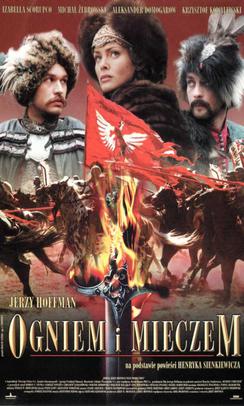
Polish author of Quo Vadis (of old Hollywood fame) and other historical classics such as With Fire and Sword and Teutonic Knights. He wrote characters who well not without fault, but especially likable because of that, and great, big epic historical stories worth following through.

Graham Shelby
Remember that Kingdom of Heaven movie where Orlando Bloom pretended to be a blacksmith and Eva Green pretended to be slightly less terrifying than usual? Well, it was supposed to be based on Shelby's Knights of Dark Renown series, telling the story of the Crusades. Except the books are infinitely better, full of adventure and awkward love, and great storytelling.


Edward Rutherfurd
Unlike the others on the list, Rutherfurd is here for one book only: London. He wrote an awesome epic telling of the history of one city through dozens of generations of a handful of intertwined families - and then he tried to do it again and again and again, and repeated the success, but never the quality. I tried some of the other books, and gave up pretty fast. London is a masterpiece, though.

Robert Merle
I grew up reading his Fortunes of France series in Hungarian, and was excited to find out that they just started publishing them in English. Fortunes of France is a swashbuckling adventure through religious wars, court intrigue, and a great exciting time of French history, peppered with a cheeky roguish hero and a lot of gratuitous sex.

Mary Renault
I already mentioned her on my list last week: The lady took Greek historical fiction to a whole new level. In addition, she also wrote the most adorable, touching same-sex romance about Alexander the Great in The Persian Boy. My favorite of hers is The King Must Die in which she brought Minoan Crete to colorful and breathtaking life.


Robert Graves
I love Graves for so many reasons. While his work with mythology is criticized a lot in Classics, he knew how to lift mythology into historical fiction. My favorite book of his is probably The Golden Fleece, but he became most famous with I, Claudius (a book largely responsible for me ending up with a degree in Roman archaeology).

Bernard Cornwell
Also mentioned last week: He is a recent new favorite of mine for his Saxon Stories series. An extremely prolific author with a good sense of historical realities, and very likable, human characters. Also, the best battle descriptions I have read in a long time.

There you have my list. Do you have favorite historical fiction?