Wednesday, April 19, 2023

P is for Pubic Hair (Body Folktales)

This year, my A to Z Challenge theme is Body Folktales. Enjoy! 

CW: Adult themes.

(Image from here.)

This is one topic that folktales get really fun about.


This legend explains the origin of body hair; I blogged about it before. When Adam and Eve wash themselves in water that gives them body hair, Eve gets stung by a bee between her legs, and swatting her hand at the little creature she accidentally creates centuries of business for bikini wax.


This story is a Hungarian variant of ATU 1175 - Straightening curly hair. A man hires the Devil as a servant, with the agreement that if he can't give him enough work the Devil will take over as master, and the man and his wife will become servants. Whatever the man orders, the Devil fulfills immediately, until he begins to get worried about the whole deal. He confides in his wife, who confidently takes over the next day: she hands the Devil one of her pubic hairs, and orders him to straighten it. The Devil spends hours trying to pull the hair straight, but it always springs back. He finally asks the woman if there's a lot of work left - at which point she lifts her skirt. Seeing all the hairs waiting to be straightened, the Devil gives up and flees.

White hair (Hungary)

One of the most popular erotic folktales of Hungary. A man swears to only marry a woman who has white hair between her legs. A clever maiden makes a little thong out of rabbit fur, and manages to catch herself a husband. However, the fur wears out eventually, and the truth comes to light. The husband complains to an older woman about the change. The old woman hands him a boiled egg and tells him to gently knock it against his forehead for a few hours. Obviously, this activity results in a dark bruise. The old woman points out he couldn't expect things to stay white down there either with so much... knocking.

Golden breasts, diamond navel, chain of gold (African-American tale)

A poor boy has three dancing pigs, which he exchanges with a princess for finding out what secret features she has on her body. Turns out she has golden breasts, a black diamond in her navel, and a golden chain around her thighs that matches her pubic hair. Later on the king announces he'll marry his daughter to whomever can divine what her secret features are. Obviously the boy wins.

The sun snarer (Menominee)

A young man's clothes are burned by the sun, so he goes home and asks his sister for a pubic hair. Using the hair he makes a noose and traps the sun with it; by the time a mouse manages to chew through the noose, the sun has learned its lesson.

Pasquino and the pig (Italy)

A priest wants to seduce the young mother of one of his students, but she rejects him. He then decides to put a love spell on her, and threatens her son into bringing him some of the woman's pubic hairs. The boy brings him some pig hairs instead. Thus, when the priest puts the spell into effect, a very amorous sow bursts into the church, chasing him upstairs and then out a window.

That's all for today, people :) Which story do you find the most entertaining?

Tuesday, April 18, 2023

O is for Optic Organs (Body Folktales)

This year, my A to Z Challenge theme is Body Folktales. Enjoy! 

Yeah yeah, I'm cheating, but I used E for Elbows.

Eyes are also a very common theme in folktales; I have blogged about them in various contexts before (such as eye juggling, fairy eyes, and a cat-eyed princess). So once again, I went around cherry-picking stories that sounded new and fun.

The pelican bird (Hungary)

This story begins with a king whose eyes are doing different things: one is always crying, and one is always smiling. One smiles because he has a lovely daughter and one cries because he used to have a magic pelican bird that he lost. The princess announces that she'll only marry a man who can return the bird. Of course a hero presents himself and goes through many adventures for it. The motif of laughing and crying eyes is very common in Hungary; people often quote it when they talk about being sad and happy about different things at the same time.

Rabbit's eyes (Korea)

The king of the fishes falls ill, and he can only be cured by eating the eyes of a live rabbit. He sends a turtle to lure a rabbit into the sea. When the rabbit finds out why he's there, he bluffs, saying he's left his real eyes at home, and he's wearing glass substitutes. Thus, he tricks the turtle into bringing him back to shore.

The witches' eyes (Mexican-American tale)

A man is good friends with two elderly sisters whom everyone else believes to be witches. He doesn't listen to the rumors, and visits them almost every day. He notices that there are cats around the house at night, even though the women claim not to have any. One night he goes over to the house and finds no one at home - but he stumbles across two pairs of human eyes left out on a stool by the fire. He knocks over the stool, and the eyes burn. The next day when he comes to visit, the women are hostile towards him - and he notices they have cat eyes, sensitive to the light of day. He flees, and soon after the sisters move away from town.

Shirime (Japan)

This creature is a yokai, a supernatural being featured in Japanese anecdotes. It stops people walking at night, bends over, and flashes its anus at them - an anus that has one large eye staring out of it. That's it. That's the story.

The sandalwood merchant (Arabic tale)

A sandalwood merchant stumbles into a town where everyone is a cheat and a rogue (in some translations it's called Falsetown). He runs into various people who trick him, until he is brought to court by all the rascals demanding money from him. An old woman helps him out with advice. One rascal, who only has one eye, claims the merchant took his other eye, and demands an eye in return. The merchant, following the woman's advice, tells him he is willing to give up an eye - but the rascal should take out his own first, so they can measure both and make sure they match. (Read more about versions of this story here.)

The children with one eye (Canada)

This is an indigenous story from Canada, but sadly the source doesn't note which nation it belongs to. It's about two children who blind themselves by accident. An old woman gives them an eye they can share, but warns them to take good care of it. Brother and sister pass the eye back and forth, but eventually one day they get into an argument, the brother throws the eye at his sister, and it falls to the ground where a bird snatches it up. After that, the two blind children turn into a mole and a bat.

Sharing and ransoming eyes

This one might be familiar to you from the story of Perseus: three old women, the Graeae, share one eye between them that they pass around (the Disney movie Hercules combined them with the Fates). The motif number is F512.1.2. - Three women have one eye among them. Surprisingly, this motif shows up in a whole lot of folktales around Europe. 

La Maga is an Italian folktale version (from Tuscany) of the Perseus myth, complete with an evil sorceress, and a hero who steals an eye from two women to ransom it for a mirror that can help him kill her. In a German tale Rinroth a boy climbs a tree and from there spies three men who share one eye between them. As they are trying to see who's in the tree, he snatches the eye from them, and only returns it when they give him three valuable gifts (that he uses later on to kill three giants and rescue a princess). In the Norwegian tale Lillekort a boy encounters two one-eyed women separately, takes their eyes, and blackmails them into giving him magic objects (that he also uses to defeat three trolls). Another version of the same, titled Shortshanks, has the hero similarly steal eyes from two separate old women; what makes this tale more interesting is that the hero has a twin brother who is stronger than him, and only returns at the end of the story. The most fun one I found was yet another Norwegian version, The trolls in Hedale Wood, in which two brothers did not only outwit three trolls that shared one eye, but also managed to use that large eye to see in the dark.

(Read more about this motif in general here and here.)

Were any of these stories familiar to you? Are there other "eye" stories that come to mind?

Monday, April 17, 2023

N is for Noses (Body Folktales)

This year, my A to Z Challenge theme is Body Folktales. Enjoy!


Noses are, once again, a pretty common theme in folktales. I have written about them during A to Z multiple times (e.g. here and here). Here are some fun stories to add to the list:

The Princess of Tomboso (Canada)

This is one of those folktales where a princess cheats a man out of various magical items. Eventually, exiled from her kingdom, he finds a tree of apples that make his nose grow long like an elephant's trunk - and another tree with fruit that has the opposite effect. He uses them to blackmail the princess into giving back his treasures. (Find more versions of this tale type here.)

Silver Nose (Italy)

Silver Nose is Bluebeard's Italian version, who also happens to be the Devil himself. If the girls who work for him don't obey his orders, he tosses them into hell. One clever girl, however, manages to rescue her sisters and herself from Silver Nose by trickery. (The mother warns her daughters in advance that the rich man with the silver nose seems suspect).

The magic pipe (Norway)

Three brothers set out to win a princess, and encounter a woman with a yard-long green nose that is stuck in the crack of a log. She begs them to free her, for her nose has been stuck for two hundred years, but only the youngest brother helps her. She rewards him with a magic pipe that he can use to win the princess.

The hyena, the dog, and Nose-of-Mud (Hausa people, Niger)

Nose-of-Mud, a man with a nose made of mud, goes out hunting with the help of Hyena. He makes Hyena rile up a bunch of antelopes by insulting their mother. The antelopes chase Hyena inside the nose of mud, where they die. After the successful hunt, Hyena decides to do the same and makes a mud nose for himself, inviting Dog along to repeat the trick. However, his mud nose breaks, and they both had to flee from the antelopes for their life.

What Spider knows (Ghana)

Anansi the Spider goes out hunting in times of famine, and encounters a strange little old man with a very long nose. He makes Anansi carry his nose around, and they go hunting together. When they want to kill an animal, the man makes Anansi point his nose at it, and the animal falls dead. When he returns home, Anansi makes a long clay nose for himself and tries to hunt with it - without success. The moral, claims the story, is not to be too ashamed to ask, to learn things properly.

Any more morals you can glean from these stories? Or any other nose stories you remember?

Saturday, April 15, 2023

M is for Mustaches (Body Folktales)

This year, my A to Z Challenge theme is Body Folktales. Enjoy!


5000 rupees on a single hair (India)

A merchant in a foreign land needs to borrow 5000 rupees from a banker, but can't give any insurance. The banker asks for a single hair from his mustache. The merchant gives one, promising to return for it; the banker then asks for a better hair, saying the first one is crooked. The merchant, offended, refuses. The banker gives him the money. Later a different merchant hears this story and tries the same thing - but when the banker asks for a second hair, he nonchalantly gives one. The banker refuses payment. Moral of the story: you only win the respect of others if you respect yourself. (Or, in this case, your mustache.)

The adventure of the Narts (Ossetian legend)

The Nart heroes go adventuring, and Sirdon, resident trickster of the group goes along with them. They go through many adventures. Sirdon, in true trickster fashion, gets everyone into trouble, and then out of it. Eventually, tired of his games, the Nart heroes tie him to the top of a pine tree by his mustache - but even then, he manages to escape through trickery.

Narjkhyaw (Abkhaz legend)

This story is about a storm-hero of epic strength and weight, who sets out to marry the sister of the Nart heroes. Everyone is terrified of his might, so as he shows up at their feasting hall, the Narts decide to kill him with poison. They catch two venomous snakes and grind them into Narjkhyaw's wine. Suspicious, he makes other people drink from the poison first, and they die. Still, Narjkhyaw drinks too - filtering the drink through his mustache of steel. The wine becomes purified this way, and he later picks the snake bones out of his mustache. (The Ossetian Nart hero Khamis also has a mustache of steel.)

See also: the tale of the proud king who passes himself off as a baby with a mustache. I blogged about this story in my Feminist Folktales series.

Heroes with mustaches of steel. Yay or nay?

Friday, April 14, 2023

L is for Liver (Body Folktales)

This year, my A to Z Challenge theme is Body Folktales. Enjoy!


Yeah, I could have done Legs or Limbs, but this one was more fun.

Pkharmat (Chechen legend)

Prometheus would have been an obvious choice for this topic, but instead I'm linking the Chechen version of the fire theft myth. The hero Pkharmat steals fire from the god of storms, with the help of the Mother of Narts in her bird form. After giving fire to humans, he returns voluntarily for his punishment, to be chained on the icy mountains. Every day a bird comes and asks him if he's regretted his actions but he says no; the bird then eats his liver, which grows back every day.

Why people have livers (Pengo people, India)

The creator makes the first boy and girl, but as they grow up they don't start to speak or walk. Eventually he asks his wife for advice. She suggests that he should cut her open as well as the children, and see what the difference is inside. The creator does so, and discovers that the children have no liver. He uses fig blossoms to make them livers. Ever since then, people can walk and talk, and fig trees have no flowers.

The liver of thunder (Miao people, China)

An old woman gives birth to seven brothers with magical abilities. When she gets sick, she claims the only thing that can cure her is eating the liver of thunder. The seven brothers manage to capture thunder, but while they wait to take its liver out, a robber accidentally frees it. Even since then, thunder doesn't harm robbers and thieves.

The liver of the wise and the liver of the foolish (Egypt)

A king is ill, and his vizier tells him that he needs to eat the liver of a foolish person and the liver of a wise person to get well. He immediately imprisons a judge ("wise") and a Bishari man ("foolish"). The Bishari man, however, proves him that his selection was wrong, saving his own life and the life of the judge (and throwing the vizier under the bus). From here, the story follows the Bishari man who marries the judge's daughter, and proves he is wiser than the judge himself.

Johnny and the liver (African-American story)

A classic horror folktale type in an American setting: a boy goes to buy liver but loses the money, so he cuts out the liver of a fresh corpse in the cemetery. At night, the corpse comes looking for its liver. In this version, the boy steals liver from another corpse and gives it to the first one - then lets them fight among themselves.

Were any of these stories familiar?

Question of the day: Are there any liver dishes that you enjoy? :)

Thursday, April 13, 2023

K is for Knees (Body Folktales)

This year, my A to Z Challenge theme is Body Folktales. Enjoy!

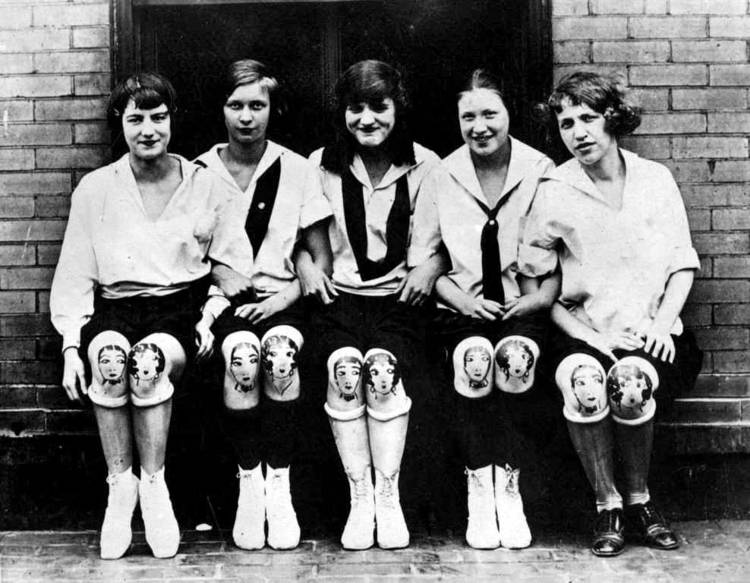
(Learn more about painted knees here)

How Sosruquo was born (Abaza legend)

One of the most famous heroes of the Caucasian Nart sagas is Sosruquo (Soslan), who is born from a stone and burns so hot that the blacksmith god has to temper him. The smith grabs the red-hot baby with tongs around his knees and plunges him in water/milk repeatedly, making his whole body strong like steel. However, his knees where the tongs covered him remain vulnerable, much like Achilles' heel. (Warning, mention of attempted sexual assault in the linked text.)

The treacherous brothers (Greece)

Three princes set out to find a magic lamp that can save their kingdom. The youngest ends up saving three princesses from three different ogres. One ogre has his strength in his knees: he kills people by luring them to lay their head on his lap (promising to de-louse them), and then crushes their skull between his knees. The prince, despite his brothers' inevitable betrayal, is victorious in the end.

Lunja (Morocco)

Princess Lunja follows some birds into the wilderness and ends up being kidnapped by a ghoul woman. When her cousin comes to the rescue, she manages to escape, but the ghoul is in hot pursuit. Lunja manages to trick her into thinking she'd run even faster if she ate her own knees. She doesn't. (The young couple has other adventures after that, but all is well in the end.)

How human beings got kneecaps (Ekoi people, Nigeria)

A woman sees a very pretty white rock in the river, and repeatedly wishes to have it. Her wish is so strong that the rock jumps out of the water and sticks to her knee; after that, she can't get rid of it anymore. And ever since, humans have had kneecaps.

The betel-nuts (Itneg people, Philippines)

This is a long mythical story about a woman who marries the sun. I am including it for a smaller detail: whenever there is a gathering of people in the story, they send out betel-nuts to invite the guests. The nuts tell those who are invited that they have to come, otherwise they grow on their knees and make them unable to walk. Some heed the warning and some don't.

"My father is a fish and my mother is a man" (ATU 705)

This is a folktale type popular in Scandinavian countries and Arab traditions. It generally involves a couple that wishes for a child, but the man accidentally eats the miracle pregnancy food (fish) instead of his wife. A daughter is then born from his knee. She later becomes queen and goes through several adventures; in the end, she is recognized by her lost husband by the riddle of her birth.

What do you think of these stories?

If you got a painting for your knee, what would it be? :)

Wednesday, April 12, 2023

J is for Joints (Body Folktales)

This year, my A to Z Challenge theme is Body Folktales. Enjoy!

(Image from here)

The adventures of the twins (Congo)

Twin brothers set out to find their father who had gotten lost on a trading voyage. They travel through a strange country where people can do whatever they want with their bodies. Some take out their bones before climbing a tree so they don't break in the event of a fall. Some turn their feet backwards at the ankle so they don't stub their toes. Some turn their knees backwards so they don't scrape them if they trip, or their arms so they can fall backwards without harm. At a marketplace, everyone is missing their jaw - it later turns out they made it a rule to avoid quarreling.

Sana (Zarma people, Niger)

A beautiful girl vows to only marry a man who has no joints in his body. A snake turns himself into a man with no joints, and proposes to her, spiriting her away from her family. By the time she realizes who her husband is, it is too late. After many troubles and adventures, her outcast brother rescues her.

How people got joints (Dogon people, Mali)

Dogon mythology is full of fascinating imagery and symbolism. Among them, there is a story about an ancestor who was a heavenly smith, who decided to come down to earth on a granary full of plants, animals, and people. He made the journey down the rainbow, defending the granary from the attacks of the Nummo spirits who had no joints in their limbs. Neither did the smith, but the impact of his landing broke his arms and legs, creating the joints that he then passed on to humans, making their limbs capable of working.

Ha! Managed to sneak another body part that starts with J into this post :) Did you see it?