When I tell stories to children parents, teachers and other grown-ups often make a mistake: they think I am telling stories for them. Not to them, mind you, for many of them never actually listen - but for them. To entertain their children (for them), to educate them about values (for them), to give them an interesting experience of real life storytelling that is so rare nowadays. And because grown-ups think that I am doing all this for them, they make the mistake of thinking they can tell me what to do. Or what to tell.
Well, here come the news flash: I am not doing it for the grown-ups. Not for the teachers, not for the planners, not even for the parents.
I am telling for the kids.
I am telling for the kids who crawl up on my lap or sit next to me and listen with eyes wide like saucers.
I am telling for the kids who chatter at me in the middle of the story and they want to ask what the prince's name was, or where the kingdom is on the map, and most of all, they want to know if the story is true.
I am telling for the kids who come up with new solutions to the tasks in the story, and I can't help but tell it their way the next time around.
I am telling for the boy who told me the first time we met that he hated stories, and marched out of the room. I am telling for him because the next time I came in he stood in the back and nodded at the prince's decisions. I am telling for him because we sat by the bookshelf and talked about what kind of stories he would like to hear, and the next time, he stayed.
I am telling for the girl who came in wearing a tutu and told me she was a warrior princess, and she wanted stories where the princess saves herself.
I am telling for the little boy who listened for an hour with his mouth hanging open, and afterwards the teachers told me that was the first time in his entire life he had heard a story (because his father thought stories make boys weak).
I am telling for the girl who turned the Roman legend of Camilla into a story of eternal friendship, and told it back to me in a way that left me speechless.
I am telling for the girl who told me "You have inspired me to become a storyteller" and started telling stories to her classmates every break between classes. At the age of eleven.
I am telling for he kids who hear stories about children their age being shot to death at school, and they need to deal with that thought when they go to school the next morning. I am telling them stories about life and death, and I listen to their questions.
I am telling stories for the kid who told me he felt lonely just like the hero in the tale, and needed to hear the happy ending.
I am telling for kids to show them not all princesses are golden haired and blue eyed and perfect, and not all heroes are male. I tell of Antar the dark-skinned Arabian knight, of Aicha the monster-hunter, of the mother who raises the changeling child instead of tossing him into the fire. I ask the kids if they like dragons, and the Korean twins can explain the rest of the class why.
I tell for the stories. Grown-ups don't always understand. But the kids do.
Friday, January 18, 2013

Thursday, January 17, 2013
Stories about Death for children
Every once in a while I run into parents, teachers and other worried adults who reach out to me to have an adult conversation about death in my stories. Most of what they tell me can be summarized in a few simple words:
DO NOT MENTION IT. EVER.
Now, death shows up in stories in many ways. Sometimes it is not more than one of many possible outcomes: this is what folklorists like to call "Do or Die." These are the tales where the prince knows that if he doesn't complete his mission, he will be killed (of course it never actually happens because he does). Sometimes death shows up as a side event - the first two heroes fail and die, and are either resurrected in the end by the victorious third, or stay dead. A lot of times death is punishment: the evil queen, the wicked witch, or other villains end up dead instead of the champions they tried to kill. There is a metric ton of scientific publications on how this is very important for the children's mental development: they need, crave and often demand the resolution in the story that death brings, making super-extra-maxi sure that the bad guy never returns. I have had experiences where children expressed anxiety if the villain did not die, told me they were worried they would come back. It's primal, people. Not rocket surgery.
I remember a sunny summer afternoon in the sailing camp when the kids walked up to me on the shore and asked me if I could tell them any stories about death. It wasn't the usual "tell us something scaaaaaary!" plea either, it was kind of quiet and curious. I sat down and told them a few folktales that deal with death; we sat around and discussed them, they shared their ideas and concerns, and asked if I could tell them some more stories.
Long story short: you can't just put death in a box and bury it somewhere hoping your kids will never find it. You know why? There is a story about it.
(And for future reference, here are some more similar stories I told that afternoon).
Koschei the Deathless
Talkin' about burying death in a box... or chaining him up in the basement. Apart from being a kickass action story that kids love, with princes and magic, and a strong female hero, the more you think about it the deeper the meaning gets. No, really. Try it.
(Recently the story has been adapted into a completely gorgeous urban fantasy book titled Deathless, by Catherynne M. Valente. Worth reading! Not for kids.)
Godfather death
Grimm classic, also known in other versions with Death being male or female, depending on the culture. Talks about how everyone has their time and we can't do much to change it. Even talks about the relationship between death and doctors, and how sometimes even doctors can't perform miracles. Telling ranges from comical to very serious, dealer's choice.
Mr. Death and the Red-headed woman
My ever favorite death story, and the nicest portrayal of Death I have seen in a short story. Not a folktale (written by Helen Eustice), but the storytelling community adores this one as one of the great tales. It's a love story, people. With a happy ending.
Alkestis
Kids love this one. Greek myth about love, loss, and fear of death. When King Admetus gets to trade his death for another person's, his wife volunteers to go in his place. Admetus, realizing that his fear of death was not worse than his grief for his wife, wishes he could take it all back. Hercules shows up out of nowhere, coaxes the story out of the mourning king, and proceeds to beat the cr*p out of Death when he appears to take the queen's soul. Tanathos leaves with bruises, queen lives, king celebrates, Hercules gets drunk (this part is optional). Everyone's happy. Every once in a while, you get a "get out of death" free card. This story is great for teaching kids about love, sacrifice, family, and the fact that Death is not something grand and fearsome that you cannot face with bravery.
The Prince who wanted to be immortal
I usually tell the Hungarian version of this one, but it exists in many other cultures. A prince who is too afraid to ever die sets out on a journey to find a kingdom where people never die. He travels through realms where people live longer and longer, but not forever, until he finds the palace of the Immortal Queen. Moving in he enjoys immortality for a while before he gets homesick and decides to go home for a visit. On his way back he finds the previous kingdoms long gone, and when he gets home, his home is nowhere to be found. He realizes that immortality took a long time, and everyone is long gone. Among the ruins he finds Death waiting for him, and death chases him all the way back to the castle of immortality, catching him right on the doorstep. There are two endings to this story: in one, the Prince dies, because that is the natural order of things. In the other, through giving away his Water of Life and reviving the previous kingdoms, he gets help to chase Death away, and manages to return to the Queen, and live happily forever. I usually tell this latter one, solely because of the comical ending of the Queen and Death playing tug-o-war with the prince.
Spelling it out: this story teaches kids that death is a natural thing that everyone shares. It also teaches them that one way of escaping oblivion is making sure that others remember you (as a good person). It also explains that living forever by itself is not rewarding - you need people you can spend eternity with.
The Master-smith
Norwegian folktale about a blacksmith that tricks death. Exists in many versions (sometimes it is the devil instead of death). Great story for explaining the role of death in the world. Once Death is trapped by the smith, chaos ensues all around the world: nothing dies, people can't eat, the sick and dying can't go to rest, and everything is swarmed with insects. Finally the smith has to admit that death has an important role to play and lets him out. I'm not even going to spell out the teachings in this one.
The Wedding veil of the Proud Princess
Also not a folktale, but I have loved this story since I was little. A princess who is too proud to marry anyone but the strongest knight in the realm is won by a mysterious black armored knight who knocks everyone out of the saddle. In the end, the black knight turns out to be Death, and he takes the princess away. This story teaches us how important it is to enjoy life and notice the little things, because death defeats everyone in the end. You can't be too proud to live happy.
"The Greatest Story Ever Told"
This one just made me wonder. If we are not allowed to talk about death to kids (let alone blood and gore, and nailing people to things), how will they understand the story of Jesus Christ? He happened to... you know... go away on a long journey for our sins. Just sayin'.
DO NOT MENTION IT. EVER.
Now, death shows up in stories in many ways. Sometimes it is not more than one of many possible outcomes: this is what folklorists like to call "Do or Die." These are the tales where the prince knows that if he doesn't complete his mission, he will be killed (of course it never actually happens because he does). Sometimes death shows up as a side event - the first two heroes fail and die, and are either resurrected in the end by the victorious third, or stay dead. A lot of times death is punishment: the evil queen, the wicked witch, or other villains end up dead instead of the champions they tried to kill. There is a metric ton of scientific publications on how this is very important for the children's mental development: they need, crave and often demand the resolution in the story that death brings, making super-extra-maxi sure that the bad guy never returns. I have had experiences where children expressed anxiety if the villain did not die, told me they were worried they would come back. It's primal, people. Not rocket surgery.
I remember a sunny summer afternoon in the sailing camp when the kids walked up to me on the shore and asked me if I could tell them any stories about death. It wasn't the usual "tell us something scaaaaaary!" plea either, it was kind of quiet and curious. I sat down and told them a few folktales that deal with death; we sat around and discussed them, they shared their ideas and concerns, and asked if I could tell them some more stories.
Long story short: you can't just put death in a box and bury it somewhere hoping your kids will never find it. You know why? There is a story about it.
(And for future reference, here are some more similar stories I told that afternoon).
Koschei the Deathless
Talkin' about burying death in a box... or chaining him up in the basement. Apart from being a kickass action story that kids love, with princes and magic, and a strong female hero, the more you think about it the deeper the meaning gets. No, really. Try it.
(Recently the story has been adapted into a completely gorgeous urban fantasy book titled Deathless, by Catherynne M. Valente. Worth reading! Not for kids.)
Godfather death
Grimm classic, also known in other versions with Death being male or female, depending on the culture. Talks about how everyone has their time and we can't do much to change it. Even talks about the relationship between death and doctors, and how sometimes even doctors can't perform miracles. Telling ranges from comical to very serious, dealer's choice.
Mr. Death and the Red-headed woman
My ever favorite death story, and the nicest portrayal of Death I have seen in a short story. Not a folktale (written by Helen Eustice), but the storytelling community adores this one as one of the great tales. It's a love story, people. With a happy ending.
Alkestis
Kids love this one. Greek myth about love, loss, and fear of death. When King Admetus gets to trade his death for another person's, his wife volunteers to go in his place. Admetus, realizing that his fear of death was not worse than his grief for his wife, wishes he could take it all back. Hercules shows up out of nowhere, coaxes the story out of the mourning king, and proceeds to beat the cr*p out of Death when he appears to take the queen's soul. Tanathos leaves with bruises, queen lives, king celebrates, Hercules gets drunk (this part is optional). Everyone's happy. Every once in a while, you get a "get out of death" free card. This story is great for teaching kids about love, sacrifice, family, and the fact that Death is not something grand and fearsome that you cannot face with bravery.
The Prince who wanted to be immortal
I usually tell the Hungarian version of this one, but it exists in many other cultures. A prince who is too afraid to ever die sets out on a journey to find a kingdom where people never die. He travels through realms where people live longer and longer, but not forever, until he finds the palace of the Immortal Queen. Moving in he enjoys immortality for a while before he gets homesick and decides to go home for a visit. On his way back he finds the previous kingdoms long gone, and when he gets home, his home is nowhere to be found. He realizes that immortality took a long time, and everyone is long gone. Among the ruins he finds Death waiting for him, and death chases him all the way back to the castle of immortality, catching him right on the doorstep. There are two endings to this story: in one, the Prince dies, because that is the natural order of things. In the other, through giving away his Water of Life and reviving the previous kingdoms, he gets help to chase Death away, and manages to return to the Queen, and live happily forever. I usually tell this latter one, solely because of the comical ending of the Queen and Death playing tug-o-war with the prince.
Spelling it out: this story teaches kids that death is a natural thing that everyone shares. It also teaches them that one way of escaping oblivion is making sure that others remember you (as a good person). It also explains that living forever by itself is not rewarding - you need people you can spend eternity with.
The Master-smith
Norwegian folktale about a blacksmith that tricks death. Exists in many versions (sometimes it is the devil instead of death). Great story for explaining the role of death in the world. Once Death is trapped by the smith, chaos ensues all around the world: nothing dies, people can't eat, the sick and dying can't go to rest, and everything is swarmed with insects. Finally the smith has to admit that death has an important role to play and lets him out. I'm not even going to spell out the teachings in this one.
The Wedding veil of the Proud Princess
Also not a folktale, but I have loved this story since I was little. A princess who is too proud to marry anyone but the strongest knight in the realm is won by a mysterious black armored knight who knocks everyone out of the saddle. In the end, the black knight turns out to be Death, and he takes the princess away. This story teaches us how important it is to enjoy life and notice the little things, because death defeats everyone in the end. You can't be too proud to live happy.
"The Greatest Story Ever Told"
This one just made me wonder. If we are not allowed to talk about death to kids (let alone blood and gore, and nailing people to things), how will they understand the story of Jesus Christ? He happened to... you know... go away on a long journey for our sins. Just sayin'.
Wednesday, January 16, 2013
Tell me about it! - Senior Story Circle at MPCC
Everyone has a story about a mother-in-law ruining the Thanksgiving dinner.
I have been looking forward to starting the Senior Story Circle with the new year. I grew up listening to stories from four grandparents, each a different flavor and repertoire, and have been missing the comfort of family stories since I came to the USA.
I gave up on the idea of "teaching" storytelling before we even started. For one, I don't feel like a teacher,and two, I selfishly wanted to listen to their stories instead of listening to myself. So we decided it was going to be a real old school storytelling experience: sitting around a table, passing the word from one person to the next.
I was genuinely surprised how naturally everyone settled into the pace of telling. After the first few shy stories, we just started passing the ball around. One story reminded someone of the next, and we went from fishing accidents to mother-in-laws to strong grandmothers to scary grandmothers to family history; then we went from old amusement parks to roller coasters to Swedish silver treasures to local Tennessee history.
I was even more surprised how naturally talented everyone was at finding good stories. Finding and crafting a good personal story is hard. You have to know what would be interesting for other people who don't know you or your family; you have to have a good starting point, a climax for the story, and a good ending point. Unlike many slam experiences, none of the stories were boring or awkward, and although some of them were very short and some of them were longer, all of them were intriguing, funny, and good to listen to. It felt like a group of people passing the word around, and there was nothing "classroom-y" about it.
All in all, so far it has been a great experience, and I learned to look forward to Monday afternoons with cheerful anticipation.
I have been looking forward to starting the Senior Story Circle with the new year. I grew up listening to stories from four grandparents, each a different flavor and repertoire, and have been missing the comfort of family stories since I came to the USA.
I gave up on the idea of "teaching" storytelling before we even started. For one, I don't feel like a teacher,and two, I selfishly wanted to listen to their stories instead of listening to myself. So we decided it was going to be a real old school storytelling experience: sitting around a table, passing the word from one person to the next.
I was genuinely surprised how naturally everyone settled into the pace of telling. After the first few shy stories, we just started passing the ball around. One story reminded someone of the next, and we went from fishing accidents to mother-in-laws to strong grandmothers to scary grandmothers to family history; then we went from old amusement parks to roller coasters to Swedish silver treasures to local Tennessee history.
I was even more surprised how naturally talented everyone was at finding good stories. Finding and crafting a good personal story is hard. You have to know what would be interesting for other people who don't know you or your family; you have to have a good starting point, a climax for the story, and a good ending point. Unlike many slam experiences, none of the stories were boring or awkward, and although some of them were very short and some of them were longer, all of them were intriguing, funny, and good to listen to. It felt like a group of people passing the word around, and there was nothing "classroom-y" about it.
All in all, so far it has been a great experience, and I learned to look forward to Monday afternoons with cheerful anticipation.
5 Things the USA should adopt from Hungary, and 3 Things just to baffle them
There are many things that come from the USA to Hungary. Movies, music, fast food, and even a few holidays like Halloween and Valentine's (I'm a Roman archaeologist, I know where it came from, don't argue, it's a figure of speech and lotsa fluffy pink bears). But, every once in while when talking to my American friends, I come across things that we have that seem to tickle the American fancy. Here is a list of things that Hungary should think about promoting across the ocean. Could be a bigger hit than goulash soup.
1. Easter sprinkling
I have thoroughly covered this one earlier here, but it bears repeating. Douse girls in water and get money/chocolate/alcohol for it? Seriously. If you are going to trade a Hungarian custom for giving us Halloween, pick this one.
 2. May trees
That's another fun one. The night before May 1st guy go out and chop down a huge tree, and plant or otherwise place it in front of the house of the girl they like (they usually do it in groups, obviously, and sometimes not entirely sober). I am talking tree tree here, no mere branches (see picture). They decorate the tree with ribbons, bottles, balloons, sometimes little gifts. Because who would not want to get a tree for May Day from a secret admirer?
3. Second breakfast, second lunch
What, you thought it was the hobbits' idea?! I have not even realized until recently that my eating habits had to change when I came to the USA. In Hungary the main meal is lunch, which makes me constantly hungry over here at noon (make a pun, I dare you, I double dare you), and then I can't eat all of dinner. In addition to that, we have smaller snack meals in Hungary at 10 o'clock and then in the afternoon. People seemed to like this in Lord of the Rings, and although I don't think Americans need to be encouraged to eat more, I thought I'd put it on the list anyway. Since I am munching on my 10 o'clock snack right now.
 4. Krampusz
This one is so much fun. They tried to rope me into designing the Christmas festivities at my workplace, but they quickly changed their minds when I told them that if I did Christmas Hungarian style, Santa would be dressed as a Catholic bishop and accompanied by a girl dressed as the Devil. You should have seen their faces. Priceless.
Anyhow, Krampusz is fun. You can read more of the background here. He/she (often a she since Santa is always a he) is pretty much St. Nick's sidekick, and kids absolutely love it. Side note: it's not like we worship Satan or anything. Krampusz is a Christmas spirit of the darker sort. We don't have elves with striped stockings, but we do have little devils. You can't have everything.
And while we are on the topic of Santa: we have St. Nicholas' Day on the 6th of December (Catholic calendar, people), when we put our shoes in the window and get them filled with bags of candy and oranges (and if you were a bad kid, little switches or branches to spank you with, from the good old days of corporal punishment). Then, two weeks later, we have Christmas. And more gifts.
5. Kinder eggs
This one speaks for itself. It still cracks me up that it is easier in the USA to buy a gun than to buy a piece of chocolate with a toy inside.
The next three are things that I have mentioned to Americans before and I was surprised at their surprise. These are some of those cultural things that you don't notice until you go somewhere else and people look at you like you are crazy. So here are the 3 biggest things not for adoption, just for the sake of perspective, or, What Baffles Americans about Hungary the most.
1. Names
There is the fact that we put family names first (which messes royally with any paperwork I fill out - I have been Miss Zalka, Miss Csenge, Miss Virag, Miss Zalka Virag, Miss Virag Csenge, and any other possible combination). Then there is the fact that names in Hungary have to be approved by the Hungarian Academy of Sciences, Linguistics Department. That's right people, no naming your kid Tape Recorder (real life example) or ABCDE (ditto), or any of those that ensure that your kid will have no lunch money till they can change it at age 16 and the damage is already done. Of course this is a two-sided coin; if you come up with a unique name, you have to get it approved. The Academy publishes a book of names every year with the newly approved additions to it, so at this point there is a couple of thousand names to choose from. Still, every time I mention this to Americans I get shocked pale faces thinking our Government dictates how to raise our children. It's fun to watch.
Side note: On the bright side, registered names come with namedays (Game of Thrones, people :). It's kinda like having two birthdays in one year (or, in my case, four). Every name that gets registered is assigned a day (or more) in the calendar. People remember it easier than birthdays, that way. I should have added this on the adoption list, now that I think of it...
2. Cars and washing machines
It similarly shocks people when I say I don't need to have a car to exist in Hungary - and their shock matches mine when I find out not every house in the USA has a washing machine. Laundromats are a very American thing, and I am still not quite okay with them (washing your underwear in public? Seriously, people?). It is interesting to observe that while getting your own car means you are fully grown and independent in Hungary, the same time in the USA having your own washer and dryer at your place means the same.
3. Dubbed movies
Americans would rather make a new movie than read subtitles, and even the mention of dubs gets a range of disapproving reactions from them. In Hungary you pretty much grow up watching American movies dubbed, and many times you don't even know what the actor's original voice sounds like. Contrary to popular belief, the fact that the lips don't move the same way doesn't really make a difference, as long as they are synced up with the voice. (I got into an argument with a friend of mine once who claimed that Hungarian dubs should still speak Hungarian with an American accent. That was the point when I realized that even the concept of dubs is completely foreign on this side of the world...) Hungarian dubs vary from absolutely great to pretty bad, but you don't notice the bad ones until you start watching the original movies (and then they are ruined forever). To this day I can only quote Star Wars in Hungarian. I'll make a note to change that.
1. Easter sprinkling
I have thoroughly covered this one earlier here, but it bears repeating. Douse girls in water and get money/chocolate/alcohol for it? Seriously. If you are going to trade a Hungarian custom for giving us Halloween, pick this one.
That's another fun one. The night before May 1st guy go out and chop down a huge tree, and plant or otherwise place it in front of the house of the girl they like (they usually do it in groups, obviously, and sometimes not entirely sober). I am talking tree tree here, no mere branches (see picture). They decorate the tree with ribbons, bottles, balloons, sometimes little gifts. Because who would not want to get a tree for May Day from a secret admirer?
3. Second breakfast, second lunch
What, you thought it was the hobbits' idea?! I have not even realized until recently that my eating habits had to change when I came to the USA. In Hungary the main meal is lunch, which makes me constantly hungry over here at noon (make a pun, I dare you, I double dare you), and then I can't eat all of dinner. In addition to that, we have smaller snack meals in Hungary at 10 o'clock and then in the afternoon. People seemed to like this in Lord of the Rings, and although I don't think Americans need to be encouraged to eat more, I thought I'd put it on the list anyway. Since I am munching on my 10 o'clock snack right now.
This one is so much fun. They tried to rope me into designing the Christmas festivities at my workplace, but they quickly changed their minds when I told them that if I did Christmas Hungarian style, Santa would be dressed as a Catholic bishop and accompanied by a girl dressed as the Devil. You should have seen their faces. Priceless.
Anyhow, Krampusz is fun. You can read more of the background here. He/she (often a she since Santa is always a he) is pretty much St. Nick's sidekick, and kids absolutely love it. Side note: it's not like we worship Satan or anything. Krampusz is a Christmas spirit of the darker sort. We don't have elves with striped stockings, but we do have little devils. You can't have everything.
And while we are on the topic of Santa: we have St. Nicholas' Day on the 6th of December (Catholic calendar, people), when we put our shoes in the window and get them filled with bags of candy and oranges (and if you were a bad kid, little switches or branches to spank you with, from the good old days of corporal punishment). Then, two weeks later, we have Christmas. And more gifts.
5. Kinder eggs
This one speaks for itself. It still cracks me up that it is easier in the USA to buy a gun than to buy a piece of chocolate with a toy inside.
The next three are things that I have mentioned to Americans before and I was surprised at their surprise. These are some of those cultural things that you don't notice until you go somewhere else and people look at you like you are crazy. So here are the 3 biggest things not for adoption, just for the sake of perspective, or, What Baffles Americans about Hungary the most.
1. Names
There is the fact that we put family names first (which messes royally with any paperwork I fill out - I have been Miss Zalka, Miss Csenge, Miss Virag, Miss Zalka Virag, Miss Virag Csenge, and any other possible combination). Then there is the fact that names in Hungary have to be approved by the Hungarian Academy of Sciences, Linguistics Department. That's right people, no naming your kid Tape Recorder (real life example) or ABCDE (ditto), or any of those that ensure that your kid will have no lunch money till they can change it at age 16 and the damage is already done. Of course this is a two-sided coin; if you come up with a unique name, you have to get it approved. The Academy publishes a book of names every year with the newly approved additions to it, so at this point there is a couple of thousand names to choose from. Still, every time I mention this to Americans I get shocked pale faces thinking our Government dictates how to raise our children. It's fun to watch.
Side note: On the bright side, registered names come with namedays (Game of Thrones, people :). It's kinda like having two birthdays in one year (or, in my case, four). Every name that gets registered is assigned a day (or more) in the calendar. People remember it easier than birthdays, that way. I should have added this on the adoption list, now that I think of it...
2. Cars and washing machines
It similarly shocks people when I say I don't need to have a car to exist in Hungary - and their shock matches mine when I find out not every house in the USA has a washing machine. Laundromats are a very American thing, and I am still not quite okay with them (washing your underwear in public? Seriously, people?). It is interesting to observe that while getting your own car means you are fully grown and independent in Hungary, the same time in the USA having your own washer and dryer at your place means the same.
3. Dubbed movies
Americans would rather make a new movie than read subtitles, and even the mention of dubs gets a range of disapproving reactions from them. In Hungary you pretty much grow up watching American movies dubbed, and many times you don't even know what the actor's original voice sounds like. Contrary to popular belief, the fact that the lips don't move the same way doesn't really make a difference, as long as they are synced up with the voice. (I got into an argument with a friend of mine once who claimed that Hungarian dubs should still speak Hungarian with an American accent. That was the point when I realized that even the concept of dubs is completely foreign on this side of the world...) Hungarian dubs vary from absolutely great to pretty bad, but you don't notice the bad ones until you start watching the original movies (and then they are ruined forever). To this day I can only quote Star Wars in Hungarian. I'll make a note to change that.
Monday, December 31, 2012
Django - German heroes, soaring eagles, and some good storytelling
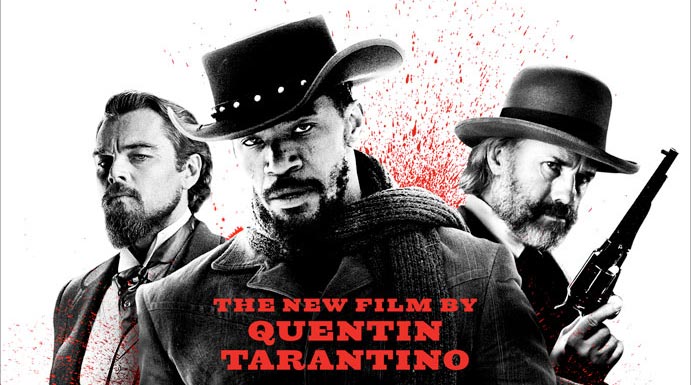 Taking a break from all the end-of-year madness and the fact that the heating is still broken in the house, I went to see Django Unchained last night. This is not a movie review - all I can tell you is I personally had great fun with it. Tarantino once again knows what he is doing, and he is pulling all the stops. Fair warning: in this one, violence is the answer, and it feels sinfully justified. You just want to dunk Leo's head in a toilet anyway.
 Here be SPOILERS.
I just wanted to make a short post about the role of storytelling in the movie. Because there is storytelling in the movie, and not just in the film studies "getting the plot across" sense of the word either. Cristoph Watz makes a wonderful job of telling a campfire-side version of the story of Brünhilde and Siegfried from the Niebelungenlied (*insert heart throb here*). That would be worth a blog post alone, but the movie goes way beyond that: they make a point of showing why that story is directly relevant to the plot of the film.
For one, and this is fairly obvious, the lady in need of rescuing was named by her slave-owners after Brünhilde (she also speaks full frontal German, on screen, good Tarantino style). As the good doctor-slash-bounty-hunter explais, Django's story echoes Siegfried and Brünhilde's - he has to "climb the mountain, fight the dragon and cross the hellfire" to rescue his love (luckily for them, the metaphor ends here, and the storyteller spares his audience the bloody-gory end result of the original legend... well, gory for the heroes, anyway, there is plenty of gore left in the movie for the bad guys).
The other point of relevance is that the good doctor, when asked why he is helping a slave to rescue his wife, brings up the story as a reason: as a German, he says, he feels obliged to aid a hero trying to save his Brünhilde. (*insert sqealing part-German storyteller in the audience here*) In this form, the old story (and the telling thereof) plays a very direct role in the movie plot. Also highlights why stories are important and relevant and all the stuff storytellers work hard to remind people of.
Nice work, Mr. Tarantino.
Another nugget that I caught: at one point in the movie, the doctor compares Django to a "soaring eagle" that is superior to chicken. This is nice as it is, as a metaphor, but storytellers will know there is a story behind it, connected to flight and freedom: The Eagle who thought he was a chicken. I personally have heard it in the masterful telling of Antonio Rocha, and also the delightful adaptation of Brenda White Wright at the JC Umoja festival (complete with singing!). Both of them tell it with a much happier ending. Not many people will catch that reference, but it made me smile all the same.
Wednesday, December 12, 2012
A very Catholic movie
So, talking about the Advent dinner: the fabulous Cathy Jo and I combined two very important and festive things into one evening:
1. Education about Catholic holidays, and
2. Education about Hungarian Christmas
Since I am in the process of being educated in American Chrismtas through full immersion - I watched the entire Muppet Christmas Carol, and White Christmas on the big screen! - I thought it was time to show people a glipmse at Hungarian Christmas TV programs. Most of our holiday movies come from the USA, so nothing really intriguing there, but I did manage to find a movie that plays every single Christmas on TV, and it has never been released in America. I think I have figured out why.
The movie is called State buoni se potete (Be good if you can) and it is about the life of St. Philip Neri in the Rome of the 1500's. It is a very Catholic movie. There are tempting devils being burned by holy water, and an entire entourage of contemporary saints e.g. St. Ignatius of Loyola, the stern yet cuddly founder of the Inquisition. Don Filippo is raising a horde of orphan children in an abandoned church, and is pretty much the most awesome saint you can watch movies about when you are 5 (minus the trauma of the burning devils). He even plays soccer.
Adding to the entertainment factor of the movie was the fact that the English subtitles were the courtesy of Google Translate from the Hungarian original (or at least that was my best guess since it contained random sentence fragments like "Crosstown Pálinka!"). It was like watching a train wreck meet a Chinese user's manual, and it was all kinds of hilarious.
The reason why this movie probably never made it to America (apart from the whole Catholic thing) is probably the fact that the devil is played by a "Moorish" woman, and that Don Filippo cheerfully smacks kids upside thet head when they misbehave. Granted, it was made in 1984, and nobody sues anybody in Italy/Hungary for stuff like that anyway.
Also, the movie comes with a very catchy title song that gets stuck in your ear for days. You are welcome.
1. Education about Catholic holidays, and
2. Education about Hungarian Christmas
Since I am in the process of being educated in American Chrismtas through full immersion - I watched the entire Muppet Christmas Carol, and White Christmas on the big screen! - I thought it was time to show people a glipmse at Hungarian Christmas TV programs. Most of our holiday movies come from the USA, so nothing really intriguing there, but I did manage to find a movie that plays every single Christmas on TV, and it has never been released in America. I think I have figured out why.
The movie is called State buoni se potete (Be good if you can) and it is about the life of St. Philip Neri in the Rome of the 1500's. It is a very Catholic movie. There are tempting devils being burned by holy water, and an entire entourage of contemporary saints e.g. St. Ignatius of Loyola, the stern yet cuddly founder of the Inquisition. Don Filippo is raising a horde of orphan children in an abandoned church, and is pretty much the most awesome saint you can watch movies about when you are 5 (minus the trauma of the burning devils). He even plays soccer.
Adding to the entertainment factor of the movie was the fact that the English subtitles were the courtesy of Google Translate from the Hungarian original (or at least that was my best guess since it contained random sentence fragments like "Crosstown Pálinka!"). It was like watching a train wreck meet a Chinese user's manual, and it was all kinds of hilarious.
The reason why this movie probably never made it to America (apart from the whole Catholic thing) is probably the fact that the devil is played by a "Moorish" woman, and that Don Filippo cheerfully smacks kids upside thet head when they misbehave. Granted, it was made in 1984, and nobody sues anybody in Italy/Hungary for stuff like that anyway.
Also, the movie comes with a very catchy title song that gets stuck in your ear for days. You are welcome.
Hungarian Christmas dish from Georgia
As in, Georgia the country. Okay, so there is really nothing Hungarian about this dish, except that I love it and I decided it was festive (not to mention easy) enough to be featured at our storytelling Advent dinner last night. Then again, my family's traditional Chrismas dish is Chinese soy beef that my father makes, so if you expect paprika and goulash from me, I am really sorry to diappoint you.
Anyhow, here is the recipe.
Georgian turkey breast (for 6 people, if some of those people are guys, otherwise you shall have leftovers)
3 lbs of turneky breast
Half a pound of butter
Nutmeg
Pepper
Salt
Curly parsley
1 box of cream (second to smallest box)
2 cans of corn
2 cans of baby mushrooms (whole)
1 can of baby carrots
Rice
First you chop the turkey into small pieces. (If you have a roommate at hand who used to work in a butcher shop, leave the chopping up to her.)
Then you melt the butter in a big pot (this is a one pot dish) and when it is melted, toss the meat into the pot. Stir carefully until the meat is starting to get golden brown in small patches and it is thoroughly cooked (the butter should be all gone but if you used too much like I did, you can take some out with a spoon). If it burned down too badly on the bottom of the pot, move the salvageable meat into a new pot. (Not like I had that problem, personally, but it could happen).
Once the meat is golden and smells awesome, pour the vegetables into the pot. Stir carefully (don't break the baby carrots!) and add half a teaspoon of nutmeg, a pinch of pepper and salt. Let it start boiling again. When it is hot, pour the cream into it and stir again, add the parsley. Once the cream warmed up to the rest of the dish, you can turn the stove off. Yay!
Serve it with rice. If you made way too much rice, plan on making stir fry tomorrow.
Enjoy!
Anyhow, here is the recipe.
Georgian turkey breast (for 6 people, if some of those people are guys, otherwise you shall have leftovers)
3 lbs of turneky breast
Half a pound of butter
Nutmeg
Pepper
Salt
Curly parsley
1 box of cream (second to smallest box)
2 cans of corn
2 cans of baby mushrooms (whole)
1 can of baby carrots
Rice
First you chop the turkey into small pieces. (If you have a roommate at hand who used to work in a butcher shop, leave the chopping up to her.)
Then you melt the butter in a big pot (this is a one pot dish) and when it is melted, toss the meat into the pot. Stir carefully until the meat is starting to get golden brown in small patches and it is thoroughly cooked (the butter should be all gone but if you used too much like I did, you can take some out with a spoon). If it burned down too badly on the bottom of the pot, move the salvageable meat into a new pot. (Not like I had that problem, personally, but it could happen).
Once the meat is golden and smells awesome, pour the vegetables into the pot. Stir carefully (don't break the baby carrots!) and add half a teaspoon of nutmeg, a pinch of pepper and salt. Let it start boiling again. When it is hot, pour the cream into it and stir again, add the parsley. Once the cream warmed up to the rest of the dish, you can turn the stove off. Yay!
Serve it with rice. If you made way too much rice, plan on making stir fry tomorrow.
Enjoy!
Subscribe to:
Posts (Atom)


 Posts
Posts