Showing posts with label Monguor. Show all posts

Saturday, February 4, 2023

Folktale Selection: Sometimes you just have to let toxic people go

Folktales and other traditional stories carry a community's values. They teach us about important things such as empathy, forgiveness, acceptance, teamwork, and more. They are not always as black and white as one may think: heroes can make mistakes and learn from them; villains can be forgiven.

But every once in a while, forgiveness is not the answer. Just like in real life, abusive relationships cannot be mended by second, third, fourth chances; no matter how well you communicate your feelings, you can't negotiate with an abuser who doesn't care if they hurt you. In these cases, the pressure to "forgive and try again" only results in more hurt. In these cases, even folktales know that the best course of action is severing ties with the ones that keep hurting you.

I have encountered many folktales that have a "happy ending" that involve people returning to spouses or parents that hurt - or even tried to kill - them, without the other party showing any sign of remorse. To balance out the scales, I made a selection of folktales about people who walk away from toxic relationships, and never look back.

Links in the titles, as usual.

Holua-Manu (Hawaii)

This is a very strong story. A boy's parents have magic powers and solely use them to torture their child for fun. He wants to go and play, but there are always more chores to do, and he can never do them well enough to please his parents. When he makes a decision to go do something for himself anyway, his parents grow furious and attack him. In the end, he manages to get away, and makes a decision to leave for good. The gods, as punishment, take away the parents' powers.

Three orphan sisters (Tu/Monguor people)

A couple wants a son, but instead they have three daughters. With the birth of each child, they resent each other and the children more and more, for not having a son. In the end, they take the girls out into the wilderness and abandon them. The girls are found by hunters and taken to a good home; eventually, they marry good men and live happily. One day they return to visit their parents, hoping to reconcile... but they find their parents still busy praying for a son and showing no remorse. So the girls leave without a word.

Youngest Brother Returns Favors (Tu/Monguor people)

Four orphan brothers each pursue different trades; the youngest goes to school and studies for examinations. When he wants to travel to take the exam, only one brother lends him support, the others mock him and turn him down. In the end, the boy becomes emperor - but when his cruel brothers come to him for favors, he turns them away. Later drought hits the lands, and he makes sure to help the brother that had been kind to him.

Nisang shamaness (Daur people)

This is a long and fascinating epic about a brave shamaness who descends into the underworld to save the soul of a young man. On the way back she encounters the soul of her late husband, who berates her for not saving him too. She tries to explain that she can't, but he gets violent and threatens her - so Nisang summons spirits to lock him up and leaves him behind. It is implied that he had not been a good husband while he was alive.

The king and the weaver bird (Nigeria)

A king marries a woman he loves, despite the warnings that women in her family often give birth to twins (an offense traditionally punishable by death). When she does indeed have twins, the king decides that his family is more important than what people think, and they all leave, transforming into weaver birds to live in the forest.

My Beauty (Haiti)

A girl is tortured by her cruel stepmother in the absence of her (grown-up) brothers. The stepmother eventually promises her to the Devil. In the last moment the brothers come to the rescue and take their sister away. Years later they return, only to find the stepmother telling lies and the father claiming that he did not notice anything at all. They all leave again, to live happily elsewhere.

A woman and the king's treasury (Syria)

A kind and little simple woman is abused by her husband, until one day he throws her out of the home. She wanders away, and accidentally witnesses two thieves dividing up treasure they stole from the King. She tells her husband, who takes the treasure, covers his tracks, and threatens her into silence. She decides to stand up for herself, and goes to report it all to the King - the thieves and the husband are arrested, the woman gets half the treasure, and she can live in wealth and peace for the rest of her life.

I also wrote a blog post about folktales that feature divorce, among them stories where people leave abusive spouses. You can find that post here.

Tuesday, May 3, 2022

White dragon, golden frog (Folktales of Asian Minorities 20. - Tu/Monguor)

As a sequel to the Following folktales around the world reading challenge, I decided to start reading minority and indigenous folktales. First up are the minority peoples who live in Asia. You can find previous posts here, and you can follow the challenge on Facebook here.

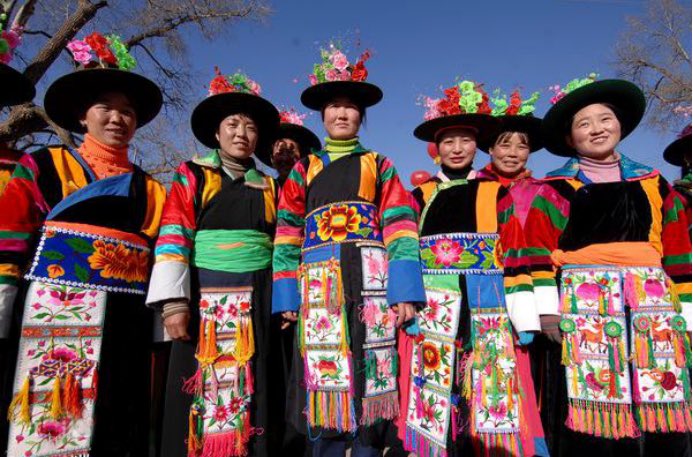
China's Monguor minority
Ethnography and folktales
Kevin Stuart & Limusishiden
Sino-Platonic Papers, 1994.

The Tu/Monguor are a Mongolic ethnic group with strong cultural ties to Tibet. They number about one hundred thousand people. The book contains 94 folktales, translated from written and oral sources.
In the first part of the book we get a lot of information on the traditional Monguor way of life. Some of this text is strongly political (e.g. "in the days before the Liberation, when people were exploited by the ruling class", etc.). Shorter chapters introduce us to beliefs, Buddhism, traditions, marriage, folk arts, history, clothing, etc. - as well as mythology, epics, and proverbs. The stories themselves are divided into two chapters: Huzhu Monguor and Minhe Monguor tales.

Highlights

The myth about the origin of the five elements and the creation of the earth was interesting: the first dry land was placed on the belly of a golden frog. Another, very beautiful origin story concerned the tung tree: a boy set out to find a way to make the moon shine and give warmth every night. He acquired a potion from an old sage, which turned him into a tung tree. The oil of the tree has been used for lamps for centuries, so the boy is still bringing people light and warmth. I also loved the legend of the White Dragon Horse, who brought rain to people against the orders of the Heavenly Emperor, and was sent to hell for it. People solved an impossible riddle to win his freedom back.
One of my favorite stories was the love between Dala and Shalan Gu. A poor boy borrowed money from his rich uncle, and lied that he needed it for a wedding. When the uncle came to visit, the boy needed a fake wife, and decided to steal a goddess statue. In the darkness, however, he accidentally stole a real girl who was sleeping in the temple. They fell in love, obviously. Prime romcom material.
There was a story about three abandoned sisters that illustrated how women are just as valuable as men. The girls had been abandoned because their parents wanted sons. They found their fortune and lived happily; when later on they returned to help their old, miserable parents, they found them still mourning that they could not have sons. So the girls left them to their own devices. I also liked the story where three brothers set out to find their fortune; two became wealthy merchants, and the youngest became a musician. The daughter of the Lake King fell in love with the latter's music, and fulfilled all his wishes. The funniest moment was the proof of a perfect wife: when a piece of noodle fell onto her shoe while cooking, she gracefully flicked it back into the pot with her foot.
This book also had of the best versions I have ever read for a "language of animals" story: a young man found out, with the help of a small green stone, that an earthquake was imminent. However, people wouldn't believe him until he disclosed where he got the knowledge - and he willingly broke the secret, turning into stone to save his people.

Connections

There were several familiar story types in the book, including some unexpected complications. The Black Horse, for example, started as a "three kidnapped princesses" tale, but then turned into one of those stories where someone borrows fire from a monster. In the end, the three brothers killed the monster together. Bawo Mori was a classic Frog Husband story, but in the end we found out that if the frog skin had not been burned ahead of time, the hero would have ended social injustices... There was also a "princess in the shroud" tale, where the hero exchanged his dead father's head for useful gifts that helped him defeat serpents that crawled out of the cursed princess' nose (yup). I also found another tale about the magpie teaching birds how to build a nest, as well as a myth about a hero shooting down nine suns.

Further familiar tale types: contest of Truth and Lies (The blind healer), kidnapped princesses (The evil whirlwind), donkey, stick, tablecloth (Stick of revenge), Brementown musicians (where animals and objects helped an old woman get rid of a monster), multiple "kind and unkind" tales with boys and girls (the best one was about a girl who stole a chicken for her mother-in-law), frog husband, unjustly punished animal (here a monkey protected a baby from a wolf). I was reminded of Vasilisa the Beautiful by the story where a kind girl was helped in her journey by a doll gifted to her by her mother-in-law. There was also a tale where a man wanted to abandon his old, feeble father by taking him to the wilderness in a basket - and his little son reminded him to bring the basket back, because one day he'll need it too. There was a "clever girl" tale with a boy hero who outwitted an evil lama. I was reminded of the story of the ay-ay-ay nuts by the story where a boy had to bring a pot full of "ow" for a rich man.

The trickster in residence is Huairighasuu, a boy born from a lamb's tail, who played a series of tricks on an evil lama. Further tricksters included Fox (who played the classic tail-fishing trick on Wolf), Hare (who cruelly tricked wolf and other animals), and occasionally Frog. The latter was featured in the "animals racing" tale where he did not only defeat Tiger, but also managed to convince him he ate tigers for dinner. Frog also starred in the "talkative animal" story where he was carried by birds while holding on to a stick (but couldn't keep quiet, and fell down), as well as a "monkey heart" type tale where he tried to trick Fox out of his fur.

Who's next?
The Kam/Dong people