We are now in the second half of the year, which means that I have begun work on the second epic of my choice, under the J. J. Reneaux grant and the mentorship of the amazing Cathryn Fairlee. After long consideration, I decided to work with the Dietrich Cycle. A number of factors helped me make the decision:
1. I read the Saga of Thidrek of Bern for the A to Z challenge this year, and I enjoyed it immensely
2. I also read the Queen of the Mountains for A to Z and it is epic in all senses of the world
3. I have worked on a version of King Laurin's Rose Garden for my book (under Invisibility) and I always wanted to dig into the whole German "dwarf kingdoms" mythology more
4. Part of my heritage is Swabian, and after the Persian epic I wanted to explore something closer to home.
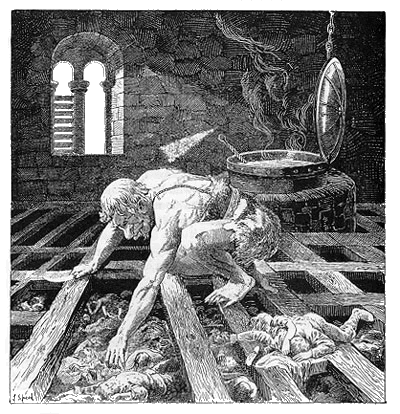
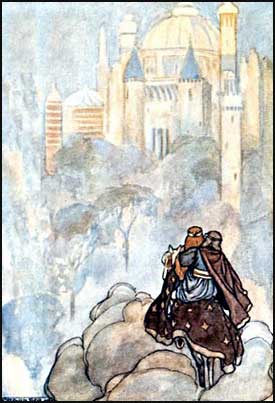
The Dietrich Cycle is a collection of German legends centered on King Dietrich, a mythical knight-hero figure loosely based on Theoderic the Great. Unlike the Persian Book of Kings, it is essentially a mosaic of stories I get to piece together for myself, from various sources. My main source (the most coherent and comprehensive one) is the Saga of Thidrek, a Norse re-telling of the German legends. Because of this fractured nature, there will be a lot of work with selecting the parts I want to tell, exploring the world of Dietrich and his companions, and shaping it all into one (or more) storytelling performance.
I decided to journal this process in my upcoming Story Saturday posts. Dietrich is not nearly as internationally well known as King Arthur is, and yet there are a lot of similarities - and also a lot of unique elements that make the saga cycle exciting. If you don't believe me, read my A to Z posts about the best bits!
For starters, here is a list of the sources I am working with. The ones with links attached are available for free from archive.org (yay!):
The Saga of Thidrek of Bern (translated by Edward Haymes, 1988)
Dietrich of Berne and the Dwarf King Laurin (by Ruth Sawyer, 1963) - This one actually turned out to be a novelized re-telling, I'll probably read it at the end for flavor
Great Norse, Celtic and Teutonic Legends (by Wilhelm Wagner, 2004)
The Wayland-Dietrich Saga (by Katherine M. Buck, 1924) - This one is an 8-volume (!!) attempt at a coherent poetic English re-telling of the entire cycle (Kalevala style)
Hero Tales & Legends of the Rhine (by Lewis Spence, 1915)
Teutonic Myth and Legend (by Donald Mackenzie, 1934)
Epics and Romances of the Middle Ages (by Wilhelm Wagner, 1884)
Illustrations of Northern Antiquities (by Henry Weber, 1814)
Tales and Legends of the Tyrol (by Comtesse von Günther, 1874)
The Heroic Saga-Cycle of Dietrich of Bern (by F.E. Sandbach, 1906)
Hopefully, by next week I will be able to introduce you to some characters that will be making an appearance.
Also, dragons.
Stay tuned!
Showing posts with label bibliography. Show all posts
Saturday, August 22, 2015
Thursday, July 30, 2015
Folklore Thursday: Greek tales for the summer
Today is Folklore Thursday on social media! If you want to find out more, follow this link, or click on the #FolkloreThursday hashtag on Twitter! Hosted by @FolkloreThursday.
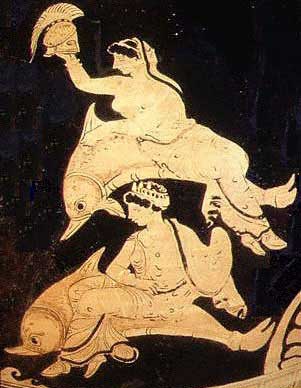
As you have probably seen in the previous posts, I recently spent some time in Greece at a storytelling conference and festival. I love to prepare for travel ahead of time, mostly by reading local folklore and legends. Now, you do not have to dig very deep for the mythology of Ancient Greece - pretty much everyone grows up with those. But I was also curious about more recent stories, folktales and legends, so I went digging anyway. I immediately realized "modern" Greek tales are a lot less popular in English than mythology, but I still managed to find some great collections:
E.M. Geldart: Folk-lore of modern Greece: The tales of the people (1884)
L.M.J. Garnett: New folklore researches: Greek folk poesy, Vol. II. (Folk-prose) (1896)
R. M. Dawkins: Modern Greek Folktales (1953)
R. M. Dawkins: More Greek Folktales (1955)
Ruth Manning-Sanders: Damian and the Dragon (Modern Green Folk-tales) (1965)
I have not gotten through all of these, but the stories I read were just as fascinating as Greek mythology. In addition, a lot of them retain traces and motifs known from mythology. At the FEST conference we heard a great presentation on this, and the question whether it was mythology first, or tales first. Either way, you can recognize many elements, both old and new, in these stories, and they are definitely worth reading.
Here are some of the familiar things I have encountered so far (most of them in Greek folk poesy):
1. A prince that visits his princess in the form of an eagle
2. Nereids (they seem to be very popular in Greek folklore - they take the place of fairies in most tales)
3. A king having a child with a woman and leaving his weapons for his son to find when he grows up (Theseus)
4. Fates (instead of fairy godmothers)
5. A multi-headed serpent living in a swamp and killed by a hero (Hydra)
6. Hunt for a terrifying wild boar (Kalydonian boar hunt)
7. Rocks that open and shut that the hero needs to get through (Argonauts)
8. Golden apples and their guardian (Hesperides)
9. "Souls in Hades"
10. A fish-horse the hero rides into battle (hippocampus)
11. A one-eyed giant who lives in a cave and gets blinded, and then the hero escapes the cave by crawling under the sheep (come on, you know this one)
12. Blind old women giving directions to the hero (Perseus)
+1: A hero that can make the earth shake. This one is interesting because it is found in an "Extraordinary Helpers" type folktale, but out of the 46 version of this type I have collected, the Greek was the only one that mentioned earthquake powers (and it made me happy because I could include it in my book as the story for Earth Manipulation). Go figure.
It is all kinds of fun, reading these folktales and hunting for mythological Easter eggs.
As you have probably seen in the previous posts, I recently spent some time in Greece at a storytelling conference and festival. I love to prepare for travel ahead of time, mostly by reading local folklore and legends. Now, you do not have to dig very deep for the mythology of Ancient Greece - pretty much everyone grows up with those. But I was also curious about more recent stories, folktales and legends, so I went digging anyway. I immediately realized "modern" Greek tales are a lot less popular in English than mythology, but I still managed to find some great collections:
E.M. Geldart: Folk-lore of modern Greece: The tales of the people (1884)
L.M.J. Garnett: New folklore researches: Greek folk poesy, Vol. II. (Folk-prose) (1896)
R. M. Dawkins: Modern Greek Folktales (1953)
R. M. Dawkins: More Greek Folktales (1955)
Ruth Manning-Sanders: Damian and the Dragon (Modern Green Folk-tales) (1965)
I have not gotten through all of these, but the stories I read were just as fascinating as Greek mythology. In addition, a lot of them retain traces and motifs known from mythology. At the FEST conference we heard a great presentation on this, and the question whether it was mythology first, or tales first. Either way, you can recognize many elements, both old and new, in these stories, and they are definitely worth reading.
Here are some of the familiar things I have encountered so far (most of them in Greek folk poesy):
1. A prince that visits his princess in the form of an eagle
2. Nereids (they seem to be very popular in Greek folklore - they take the place of fairies in most tales)
3. A king having a child with a woman and leaving his weapons for his son to find when he grows up (Theseus)
4. Fates (instead of fairy godmothers)
5. A multi-headed serpent living in a swamp and killed by a hero (Hydra)
6. Hunt for a terrifying wild boar (Kalydonian boar hunt)
7. Rocks that open and shut that the hero needs to get through (Argonauts)
8. Golden apples and their guardian (Hesperides)
9. "Souls in Hades"
10. A fish-horse the hero rides into battle (hippocampus)
11. A one-eyed giant who lives in a cave and gets blinded, and then the hero escapes the cave by crawling under the sheep (come on, you know this one)
12. Blind old women giving directions to the hero (Perseus)
+1: A hero that can make the earth shake. This one is interesting because it is found in an "Extraordinary Helpers" type folktale, but out of the 46 version of this type I have collected, the Greek was the only one that mentioned earthquake powers (and it made me happy because I could include it in my book as the story for Earth Manipulation). Go figure.
It is all kinds of fun, reading these folktales and hunting for mythological Easter eggs.
Labels:
bibliography,
FolkloreThursday,
folktales,
Greece,
mythology
Thursday, June 25, 2015
Folklore Thursday: A mosaic of stories
Today is Folklore Thursday on social media! If you want to find out more, follow this link, or click on the #FolkloreThursday hashtag on Twitter! Hosted by @FolkloreThursday.
One of my favorite things to do as a storyteller? Looking up several versions of the same tale, and building my own from them. It is kind of like a make-your-own ice cream thing.
One of the stories I am working with recently is most commonly known as The Black Thief and the Knight of the Glen. It belongs to Aarne-Thompson folktale type 953 ("Old robber tells three stories"), and I have managed to find about a dozen different versions of it, most of them from Scotland and Ireland. Interestingly enough the story also shows up in the Grimm Fairy Tales, but it was edited out after the 6th edition (it was No. 191 until then).
The story in a nutshell: Three young men and an old thief are caught trying to steal a king's horse. They are about to be burned alive for their crime. In order to save the lads, the old thief tells the king that he has been in a worse situation before. The king promises that if it's true, one of the lads can go free. The old thief tells outrageous stories about his close brushes with death; each story gets more hair-raising and exciting, and after each, one of the lads is let go. After the last story, which involves saving a baby from a giant, the king realizes that the child the old thief saved was no other than himself, and lets everyone go free with gifts and good wishes.
There are many things to love about this story, and it is a lot of fun to tell. In order to show some of my build-a-story process, here are some details:
1. The protagonist is known as the Black Thief, Red Conall, Conal Yellowclaw, or the Byzantine Brigand in different sources. In my version, I call him Red Conall, the Byzantine Brigand, because his red hair is an important plot point in the story, and "Byzantine Brigand" just sounds too awesome not to include.
2. In some versions the three lads are Conall's own sons whom he tries to keep away from becoming robbers themselves (Conall himself reformed in his old age). In other versions they are three princes sent on a quest by an evil queen. While both versions carry a lot of emotional weight and possibilities, I tell the second one, because an old, wandering former master-thief taking three exiled princes under his wings is just too interesting to pass up. He definitely becomes a father figure that is willing to sacrifice his own life to save the lads.
3. The three stories told by Conall are varied across the board. One of them is often a version of the "Blinding the Cyclops" episode from the Odyssey. I left that one in since it is exciting, and also intriguing that it shows up in an Irish folktale. I especially like that according to Conall, he and his companions went into the Cyclops' cave because they wanted to rob it. Conall talks about his former exploits of thieving and robbery with pride, even if they went horribly wrong in the end. He used to be the best of the best, after all.
4. You can never quite tell how much of Conall's stories are true, and how much he is making up on the spot. The last story usually includes a physical sign - he saves the baby's life by cutting off a little finger, and that's how the king knows it was himself, since he is missing a finger too. I like to imagine that Conall just looked at the king, saw the missing finger, and took a chance on it. It is never said in the story when I tell it, but kind of implied, that Conall is just pulling a Scheherazade, making up tales on the fly in desperation to save the princes' lives. You have to be an awesome storyteller to get away with that three times in a row.
(Scheherazade at least always had a day to think ahead...)
Anyhow, fun story, many possibilities. I really enjoyed assembling my favorite version.
Here is a short list of some of my sources:
One of my favorite things to do as a storyteller? Looking up several versions of the same tale, and building my own from them. It is kind of like a make-your-own ice cream thing.
One of the stories I am working with recently is most commonly known as The Black Thief and the Knight of the Glen. It belongs to Aarne-Thompson folktale type 953 ("Old robber tells three stories"), and I have managed to find about a dozen different versions of it, most of them from Scotland and Ireland. Interestingly enough the story also shows up in the Grimm Fairy Tales, but it was edited out after the 6th edition (it was No. 191 until then).
The story in a nutshell: Three young men and an old thief are caught trying to steal a king's horse. They are about to be burned alive for their crime. In order to save the lads, the old thief tells the king that he has been in a worse situation before. The king promises that if it's true, one of the lads can go free. The old thief tells outrageous stories about his close brushes with death; each story gets more hair-raising and exciting, and after each, one of the lads is let go. After the last story, which involves saving a baby from a giant, the king realizes that the child the old thief saved was no other than himself, and lets everyone go free with gifts and good wishes.
There are many things to love about this story, and it is a lot of fun to tell. In order to show some of my build-a-story process, here are some details:
1. The protagonist is known as the Black Thief, Red Conall, Conal Yellowclaw, or the Byzantine Brigand in different sources. In my version, I call him Red Conall, the Byzantine Brigand, because his red hair is an important plot point in the story, and "Byzantine Brigand" just sounds too awesome not to include.
2. In some versions the three lads are Conall's own sons whom he tries to keep away from becoming robbers themselves (Conall himself reformed in his old age). In other versions they are three princes sent on a quest by an evil queen. While both versions carry a lot of emotional weight and possibilities, I tell the second one, because an old, wandering former master-thief taking three exiled princes under his wings is just too interesting to pass up. He definitely becomes a father figure that is willing to sacrifice his own life to save the lads.
3. The three stories told by Conall are varied across the board. One of them is often a version of the "Blinding the Cyclops" episode from the Odyssey. I left that one in since it is exciting, and also intriguing that it shows up in an Irish folktale. I especially like that according to Conall, he and his companions went into the Cyclops' cave because they wanted to rob it. Conall talks about his former exploits of thieving and robbery with pride, even if they went horribly wrong in the end. He used to be the best of the best, after all.
4. You can never quite tell how much of Conall's stories are true, and how much he is making up on the spot. The last story usually includes a physical sign - he saves the baby's life by cutting off a little finger, and that's how the king knows it was himself, since he is missing a finger too. I like to imagine that Conall just looked at the king, saw the missing finger, and took a chance on it. It is never said in the story when I tell it, but kind of implied, that Conall is just pulling a Scheherazade, making up tales on the fly in desperation to save the princes' lives. You have to be an awesome storyteller to get away with that three times in a row.
(Scheherazade at least always had a day to think ahead...)
Anyhow, fun story, many possibilities. I really enjoyed assembling my favorite version.
Here is a short list of some of my sources:
Johannes Bolte & Georg Polívka: Anmerkungen
zu den Kinder- u. Hausmärchen der Brüder
Grimm, 1913. (Der Rauber und seine Söhne)
Italo Calvino: Italian folktales, 1992. (Three Tales by Three Sons of Three Merchants)
J.F. Campbell: Popular Tales of the
West Highlands Vol. 1, 1890. (Conall Cra Bhuidhe)
J.L. Campbell: Stories from South
Uist, 1961. (The Byzantine Brigand)
Wilson M. Hudson: Tire Shrinker to
Dragster, 1968. (An Gadaí Dubh: The Black Thief)
Joseph Jacobs: Celtic Fairy Tales,
1892. (Conal Yellowclaw)
Andrew Lang: The Red Fairy Book, 1890. (The Black Thief and the Knight of the Glen)
William Thackeray: The Irish Sketch
Book, 1843. (The Black Thief of Sloan)
Labels:
bibliography,
FolkloreThursday,
folktales,
Grimm,
Irish,
Scottish,
storytelling
Tuesday, March 17, 2015
St. Patrick's Day post: A love letter to Irish stories
It is nine in the morning, and the cops are already picking up piss-drunk college students all dressed as leprechauns.
I am not Irish. As far as I know, none of my close or far ancestors are even remotely Irish. I am also not American, so I am experiencing this whole day through the double lens of an outsider.
And yet, I can't help but take it personally.
As a storyteller.
Take my advice: Do NOT visit Amazon.com today. The green will burn your eyes out. There is green nail polish, glittery green shamrocks, leprechaun costumes from all points of the Halloween spectrum, Irish cookbooks, and a scattering of Irish History for Dummies. Out of morbid curiosity, I visited the children's books section. I shouldn't have.
Not. A single. Irish story in sight.
Believe me, it is not for the lack of available materials.
So, instead of ranting even more, I decided to get personal, and give you a little tour of my love affair with Irish stories, through a list of books.
Dömötör Tekla: Germán, Kelta Regék és Mondák [German and Celtic Tales and Legends]
I found this book on my uncle's bookshelf when I was maybe twelve or thirteen years old. It was my first venture outside of Greek mythology, and instantly enchanted me forever. The first part of the book was Norse mythology, the Niebelungenlied, and German folktales; the second half was Irish mythology, Welsh mythology, and Arthurian legends. It was my very first encounter with Lugh, Angus Og, Conn of the Hundred Battles, Maeldun, Cú Chulainn... and Fionn Mac Cool.
Rosemary Sutcliff: The High Deeds of Finn Mac Cool
I was in high school, preparing for an ESL competition. Every contestant had to read a book in English and then do a presentation on it. Digging around in the gloomy "foreign languages" section of our library, stuffed under a bunch of Dick and Jane books, I found a tiny volume titled The High Deeds of Finn Mac Cool. The name sounded familiar. I read the book.
I fell in love. Hard.
This was the late 1990's. All of my classmates were throwing screaming fangirl fits over Leonardo DiCaprio and the Backstreet Boys. Meanwhile I, being the nerd of the herd, had a hardcore crush on Oisín, and wanted to be a bard.
(My English teacher told me I could keep the book if I won the contest. I didn't. When six years later I came to the USA for the first time, this book was my first Amazon order).
Arthur Cotterell: The Encyclopedia of Mythology
I also found this one (in Hungarian) in our high school library, and pretty much had it constantly checked out until I graduated. Some of the pictures burned into my mind so deep I still recall them every time I tell the corresponding story. For example, here is the picture of Macha's Curse - see my experience with telling in the previous post about Epic Day.
Lady Augusta Gregory: Gods and Fighting Men
The first Hungarian translation of this book came out in 2006. I fell in love with the Fianna around 2000-2001. I found the English version online or Sacred Texts, and spent hours applying my shaky English reading skills to it, page by page. It was a lot of work, but every deciphered story came as a new discovery. It was about the same time i started telling some of them to my friends. I didn't know what a storyteller was yet, but the stories wanted out.
Michael Foss: Celtic Myths and Legends
I stared at this book in the window of our local book shop (on my way to school) for a long time before I decided to spend my allowance money on it. Even in Hungarian it was a hard read, not the child-friendly rendition of tales I was used to. But it was also my first introduction to stories like the Children of Lir or the Battles of Magh Tuireadh.
W. B. Yeats: Fairy and Folk Tales of the Irish Peasantry
I got a large, heavy, English print version of this for my 17th birthday from my parents (who by then learned what my taste was in books). I didn't only get to practice advanced English on it, but also learned a whole lot about the Irish fairy folk. If I had any doubts before about the "cute fairy" stereotype, this book completely slayed it for me. Teig O'Kane is still one of my favorite stories.
When I decided to become a storyteller and travel, the world of Irish storytelling opened up for me. I got to meet people like Richard Marsh, Yvonne Healy, Clare Murphy, Liz Weir, and Brendan Nolan (among many, many others), and I finally had others to talk with about all the stories I have loved and cherished for so long. I got to visit American libraries and delve into their collections in search of more stories, more legends, and most of all, more Fianna. I grew as a storyteller and as a person; but none of this would have happened if I had not wanted to be an Irish bard first.
There is a saying that claims that if the name of Fionn Mac Cumhail is not spoken at least once every day, the world will come to an end.
Well, not on my watch.
(I still have a crush on Oisín)
Finally, here is a new find of mine. This book I got as a gift from my mentor Cathryn Fairlee. It is significant because it is the first novelization of Fianna legends that I actually like, because the author's idea of Finn and his men is very close to how I have imagined them over the years. I am only halfway through the book, but I am loving it.
I am not Irish. As far as I know, none of my close or far ancestors are even remotely Irish. I am also not American, so I am experiencing this whole day through the double lens of an outsider.
And yet, I can't help but take it personally.
As a storyteller.
Take my advice: Do NOT visit Amazon.com today. The green will burn your eyes out. There is green nail polish, glittery green shamrocks, leprechaun costumes from all points of the Halloween spectrum, Irish cookbooks, and a scattering of Irish History for Dummies. Out of morbid curiosity, I visited the children's books section. I shouldn't have.
Not. A single. Irish story in sight.
Believe me, it is not for the lack of available materials.
So, instead of ranting even more, I decided to get personal, and give you a little tour of my love affair with Irish stories, through a list of books.
Dömötör Tekla: Germán, Kelta Regék és Mondák [German and Celtic Tales and Legends]
I found this book on my uncle's bookshelf when I was maybe twelve or thirteen years old. It was my first venture outside of Greek mythology, and instantly enchanted me forever. The first part of the book was Norse mythology, the Niebelungenlied, and German folktales; the second half was Irish mythology, Welsh mythology, and Arthurian legends. It was my very first encounter with Lugh, Angus Og, Conn of the Hundred Battles, Maeldun, Cú Chulainn... and Fionn Mac Cool.
Rosemary Sutcliff: The High Deeds of Finn Mac Cool
I was in high school, preparing for an ESL competition. Every contestant had to read a book in English and then do a presentation on it. Digging around in the gloomy "foreign languages" section of our library, stuffed under a bunch of Dick and Jane books, I found a tiny volume titled The High Deeds of Finn Mac Cool. The name sounded familiar. I read the book.
I fell in love. Hard.
This was the late 1990's. All of my classmates were throwing screaming fangirl fits over Leonardo DiCaprio and the Backstreet Boys. Meanwhile I, being the nerd of the herd, had a hardcore crush on Oisín, and wanted to be a bard.
(My English teacher told me I could keep the book if I won the contest. I didn't. When six years later I came to the USA for the first time, this book was my first Amazon order).
Arthur Cotterell: The Encyclopedia of Mythology
I also found this one (in Hungarian) in our high school library, and pretty much had it constantly checked out until I graduated. Some of the pictures burned into my mind so deep I still recall them every time I tell the corresponding story. For example, here is the picture of Macha's Curse - see my experience with telling in the previous post about Epic Day.
Lady Augusta Gregory: Gods and Fighting Men
The first Hungarian translation of this book came out in 2006. I fell in love with the Fianna around 2000-2001. I found the English version online or Sacred Texts, and spent hours applying my shaky English reading skills to it, page by page. It was a lot of work, but every deciphered story came as a new discovery. It was about the same time i started telling some of them to my friends. I didn't know what a storyteller was yet, but the stories wanted out.
Michael Foss: Celtic Myths and Legends
I stared at this book in the window of our local book shop (on my way to school) for a long time before I decided to spend my allowance money on it. Even in Hungarian it was a hard read, not the child-friendly rendition of tales I was used to. But it was also my first introduction to stories like the Children of Lir or the Battles of Magh Tuireadh.
W. B. Yeats: Fairy and Folk Tales of the Irish Peasantry
I got a large, heavy, English print version of this for my 17th birthday from my parents (who by then learned what my taste was in books). I didn't only get to practice advanced English on it, but also learned a whole lot about the Irish fairy folk. If I had any doubts before about the "cute fairy" stereotype, this book completely slayed it for me. Teig O'Kane is still one of my favorite stories.
When I decided to become a storyteller and travel, the world of Irish storytelling opened up for me. I got to meet people like Richard Marsh, Yvonne Healy, Clare Murphy, Liz Weir, and Brendan Nolan (among many, many others), and I finally had others to talk with about all the stories I have loved and cherished for so long. I got to visit American libraries and delve into their collections in search of more stories, more legends, and most of all, more Fianna. I grew as a storyteller and as a person; but none of this would have happened if I had not wanted to be an Irish bard first.
There is a saying that claims that if the name of Fionn Mac Cumhail is not spoken at least once every day, the world will come to an end.
Well, not on my watch.
(I still have a crush on Oisín)
Finally, here is a new find of mine. This book I got as a gift from my mentor Cathryn Fairlee. It is significant because it is the first novelization of Fianna legends that I actually like, because the author's idea of Finn and his men is very close to how I have imagined them over the years. I am only halfway through the book, but I am loving it.
Labels:
A to Z,
bibliography,
books,
Fianna,
folktales,
Irish,
legends,
mythology,
popular culture,
storytellers
Tuesday, July 2, 2013
For Public Use Only: Hungarian folktales in English
I made this bibliography for one of my workshops last year, and after the post about the Archives I remembered to finally post it online.
Ta-da! Consume with care.
Hungarian folktales in English
Also,
Selected Hungarian literature in English
('selected' as in: these are books I would recommend)
Out now!
(As in, shameless self promotion. But it has Hungarian folktales in it. Quite a few.)
Zalka, Cs. V. (2013). Tales of superhuman powers: 55 folktales from around the world. McFarland Publishing.
Ta-da! Consume with care.
Hungarian folktales in English
Benedek, E. (1990). The tree that reached the sky. Budapest: Corvina.
Biro, V. (1992). Hungarian folk-tales. Oxford University
Press.
Dégh, L. (1965). Folktales
of Hungary. Chicago: The University of Chicago Press.
Dégh, L. (1996). Hungarian
folktales: the art of Zsuzsanna Palkó. University Press of Mississippi.
Dorson, R.M. (1978). Folktales from around the world. University of Chicago Press.
Henry, J.W. & Kriza, J. (1889). The folk-tales of the Magyars. London.
Hoffmann, P. & Bíró, G. (1969). The money hat and other Hungarian folk tales.
Philadelphia: The Westminster Press.
Illyés, Gy. (1964). Once upon a time: forty Hungarian folk-tales. Budapest: Corvina
Press.
MacDonald, M.R. (2007). Little Rooster’s Diamond Button. Albert Whitman & Co.
Manning-Sanders, R. (1968). The glass man and the golden bird: Hungarian folk and fairy tales.
Oxford University Press.
Molnár, I. (2001). One-time
dog market at Buda – and other Hungarian folktales. North Haven, CT: Linnet
Books.
Orczy, E. (1895). Old
Hungarian fairy-tales. London: Dean & Son / Wolf & Co.
Ortutay, Gy. (1962). Hungarian folk tales. Budapest: Corvina.
The princess that saw
everything (Mindent látó
királylány). (1998). Budapest: Móra kiadó.
Wass, A. (1972). Selected Hungarian folk tales. Astor Park, FL: Danubian Press, Inc.Also,
Selected Hungarian literature in English
('selected' as in: these are books I would recommend)
Gárdonyi, G. (1970). Slave of the Huns. Indianapolis: Bobbs-Merrill.
Gárdonyi, G. (1991). The eclipse of the crescent moon. Budapest: Corvina.
Leader, N.A.M. (2011). Hungarian classical ballads: and their folklore. Cambridge
University Press.
Makkai, A. (1996). In
quest of miracle stag: the poetry of Hungary. Atlantis Centaur.
Móra, F. (1964). The
Gold Coffin. Budapest: Corvina Press.
Örkény, I. (2006). One
minute stories. Budapest: Corvina.
Szabó, M. (2008). The
gift of the wondrous fig tree: a fairy tale. Budapest: Európa Könyvkiadó.
Szerb, A. (2010). Love in a bottle. Budapest: Pushkin Press.Out now!
(As in, shameless self promotion. But it has Hungarian folktales in it. Quite a few.)
Zalka, Cs. V. (2013). Tales of superhuman powers: 55 folktales from around the world. McFarland Publishing.
Labels:
bibliography,
books,
folktales,
Hungarian,
literary tales
Subscribe to:
Comments (Atom)