Showing posts with label mythology. Show all posts

Saturday, April 26, 2025

W is for the Water Goddess (Women's Epics A to Z)

This year my theme for the A to Z Blogging Challenge is Women's Epics. My goal was to read 26 traditional epics from around the world that have women as their heroes. Because epics like this do exist, and they are fascinating! Read the intoduction post here.

Song of the Goddess of the Waters

Ainu

This one is another epic song collected from the Hokkaido Ainu at the beginning of the 20th century. It was also sung by Hiraga Etenoa in 1932 (much like Song of Spider Goddes, and Repunnot-un-kur, featured earlier in this series).
The goddess in question is Wakka-ush-kamui, Goddess Dwelling in the Waters, also sometimes called Petru-ush-mat, Woman Dwelling in the Watering Place, or Petorush-mat, Woman Dwelling in the River. Another goddess figure, Chiwash-kor-kamui, Goddess of the River Rapids, also makes an appearance. The song is narrated in the first person, from the point of view of the water goddess.
I read the epic from this collection. It has other variants collected, as noted in the introduction. The book also shortly introduced the Ainu worship of the water goddess.

What is it about?

TL;DR: The Water Goddess and the Goddess of the River Rapids trick the other gods to help end a famine in the land of humans.

Image from here

The Water Goddess receives a message from the culture hero Okikurmi. The message conveys that there is a famine in the land of the humans, and Okikurmi has already done everything he possibly could. With the last of his supplies he brewed sacrificial wine, and sent a message through prayer to the goddess, asking for help.

The Water Goddess prepares large tubs of wine and invites other divinities to her home. The Goddess of the River Rapids, the Owl God, the Goddess of the Hunt, the God of Game and God of Fish are all invited (with the Owl God as chief guest). The Goddess serves them all wine, and tells them about the famine in the land of humans.

The God of Game and the God of Fish explain that they have been witholding their subjects from the human world because humans treat them badly - they kill them without eating them or offering gifts in exchange. The Owl God sits sullenly, because there is a hair from a human woman in his wine; he only speaks when Goddess of the Waters manages to convince him that the hair is actually hers. Offense avoided.

The two goddesses (Waters and Rapids) entertain the guests with songs and dancing. While they are performing, the Water Goddess' soul leaves her body in a trance, sneaks into the house of the God of Game, and opens the doors that lock the animals away. The Goddess of the Rapids similarly leaves her body, and her soul travels to the God of Fish, taking baskets of fish and setting them loose at the river fishing grounds.

All the while, the two goddesses keep performing. When the feast ends, eventually the two gods find out that they have been cheated, but there is nothing they can do about it so they stay silent. The Water Goddess reaches out to Okikurmi in a dream to let him know what happened, and what the cause of the famine had been. She warns him to treat animals well, and to beat the fish with special, nicely prepared beating sticks instead of rotten wood. Soon after, the God of Game and the God of Fish turn up to thank the Water Goddess - their people are now treated by humans with respect.

The highlights

I loved reading a story narrated from the deity's point of view. As noted in the previous post about Repunnot-un-kur, this way of narration was tied to the shamanistic tradition; the spirit of the deity spoke through the (usually female) shaman's voice, telling the story. In this case, we got to see what it is like to receive a prayer from the human world (kind of like the phone ringing).

I was fascinated by the concept of animals visiting the human world, sent by the gods, "on a business trip" (the term used irauketupa, literally means to go on a trip to conduct business). They give their bodies and fur, and in exchange they are supposed to be sent back to the divine realm with gifts. These gifts are wine and inau, elaborately carved sticks that are regarded as artifacts, and prized by the gods as souvenirs from the journeys into the human world which they admire (in the form of animals). Attached to this sort of admiration, it was also lovely to see that the Water Goddess instructed Okikurmi to have people apologize to the God of Game and the God of Fish - and also thank the Goddess of River Rapids for her help.

I liked the moment when the Goddess of Waters pretended the hair in the wine was hers - with a line translated as "O what a gangling hobgoblin of a woman am I! I did not even know that a hair of mine has gotten into the wine."

Once again, the song was full of lovely details. For example: "the fish were so abundant in the river fishing beds that it seemed as if the schools offish on the bottom were rubbing against the rocks and the schools of fish at the top were scorched by the sunshine."

FUN FACT: The book also features another, shorter song where the Water Goddess steals the Fire Goddess' husband. The two women have an epic fight of magic, calling on the elements. Fire Goddess wins, and her shame-faced husband returns home to her.

SOMETIMES ONE STORY CAN OPEN THE DOOR FOR GETTING TO KNOW AN ENTIRE TRADITION.

Are you curious about more Ainu stories? Did you know them before?

Friday, April 25, 2025

V is for the Voyage of Hiiaka (Women's Epics A to Z)

This year my theme for the A to Z Blogging Challenge is Women's Epics. My goal was to read 26 traditional epics from around the world that have women as their heroes. Because epics like this do exist, and they are fascinating! Read the intoduction post here.

Pele and Hiiaka

Hawaii

The voyage of Hiiaka is one of the most significant stories of Hawaiian tradition, and it is an oral epic on par with The Odyssey and others. It was published in the 19th and early 20th centuries in Hawaiian newspapers in various versions (see source below). The version I had access to was compiled by Nathaniel B. Emerson. He drew from the series written by M. J. Kahienui, starting in 1861, although he did not credit the source. He also claims that he collected songs embedded in the story from various indigenous storytellers (whom he does name). He makes notes about translation, and diverging variants, throughout the text. Whenever he includes songs that narrate parts of the story, he always includes the original language and then the translation, with some linguistic comments.
I read the version compiled by Nathaniel B. Emerson because it is in the public domain, but it also has a new translation. You can read about the publication history of various versions here.

What is it about?

TL;DR: Volcano goddess Pele meets a handsome man, Lohiau, during a spirit voyage. When she awakens, she sends her loyal little sister Hiiaka on a journey to fetch him. Hiiaka goes through many epic adventures, fights monsters, rearranges the landscape, revives the dead, until he manages to bring Lohiau. However, they end up falling in love along the way, and Hiiaka turns against Pele when she kills the man out of jealousy.

CW: suicide

The story opens with the voyage of Pele along the islands, seeking a new home, and her ascension from spirit to main goddess. She is accompanied on the journey by her extensive family, among them by her beloved youngest sister Hiiaka whom she raises like a mother (her full name, among the many Hiiaka sisters, is Hiiaka-i-ka-poli-o-Pele, Hiiaka-in-the-bosom-of-Pele). Pele eventually settles with her family in the crater of the Kilauea volcano on Hawaii.

After watching a hula performance by Hopoe, best (mortal) friend of Hiiaka, Pele falls asleep. Her spirit travels to the island of Kaua'i, following the sound of hula drums. There she meets a handsome and quite flirtatious young chief named Lohiau. He seduces her and they kiss, but she refuses to sleep with him. Lohiau tries to convince her to change her mind, and Pele (biting him on the hand) eventually leaves him, telling him she'll send a woman to guide him to her, and then they can be together. Lohiau, left alone, hangs himself. His sister finds him and buries him.

Meanwhile Pele's spirit returns to her body; her companions are worried since she has been sleeping for days. Hiiaka manages to wake her. Pele immediately summons her sisters (all of them named Hiiaka, representing various natural phenomena), asking them to go fetch Lohiau. She orders that they shall not touch him, but once she is done with him, they can have their turn. All of them refuse. They know the journey is dangerous, full of spirits and monsters, and the chance of failing and angering Pele is high. Finally Pele summons the youngest, favorite Hiiaka (who is off surfing with her friend Hopoe), and asks her the same.

Hiiaka accepts the quest immediately; she even makes fun of her sisters for refusing the call. The others try to warn her about the dangers, but she doesn't listen. She, however, extracts a promise from Pele that if she grows angry while Hiiaka is away, she won't hurt Hiiaka's gardens, or her friend Hopoe. She also receives a traveling companion, a woman named Pau-o-palae, and asks Pele to give her power to fight her enemies along the way. Pele soon sends her another mortal traveling companion too, a woman named Wahine-oma'o. While Pau-o-palae leaves the group fairly early on, Wahine accompanies Hiiaka the entire way and back.

The women have many adventures along the way. They trick fishermen who try to assault or make fun of them. Hiiaka battles a monster named Pana-ewa, and clears all the islands on her journey from evil spirits, monsters, dragons, and magicians. "Like a wise general, she would have no enemies at her back." She leaves many landscape features changed in her wake; this is an epic that can be followed, step by step, across the islands, with all the episodes taking place in recognizable spots.

Apart from all the fighting, Hiiaka also saves and restores several people. She finds two men whose bones have been taken by spirits, and replaces their skeleton with stems from the ti plant. She also catches ghosts, some to restore to life, and at least one used to blackmail a chief into hospitality (she takes the chief's second, dreaming-traveling soul hostage).

Eventually, Hiiaka and her companion build a canoe (from pilfered household items from a spirit relative) to cross to Kaua'i. During the crossing, Hiiaka has a dark premonition: she feels her beloved groves burning. Later it turns out it is true: Pele, in her impatient anger, has broken her promise, burned Hiiaka's home, and killed Hopoe.

Arriving to Kaua'i, they see Lohiau's ghost: this is the moment Hiiaka realizes the target of her quest is dead. A long sequence follows where they catch the ghost, find the body, and reunite the two through elaborate rituals and prayers (ghosts generally don't want to go back to their bodies without a fight). All this takes place in an inaccessible cavern high above the beach; the three of them, with the revived Lohiau, descend from it on rainbows. Lohiau's family rejoices when they find him surfing, alive and well. Hiiaka tells Lohiau about her quest, and the three of them set out for the journey back to Pele. Paoa, Lohiau's fiery best friend, is not happy; he has sworn vengeance against Pele for his death. Lohiau makes him stay behind.

As they travel, Lohiau proves to be quite the flirtations person. This comes in handy, because Hiiaka, on the way back, finds out about Pele's betrayal, and decides to use Lohiau for revenge. She makes him make advances at Wahine, and then at a former lover of his, Pele-ula (who could be his mother) along the way. At Pele-ula's home, they play kilu, a game of skill and song, and Lohiau, who has always been a champion, is sorely bested by Hiiaka. Pele-ula accuses her of desiring Lohiau, but Hiiaka denies it. "You are cool as a ti leaf", her hostess notes. Lohiau, however, falls in love with Hiiaka then and there. Wahine, on her part, makes up a silly song and makes everyone laugh.

Hiiaka sends her two companions to Pele to announce her arrival. Wahine, and the newly re-appeared Pau-o-palae go to the goddess, but Pele deems them traitors and kills both. It is time for Hiiaka's ultimate revenge. She takes Lohiau to a mountainside facing Pele's home, and seduces him in plain sight of everyone. Pele is furious. She sends fire goddesses to kill Lohiau (she is angry at him, not Hiiaka, ironically). The goddesses, however, see how handsome he is and they don't have the heart to hurt him. Pele then sends male gods, but they refuse her orders too. Pele strips them of their power and their domain. In the end, she has to get the job done herself: she engulfs the lovers in a flood of fire. Hiiaka kisses Lohiau goodbye. In this last moment, she realizes she loves him. She is not hurt, but the mortal man dies.

Hiiaka, however, is not done. She gets to work tearing up the lava-covered ground. She digs ten strata deep, finds her friends and revives them, then gets ready to flood Pele's crater with water. A battle between sisters is imminent, until Wahine manages to talk Hiiaka out of it. She returns to her sister's court, forlorn.

Meanwhile, Lohiau's spirit appears to his friend Paoa, and asks him to come fetch his body. Paoa follows the ghost to Kilauea, and finds Lohiau's body turned to stone. He enters the crater and meets the goddesses who live there. He is the one that tells Pele that Hiiaka had been faithful to her the whole time, and she even restored Lohiau to life so she could bring him. Pele realizes she has been unjust to her sister. She feels remorse. Paoa, on his part, wins the goddess' liking by recognizing her even in disguise (he puts the women's hands to his ear, feeling hers the warmest). He spends five days and five nights making love to Pele, until she is satisfied. She lets him go after.

Hiiaka, however, doesn't feel at home with her sister anymore. She sets out to the only home she is drawn to: Kaua'i, where she can at least be with Lohiau's memory. On the way, she stops to visit Pele-ula; she is a good-natured host who can see the girl is heartbroken, and invites her to stay. To Hiiaka's surprise, suddenly Lohiau himself appears at the festivities: he has been revived by a magician and one of the gods.

The epic thus has a happy ending. Emerson notes that it is not just about love, but also a story of dissent: after Hiiaka's journey, Pele is not the supreme power among the gods anymore. Hiiaka, the most loyal little sister, has grown up and shown that it is possible to stand up to her whims.

The highlights

One of my favorite episodes from the epic is the fight against Pana-ewa. It is rich in detail, with various shapeshifting enemies and spying birds, the monster-king turning himself into a tree and Hiiaka trapping him with vines, and a huge battle where Hiiaka's family comes to her aid with "hurricane, lightning, and hail". Hiiaka is at the center. "Some described her as wielding a flaming battle-ax and hurling missiles of burning sulphur... The quickness of her every motion was a counterfeit of the riving blade or blazing fire-ball. Some assert that, in her frenzy, she tore with her teeth and even devoured the reeking flesh..." Hiiaka's main weapon is a lightning-skirt - Pele's gift of literal fire-power. Her mortal companions also put up quite the fight, although they do lose another mortal girl in the battle. There is a moment I loved, where, in the middle of the torrents of hail and flood, Hiiaka "gathers her little brood about her like a mother-hen" to protect her companions from harm.

Another interesting enocunter happens at a narrow plank bridge guarded by two mo'o monsters masquerading as sorcerers. They make people pay a toll, and proudly claim they are relatives of Hiiaka. If someone doesn't pay, they tip them into the water from the bridge. People in the area fear and respect them, and turn on Hiiaka when she claims they are simple bandits. Eventually she proves her point by attacking them and tearing them in half by their jaws. (Yup.) The travelers have another, similar encounter where the bridge is actually a mo'o's tongue.

Wahine-oma'o is a fascinating side character, and an especially loyal companion. When they pass the place where her parents live, she begs Hiiaka to hide her, fearing that her parents would force her to go home. Hiiaka makes her walk behind her with hunched shoulders, pretending to be an old woman. The parents see them passing and note "that woman looks like our daughter, except she is hunching her shoulders." They don't make her stop, though.

Another fun episode was when Hiiaka's companions suggested they should swim across a bay. Hiiaka repeatedly warned them that there was a shark in the water, but they didn't believe her until she threw a stick in, and it was immediately pulled underwater. The girls quickly waded out of the water. (Hiiaka then battled and killed the shark.)

Probably my favorite encounter on the journey, however, was that of the handless woman. The travelers found her on a beach, cheerfully singing mischievous songs and hopping away from the waves as they rolled in, playing a game. Wahine-oma'o took a liking to the joyful character and wished to befriend her. Hiiaka noted that she is only a ghost, but her companion begged her until she managed to catch the cheerful spirit. They bound her in Wahine's skirt, took her back to her mourning family and revived her, restoring her hands.

I also liked the scenes where gods were invited to the feasts of humans. They, including Hiiaka, usually ate in secret, when no one saw them, leaving plates empty. Sometimes they even ate in more magical ways: they left unopened but empty bananas and coconuts behind.

THIS STORY IS EPIC BY EVERY DEFINITION OF THE WORD.

Have you heard about it before? What do you think?

Tuesday, April 22, 2025

S is for the Silappadikaram (Women's Epics A to Z)

This year my theme for the A to Z Blogging Challenge is Women's Epics. My goal was to read 26 traditional epics from around the world that have women as their heroes. Because epics like this do exist, and they are fascinating! Read the intoduction post here.

Silappadikaram

Tamil

Cilappatikaram (also spelled Silappadikaram) is the earliest and one of the most famous Tamil epics, consisting of almost 6,000 lines. It is part of the Tamil Sangam literature tradition, and it has been living in the oral tradition for centuries, incorporating historical, religious and cultural elements as well as folksongs. 
Tradition holds that it was composed by a monk named Ilanko Atikal sometime in the 2nd century CE. This monk has his own story: he was a prince foretold to become king, but he rejected the throne in favor of his beloved older brother. The brothers agreed to write an epic each - Ilanko wrote the Cilappatikaram, and Sattanar wrote its sequel, the Manimekalai (see earlier this month). The first full written edition, based on palm-leaf manuscripts, was published in the late 19th century.
The epic consists of three books, symbolizing the three Tamil kingdoms where the plot takes place - the Chola Kingdom (where the main couple is born and married), the Pandya Kingdom (where their tragedy unfolds), and the Chera Kingdom (where Kannaki becomes a goddess).
I read this one in a Hungarian translation, which was based on this book. This is a prose rendering of the story, rather than a full verse translation. For a fuller English version, read this book.

What is it about?

TL;DR: Kannaki is a faithful woman whose husband cheats on her but later repents. They go on a journey together, the husband is innocently killed for theft, and Kannaki takes revenge for his death before she turns into a goddess.

Kannaki and Kovalan are both children of merchants, and their fathers decide to marry them. They are quite happy with the arrengement, since they grew up as friends, and they get married when Kovalan is sixteen and Kannahi is twelve. Kannahi receives a pair of gorgeous gold and ruby anklets from her mother as wedding gifts. (These anklets are what the epic is named after.)

Three years later the young couple moves into their own home and Kannaki becomes mistress of her own household. However, Kovalan falls in love with a dancer girl named Madhavi. He abandons his shared home with Kannaki and spends all his time with his lover; eventually they have a daughter, Manimekalai (the protagonist of the other epic I'll talk about later!). However, Kovalan is slowly consumed by guilt as he spends all his fortune on his new family and on whims, until he is selling Kannaki's dowry too. Eventually he falls out of love with Madhavi, and after they have a - very poetic - fight, he returns home to his wife.

Meanwhile, Kannaki faithfully waits for her husband with her own life on hold. She is comforted by her in-laws and her best friend Devandi. Suddenly, Kovalan returns home and repents. He wants to start fresh, and suggests they should leave town and go to the rich city of Madurai in the neighboring kingdom. Husband and wife leave immediately, traveling on foot.

On their journey they meet a Jain nun, Kavunthi. She feels empathy towards the young couple, especially the wife, and agrees to accompany them on their journey, sort-of adopting them as her children. They have various adventures along the way, until they finally make it to Madurai. There, the nun arranges for a cowherd woman (Madari) and her daughter (Aiyai) to take in Kannaki, while her husband looks for a new job and a fresh start.

However, things take a dark turn. Kovalan takes one of Kannaki's precious anklets (the only possessions they have left) to sell it and get some money to start their new life. He doesn't realize that the goldsmith he offers the anklet to is secretly a thief. He had stolen the queen's identical anklets, and now he takes the chance to blame Kovalan for the theft. The king oders Kovalan to be arrested - and in the process of the arrest, one of the guards kills him.

When Kannaki finds out her husband has been killed for theft, she falls into grief and righteous anger. She sets out to the king's court to demand justice. Holding her other anklet above her head as proof, she walks to the palace (only stopping to cry over her husband's body). She accuses the king of injustice, the gravest of any sin for a ruler. She reveals the truth and breaks her anklet to show the unique rubies inside, proving it is not the queen's.

Then, she walks around the city three times, tears off one of her breasts, throws it over the walls, and curses Madurai to be consumed by fire.

Since Kannaki is right in her anger, and the Sun God likes her, her curse comes true, and Madurai is destroyed in a blaze. (However, she makes sure all innocents are unharmed). After, there is nothing left but Kannaki walking amongst the ashes. There she meets the goddess of the city, the only one still present. The goddess reveals Kovalan's story from his previous life: he had born false witness in trial, and had an innocent man executed; Kannaki herself was that man's wife in her previous life. Therefore their tragedy crossed lives and came to a fated conclusion.

Kannaki leaves the ashes of Madurai, and two weeks later she ascends into the heavens, becoming a goddess of chastity.

The third part of the epic deals with the Chera king Senguttuvan, who decides to build a temple to Kannaki and create a statue from a sacred rock from the Himalayas. He goes on a war campaign to fulfil his plan. We also find out the fates of all the other characters (most of whom either died or became monks).

The highlights

Honestly, Madhavi was a fascinating character for me. The story describes her childhood and education by her mother, a master dancer herself who trained her own daughter to be the best. (As they were descended from the heavenly dancer Urvashi). After her premiere performance, it is Madhavi herself who sends out her servant saying "whoever pays a thousand gold for this wreath can have me." She is, apparently, a talented singer and poet, and intelligent conversationalist and - later - a considerate mother.

Another character I grew to love was the nun Kavunthi. She was devout and ascetic, but at the same time she couldn't keep herself from caring for the young couple, and helping them in many ways. There is a scene where a bunch of young people stop and make fun of the travelers - Kavunthi turns them into jackals with one angry word. (Kovalan manages to convince her to mitigate the curse to one year, and not make them suffer forever for a youthful mistake.) When they cross dense forests full of terrifying animals, Kavunthi even walks beside the couple (instead of in front, as custom), distracting and entertaining them with stories from her life. When they reach Madurai, she convinces the community of Jain ascetics there to give shelter to the couple on their first night (again, breaking custom). When she finds out about the couple's tragic fate, she decides to die by starvation, not being able to accept that she failed to protect them.

I also loved the minor characters who helped along the way: Kannaki's best friend Devandi, the cowherd woman Madari and her daughter Aiyai. Madari is an amazing host to Kannaki: she is not only universally friendly and loved by her community, but she also runs into the burning city later to save the young woman (and perishes herself). Devandi and Aiyai meet by accident and become friends; united by their grief and their love for Kannaki they build a temple to her.

The process of Kovalan slowly falling out of love with Madhavi was very psychologically rich. It involved him spending all his fortune on whims of helping people who had made mistakes and tried to atone for them. He even adopted an old woman as his second mother after her son was executed for bearing false witness (a sin he himself had committed in his previous life). Even along the journey to Madurai he is torn by guilt; a forest nymph at one point tempts him to go back by taking on the shape of Madhavi's servant. Later on, he receives an actual letter from his lover; she asks him to forgive her. At this point, Kovalan again refuses to return to her, but admits to himself that his fate is his own fault, and not hers.

The scene of Kannaki demanding justice, the narrative high point of the story, is amazing. The moment she breaks the bracelet and the rubies cascade out of it, hitting the king's face like blood, is literally epic. There is also a scene where the four gods of Madurai gather to see the city burn - and, realizing Kannaki's anger was justified, they walk out of the city.

THIS EPIC, TWO MILLENNIA OLD, IS STILL VERY RELATABLE IN MANY WAYS.

What speaks more to you in the story? Mistakes and forgiveness? Anger and grief? Friendship and community?

Monday, April 14, 2025

L is for Long-Fingered-Woman (Women's Epcis A to Z)

This year my theme for the A to Z Blogging Challenge is Women's Epics. My goal was to read 26 traditional epics from around the world that have women as their heroes. Because epics like this do exist, and they are fascinating! Read the intoduction post here.

Song of Spider Goddess

Ainu

This story is an epic song collected from the Hokkaido Ainu at the beginning of the 20th century. It was told by a woman named Hiraga Etenoa in 1932; she was one of the most talented epic-singers on record (see picture below). 
These epic songs were traditionally recited in first person, whether they spoke about gods or by humans - a shamanistic tradition where spirits spoke through the mouth of the tellers. The epic songs were first collected at a time when Ainu culture and tradition were quickly being erased. While the Ainu have been under Japanese rule since the 17th century, their language is wholly independent from Japanese, and their traditions were passed down orally through the generations. The traditions were first collected at the end of the 19th century. Some of the best epic reciters and informants were women, who kept the tradition alive during the decline of culture. Shamans were also almost always women. Epics were sung at the fireside on winter nights. 
The Spider Goddess is known among the Ainu as Ashke-tanne-mat, Long-Fingered-Woman. She is worshiped by women, accompanies female shamans, and is invoked to help with childbirth.
I read the epic from this collection. Two more epics from the same book will be featured later this month!

What is it about?

TL;DR: A mythical version of the Brementown Musicians tale type.

Spider Goddess is sitting at home, doing needlework, when she heards rumbling, and another god appears on his chariot, warning her that Big Demon has fallen in love with her, and he is on his way to visit. Spider Goddess is not bothered by this. When the warning is repeated, she prepares for the visit: she places six of her "helpers" (objects and animals) around the house, then transforms herself into a piece of reed stalk, and hides in the wall of her house.

Big Demon soon pushes into the house, and takes the place at the right of the fireplace, signaling that he considers himself master of the house, not a guest. However, the six helpers soon spring to action: Chestnut Boy, hidden in the fireplace, pops and hits him in the eye. He falls, and Thin Needle Boy, hidden in the sitting place, pricks his butt. He stumbles to the window, where Hornet Boy stings his other eye. He looks for water, and Viper Boy bites him on the hand from the water barrel. He stumbles outside, and Pestle Boy falls on his head from the door frame, then Mortar Boy follows at the outer doorway. 

Big Demon flees, rumbling and roaring (symbolically dies). Spider Goddess goes back to her needlework.

The highlights

This story was fairly short, but I loved Spider Goddess' nonchalance through the whole thing. When first warned about the impending visit, she thinks to herself: "Am I a deity with weak powers?" Concluding that she is not, she continues her needlework unbothered.

THIS EPIC SONG FOLLOWS A PLOT THAT ALSO EXISTS IN FOLKTALES.

Have you encountered other spider deities in stories before? What do you think about this one? :)

Saturday, April 5, 2025

E is for the Epic of Manasa (Women's Epics A to Z)

This year my theme for the A to Z Blogging Challenge is Women's Epics. My goal was to read 26 traditional epics from around the world that have women as their heroes. Because epics like this do exist, and they are fascinating! Read the intoduction post here.

I know I know, this is a cheap shot for E, but if you have seen how much reshuffling I did with this list, you'd appreciate the effort.

The Triumph of the Snake Goddess

Bengal

First off, the introductory study in the book was titled "Sympathy for the Devi" and I applaud that. (It talks about the origins of serpent worship in India, and especially the role snakes play in the Mahabharata.)

The devi in question is Manasa (also called Padma, Padmavati, or Kamala), a serpent goddess who appears in folk tradition all over the subcontinent, but is especially revered in Bengal. The epics about her emerged from indigenous Bengali oral tradition, and the first recorded versions are from the 15th century. They represent a "snake-eye view" of Hindu mythology, telling popular myths from the perspective of Manasa and her nagas, and their struggle for recognition. Because of this living folk aspect, the gods are also less mighty in these stories - there is a lot of humor, trickery, and imperfection involved in their characters, often bordering on folktale tropes (e.g. evil stepmother). Manasa is worshiped to this day, has her own altars and festivals, and the epics are still performed in her honor.

The book itself is an interesting take on publishing a folk epic: the translator took several versions collected from the oral tradition, and pieced together the various episodes into a cohesive, compound version. The introduction calls it an "uncritical edition" (as opposed to critical editions trying to zero in on one "original" layer of a story). The Manasa epics slightly differ in North, West, and East Bengal, so the translator decided to include some from each region, making the story more detailed.

What is it about?

TL;DR: Manasa is a serpent goddess accidentally born to Shiva. She spends the epic fighting to gain respect and recognizion as a goddess, first among the gods, and then among mortals.

CW: Mentions of sexual abuse.

The epic has two parts: the first takes place in the divine realm, and the second among mortals. 

DIVINE REALM

The divine half begins with creation, and tells the origins of Shiva, his marriage to Chandi and Ganga, and the birth of his sons. It also tells of the origin of snakes, and their emnity against the Garuda bird. Eventually we get to the birth of Manasa (see below). She is raised in the underworld by the sage Kasyapa and hailed as the goddess and queen of all serpents.

Eventually she sets out to meet her father Shiva. At first he doesn't believe she is his daughter, and tries to force her - so Manasa kills him with her venomous gaze. And then brings him back to life. Shiva reconsiders, and brings her home, but in secret, fearing his wives would get jealous. And they do. When he leaves, they discover the girl, and Chandi gets so angry that she beats Manasa senseless and gouges out one of her eyes (she has been one-eyed ever since). Even though Shiva manages to calm her down (after Manasa kills Chandi too, and then brings her back), eventually Chandi insists they should exile Manasa into the wilderness. Shiva does so, but from his tears he creates a sister for Manasa: the clever and loyal Neta. From this point on through the epic, Neta is Manasa's brains, conscience, and PR advisor.

Manasa makes her home on Mount Sijuya, creates a splendid city filled with all kinds of people from all castes, as well as all serpents, and lives her best life. She marries a sage on her father's insistence, but he flees from her on their wedding night, so she raises her son Astika alone. Astika later stops a horrible massacre of snakes in a ritual sacrifice.

During the churning of the ocean of milk (a famous episode in Hindu mythology), Shiva sacrifices himself by drinking the deadly kalkuta poison that emerges from the milk. Manasa shows up to bring him back to life, and the gods entrust her with the poison, since she is the only one powerful enough to handle it. She distributes it among her snakes, and keeps some in her eye.

MORTAL REALM

Manasa eventually decides she wants to be worshiped by mortals, so she descends to the human realm. Neta advises her that if she manages to convert a merchant king named Chand, the rest of mortals will follow. However, Chand just happens to be the most stubborn follower of Shiva, and he absolutely refuses to sacrifice to Manasa. The second half of the epic is a string of disasters and tricks Manasa and Neta devise to make Chand change his mind - by offering boons, by disguise, by converting his wife, by killing his sons and promising to bring them back, etc.

Chand has a secret mantra that keeps him safe and revive the dead. Manasa visits him in disguise, seduces him, and steals this power, making him defenseless. Still, he holds out, regularly calling her a "one-eyed bitch" and taking swings at her with a stick. He hires famous sorcerers who can fight snakes (ojha), but Manasa manages to trick and kill all of them (and then she revives them and adds them to her own household).

It all culminates in the story of Behula and Lakshmindar, an epic within an epic that is still very popular in Bengal. Manasa exiles a heavenly couple to earth to enact Neta's plan. One of them is incarnated as Chand's new son, the other as the princess Behula. Before the baby is born, Manasa tricks Chand into going on a trading mission to Lanka, and puts him through an odyssey for several years, concluding in sinking all of his ships. Chand comes home as a broken beggar, but he still refuses to bow to Manasa.

Meanwhile, Lakshmindar grows up, but he doesn't marry because prophecy says he will die of snakebite on his weddnig night. Manasa then puts him in a positon where he grows infatuated with his aunt, and he assaults the woman. His parents, finding out what he did, decide to get him a wife after all - in the person of 12-year-old Princess Behula. (They don't actually consummate the marriage). On the wedding night they lock the couple in a steel panic room, but a snake still gets in and kills Lakshmindar.

When Lakshmindar's body is set on a raft on the river (as they do to snake bite victims), Behula decides to accompany him, and travel on the raft until she finds a way to bring him back to life. Thus begins her own epic of many encounters and adventures (inlcuding finding out about her husband raping his aunt), until, after 6 months, she convinces Manasa to let her ascend to heaven and dance for the gods. With her dance, she wins a boon, and Manasa brings Lakshmindar back to life. And his brothers, and the ships, etc.

Chand, relieved, finally makes a sacrifice to Manasa, and the epic concludes on a happy note.

The highlights

The introductory study mentioned the fascinating concept of dvesha-bhakti, or devotion through hatred, represented by Chand. The idea is that any strong emotion directed towards a deity is a form of connection with them.

The birth of Manasa is one of the most convoluted I have ever seen in mythology. Basically, Shiva gets aroused by seeing some breast-shaped fruit and has a wet dream, during which he ejaculates. His sperm ends up on a lotus leaf, and a bird eats it, but it burns, so the bird drinks water and throws it up. It then falls onto another lotus, turns into an egg, and from the egg hatches Manasa.

I loved Manasa's personality, because it made for a fascinating story. She is extremely powerful, loves trickery, tends to be quick to anger and holds grudges (Neta often has to hold her back from going from zero to murder immediately). But she can also be convinced to change her mind, she is kind to her followers, and she enjoys life as a goddess very much. I also loved her physical descriptions throughout the epic: she wore a deadly snake as a necklace, rattlesnakes as anklets, snakes in her hair "for a novel coiffure" etc. She decks herself out like this for her wedding night, for example, which is why her husband flees. She doesn't mind.

I also enjoyed Manasa and Neta's duo, and the way they worked together. Manasa was all anger and power, and trickery when needed, but Neta was the one who knew where to topple a domino to get results down the line. At one point, Manasa called her sister "a wonderful scriptwriter". She really was.

Another fascinating character in the epic is Behula herself. At first glance she seems like a meek girl who wants to be "the perfect wife". But she does defend her husband from snakes with a machete on the wedding night - successfully, until she falls asleep. And she goes through a lot of harrowing experiences on the river. She comes back a mature and experienced (and somewhat disillusioned) woman. Also, before the wedding, she obtains the secret mantra from Manasa to bring her husband back from the dead three times - Lakshmindar just wastes all three of them by repeatedly getting heart attacks during the ceremony because he is paranoid and sees snakes everywhere.

One of my favorite moments of humor in the epic was the story of Hussain and Hassan, two Muslim rulers who destroyed Manasa's altars. Manasa sent an army of snakes against them. Defeated, Hassan fled into a haystack, and there he came face to face with a chameleon that just shook its head in a judgmental way. That was the last straw that broke Hassan's pride. (Introduction noted that epic-tellers don't include this episode in the epic anymore, because it would be seen as an attack on the Muslim community) (I just liked the judgmental chameleon).

Another favorite scene was where Manasa sent a cobra to kill Chand's six sons. The ("somewhat matronly female") cobra, however, found all six of them engaged in activities - one was playing board games, one was having sex with his wife, etc. - and felt so sorry for them that she let them live. Eventually, Manasa found another way to kill them, with poisoned food. (The snake she sends before the cobra is "easy-going" and friendly, but manages to bungle the mission by being dumb, and she takes his venom as punishment).

Possibly my favorite episode of the whole epic was the battle between Manasa and Yama. Manasa declared that people killed by snake bite should belong to her, infringing on the territory of the god of the Underworld. When she also claimed two heavenly dancers for her plan, Yama summoned his infernal army to put her in her place - and she responded in kind, with an army of serpents. It is an awesome, epic scene, that concludes with Manasa's victory over death.

The best part about Chand's odyssey was the series of attacks his ships endured from various water creatures - consecutive armies of leeches, cowries, prawns, etc. Another amusing episode was the part where he bartered with the king of Lanka, and introduced him to coconuts for the first time. On the way back Manasa sent Hanuman the monkey king to sink the ships, but Chand had a magic boon that no ship he travels on could be sunk. So, Hanuman got him on a technicality: he knocked him off he ship and then sank it. Another amusing scene ensued here, as Chandi (who took Chand's side, obviously) kept bringing up the ships, and Manasa kept sinking them again. The two women went on like this for a while until Shiva intervened.

I was fascinated by the descriptions of rituals that accompanied pregnancies throughout the epic. At five months pregnant, women were ritually fed five sweet things (yoghurt, milk, ghee, sugar, honey), and at nine months "they went through the ritual of eating whatever they craved." Children were ritually introduced to solid foods at the age of 7 months.

I liked it that characters throughout the epic actually called each other out on a lot of questions that I myself had: "If Manasa is so powerful, why doesn't she cure her own eye?" (Chand, obviously). "What will people think if you keep abandoning the ones that worship you the most?" (Chandi to Shiva).

The intro calls this epic "a rollicking, violent, emotionally charged tale full of utterly unbelievable things and yet making complete sense." It really was.

What do you think of the concept of "uncritical editions"?

Wednesday, July 10, 2024

Important questions, great discussions: FEST 2024, Glasgow

This year's FEST (Federation for European Storytelling) conference took place in Glasgow, organized by representatives from four nations: Scottish, Irish, English, and Welsh. They created a great program in collaboration, running parallel to The Village Storytelling Festival with all its marvelous events.

Fun fact: this was my 10th FEST conference! I attended in 2009 for the first time. Even more fun than that, we had a whole lot of Hungarian attendees this year. I traveled with my long time friend Kata Orosz (who is a volunteer storyteller from Világszép). In addition, Meseszó was represented by Klitsie-Szabad Boglárka, Hungarian Heritage House by Sándor Ildikó, Holnemvolt (Onceuponatime) Festival by Szabó Enikő, and Világszárnya by Hajós Erika, Zámborszky Eszter, and Bedőházi Beáta. Three of us (Bogi, Enikő and I) even presented workshops. Although I didn't get to see the other two, I heard they were really popular.

I arrived in Glasgow Tuesday evening, missing the first evening's welcome events, but welcomed by friendly storytellers in the lobby of the hotel anyway. It always feels like coming home when I arrive to FEST, seeing friends from all over Europe. 

The conference program itself began Wednesday morning, with welcome speeches and keynote presentations. The organizers introduced themselves and welcomed us officially, then handed the stage over to the keynote speakers. Steve Byrne talked about intangible cultural heritage in Scotland, and the work it took to record and register traditions as such (my favorite quote: "Cultural heritage is not just what we used to have."). DrStephe Harrop talked enthusiastically about creating storytelling spaces in Glasgow, and the work of women storytellers in this process. We also received a warm and friendly welcome presentation from Amadu Wurie Khan, who talked about identity as a "new Scot", as well as finding a place among cultural similarities and differences between Scotland and his native Sierra Leone. At this point, the conference program was running a bit late, but no one minded much - we heard a lot of fascinating things in one morning. During the breaks we were treated to coffee, tea, and pastries in the cafeteria; we even received reusable coffee mugs in the spirit of sustainability.

I chose to attend a fascinating presentation after the break. Peter Chand and Aoife O'Connor promised us "a provocation and a discussion", and that was exactly what they delivered. They dropped some hard truths about diversity (or lack thereof) within FEST and the larger storytelling community. The talk revolved around representation of marginalized identities (by race, nationality, gender, sexuality, ability, language, etc.), and the ways FEST and other storytelling events in Europe could be more inclusive in general - especially to young, upcoming tellers. They also touched on the topic of cultural appropriation, and doing justice to stories from other cultures - from learning to pronounce names all the way to dealing with people from colonizing countries telling stories from the groups they had colonized. The presenters didn't only open up a lot of important questions, but they also allowed time for feedback, discussion, and expressing feelings (even uncomfortable ones). The entire presentation was just the start: whoever wanted could sign up to a mailing list to continue the discussion. It was a very important session, much needed for the European storytelling community - and all the while honest, friendly, and open. The presenters held the space well. I am glad I attended.

After the lunch break there was another selection of workshops. In the first half hour I did my presentation on MythOff and bringing mythology and storytelling to new audiences. I got some great questions at the end. After my time was up, I hurried over to Dougie Mackay's workshop on wolves. This is a topic near and dear to my heart, especially because the reintroduction of wolves to Hungary sparked some debates (not to mention the shooting of a Swiss wolf by a Hungarian hunter recently...). And I love stories where wolves are not evil or dumb. Dougie led a great discussion on wolves, their importance to the environment, and the responsibility of storytellers. He also told us about his adventures tracking wolves in the wild.

I doubled down on environmental storytelling in the next session: after a coffee break I attended Cara Silversmith's workshop on environmental literacy and storytelling. Cara is passionate and enthusiastic about nature, and educating people - through stories - about our relationship with it. We got to touch some leaves and try to guess what tree they came from; we talked about different types of knowledge, and the emotions nature can evoke in us. It turned out the leaves were from an elm tree (and I was a little ashamed that I once wrote a whole article on elm trees in mythology, and yet I did not recognize the leaf). It was a lovely workshop, and great discussion.

After having dinner, we returned to the Centre for Contemporary Arts for the evening shows. Kata and I arrived early, so we got to sit and chat with people in the cafeteria - among them Ronni Gurwicz who runs a really fun podcast series, and also published a book alongside Arjen Barel and Stu Packer (yes I bought it). The evening performance I got to attend was Queens of Albion by Stephe Harrop. She masterfully combined personal stories with the foundation legends of Britain and some Greek mythology. She is a sparkling, humorous storyteller who owned the stage with minimal props - a few rocks, and a shiny jacket that transformed into various things in her hands. It was a stunning performance. I was too tired to stay for the late night shows (toddler mom), but I was happy I made it to that one.

The second full day of the conference also had a lot to offer. I chose the workshop titled Finding Your Voice run by Irish storytellers from the Leprechaun Museum. They had done a project on Erasmus+ funding, reworking traditional stories with LGBT+ youth. We got to go through a shorter version of the workshop they designed, and had great fun with it. We discussed what queer stories do exist in tradition, and what storytellers can do to queer other tales - also, what kinds of heroes and plots we would love to see in stories 100 years from now. We had a great group of people at the workshop, and it was lovely to see folklore research combined so well with creativity.

The second half of the day was Open Space - attendees could suggest topics of discussion, and we gathered in small groups all around the Centre. I joined the table where the topic was "how much can we change myths when we tell them?" We sat in the cafeteria, and we were "violently agreeing" with each other. It was great fun. Sadly, the program was running a bit late, and we soon had to return to the main room to share our thoughts.

All that was left now was to close the conference, and pass the torch on to Paola Balbi - next year we will be in Rome!

We ended the conference with singing, laughter, and gifts - but the day was not over yet. In the evening we had a gala dinner at the National Piping Centre (with some great Scottish music). We heard stories between courses, and after dessert a surprise guest appeared: a Mari Lwyd came dancing, and we all sang and cheered. It was a great way to celebrate us being together. The evening was so lovely that in the end I only said a few goodbyes and slipped out to go sleep. 

Kata and I spent the remaining day on the Isle of Arran, walking the beach, enjoying the sunshine, and visiting the Bodick Castle botanical gardens. It was a gorgeous place to visit, with friendly people. On the morning before we returned to Hungary we also got to browse some bookshops around Glasgow, and have lunch with folklorist Maggie Mackay. We made the most of our time to the last minute.

This was my second time in Scotland, and I was once again enchanted by the place, and by the storytelling community. I am sure I will be back. And next year, I'll see you all in Rome!

Wednesday, February 21, 2024

StorySpotting: The goddess under the ice (True Detective: Night Country)

 StorySpotting is a series about folktales, tropes, references, and story motifs that pop up in popular media, from TV shows to video games. Topics are random, depending on what I have watched/played/read recently. Also, THERE WILL BE SPOILERS. Be warned!

I don't usually post about shows where the entire story is based on folklore, but this season of True Detective was just too well done.

Where was the story spotted?

True Detective: Night Country (Season 4)

What happens?

When the entire crew of an arctic research station disappears at the start of the weeks-long winter night, two (personally messed up, as per usual for TD) detectives start trying to solve the case. The plot is intertwined with Indigenous tradition, identity, and relationships with the white residents of the town. There is a distinct supernatural tint to this season: people seeing (and getting clues from) spirits and ghosts, traditions being carried of questioned, and an open-ended season finale that leaves room for explanations that are not tangible.

Early on, the young son of one of the policemen in town is seen drawing a gory picture (below). When his (white) father is taken aback by this, his Indigenous mother argues that he should "know his own culture." It has been confirmed by showrunners that the image is that of the goddess most often referred to as Sedna. The rest of the show has many more moments that reference her myth and her character, although she is never mentioned by name (only as She). The plot is also - loosely - based on her story, if you look close enough.


What's the story?

The earliest published records of this story can be found in Franz Boas' book on Inuit culture (1903), and Knud Rasmussen's books on the Thule Expeditions in the first decades of the 20th century. They collected a lot of information on Inuit folklore and mythology - stories among them. For example, Rasmussen writes that the most powerful spirit in Netsilik tradition was named Nuliajuk, mistress of land and sea and the mother of animals. Boas records her name as Sedna.

So here are some of the elements of this mythology that make a appearance in the show:

- The goddess can make hunting bountiful, or can make animals disappear (In the first scene of the season, we see reindeer fleeing into the abyss from a hunter.)

- She used to be a mortal woman who was thrown overboard into the sea, and people (or her own father) cut her fingers off when she clung to the kayak. Her fingers turned into seals and other sea creatures, and she sank to the bottom of the ocean, becoming a powerful spirit. In some versions, one of her eyes is also knocked out. (See drawing above. I would also argue that the missing eye of a witness, and the missing fingers of the killer who is finally revealed are also an homage to Sedna.)

- She has a house made of whale bones at the bottom of the sea (The ice cave the detectives finally locate has frozen whale bones in the walls.)

- She can summon blizzards (A blizzard, and other freak weather events, play an important role in the show)

- She is especially dangerous, with a lot of taboo directed at her, during the dark time of the year (Which is when the show takes place.)

- When people don't observe taboo, or disrespect nature, she is angered, and she hides the animals. These times, shamans have to descend into her realm to placate her, by combing all the filth out of her hair. (Many people in the show literally descent under the ice, and have various visions and journeys, trying to solve the case that seems like the result of her wrath over the pollution of the local mines.)

- In connection to the above, one source mentions that the "pollution" that offends the goddess is designated with the same word that is used for stillborn children. (In the show, it is specifically mentioned that several children had died due to the pollution from the mines.)

- She also rules over the underworld, where people's spirits go after they die, at least for a while. (Many deceased people make an appearance in the show, talking to various living relatives.)

You can read in detail about Sedna's mythology - and its relationship to environmental awareness - in this book.

Conclusion

I really enjoyed slowly picking up on the references to the myth over the course of the show, and then making guesses at what the solution was going to be. I still did not anticipate the actual reveal in the finale, but I think it was excellently done.

Thursday, April 27, 2023

W is for Wax (Body Folktales)

This year, my A to Z Challenge theme is Body Folktales. Enjoy! 

In case you ever wondered: yes, there are stories about ear wax.

Why mosquitoes buzz in people's ears (Gabon)

Ear and Mosquito go bathing together, and ear begins to treat his skin with oil (wax) after. Mosquito ask for oil and Ear promises to lend some, but never fulfills his promise. He just puts the rest of the oil back inside the ear and walks away. Ever since then, mosquitoes have been buzzing in people's ears, asking for the promised wax.

Why mosquitoes buzz (Garifuna people, Saint Vincent)

Wax and Mosquito are friends. Wax goes bankrupt, and borrows some money from Mosquito, but never pays it back. Eventually, trying to avoid his creditor, Wax hides in a human's ear, and has been hiding ever since. Mosquito, on his part, has been angrily buzzing, demanding payment.

Madhu and Kaitabha (India)

In Hindu mythology Madhu and Kaitabha are two beings born from the ear wax of the god Vishnu. One of them is soft and one of them is hard. They gain the power to only die with their own consent, from the goddess Mahadevi, and use it to challenge the gods to a fight. Eventually, Vishnu defeats them with deception.

Next time you hear a mosquito, I hope these stories will come to mind...

Saturday, April 22, 2023

S is for Saliva (Body Folktales)

 This year, my A to Z Challenge theme is Body Folktales. Enjoy! 

NOTE: I am sorry I have not been visiting back. I really miss seeing all your posts! I was traveling, my phone died, and then the Internet went down at home. I will catch up as soon as I can!

I could not find a single image that was not gross,
so here's a puppy.

CW: These stories will get gross.

Spitting and saliva have long featured into all kinds of customs and folklore. This book has a long list of them. I also blogged about a Japanese legend earlier about a samurai killing a giant centipede with arrows he'd spat on. Here are some other interesting tales I found:


In this 5th century legend a saint slays a dragon by spitting into its mouth. The trick works, says the notes, because there was a long-standing belief that human saliva is scalding to serpents. In another 13th century text, people trap and kill a dragon by fasting and then spitting a circle around it.
(This is a whole D&D adventure waiting to happen...)

Juan and the Princess (Philippines)

A poor boy is challenged by a king to find his hidden daughter. He succeeds, but the king still doesn't want to keep his promise and marry him to the princess. Juan receives help from some birds, who give him a pen-point but no ink, telling him to use his saliva. Whatever the king makes him write turns to gold, proving that the boy is special.

Kvasir (Norse mythology)

In Norse mythology there is a wise being named Kvasir, who was born from a bowl of spit. The Aesir and Vanir gods once had a fight, and decided to make peace by spitting into a bowl together (try this next time you have a family fight). Thus, Kvasir was born, blessed with all kinds of knowledge. Later, two Dwarves killed him, and from his blood they made the Mead of Poetry.


Chasing a monster that has been stealing apples from the garden, the hero of this story ends up in the depths of the underworld. There, he meets a woman who is making dough with her own saliva instead of water, for her six children. She tells the hero that there is no water in their realm because a monster is guarding the well. Of course the hero manages to defeat the monster, and bring water back.

Glaucus (Greece)

Glaucus, son of King Minos of Crete, dies, and the seer Polydius brings him back to life. Against his will, Minos forces the seer to teach Glaucus the art of divination. However, when Polydius is finally allowed to leave, he asks Glaucus to spit into his mouth, and the boy forgets everything he'd learned.

The fairy midwife (Guernsey)

This is a common tale type I have blogged about before, where a woman acts as midwife to the fairies, and accidentally gets something in her eye that allows her to see through enchantments later on. In a version from Guernsey, that something is the saliva of the newborn fairy baby.

Talking spit

This is a folktale motif, rather than an individual tale. There are many stories around the world where someone escapes captivity of witches / ogres / devils / abusive parents / etc., and spits on the floor on the way out. Later on, the spit answers in their name, delaying the discovery that they'd escaped. (D1611: Magic spittle impersonates fugitives)
In the tale of Dhon Cholecha from Nepal, a girl escapes from demons by leaving spittle behind and putting charcoal in it. The motif is especially common in Blancaflor tales from Spain and Latin America (see here, here and here).

Would you tell any of these stories to your audiences? 

Friday, April 14, 2023

L is for Liver (Body Folktales)

This year, my A to Z Challenge theme is Body Folktales. Enjoy!


Yeah, I could have done Legs or Limbs, but this one was more fun.

Pkharmat (Chechen legend)

Prometheus would have been an obvious choice for this topic, but instead I'm linking the Chechen version of the fire theft myth. The hero Pkharmat steals fire from the god of storms, with the help of the Mother of Narts in her bird form. After giving fire to humans, he returns voluntarily for his punishment, to be chained on the icy mountains. Every day a bird comes and asks him if he's regretted his actions but he says no; the bird then eats his liver, which grows back every day.

Why people have livers (Pengo people, India)

The creator makes the first boy and girl, but as they grow up they don't start to speak or walk. Eventually he asks his wife for advice. She suggests that he should cut her open as well as the children, and see what the difference is inside. The creator does so, and discovers that the children have no liver. He uses fig blossoms to make them livers. Ever since then, people can walk and talk, and fig trees have no flowers.

The liver of thunder (Miao people, China)

An old woman gives birth to seven brothers with magical abilities. When she gets sick, she claims the only thing that can cure her is eating the liver of thunder. The seven brothers manage to capture thunder, but while they wait to take its liver out, a robber accidentally frees it. Even since then, thunder doesn't harm robbers and thieves.

The liver of the wise and the liver of the foolish (Egypt)

A king is ill, and his vizier tells him that he needs to eat the liver of a foolish person and the liver of a wise person to get well. He immediately imprisons a judge ("wise") and a Bishari man ("foolish"). The Bishari man, however, proves him that his selection was wrong, saving his own life and the life of the judge (and throwing the vizier under the bus). From here, the story follows the Bishari man who marries the judge's daughter, and proves he is wiser than the judge himself.

Johnny and the liver (African-American story)

A classic horror folktale type in an American setting: a boy goes to buy liver but loses the money, so he cuts out the liver of a fresh corpse in the cemetery. At night, the corpse comes looking for its liver. In this version, the boy steals liver from another corpse and gives it to the first one - then lets them fight among themselves.

Were any of these stories familiar?

Question of the day: Are there any liver dishes that you enjoy? :)

Thursday, April 13, 2023

K is for Knees (Body Folktales)

This year, my A to Z Challenge theme is Body Folktales. Enjoy!

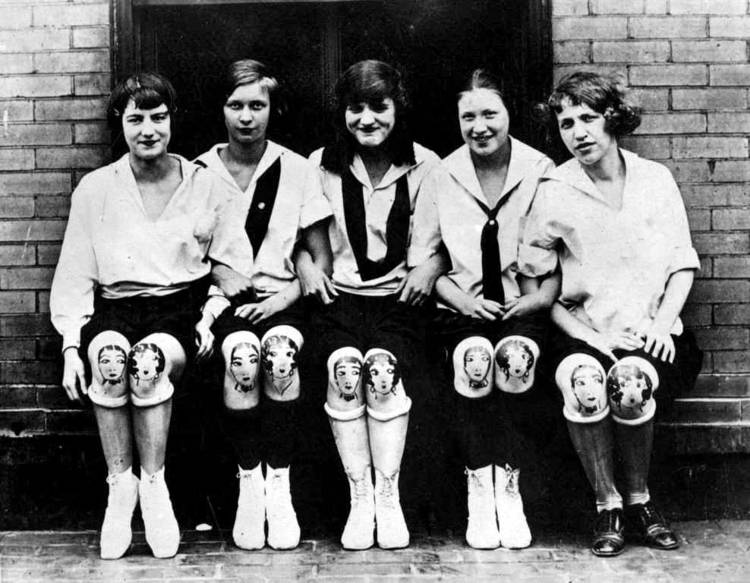
(Learn more about painted knees here)

How Sosruquo was born (Abaza legend)

One of the most famous heroes of the Caucasian Nart sagas is Sosruquo (Soslan), who is born from a stone and burns so hot that the blacksmith god has to temper him. The smith grabs the red-hot baby with tongs around his knees and plunges him in water/milk repeatedly, making his whole body strong like steel. However, his knees where the tongs covered him remain vulnerable, much like Achilles' heel. (Warning, mention of attempted sexual assault in the linked text.)

The treacherous brothers (Greece)

Three princes set out to find a magic lamp that can save their kingdom. The youngest ends up saving three princesses from three different ogres. One ogre has his strength in his knees: he kills people by luring them to lay their head on his lap (promising to de-louse them), and then crushes their skull between his knees. The prince, despite his brothers' inevitable betrayal, is victorious in the end.

Lunja (Morocco)

Princess Lunja follows some birds into the wilderness and ends up being kidnapped by a ghoul woman. When her cousin comes to the rescue, she manages to escape, but the ghoul is in hot pursuit. Lunja manages to trick her into thinking she'd run even faster if she ate her own knees. She doesn't. (The young couple has other adventures after that, but all is well in the end.)

How human beings got kneecaps (Ekoi people, Nigeria)

A woman sees a very pretty white rock in the river, and repeatedly wishes to have it. Her wish is so strong that the rock jumps out of the water and sticks to her knee; after that, she can't get rid of it anymore. And ever since, humans have had kneecaps.

The betel-nuts (Itneg people, Philippines)

This is a long mythical story about a woman who marries the sun. I am including it for a smaller detail: whenever there is a gathering of people in the story, they send out betel-nuts to invite the guests. The nuts tell those who are invited that they have to come, otherwise they grow on their knees and make them unable to walk. Some heed the warning and some don't.

"My father is a fish and my mother is a man" (ATU 705)

This is a folktale type popular in Scandinavian countries and Arab traditions. It generally involves a couple that wishes for a child, but the man accidentally eats the miracle pregnancy food (fish) instead of his wife. A daughter is then born from his knee. She later becomes queen and goes through several adventures; in the end, she is recognized by her lost husband by the riddle of her birth.

What do you think of these stories?

If you got a painting for your knee, what would it be? :)