Showing posts with label research. Show all posts

Thursday, September 19, 2024

Girl in the Chair: The Storyteller and the Bateleur, or, why researching animal tales is worth it

As I have mentioned before, I am busy working on my next folktale collection, focusing on animal tales. I have done a whole lot of research in the past year, making a long list of stories - and animal species - I would love to include. Right now, I am translating, retelling, and polishing the tales one by one, in writing and in telling. The latest one provided me with a bit of a research adventure, so I decided to share.

Before we get started:

1. There are a lot of animal tales out there. I could just Google "lion + folktale", find one, copy and paste, move on. Sadly, there are books on the market that do exactly that. But I do believe that the more work I put into a story, the better the book will be. And I also believe that in order to tell a story well (especially from another culture) I have to do my homework, and understand it as much as possible.

2. I set some goals for myself for this project. In order for a story to be included, it has to be enjoyable (exciting, interesting, polished), has to represent the animal in a positive way (not dumb, evil, or cursed), and the flora and fauna of the story has to match the place it comes from. The latter one is the important part for this post.

The case study

The story I am working with is a Mbaka folktale from Angola. I came across it during my Following Folktales Around the World reading challenge, and it stuck with me. It is titled The son of Kimanaueze and the daughter of Sun and Moon. The basic tale is that a great hero's son decides he wants a bride from the sky, but doesn't know how to get his letter of proposal to her. He asks various animals to help take the letter to the heavens.

The (bilingual) text mentions four animals:

Mbambi, translated as Deer,

Soko, translated as Antelope,

Kikuambi, translated as Hawk,

and Holokoko, translated as Vulture.

None of the four help the hero, actually, and they only have one line each in the tale, so I could have settled for these names and moved on. But since this whole book is about animals, I wanted to pay attention to detail, and go beyond stereotypes. 19th century British translators had a habit of labeling any bird a "pidgeon" or "eagle", and every ungulate "deer." So I looked up the book's end notes to see if these animals were really the ones they were translated into.

Obviously not. And here things got interesting.

Mbambi, according to the notes, is Cephalophus burchelii. This name, however, doesn't exist anymore. Taxonomic names can change a whole lot in a century, and it was obvious that Mbambi had swapped Latin names since 1894, but I had no idea to what. I was sure he is not a deer, given that Cephalophus refers to duikers. I also learned that the old name referenced British naturalist William John Burchell, so I started searching for terms like Burchell + antelope, Burchell + bushbuck, Burchell + Cephalophus etc. Nothing really came up, until finally I ran into an article about the catalog of Burchell's mammal collection. And there they noted the new name: Sylvicapra grimmia ssp. burchellii, common duiker. Win.

Soko was a more complicated case, given that the notes gave no Latin name at all. The translator only stated that it is some sort of an antelope, with longer horns. This was not much to go on, so I decided to look up antelop species that live in Anglola. Since Angola's borders have also changed, I looked up the regions where the Mbaka live and tried to cross-reference. Eventually I came across the Springbok (Antidorcas marsupialis), which matched the description, and also the role in the story (see below). I am not sure about this one, but decided to go with it until further notice. (Fun fact: antidorcas means "not a gazelle". Gee thanks.)

Kikuambi had a Latin name: Fiscus capelli. However, this one is also out of date. Luckily, my search came up with a very useful page, which led me to the current name, and another which helped me with names in different languages. This is how I found Lanius humeralis capelli - which is not a hawk at all. It's a small shrike (Northern fiscal). I also had to do some extra work figuring out what to translate it to in Hungarian, since we don't have a common name for it. But at least I had the species.

And then came Holokoko, Helotarsus ecaudatus. This one was pretty straightforward: Google told me that it is an older Latin name for Teratophius ecaudatus, the bateleur. Not a vulture. This bird:

This whole side quest took me about two hours, and resulted in finding out about four fascinating animals. With one line each in the folktale.

First off, I had to make decisions on how to incorporate them into the text. In a folktale, modern names can stick out like a sore thumb ("and then along came the Northern fiscal"). And yet, I like to tell the story with the accurate animals, and name them with their original names. So, I settled on "along came Kikuambi, a small shrike" - and put the rest in the Comments section after the tale. 

Why go to all this trouble?

Because the four lines in the story suddenly made sense in contet, and expanded into a small scene. The hero first tries to send the letter with the small and swift duiker, but Mbambi can't run up to the sky. Then he asks Soko, who can jump (pronk) very high - but not that high. Then he asks a bird who can perch in high places, but he can't help either. Finally he asks the bateleur, who can soar very high - but even he can only get halfway to the sky.

And now it all makes sense.

A lot of this was probably self-explanatory to people when the original text was collected. But if I am telling it to contemporary audiences in Hungary (or Europe), these things need spelling out. And yes, the story would still work if it was four random animals saying no to the hero - but with the specific species, and the background knowledge, the story gains richness, detail, and layered meaning.

And, honestly: I freaking enjoy doing this work. Hello, dopamine. I love the search, the discovery, the puzzle. And I love animals, I always have. So I enjoy finding out about interesting species, and doing them justice when telling people about them.

And now I am moving on to the second paragraph...

(Note: if you are a biologist, birder, anthropologist, or any other professional, and you see a mistake in this post, please educate me :) )

Friday, August 9, 2024

Girl in the chair: Luck, research, and wolves

It has been a while since I last did a Girl in the Chair in-depth research post. Incidentally, that one had also been about wolves. Yesterday I went deep down into a rabbit hole, and this time, luck played an important part in the process. So I decided to write down the play-by-play, to show what an adventure research can be.

It all started with trying to find folktales where the wolf is a positive character. I am working on a folktale collection that features animal tales, and I really wanted to get a good wolf story in there. This topic has come up recently at the FEST conference too, and it is a contentious point in Hungary right now, so I was extra motivated.

I went through a bunch of usual suspects - Prince Ivan and the Grey Wolf (which, I found out, has been translated at one point as The Grey Wolf and the Golden Cassowary), the Wolf Queen, Sirko and the wolf, etc. But so far most stories I have been interested in were about shapeshifter wolves, rather than the actual animal. In addition, stories where the wolf is a positive character have been rare and hard to find. And on top of that, I wanted the story to be interesting and exciting. And to say something about wolves being a useful part of the environment. NO pressure.

Then I vaguely remembered hearing a story about the creation of the first wolf, from a fellow storyteller. I only recalled that it was a Finnish (?) story, and the wolf was made of sticks, designed to be a guardian. I tried to Google Books "creation of wolf", "first wolf", etc., but came up blank. No Kalevala, no Finnish, no mythology. It was beginning to drive me crazy. After a while I decided to attack the problem from a different angle: I tried to remember who told it. Then it dawned on me that it must have been Kevin Strauss, whose awesome workshop about animal tales I have attended in the US. Once I remembered, I realized that Kevin has also published books on animal tales. I don't have his wolf book, or Tales with Tails (it has been on my wish list forever), but I thought maybe he included this story in one of those. So, I did the next best thing: I used Amazon Preview. And found out that "The First Wolf" was indeed included in Tales with Tails! Then I sent up a little prayer that Kevin, being the awesome researcher he is, included sources in the book. (And that they were visible in preview). And he did! (Thanks, Kevin! I'm buying the book). 

Kevin's source list led me to another book, The Enchanted Wood and Other Tales from Finland. And lo and behold, it had the story (this book is on Archive). Sadly, however, it did not note any sources that I could find. I was beginning to wonder if it came from a family tradition of some sort. I tried to do a reverse search, using terms from the text of the tale ("first wolf" "great wizard" "evil spirit" "burning eyes" etc.), but no hits. Then I thought maybe the source is in Finnish, so I used Google Translate to translate the search terms. Still no dice. After poking at it for a good hour, I gave up.

Next came the iffy part: if I can't find a source, but want to use a tale, I need permission. I looked up the publisher, and found out that Libraries Unlimited has recently become an imprint of Bloomsbury. Which means I need Bloomsbury's copyright permission for using the tale. I looked up Bloomsbury's permission policy, downloaded the permission request form, and got ready to work on it. However, at this point my spoons ran out, and I decided to postpone the form-filling for later.

In the meantime, I took another tack at finding other good-wolf stories. My usual go-to is to pull up the Thompson Motif Index, and search for a keyword in it. So I did Ctr+F "wolf", and started poking through the 300+ hits. I eventually came across motif G303.17.3.3: Wolf eats the devil; therefore, devil no longer lives in the world. This one sounded promising, so I pulled up the source referenced: the first volume of Natursagen by Oskar Dähnhardt. Since this was published in 1909, I went back to Archive to pull it up. Praise the gods it was not in Gothic letters, so between my rudimentary German and Google Translate, I managed to read the story on page 153. I realized that it sounded similar to the Finnish story! But not quite the same. Here, the devil created wolves too, but to spite God.

On this page, the author referenced a Ukrainian version by Dragomanov in the journal Mélusine, where other animals are also created from the wolf (bumblebees, flies, etc.). I got curious about this one, so I went on a whole side quest digging up volume IV of Mélusine, and sorting through the versions Dragomanov referenced (some in Russian). They all had the same basic structure as the Finnish story, with the Evil Spirit creating the first wolf, but they were missing a crucial part: the creation of the wolf as a guardian, rather than a monster.

Giving up on Dragomanov and his Slavic sources, I eventually wandered back to Natursagen. I decided it is a useful volume to leaf through, even if not for this particular tale. So I turned the pages back to the beginning of the Wolf chapter, to see what else is there.

And there was the damn Finnish story!

Almost word for word.

Except it's Estonian.

Bless Natursagen, this one had sources too! One was a collection of Estonian folktales from 1888, in German (also available in the public domain, but in Gothic letters. Luckily, they were good enough for the screen reader to be copy-pasted into Google Translate. Sometimes copy-paste turns Gothic into gibberish.) Another one was a collection that had Estonian and Latvian variants, and there was even a Hungarian collection referenced, although the story in this one was only tangentially related.

But! The Estonian book even came with notes that revealed some very intriguing details. For one, it finally named the "creator" as Jumah, the Estonian sky deity. For another, it specified the plant that is used for the tail as Daphne mezereum, which, funny enough, is named after wolves in Hungarian.

So. Yeah. I found the story's source after all!

Here are a few conclusions:

1. While tracing a story back to a public domain source is useful, that is not the primary reason to do it. As demonstrated above, a lot can get scrambled and lost during translation and adaptation (Jumah turns into Great Wizard, or firebirds turn into cassowaries). Also, the closer a source is to the oral tradition, the more intriguing details might be noted, as I found out in the end.

2. Even with the most dedicated research skills, sometimes luck plays a part. Turning to the right page, selecting the right motif out of 300, happening on the right workshop at the right time, or having access to the right page on Amazon Preview. I was wandering around, and lucked into something I almost gave up on.

3. Reading multiple versions of the same tale type is still a very illuminating process. There are similarities and differences, sometimes as subtle as the "evil spirit" noting that wolves are needed to protect the woods. That one line makes one version more fascinating than all the others - and more fitting for a contemporary message.

4. Wolves are awesome and deserve more positive representation!

5. I still very much love this part of my job :)

Friday, May 20, 2022

Sisterhood of the Wolf: The hunt for female werewolves (Girl in the chair)

Girl in the Chair is a blog series on research for storytellers. You can find the details about it in the opening post here


I am preparing for this year's Story Camp that my organization (the Világszép Foundation) runs for children in the foster system. This year's theme is Transformations/Shapeshifting. First step is usually for the camp staff to choose folktale roles for themselves, so we can greet the children in character. I have spent the past few weeks researching tales about shapeshifters. When it came to picking my own character, I decided I'd like to turn into a wolf. 
(I recently read the book about Wolf 21 and I am in love with positive wolf representation. In addition, Werewolf is one of my favorite RPGs.)

So, I set out to find folktales or legends or myths about female werewolves or wolf shifters. I set some pretty specific criteria:

1. It has to be a traditional story with a narrative (folktale, legend, myth)
2. It has to be a good story
3. It has to feature a female character who can turn into a wolf
4. This female character has to be portrayed in a positive light, and has to achieve a happy ending
5. Wolves have to be portrayed in a positive (or non-negative) light
6.The transformation should happen at will, not as a curse or a one-time thing

Yeah. The bar was pretty high.

1. Thompson Motif Index

I turned to the motif index first, looking for "transformation: man to wolf" (D113.1). Werewolves do get their own motif number (D113.1.1), but I did not want to dig into those one by one unless I had to - werewolves are almost always male. Since Thompson usually notes when transformation happens to a woman, I filed this away for later. Too broad.

2. Keyword search

I set out with the most obvious search terms on Google Books and Google Scholar: "female werewolf", "she turned into a wolf", "wolf princess", "wolf fairy", etc., combined with "folktales", "legends" and other keywords. I had to work through a lot of fantasy novels (Google autocorrects "folktale" to "story" for some godforsaken reason), and several references to Princess Mononoke and Angela Carter.
No story really jumped out at me, but I did flag a book about the cultural history of female werewolves.

3. She-Wolf

The aforementioned book is a fascinating collection of articles on female werewolves. Only one really goes into folktales, but that one is a treasure trove, about female werewolves in Estonia (apparently, Estonia is unique with its strong female wolf tradition, go figure). I did get a couple of stories from it, but they didn't tick all the boxes: either the wolf was cursed, or evil, or it died in the end, or the story was simply not all that interesting. Still, great book.
(There was also a study on Burgundian werewolf trials, but the women accused of lycanthropy were all executed.)

4. I take to Twitter

When in doubt, tweet about it. The online folklore community rallied around my question, and I received quite a few suggestions from lovely people. Some were literary examples (again, Angela Carter, also Sergeant Angua),but others were promising. 

4A. 

A Croatian friend was kind enough to send me translations of two She-Wolf folktales, both variants of the "swan bride" tale type, with a girl whose wolf fur is stolen by her husband. I loved these, but I couldn't really use them in the story camp setting. 

4B.

Multiple people pointed me to the Werewolves of Ossory. It's an interesting tale, but once again it is short, with nameless characters, and the wolves are cursed. But it did point me to the Irish wolf tradition, which I circled back to later.

4C.

Someone brought up Romulus and Remus. I went on a side quest, looking into the lupa of Rome, and Acca Larentia as a possible wolf goddess - but in the end, Romulus and Remus is not a story that gets me excited either. And I thought a wolf mom to abandoned babies would hit a little too close to home with the foster kids.


4D.

Someone suggested looking into the Wulver, but I couldn't find a tale with a female Wulver. Or any tale, really. Some say this whole thing might be fakelore.

4E.

Someone linked me to a Chinese tale about an old woman who turns into a wolf, and eventually has to leave her family. It was a touching story, but with a sad ending.

4F.

Jürgen Hubert mentioned a tale about a wolf-woman who fell into a trap, and later killed the hunter with his own rifle. I liked this one, but it's not really much to build a character on. Translation forthcoming.

INTERLUDE: Pinkola Estés

Yes, a bunch of people mentioned Women Who Run With the Wolves. While I have a bone to pick (heh) with CPE and her treatment of folktales, I did look up the book to refresh my memory. One of my problems with this book is that it comes with notes, but it does not cite the sources for the stories - and she tends to change them a lot. And then everyone quotes her as a folklore source. I checked both in English and Spanish, and could not find the story she references.

5. Peeira

Fables, 1001 Nights
of Snowfall
My "wolf fairy" search took me to the topic of the peeira, a Portuguese creature of legend often translated as "fairy of the wolves." These women are usually seventh daughters in their family, and at one point they run off to live with wolf packs who take care of them.
It gets a mention in this book (which a Twitter friend kindly looked up for me), but the story itself attached only deals with wolves symbolically (as punishment for an unkind girl). Also this one, which looks fun, but I could't get a copy. Following the trail, I found this video which tells an amazing peeira legend, but it is kind of dark and bloody. I found a source in Portuguese as well, but it didn't really give a full story, just a belief. I found a reference to another (non-peeira) Portuguese female werewolf story, but in this one the girl was definitely evil, and she ate a baby. Boo.
(Here is a blog post on Portuguese werewolves)
All in all, I like the peeira as a concept, but couldn't find any convincing narratives to use.

6. Irish wolves

I circled back to the Irish tradition, as one of the Portuguese sources cited a source about Irish wolves. The source cited is pretty short; it says the Irish word for female werewolf was conoel (which Google promptly autocorrected to colonel), and mentions women who go into wolf shape, but alas no stories. Conoel did not yield any as a search term either.
The mentions of the Werewolves of Ossory led me to look into Laignech Faelad, a legendary figure whose descendants can turn into wolves. Couldn't find a direct reference to women, though.
I did get a few hits here and there. I found a literary poem featuring the warriors of the Fianna, and a Wolf-Girl whose curse is broken by a kiss from Oisín. In one of the folktales collected by Curtin a woman cursed into the shape of a wolf gave birth to a human baby (but then promptly died). The Acallam na Senórach mentions the three wolf-daughters of Airitech who came out of their cave to hunt, but they are murdered by warriors in the end. There was also a tale about a family of shapeshifting wolves, and a man they rewarded for saving and healing one of their pups. The family included a fierce mother, so this tale was a definite maybe.
I also found some references to lycanthropy and women in Ireland, such as this article, but no convincing stories. There was an entire side quest about the wolf-woman to be tamed by Irish kings through marriage (see references here). Some sources that looked interesting I could not track down (like this study from this book. It referenced a 17th century text here, but I did not have the bandwidth to go through it in search of the mention of a female wolf).

7. More keywords

I found a reference to a Persian tale called "The Wolf-Girl and the Fairy", but despite the enticing title, it turned out to be one of those tales were a hero's sister transforms into a monster. You can find it in this book. I also found a reference to ATU tale type 409, "Girl as Wolf", but it was another "woman cursed to be a wolf" story.

8. Wolf Queen

And then it dawned on me that might not have searched for "Wolf Queen" earlier. So I did. Lo and behold: a story! A Cape Malay story, specifically, from Nelson Mandela's Favorite African Folktales. (This is the original source.) It's a version of the Donkeyskin tale type: a girl tries to avoid marrying a sultan by transforming into a wolf - and then occasionally forgets to transform back. In the end, her true love recognizes her anyway. And she has a name! (Amina.) And she lives happily ever after!

WHEW! That was an intense three-day dive into a rabbit hole... wolf den? I am sure there is more to rustle up, but I'm satisfied for now.

The real treasure was the citations I found along the way!


Wednesday, January 19, 2022

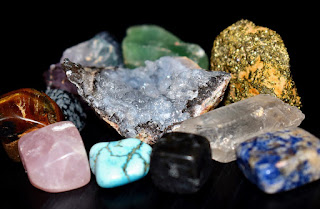
Dear 'gemstone lore' writers

This is going to be a weirdly specific rage post. Deal with it.

So, I have been researching folktales, legends, and myths about gemstones for a few weeks now, and I have some things I need to say. To anyone who writes content (digital or print) about "gem lore."

From a professional storyteller and folklore researcher, all y'all. Listen up.

1. CITE. YOUR DAMN. SOURCES!

You might think what you are doing is not academic writing, so why cite anything at all, right? Wrong. If your entire spiel is about the ancient traditions and age-old beliefs surrounding gems, then you better be able to demonstrate that your stories are actually real traditions. Or at least that you got them from somewhere more substantial than the 'gem lore' site directly above yours on the Google hit list.

This is what happens when I search:

- "Oh, look! That sounds like a neat story. I'll look it up in Google Books." (Because I already know better than to do plain Google.)

- First 10 hits: "Crystal Healing", "Lore of Precious Stones", "Crystal Power", etc.

- "Okay, so maybe one of these actually published books cites a source for the myth/folktale/legend I am looking for?"

- No, they don't.

- "Alright, let's try searching pre-1950s, crystals were not a thing yet."

- No trace of the story.

- "Okay, there is no way I have an MA in Roman archaeology and I have never heard of this one oddly specific Roman myth before."

- No Roman primary source databases mention anything of the sort.

- I do, however, start noticing that the story's wording barely changes from book to book, or from website to website. Copy and Paste are at work.

- 4.5 hours in, still no source in sight.

- My hair is turning grey.

Please, for the love of god, or Goddess, or spirits, or angels, or anything that's holy, do your homework before you make claims no one can verify! Primary sources (Ancient Greek or Roman authors, Egyptian papyrus texts, medieval manuscripts, etc.) are best, but sure, I'll take any other publication in a pinch. With a source.

If you don't know the source... try to find it. Or preface with "the Internet claims..."

2. IF IT DOESN'T HAVE A PLOT, IT'S NOT A STORY

The other thing that bugs me. You need to straighten out your terminology. Because most of what is listed under "Legends and Folktales" sections is usually neither.

"Ancient Romans used to believe emeralds improved eye sight" is interesting, it is even verifiable (Suetonius! Is the source!), but it is not a story. It is neither myth, nor legend, nor folktale. It is a belief. Traditionally speaking, beliefs turn into stories when they acquire a plot. Where someone does something once upon a time.

And while we are on this topic:

3. MYTH, LEGEND, AND FOLKTALE ARE NOT ALL THE SAME THING

This is for advanced learners right here, because most writers don't know the difference either. But there is a difference. All of the above belong to the large umbrella of "traditional stories", which means, they have been around for centuries. But.

Myths belong to belief systems and religions, and are (or were) generally believed to be true. Legends were originally religious stories of saints that were also believed to be true. Generally, legends were supposed to be historical - taking place in a more specific past, rather than a mythical past, an attached to historical persons, places, or events. Some languages (like Hungarian) even have separate words for religious and non-religious legends. Folktales are stories that are handed down through generations in the oral tradition. They don't have an author, they exist in many variants, and they change from telling to telling. They take place in a generic "once upon a time world" or simply the human world, and they are usually told as entertainment, rather than plain truth.

So. The tears of Phaethon's sisters turning into amber, when they cry for their brother who tried to drive the sun god's chariot: Greek myth. Polycrates, the tyrant of Samos wearing an emerald ring that is lost and recovered in a stroke of luck: Greek legend. The prince who climbs a mountain of gemstones and rescues an enchanted princess: Greek folktale.

"Fairy tales" can be a sub-genre of folktales (more accurately called wonder tales), but they can also be stories written by someone. Which takes us to...

4. LITERARY TALES ARE NOT ANCIENT

Stories. Written by someone. Are not "ancient lore." Now, I don't actually fault you for this one. Sometimes it is super hard to tell real traditional stories from written ones, especially when the Internet picks them up and throws them around without acknowledging the author. Case in point: the legend of "the maiden Amethyst and Dionysos" I keep coming across is actually not a Greek myth at all. It was invented by a 16th century French poet. It was never the part of the Greek mythical tradition.

Sometimes authors also publish their own stories as "folktales", either because they don't understand the term, or because they think it will sell better. This is how you get hundreds of fake "ancient Chinese wisdoms" and "old Native American legends" and such crap on the Internet.

Which is bad. Because then you are attributing something fake to someone else's tradition. 

Which is why you need to check your sources. Full circle!

5. YOU CANNOT BLAME EVERYTHING ON ANCIENT EGYPT

Seriously, just stop.

Whew. Okay. So now I feel better. So I'm gonna end on a positive note:

Researching stories and citing sources is a skill set you can learn. When in doubt, ask a research librarian, a folklorist, an archivist, or a storyteller. We are all happy to help with oddly specific research questions! And the good news is, those stories are out there. And they are marvelous, I promise.

Saturday, October 10, 2020

Down the Rabbit Hole: More questions about researching stories

Today I taught my storytelling research workshop (Down the Rabbit Hole: The How and Why of Researching Stories) as part of the FEAST webinar series. I had a lovely group of people attending from around the globe, and a wonderful team helping me run the workshop (thanks to Sheila Wee, Roger Jenkins, and Krupa Vinayagamoorthi!).

As usual, there were a lot of questions, and I did not have time to answer all of them. Luckily, people typed them into the chat, so now I can go back and address the ones I've missed.

Here we go!

How often do you find a folk tale does not fit an ATU number?

Often. Especially when I venture further outside of Europe. In these cases I try to use other sources that might help, either regional tale type and motif indexes, or other handbooks. Here is a very useful one I didn't mention, that deals with African folktale types that also appear in the Americas. It that fails, it's back to keyword search...

Does anyone have resources for folk tales from the Punjab Region of India/Pakistan in the original language? I mostly have been finding English.

I don't, but I'm putting this out here so that other people might respond. All the sources I can come up with are also in English (like the India/Pakistan tale types and motif indexes I mentioned in the slides). 

How to search for the F number E number or H number story from the search result of storyseeds.org/storysearch?

I talked about this in the workshop, but I want to share the resources. If you want to search by number, here is the motif index online (and here is the bibliography of sources it refers to). As you can see, the letters mark different groups of motifs, such as Tests or Magic. I did a really fun blog series about the weirdest motifs, you can read it here.

Also, when you have the number of a motif you are looking for, and you have already checked the motif index's own bibliography, I usually type the number into Google Books search, with quotation marks and an additional search term. For example: "S31" + "folktales"

What is your recommendation for pronunciation resources?

Usually other people, who speak the language as their native tongue. But there are also resources online, Forvo is a pretty good one for example, because people can add to it, and it gives you where the person is from.

What if I read a story in a book or watch a video of a story, and want to tell that...is it enough to just mention about the author and the publisher or do we need to take permission from the author/publisher?

This is a whole long and complex conversation that revolves around copyright laws, and also around professional ethics. Checking whether you need copyright permission for a story is one of the main reasons people do background research. But even when something is a folktale, and not under copyright, storytellers tell the same tale very differently. We all make them our own, and out favorites become our "signature stories", as the Americans call it. Because of this, I feel it is polite to ask a teller if you like their signature version of a tale - or ask for the sources, so you can go, do your research, and come up with your own signature version! 

And finally, as usual: if anyone has any storytelling research questions, or specific stories you are looking for, feel free to reach out here, or through my Facebook page! And check out Girl in the Chair, my blog series on storytelling research. :)

Tuesday, July 14, 2020

Girl in the chair: Seven blind queens raise a child in prison

Girl in the Chair is a blog series on research for storytellers. You can find the details about it in the opening post here

I did another research workshop for storytelling students recently (online, live from Berlin), and it was tons of fun, with lots of intriguing questions at the end. Once again, I am highlighting one of them, to show the steps of my search process.

The question

The person asking me was looking for a folktale where "seven blind queens raise a child together in prison."
Yes, this story exists. In more than one version.

Step one: Where have I read this before?...

I could have sworn I read a version of this in a Spanish folktale collection, but when I went through it, there was no trace of blind queens. I went through two other volumes of Spanish tales from the same publisher (the Siruela folktale series has large hardcover books with colorful covers, and I usually remember my reads visually). No luck. Sometimes, my memory tricks me.

*Edit*: In the end I remembered that I knew this story from Bierhorst's Latin American Folktales, but the Spanish edition. I wasn't entirely wrong!

Step two: Google Books

On to the starting point: I go to Google Books, and type in the most obvious search phrase, "blind queens." I get a few immediate results:
John Bierhorst's Latin American Folktales, under the title Seven Blind Queens, from Chile (this is the story the student asked about)
Joseph Jacobs's Indian Fairy Tales, where the story is called The Son of Seven Queens.
Italo Calvino's Italian Folktales, under the story title The Three Blind Queens.
Flora Annie Steel's Tales of the Punjab, with the title The Son of Seven Mothers.
Arifa Naeem's Folk Tales from the Deccan, with the title The Seven Blind Queens.
A folktale collection from Pakistan that talks about seven blind queens.

It seems like this tale type is popular in India and South Asia, with occasional occurrences elsewhere.

I put in the search term in Spanish too, since the original question was about Latin America. I get a hit for "reinas ciegas" in the Spanish edition of the ATU index.

Step three: Tale type number

Even if the Spanish index didn't yield results, the Latin American folktale collection notes the type number in the end notes: ATU 462, The Outcast Queens and the Ogress Queen. The note says this type is "widespread in India, but not indexed in Europe or elsewhere Latin America." It does reference another version of Chile, noted in Hansen's tale type index (The types of the folktale in Cuba, Puerto Rico,the Dominican Republic, and Spanish South America)

Step four: Tale type indexes

I go to the Hansen index first, since it is specific to Central and South America. Sadly, it doesn't note type 462 at all; the story reference above is grouped under type 455, in which a jealous queen blinds her husband's nieces. There is no child or prison involved, they are rescued by their brother with the lion milk (still, interesting story).
Talking about lion milk...

Step five: The story basics

In the Chilean version (originally from this book) a cruel king blinds his queens one by one, and throws them into prison. Six queens eat their babies in hunger, but the first one manages to keep her son alive in secret. As the boy grows up he manages to find a way out of the dungeon, and keeps bringing in fruit from the garden to keep all seven queens alive. They all love him. One day he is caught by the gardeners and taken to the king (who has married an eighth, cruel woman in the meantime). The king takes a liking to him and, without knowing who the boy is, gives him free reign of the palace. The boy keeps feeding his mothers in secret. One day the cruel queen decides to get rid of him, so she pretends to be sick and demands lion's milk. With advice from his mother, the boy succeeds in bringing some. Next the queen demands a singing, dancing castle; the boy goes to an Enchanted city where he plays his guitar, and with the help of a sorceress finds the small castle, as well as water that cures blindness, candles that are human lives, and a pig that is the life of the cruel queen. He kills the pig, cures his mothers, the king remarries the first queen, and they all live happily ever after.
(I'm a little miffed the king gets away with everything.)

Step six: Variants

In the Italian version (from the Abruzzi) there are three queens (married to three kings), blinded by a jealous nurse and left out in the mountains. They also eat their babies, only the youngest is saved. When he is taken in by his father the king, the nurse sends him on a quest to rescue a princess. With his mothers' advice he succeeds, and the nurse is killed.
In the Indian version from Joseph Jacobs, the king encounters a bewitching maiden on a hunt, but she'll only marry him if he blinds his seven queens. He does. One of the queens has a son, who finds a way out of the dungeon and keeps bringing food to the queens. King eventually finds him and takes him in. The boy manages to piss off the wicked wife, who sends him to her mother to get killed. On the way, however, he marries a princess (who only wanted to marry a man "with seven mothers"), who rewrites the letter he is carrying, changing death sentence to reward. The prince gets the eyes of his mothers back (minus one), plus a cow with endless milk, plus ever-expanding rice, and all is well in the end. Music also plays a part in this story.
In the Deccan version a cunning maiden seduces the king and frames his seven wives for the murder of his favorite horse and dog. The queens are blinded an exiled, and as they give birth the babies are devoured by wolves, except the youngest. He ends up at his father's court and the wicked queen tries to have him killed by sending him to her wizard brother with a death message. A wise man helps him out. The boy kills a parrot that was the wizard's soul, and makes a potion to heal his mothers. Once again the king gets away scot free.
The Punjabi version is pretty much the same as Joseph Jacobs'. That explains a lot.

Step seven: The ATU index

According to the ATU, type 462 is not extremely widespread: It mostly has variants from India, South Asia, East Asia (China, Nepal, Laos), the Middle East, Spain and Catalonia, and Chile. Also, the Romani tradition, which would explain how these stories spread West. The only outliers are Iceland and Canada.
The ATU also notes motifs within the folktale type. There is no specific motif for this tale, but there is one (L71) for "Only the youngest of group of imprisoned women refuses to eat her newborn child." The reference points to the Thompson-Balys  motif index of India.
After so many references to India and South Asia, I refer to the Types of Indic Oral Tales index, the folktale index for South Asia (India, Pakistan, Sri Lanka). This one lists a ton of variants to the story. I would have to sift through all of them if I wanted to dig deeper.

Conclusions and Musings

This tale type seems to be centered on South Asia. If I had to venture a guess, I'd say it spread west with the Roma to Spain, and then on to South America with colonization. There is also something distinctly celestial about the Punjabi version - the seven queens, one half-blind (Pleiades?), the endless stream of milk (Milky Way?), the countless grains of rice (stars?)... It might just be my imagination.
Anyway. Fascinating rabbit hole.
Thank you for the question, Johanna!

Saturday, May 30, 2020

Girl in the chair: Grief over a bowl of rice

Girl in the Chair is a blog series on research for storytellers. You can find the details about it in the opening post here

CW: Grief for a child


"I'm looking for a story..."

I was teaching a workshop today on research for storytellers, and one of the participants brought in a question about a specific story:

"There is a story about a young woman who loses her child, and a wise man / spirit (?) tells her if she collects a bowl of rice from people who have never experienced loss, she can have the child back... of course she can't."

She asked me if I could find this story. I thought this was going to be easy to answer; I have encountered this tale type before. If only I remembered where...

Step One: Google Books

When in doubt, I usually search in Google Books first. I focused in on the bowl of rice aspect of the story (it was a mistake, see later), and tried search terms such as "bowl of rice" + "grief", "bowl of rice" + "mourning", "gather rice" + "grieving", etc. Random folktales did pop up, but they usually had something to do with rice and nothing to do with grieving. I even tried adding "Buddha", as I vaguely remembered this as a Buddhist story, but no luck.

Step Two: More Google Books

A small change in search terms yielded the first results: I put "grain of rice" instead of "bowl of rice." This brought up versions of the parable, but none of them came with a source. I found simplified texts posted online, such as this one, this one, and this one.

Step Three: Untouched by grief


At this point I was kind of annoyed, so I did a "long shot" search - these are searches were I use terms that are very specific, and it is kind of unlikely that they will yield a result, but screw it, I'm gonna try it anyway. So I typed in "untouched by grief" + "folktales" in quotation marks as a search term for Google Books.
Lo and behold, The Book of Greek and Roman Folktales came up. (Maybe I had the term floating around my brain somewhere, because I reviewed this book for a journal last year, and I highly recommend it to storytellers.) This one has a story actually titled "Untouched by Grief", in which King Darius loses his beloved wife, and Demokritos tells him he can have her back if he writes three names on her tomb: the names of three people in his kingdom never touched by grief. The great king fails, and learns a lesson about loss.

Step Four: Folktale type number

Luckily, the Book of Greek and Roman Folktales comes with a folktale type index, where this story was marked as ATU 844 - The Luck-bringing shirt. I know that story: a king is told he can be happy if he wears the shirt of a happy man, and soon finds out that in his kingdom no one is happy, except for a man so poor he has no shirt. (I'd argue with this message, put let's put that aside).
So, off to the ATU Catalog I go. I get a summary of the lucky shirt, but no mention of grieving mothers or grains of rice anywhere. Technically the same basic idea, but not the same story.

Step Five: Storyseeds

Usually around this point in the research process I take a shot at finding a key motif in the story in the Motif Index. So, I go to storyseeds, where I type in "rice" and "grief", but don't find a motif specifically for this story.
Back to search terms, then.

Step Six: Loss

It occurs to me that maybe the bowl of rice is not the key motif in this story at all. On the whole, this is a parable about grief and loss.
So, I focus on the mother this time, and try search terms such as "lost her son", "lost her child", "son died" + the usual "grain of rice" since it seems to yield better results than "bowl of rice." I get some more hits like the ones above, of short version of this story, but still no direct sources. Still, I'm getting closer.

Step Seven: Search phrase

I shift my search at this point. I still cycle through terms of losing a child, but instead of the rice motif, I try a phrase that would occur in a story like this: "from a house". Because the mother has to collect rice from a house where no one has experienced loss.
BINGO. This combination, finally, comes up in a book titled First Buddhist Women. And here the young mother has a name! Her name is Kisagotami. And she has to find a mustard seed.

Step Eight: Kisagotami

I type the name into Google, and turns out she has her own Wikipedia page (as Kisa Gotami), as a part of a series of articles on Buddhism. It is a pretty good starting point for further research: it has a bibliography, footnotes, and external links to go on.

Extra steps

Just to make sure, I also type "mustard" into Storyseeds to see if I find a motif number, but no luck. I do type "mustard seed" + "grief" + "folktales" into Google Books again, and this time I finally remember why the heck this tale was so familiar to me: I read it only a couple of weeks ago for my post on folktales from Bahrain. Duh.

Step Nine: Tale type revised

This book, by the way, marks the tale as 844A - House untouched by grief, but there is no such tale type listed in the ATU. I get curious, and think maybe it was in the older tale type catalog before the Uther revision, so I put "AT 844A" into Google Books (newer numbers are ATU, old numbers are AT, and sometimes they differ).
I get a hit from El-Shamy's invaluable Types of the Folktale in the Arab World. It is the same story as the one from Bahrain (the source of that one was from El-Shamy's own collection), except this catalog actually lists motif numbers!
[I later discover the Bahrain collection also listed motif numbers, but I got too excited and didn't read the whole paragraph. Pay attention, people!]
BOOM! The key motif here is H1394 - Quest for person who has not known sorrow.

I should have typed "sorrow" into Storyseeds.

Step Ten: This is just the beginning

So now we have a tale type number (AT 844a), a motif number (H1394), and the name of the most well-known version of the story (Kisa Gotami). One can now proceed in a couple of ways:
Follow up on the Wikipedia article (through the sources listed)
Follow up on the type number (through more Google searches)
Follow up on the motif number

Conclusions

TRY A LOT OF DIFFERENT SEARCH TERMS.
Like, a lot. Don't give up.
Don't make assumptions about what the story's key motif is.
Type various words into Storyseeds to search for motifs.
Check footnotes and end notes. (And read the notes all the way through!)
Sometimes, a long shot is worth trying.

Thursday, May 14, 2020

Down the Rabbit Hole: Questions from the workshop about researching stories


Last night I taught a 90-minute online workshop as part of the Story Crossroads Spectacular! It was a lovely, lovely experience with a lot of amazing people from various countries. The title of the workshop was Down the Rabbit Hole: The how and why of researching stories. It was the "teaser" version of a 5-hour workshop I will be (hopefully) teaching in person at Story Crossroads next year.

People were curious and actively engaged all the way through. So much so in fact, that even though I left the last half an hour for Q&A, there were questions I still did not have time to answer! Because they were all exciting questions, I decided to pick out the ones I glossed over, and answer them here. I can't guarantee all the answers will be complete, so feel free to comment for more!

Are these resources (storyseeds, wikisource etc.) that you've listed only for stories that are already translated to English? Are other languages also included?

The ATU (folktale type index) does refer to many books that are not in English. This is both an upside and a downside. Upside, great for diversity of stories. Downside, it is annoying to do the whole four-step research process just to find a reference to a story you can't read. (But you can always pay someone to translate!).
There are other, regional indexes (e.g. Types of the Folktale in the Arab World) that refer to more non-English sources. Also, here is the link to the Japanese tale type index I promised!
There was a website called The Multilingual Folktale Database (mftd.org), but it has been down recently. It was a good initiative where people could upload folktale texts under the appropriate ATU numbers, in any language!

What about sources that use a different alphabet? Will Google Translate help you?

Oh, this one gets tricky. Yes, Google Translate does translate other alphabets, just not really well. And if you can't type said alphabet on your keyboard, all you have left is copy and paste. Whenever I hit this point in my research, I usually reach out for translation help.
(German texts written in Gothic letters are the bane of my existence. You can't even copy and paste those.)

Do emotions or personal attributes work as key words, example: pride, jealous, inadequate, self esteem?

(We were talking about using search terms in Google Books or the motif index)
Yes, they do. Usually the ones that would appear in older stories or texts. Things like "pride" and "jealous" show up in the motif index (try here!), but if you search for more modern terms like "self esteem" you might find publications talking about folktales in academic (or psychological) terms. The psychological analysis of folktales is a popular topic, so you might get lucky even with these terms.
Also, if you want to find stories, you can try searching for story phrases, such as "she was jealous" or "the jealous queen".

If you are collecting these stories that have "questionable" English behavior, how do you market them?

This question came up because we talked about collectors "censoring" folktales to fit the tastes and sensibilities of their audiences (this was common in the Victorian era, and is still common in children's books). So, if you collect traditional stories that contain elements that are considered "sensitive" by modern standards (sex, violence, crude humor, etc.), what do you do with that?
I believe it largely depends on what the goal of your work is. If you are looking to publish a book on folklore, you have academic obligation to leave the texts as you collected them. In that case, you'd market it as an academic book, to the appropriate (adult) audiences. Sometimes you might give a title that point at the nature of those stories (such as Erotic Folktales from Norway, or Grimm's Grimmest), so that people know what they are getting into.
(People don't always know what "folklore" entails. A famous example is the "Folktales of Nations" series in Hungary, which was an excellent series of folktale collections in the 1950s-1970s... except people started buying them as children's books, and then freaking out over the uncensored gore and sex in the stories.)

Do you do such extensive research for EVERY story you tell?  I know publishing is a must….but telling - if its a folktale.

I do so much research because I am curious. I love knowing a lot about my stories, especially when they are from another culture. So it is less of an obligation and more of an exciting quest for me. But no, sometimes I run across stories and I just tell them to test them out. But if I want to integrate them into a show, or work with them extensively, then I go back and do the research. I believe it is an important part of my job as a storyteller.

How do you feel about telling stories professionally if they are outside your own culture?

This could be (and should be) a whole other 5-hour workshop. A panel, even. A series of round table discussions, ideally, involving lots of people from lots of different traditions. It is a super important topic that we need to talk a lot about.
Personally (short answer), I fall somewhere in the middle of the scale. I do tell a lot of stories from other cultures, with the caveat that A) I do a whole lot of research on them, and B) I do my best to respect cases where the stories belong to the kind of tradition that should not be told by outsiders. I still make mistakes sometimes, and I need to own up to that. But I do love stories of all kinds too much not to try.
(Also, I believe it is important to know one's own tradition very well, even if we venture into others. I think of Hungarian stories and lore as my currency, that I put out into the world in exchange for all the lovely things I take in. I make sure I hone and develop my knowledge of Hungarian tradition constantly.)

If you put together a story from several versions, how does that stand with copyright?

Good question, and it largely depends on the sources, and the copyright laws of the country you are in. For example, in Hungary there is no copyright on folktales, but there is copyright on creative re-tellings. So if I merge multiple folktales, that becomes my version of a story, and falls under my copyright.
Using multiple versions is good for making your own story, but then you have to pay attention to the claims you make about representing certain cultures. (We talked about this in the workshop.)

Is there a problem with the publishers not permitting the author to give permission?

Yes, this can happen. I just usually find it easier to ask the author first. Often they forward me to the publisher, but at least then I have an in, and they are more likely to respond to my request. With large publishers, you need to go through official channels, filling out copyright request forms (you can usually find these on their websites).

Thank you all for participating, and asking so many great questions! If you have more, or if you have a specific research topic you'd like help with, check out my Girl in the chair posts on this blog, and send me a message!

Tuesday, August 6, 2019

Girl in the Chair: Hare rescues the sun

Girl in the Chair is a blog series on research for storytellers. You can find the details about it in the opening post here

This request came from Coral Conant Gilles. She asked me to look into a story she found in a book a while ago. It's called How Hare Rescued the Sun, and she remembered reading it in Michael J. Caduto's Earth Tales from Around the World. She also supplied a reference to it from the Storyteller's Sourcebook. She asked me to see if I can find other variants of the story, other sources for it, or similar tales from other parts of the world.

What's the story?

In Caduto's book the story is marked as an Inuit tale from Siberia. Evil creatures named Tungaks steal the sun and hide it in a crystal vessel underground. The animals gather in the darkness, trying to select someone to go and get back the sun. Polar Bear and Wolf are suggested and rejected, until the wise Owl decides Hare should go. Hare sneaks into the Tungaks' underground cave and steals the sun. While fleeing, he breaks the vessel, breaking part of the sun off and kicking it into the sky - that part becomes the moon. Hare kicks the sun up as well, and as light floods the world, the Tungaks flee back underground.

Step One: Caduto's sources

Once again, the first step is to see if the collection references a source. Luckily, Caduto does: He says the story has been retold from "How the Sun was rescued" in James Riordan's The Sun Maiden and the Crescent Moon. Luckily, I own a copy of this book, so I can pull it from the shelf and see what the story looks like, and what sources Riordan references (see Step Four).

Step Two: Storyteller's Sourcebook

The Sourcebook references a picture book version of the tale, titled How snowshoe hare rescued the sun: A tale from the Arctic, by Emery Bernhard. The motif number is A721.1.3.1 - Sun harpooned and stolen by under earth demons standing on each other's backs. I wrote the title of the book into Google Books, but sadly, this picture book has no Preview. However, finding some reviews of the book I found out that it names the Siberian Yuit People as the source of the story. From another review I also found out that the book is retold from James Riordan's collection. So, I circle all the way back to Step Four.
(If you can't peek into a picture book that is based on a folktale, it is worth searching on Google for reviews of the book. They often refer to the original folk sources. If you are lucky.)

Step Three: Texts online

Typing the title of the story into Google yields some useful results too. I find a blog post that contains the Bernhard version, one unsourced retelling, and the text from Riordan as well.

Step Four: Riordan's story

There are some differences from Caduto and Bernhard's retellings here: the sun is not kept in a crystal vessel, but rather a "white stone pot." Riordan marks the story as "Eskimo" but doesn't specify an ethnicity. The entire book, according to the Introduction, is a collection of tales Riordan himself collected in 1977 and 1981 among the indigenous peoples of Siberia, and also from archival sources, but sadly he does not note which one came what source (or teller). Usually, when we hit the first collection (straight from the oral source) we have gone as far back as we could.

Step Five: Yuit culture

A quick Google search tells me that Yuit is another name for the Siberian Yup'ik (Yupighyt) people. Looking for information on "Yup'ik folklore" in Google I find this page, which also references some books such as Tales and Legends of the Yupik Eskimos from Siberia. Sadly the book has no Google Books preview, so I can't tell if the Hare story is included in it. It might be worth a look, if for nothing else, then cultural context.
Another link, however, leads to a much older book, The Eskimo of Siberia by Waldemar Bogoras, which does contain a much shorter variant of this story. This book, in turn, claims the tale was borrowed from the Chukchee People, and points to another of Bogoras' books, Chukchee Mythology. This book is also in the public domain, so I found the Chukchee story online as well, here. These are two less elaborate, but more authentically sourced texts of the same tale.

Step Six: Motif index

I looked into the motif number noted by the Storyteller's Sourcebook to see if I can track down similar Inuit/Siberian tales. Sadly, the Sourcebook specified the motif number from A721.1 - Theft of Sun, which is too broad a motif to be useful to us. To be sure, I typed "A721.1.3.1." into Google Books, but got no useful results.

Step Seven: Tungak hunt

What are the tungaks, the key villains of the story? Once again I turn to Google Books, and search for "tungak" and various co-terms such as "Yupik", "Siberia", "Inuit", and "Eskimo". One of the first things that pops up that the term can also be spelled tuurngaq or toongak. I repeat the searches with those spellings too. Various books translate the word as "spirit" or "evil spirit" or even "devil"; occasionally "god", "shaman", or a shaman's spirit guide. I find a reference to more stories in this book that contains Siberian tales. Some call it The Great Tungak, and individual spirit that hates humans. I find some relevant info in this encyclopedia as well.
This volume seems to contain more information. Since it looks old enough to be in the public domain, I go to my favorite site, archive.org - and I am lucky: the volume is available online. But surprise! I can't find the part about tungaks in it. After some more poking at Google Books, turns out that somehow the results referred to another volume in the same publication series, The Labrador Eskimo, also available on archive.org. So, now I have more info about Tungaks! (Search in the book's text to find all the relevant paragraphs)

Step Eight: Sun theft

Combing through stories where a trickster figure steals the sun and moon we can find quite a few indigenous examples from North America. Just like Hare is a trickster in many cultures, other tricksters also have similar exploits bringing back the light into the world. Google Books has quite a few results for "steals the sun" or "stole the sun" or "rescues the sun". These stories are not quite the same as the Yup'ik story above, but they can be valuable comparison. Some that I found useful (click for books):
Coyote Steals the Sun and Sun and Moon in a Box
Grandmother Spider steals the sun
Raven Steals the Light
We get the best results in Google searches if we search for various phrases in quotation marks, such as "steals the sun" or "stole the sun" or "rescues the sun" and add folktale or myth next to it. It takes multiple rounds of searching, but weeds out irrelevant hits. I also tried some of them with addig Yupik or Siberia or Eskimo or Inuit next to the phrases to narrow down the search. Some interesting results:
This article
This book
This book
This book
This book

Conclusion

Ideally, with indigenous stories like this, an in-depth researcher would reach out to the original communities. I only looked into this a little bit, and came across an interesting website, but the real would would require more effort, and probably a lot of asking around. Contacting actual tradition bearers might be the best way to uncover, verify, and ethically learn indigenous cultural materials such as myths of folktales. Additional search help from someone who reads Russian might also be helpful.