Showing posts with label StorySpotting. Show all posts

Wednesday, February 21, 2024

StorySpotting: The goddess under the ice (True Detective: Night Country)

 StorySpotting is a series about folktales, tropes, references, and story motifs that pop up in popular media, from TV shows to video games. Topics are random, depending on what I have watched/played/read recently. Also, THERE WILL BE SPOILERS. Be warned!

I don't usually post about shows where the entire story is based on folklore, but this season of True Detective was just too well done.

Where was the story spotted?

True Detective: Night Country (Season 4)

What happens?

When the entire crew of an arctic research station disappears at the start of the weeks-long winter night, two (personally messed up, as per usual for TD) detectives start trying to solve the case. The plot is intertwined with Indigenous tradition, identity, and relationships with the white residents of the town. There is a distinct supernatural tint to this season: people seeing (and getting clues from) spirits and ghosts, traditions being carried of questioned, and an open-ended season finale that leaves room for explanations that are not tangible.

Early on, the young son of one of the policemen in town is seen drawing a gory picture (below). When his (white) father is taken aback by this, his Indigenous mother argues that he should "know his own culture." It has been confirmed by showrunners that the image is that of the goddess most often referred to as Sedna. The rest of the show has many more moments that reference her myth and her character, although she is never mentioned by name (only as She). The plot is also - loosely - based on her story, if you look close enough.


What's the story?

The earliest published records of this story can be found in Franz Boas' book on Inuit culture (1903), and Knud Rasmussen's books on the Thule Expeditions in the first decades of the 20th century. They collected a lot of information on Inuit folklore and mythology - stories among them. For example, Rasmussen writes that the most powerful spirit in Netsilik tradition was named Nuliajuk, mistress of land and sea and the mother of animals. Boas records her name as Sedna.

So here are some of the elements of this mythology that make a appearance in the show:

- The goddess can make hunting bountiful, or can make animals disappear (In the first scene of the season, we see reindeer fleeing into the abyss from a hunter.)

- She used to be a mortal woman who was thrown overboard into the sea, and people (or her own father) cut her fingers off when she clung to the kayak. Her fingers turned into seals and other sea creatures, and she sank to the bottom of the ocean, becoming a powerful spirit. In some versions, one of her eyes is also knocked out. (See drawing above. I would also argue that the missing eye of a witness, and the missing fingers of the killer who is finally revealed are also an homage to Sedna.)

- She has a house made of whale bones at the bottom of the sea (The ice cave the detectives finally locate has frozen whale bones in the walls.)

- She can summon blizzards (A blizzard, and other freak weather events, play an important role in the show)

- She is especially dangerous, with a lot of taboo directed at her, during the dark time of the year (Which is when the show takes place.)

- When people don't observe taboo, or disrespect nature, she is angered, and she hides the animals. These times, shamans have to descend into her realm to placate her, by combing all the filth out of her hair. (Many people in the show literally descent under the ice, and have various visions and journeys, trying to solve the case that seems like the result of her wrath over the pollution of the local mines.)

- In connection to the above, one source mentions that the "pollution" that offends the goddess is designated with the same word that is used for stillborn children. (In the show, it is specifically mentioned that several children had died due to the pollution from the mines.)

- She also rules over the underworld, where people's spirits go after they die, at least for a while. (Many deceased people make an appearance in the show, talking to various living relatives.)

You can read in detail about Sedna's mythology - and its relationship to environmental awareness - in this book.

Conclusion

I really enjoyed slowly picking up on the references to the myth over the course of the show, and then making guesses at what the solution was going to be. I still did not anticipate the actual reveal in the finale, but I think it was excellently done.

Thursday, December 8, 2022

StorySpotting: Women with their feet backwards (9-1-1)

StorySpotting is a weekly or kinda-weekly series about folktales, tropes, references, and story motifs that pop up in popular media, from TV shows to video games. Topics are random, depending on what I have watched/played/read recently. Also, THERE WILL BE SPOILERS. Be warned!


9-1-1 is one of those shows that consistently deliver exactly what you expect from them: first responder drama, feel-good moments, kittens and children rescued, and Angela Bassett being an unadulterated badass. Now, with some folklore.

Where was the story spotted?

9-1-1, Season 6, Episode 4 (Animal Instincts)

What happens?

In one scene this episode we see a young girl telling a very animated bedtime story to her mother. It's about an evil ciguapa with backwards feet, threatening a boy in the woods. A brave woodsman and his spotted dog with five toes run to the woods, and chase the ciguapa away.
The girl asks her mother if ciguapas are real. "I don't know. That's what abuela says. I've never seen one." "Not even when you lived in Santo Domingo?" The mother doesn't answer.
Soon after, the girl's abusive father breaks into the home, and she calls 911.

What's the story?

As the girl's words allude to, the ciguapa is a creature of Dominican folklore. It is usually described as beautiful, either tall or petite, hairy or feathered or nude, but most accounts agree it has backwards feet, with the toes pointing towards the back. Because of this, and their elusiveness, the ciguapa are very difficult to track or catch. Beliefs say they can only be captured during the full moon, with the help of a black and white spotted five-toed (cinqueño) dog. Legends also claim that if captured, they die of sadness.

The ciguapa have their origins in pre-European indigenous cultures, and their continued resistance during colonization. They became a very important symbol in Dominical literature, both in children's and adult genres. For example, there is a beautifully illustrated children's book, titled Secret Footprints, about a ciguapa girl who ventures into the world of humans. (In this version of the story - see the image to the left - they live underwater, afraid humans would capture them for their beauty.)

One ciguapa story is recorded by Francisco Javier Angulo Guridi, from the 1860s. In this one, the author encounters a young man who lost his beloved bride to the jealousy of a ciguapa. In his description the ciguapa are an ancient group of beings who live in the heart of the mountains. They are beautiful, with creole skin, dark eyes, and long lustrous hair; they can run like the wind, and leap from tree to tree like a bird. They only communicate with cries and howls, and they are very timid, hiding from humans. However, they get jealous when they see people in love. If a female ciguapa gets jealous, her cry kills the man in love, and if a male ciguapa does the same, the woman dies. In some other legends, the ciguapa seduces humans, drains them through excessive lovemaking, and then kills them.

Sometimes the ciguapa are also accused of other fairy- or trickster-like behaviors, such as stealing food or tangling the mane and tail of horses.

Some legends connect the ciguapa to the Ciguayos, indigenous people who lived on the island. One talks about a princess who retired to the caves in the mountains to avoid being killed by the European colonizers. Her people started walking backwards, as to confuse their pursuers with their tracks.

Apart from the Dominican Republic, the ciguapa also exists in the folklore of Cuba, in a slightly different (black-skinned) version.

You can read more about the ciguapa in this book, or this one.

Conclusion

I am not sure why the writers of 9-1-1 decided to include the ciguapa story in this episode. Maybe it was just to signal the Dominican origin of the characters; maybe it was a folklore parallel to the story of women fleeing danger and persecution. Either way, it was a neat little detail, and it made me go down a research rabbit hole I learned a lot from.

Tuesday, August 30, 2022

StorySpotting: Body and soul mix-and-match (Locke & Key)

StorySpotting is a weekly or kinda-weekly series about folktales, tropes, references, and story motifs that pop up in popular media, from TV shows to video games. Topics are random, depending on what I have watched/played/read recently. Also, THERE WILL BE SPOILERS. Be warned!


Locke & Key, in my opinion, is a seriously underrated show (I haven't read the comics but I hear they are good too). With the new season out, they gave me multiple things to Story Spot.

Where was the story spotted?

Season 3, episodes 4-6.

What happens?

The basic premise of Locke & Key is about an old house that hides various old keys, each with its own magical property. The Ghost Key has been a staple since Season 1. It essentially opens a door that separates one's soul from their body when they walk through. It has been used in various creative ways over the course of the show.
In this season Dodge, the demon who has been the main heroes' arch nemesis, manages to use the door to knock the young boy Bode's soul out of his body. She then leaves her own mortal shell, and takes over the boy's body instead. Bode, left as a floating ghost, eventually manages to regain his own body by projecting his soul into a sparrow, and then transforming back into human shape. (Complicated, I know, but kinda genius).

What's the story?

The whole body-snatching-taking-refuge-in-a-bird thing is actually one of the creepiest pieces of folklore I have ever encountered. And as I looked into it again, it seemed a lot more common than I had believed. It even has a couple of Thompson motif numbers: E725.1 - Soul leaves the body and enters an animal's, and K1175 - Minister dupe raja into entering body of a dead parrot, then enters raja's body. And yes, that latter one is hella specific.

The first time I encountered this trope was in a collection of Tibetan folktales titled Tales of the Golden Corpse. The tale of The Travelling Spirit was about two friends, a prince and a minister's son, who went to school together. The prince was lazy, but the other lad learned the secret art of projecting his soul out of his body (known as phowa). Jealous that the minister's son might upstage him, the prince tricked his friend into showing off his skills - and destroyed the unattended body. Seeking a new place, the boy's lost soul entered an old woman's dead parrot, reanimating it. Later on, the parrot managed to catch up to the prince, and tricked him into falling out of a window... And then the minister's son's soul entered the prince's empty body, and walked away home.
Excellent creepy revenge ending.

As I was reading my way around the world, I encountered this trope again in a collection from Thailand, in a tale titled The Weaverbird Princess. In this story, a silent princess is promised to the suitor who can make her talk. A prince comes along with his mentor, both of them versed in the art of projecting their soul. The mentor projects his soul into various objects in the princess' room, and the prince has conversations with the objects, telling them clever stories. The princess can't help but interject, and thus the prince wins her hand. 
Later on, the prince goes to the forest with his mentor, and, seeing a dead deer, decides to project his soul into the animal and go exploring. He trusts his body to his mentor. However, the evil mentor in turn takes over the prince's abandoned body, burns his own, and goes home to take the prince's place. The prince, not finding a body to return to, transfers himself into a dead parrot. He flies home and tells his wife what happened. The princess manages to trick the mentor into leaving the body and transferring into a goat to show off. The prince thus gets back into his body, and kills the goat in revenge.

Once I started pulling on the king-in-the-dead-parrot thread, a whole lot of other tales came tumbling out. 

There is one in the Turkish story collection titled The history of the forty vezirs, where the evil vezir, instead of burning his own body, puts a slave's soul into it for safekeeping (and the king, while in parrot form, also judges some court cases). Interestingly, in this version the queen recognizes that her husband is not behaving like himself, and refuses to sleep with him.
There is also a version from Pakistan in this book, where the king takes on the parrot's body to pick mangos for his queen. The queen, who is aware of the evil servant's soul in her husband's body from the get-go, devises a clever plan to trick the soul into a lamb's body.
The tale also appears in The Three Princes of Serendip, the English translation of the Italian translation of a medieval Persian tale collection. You can read the story about The Emperor who turned into a parrot here. Once again, the wife's suspicion plays an important part in restoring her husband to his body. Added bonus: the Emperor uses his body-switching ability to travel his kingdom in the disguise of birds, and right wrongs.
Another version of the story can be found in Hatim's Tales, a book of Kashmiri stories collected from storyteller Hatim Tilwon in 1896. The fun part of this one is that the vezir loses the king's stolen body when he goes hunting, and decides to inhabit a bear for greater efficiency. The king then shoots the bear, saying "we can't have a bear for a vezir"... The tale also appears in other Kashmiri collections. It even has a variation in the famous Ocean of the Streams of Stories. Here, a person takes over a recently deceased king's body, but a minister suspects the change. Still, the minister decides an impostor is better than the child heir, and makes sure the soul doesn't have another body to return to. Now this would make a great movie...

In India, the story is known as The Metamorphoses of King Vikramaditya (you can read it in two versions in this volume of North Indian Notes and Queries). In this one, the parrot ends up at his father-in-law's house, judging court cases. Once he actually judges the case of a woman whose husband has been replaced by a shapeshifting dev. Eventually his wife (who is suspicious of her "husband") hears of the parrot and discovers the truth. In the second variant, the evil servant is tricked into the body of a goat and then beheaded, and the head of the goat still laughs and weeps as it's hung in the bazaar.
(I even found a popular comic book adaptation of this story from India.)

A distant relative to this motif is a story from Melanesia, where an evil spirit pushes a girl off a cliff, and takes over her body and identity.

Conclusion

So here we have a folktale type that spans a continent at least, and also several centuries in time, all the way from 11th century Kashmir to 21st century Netflix. Traveling souls and body-snatchers are a rich topic for people to think about. It probably has something to do with our mortality...

(Fun fact: I originally started working on this post when I was watching The 100)

Friday, August 19, 2022

StorySpotting: The monster in the wilderness (Prey)

StorySpotting is a weekly or kinda-weekly series about folktales, tropes, references, and story motifs that pop up in popular media, from TV shows to video games. Topics are random, depending on what I have watched/played/read recently. Also, THERE WILL BE SPOILERS. Be warned!


So I just watched Prey, which is an amazing movie, and immediately fell down a rabbit hole. This is not just a cool action flick, but also fascinating in terms of how it incorporated Comanche culture, tradition, and even language (as the first major Hollywood production with full Comanche dubs at its release). I recommend this article for more details.

Where was the story spotted?

Prey (Hulu, 2022.)

What happens?

Naru, the movie's main hero, flees from her first encounter with the Predator (that kills a bear in front of her). She meets young men in the woods and tries to describe what she has seen: 

"It was huge. I couldn't see it until it was covered in blood, but it looked like... like a mupitsl."

One of the young men scoffs. "You saw a monster from a children's story?"


What's the story?

Okay, disclaimer first: there are a million people out there who could do this better than me, because I only found out about this creature like a day ago. But I went down the rabbit hole, and got excited, so this is me nerding out. I am citing all my sources in the links for accuracy.

So, mupitsl. Also known (or rather, spelled) as Pia Mupitsl, Pia Mupitsi, piamupits, piamupitz, mu pitz, mupits, piamupitsi, and a bunch of other variations.

The name, apparently, means 'great owl' or 'giant owl', and refers to the monster's owlish features. It is also translated in some places as 'big old giant' or 'cannibal owl.' Apparently large owls were admired by the Comanche by their ability to hunt quietly and stealthily in the night.

The earliest mention I found is a Spanish-Comanche dictionary from 1865, written by Manuel García Rejon and published in Mexico. In it, the piamupitz is described as "an imaginary being, human-shaped and gigantic, that carries an extraordinarily large staff as a walking stick, devours humans, and lives in caves in the mountains of the distant North. It is believed that if the staff breaks, it dies."
1994 article about Comanche tradition of topography also mentions the piamupits' mountain habitat, and the actual caves it was supposed to live in.

So far, the Predator does a pretty great job with this impersonation.

A Comanche medicine woman named Sanapia, whose knowledge of medicine was recorded, used bone fragments (mammoth fossils) in her work. She called them piamupits bones. She described the piamupits as a large, hairy giant, tall, with big feet, and with a face like a man. She claimed their bones ended up in the ground when they died of old age.
Turns out the bones of the piamupits were valuable medicine. An article from 1942 mentions pieces of fossil bones that were believed to be the bones of the Piamupits (a "supernatural being"), and used to treat sprains and broken bones. Sanapia also used them for the same thing.

Fossil bones and legendary creatures took me to Adrienne Mayor, who researches traditions around the world involving fossils. She does not only describe Mu pitz traditions in detail in the book linked above, but she also went straight to the source, talking to contemporary Comanche storytellers and tradition bearers. One of whom - drumroll! - was the same Juanita Pahdopony who consulted on Prey. Well, that explains a whole lot. We love it when storytellers consult on movies! The storytellers confirmed that both forms of the creature - the hairy giant and the large owl - existed parallel in tradition.

Most of the actual stories I found came from a book on Comanche Ethnography. There is one story about a group of children who get left behind when their camp moves, and they end up at a piamupits' cave. They manage to make an escape with the help of various animals (a frog, a crane, an eagle, a buffalo, and a calf). In the end, the owl-mupits is thrown up into the moon where it lives today.
In another story, a hunter encounters a piamupits (in the form of a giant man) while hunting buffalo. it offers the creature meat, but the piamupits wants to eat the hunter instead. He flees, but the piamupits tracks him down to his camp. Eventually, the hunter manages to kill the invulnerable creature by sticking a sharp pole up its anus.
In yet another story, the piamupits enters a hunter's tipi while he is away, and kills his pregnant wife in a very graphic way. The twins she had in her belly, however, survive, and their father later finds them.
There is also a story in the collection where the piamupits functions as the dragon in European stories: a girl is supposed to be devoured by the eight-headed creature, but a young man saves her. Another young man tries to take credit for the kill, but the girl tells her father the truth.

The Comanche National Museum and Cultural Center also has a short introduction to the Pia Mupits who uses a cottonwood tree as a cane, and was mentioned to scare children into quieting down. Many of the sources seem to agree that the piamupits was a child-scaring creature in folklore.

Bonus

Early in the movie, after witnessing the Predator's ship in the sky, Naru calls it a Thunderbird. Thunderbird lore is vast and well documented, but I came across one thing in one of the articles I read about the piamupits: it mentions a Thunderbird that fell into a ravine from the sky, killed some men with lightning, and burned out a large patch of grass "in the shape of a bird" where it landed. So.

Conclusion

The more I read about piamupitsl folklore, the more impressed I got with how one throwaway line from the movie integrates so much of tradition so seamlessly into the movie-mythology of the Predator. On purpose, and with consulting Comanche educators. Let's face it, the two might be centuries apart, but the 'masterful, deadly hunter stalking its prey in the wilderness' is an age-old story that keeps surfacing again and again...


Monday, August 8, 2022

StorySpotting: "This b*** I've never heard about before" (Canada's Drag Race)

StorySpotting is a weekly or kinda-weekly series about folktales, tropes, references, and story motifs that pop up in popular media, from TV shows to video games. Topics are random, depending on what I have watched/played/read recently. Also, THERE WILL BE SPOILERS. Be warned!


Yeah, I watch Drag Race sometimes, when my overworked brain needs the mental equivalent of a chewing gum. I am fascinated by the makeup and the sewing challenges. 
One thing I learned is that these shows are usually hilariously off the mark whenever it comes to geek culture... or mythology. And then recently I saw one thing I needed to blog about.

Where was the story spotted?

Canada's Drag Race, season 3, episode 2 (The Who-Knows)

What happens?

The runway theme for this episode was Goddesses of the Ancient World. All of the contestants would be worth a post... but I'll focus on one: Kimmy Couture, who walked the runway in a Vegas showgirl-esque orange dress and headpiece. During the critique round, this conversation happened between the judges and Kimmy:

"Tell us about your goddess."

"So, I went on Google, and I searched it, and then I found this b*tch that I've never heard before... I just really wanted to show some sun because I feel like, I'm like a ball of fire."

"Well, you nailed it. It all worked out."

Kimmy went on to win this episode.

What's the story?

Okay, yeah, it irked me that someone on TV would refer to a mythical character in this manner, and lack of attention to... basic facts, like her name. Because Kimmy herself could not tell us who the goddess was, I became curious to see if she'd just made up a generic sun deity for fun. After some searching, I found a post on her Instagam, and was surprised that she named the goddess there: her name was Alectrona or Elektryone.

So, here is what Kimmy didn't tell you:

Elektryone belongs to the Greek pantheon. She was a demigoddess venerated on the island of Rhodes, as the daughter of the sun god Helios and the island's own patron goddess Rhode (whom the locals worshiped as an aspect of Athena). Rhode herself was a sea nymph, the daughter of Poseidon. So Elektryone belonged to not one, but two illustrious divine families: that of the ocean, and that of the sun. Very fitting for an island deity. She had seven brothers, all kings of Rhodes.

According to some sources, Elektryone was the (demi)goddess of the sunrise. Her name is related to the Greek word for amber, which was always associated with the sun for its color, and its ability to create sparks. Elektryone was also a personification of youth, since according to myth she died a virgin, before she became elevated to the rank of a local deity. Youth and the sunrise go hand in hand.

By the way, the whole myth about Helios' family on Rhodes is pretty interesting. According to one story when the Greek gods divided up the world among themselves, Helios was not present, because, well, he was doing sun things in the sky at the time. So, they conveniently forgot about him, and gave him no realm. However, just at that time the island of Rhodes rose up from the sea, and Helios made his claim of that new piece of land. Other sources say Helios himself raised the island from the sea, after falling in love with Rhode.

You can read more about Rhode here, and Helios' family in Rhodes here.

Conclusion

I have a soft spot for Helios' family in mythology (going all the way back to Kerényi Károly's mythology books, and, most recently, Circe). That look Kimmy served did not read Greek, or mythical, to me at all - but then again, I'm not a fashion expert. I am happy for the chance to introduce some lesser known deities in this post, though. So... yay?

Tuesday, December 7, 2021

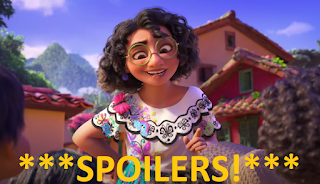
StorySpotting: Madrigal magic powers (Encanto)

StorySpotting is a weekly or kinda-weekly series about folktales, tropes, references, and story motifs that pop up in popular media, from TV shows to video games. Topics are random, depending on what I have watched/played/read recently. Also, THERE WILL BE SPOILERS. Be warned!


I watched Encanto in the movie theater and then went and immediately watched it again. It is a stunning, deeply moving film. It also emotionally knocked me on my ass for a whole day.

Where was the story spotted?

Encanto (Disney, 2021.)

What happens?

The main characters of the movie, the members of the Madrigal family, all have special supernatural powers (except for Mirabel, our hero). They gain their powers from a magic candle, gifted once upon a time to the family's matriarch.

What's the story?

All the powers granted to the Madrigal family have their counterparts in folklore and legend. Since this is one of my areas of interest (or nerdiness) as a storyteller, I couldn't pass up blogging about them. Let's see in order:

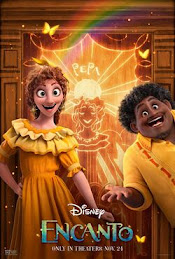
Pepa Madrigal - Weather control

In a folktale from Cape Verde two girls encounter three fairies, with vastly different results. Similarly to the Frau Holle story the hard-working girl is rewarded, while the lazy girl is punished. Both reward and punishment, however, are unusual. Good Maria gains powers so that "when she laughs the rain may fall, and when she smiles the weather thickens", while Bad Maria gets powers so "when she smiles, a strong wind blows, and when she laughs, a tempest uproots all the trees on the shore and wrecks all the ships at sea." Their mood, just like Pepa's, directly affects the weather.
There is also a queen who controls the weather in a Transcarpathian folktale I published in English a while ago.

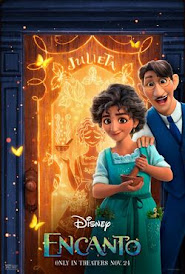
Julieta Madrigal - Healing

Julieta, Mirabel's mother, has the magic power to heal people with the food she cooks. It is one of the loveliest symbolic powers in the movie. She is one in a long line of legendary women, both of folklore and history, who knew the secrets of folk remedies and healing herbs. In European folklore, we have famous ladies such as Biddy Early or Anne Jeffries, or Hungary's lesser known but endlessly fascinating Macska Róza (Rose of the Cats). There is a lovely folktale from Tajikistan about a brave girl who sets out to find a magic plant, and learns the art of healing in the process. From the Maya South America, there is a story about a wise old woman who cures toothaches and thus saves her village.

Bruno Madrigal - Visions of the future

Seeing the future is not exactly rare in folklore and mythology. Practically everyone is doing it, from queens to strange old beggars on the roadside. But Bruno's story has two components: the fact that he sees the future, and the fact that his family basically exiles him for it. And that, in itself, is also a folktale type. It's numbered ATU 725 ("The Dream"). In it, a boy usually sees a dream or a vision of how in the future he will be a great sovereign, and his father/parents will bow down to him (Joseph, anyone?). In anger, the family kicks him out, and he has to go through a whole lot of ordeals until the vision inevitably becomes reality. (The Motif Number for this is L425). Interestingly, this tale type also exists with a female hero in a Greek collection.

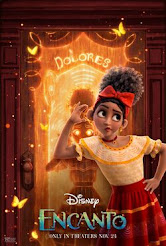
Dolores Madrigal - Sharp hearing

Dolores can hear a pin drop from a mile away. Unusually sharp hearing, actually, is not at all unusual in folktales. It even has it's own motif number: F641, Person of Remarkable Hearing. These heroes usually appear in the folktale type ATU 513, Extraordinary Companions, and they are a staple member of the team in almost every variant of the story. They can hear the grass grow, ants walk, or a feather fall halfway across the world. They usually aid the tale's main hero by telling him of impending danger.
(You can find a long list of these folktales in my thesis online.)

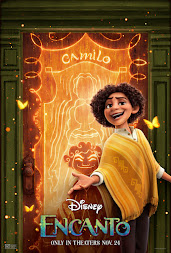
Camilo Madrigal - Shapeshifting

Continuing with the cousins: Camilo can take on the appearance of other people, and change his body at will. Now, while shapeshifting is quite common in folklore, taking on other humans' appearances is more of a rarity. In general, human shapeshifting is reserved to... people who are not quite human. In a Roman myth, for example, Vertumnus, minor god of the changing seasons turns into various attractive men to seduce a reclusive nymph. In another myth (also from Ovid's aptly named Metamorphoses) a girl named Mestra gains the power to change her shape at will, and she uses it to get away from her abusive father. In the medieval ballads about Robin Goodfellow (a.k.a. Shakespeare's Puck) he is half mortal, half fae, and can change his shape into whatever he wants to be, including humans and animals. Since Camilo has a trickster nature in the movie, Robin is probably closest to him in personality. Another shapeshifting trickster spirit that appears as various humans is Rübezahl, the goblin king of the Silesian mountains.

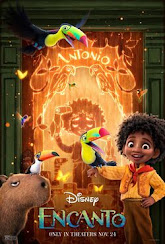
Antonio Madrigal - Animal speech

Antonio, the youngest of the Madrigal children, has the power to talk to animals. Once again, this is a classic. The motif number is B216 (Knowledge of animal languages) or B217 (Animal language learned). There are too many tales to list, although unfortunately many of them involve wife-beating or even murder. So I'm only highlighting some that are better. The legend of the Da-Trang crabs from Vietnam tells of a man who gains a magic pearl that helps him understand the language of all animals. He uses his powers for good in various creative ways (until one day he loses the pearl, and his senses with it). The Italian tale where a clever boy named Bobo learns animal speech ends better: he uses his gifts to help people, and is eventually elected Pope with the help of a pair of doves. A boy named Jack from the Traveller tradition also puts his knowledge to good use, and grows rich from the secret he learns from the birds (about how to find hidden treasure while the trees go dancing). Finally, a personal favorite: in a Japanese tale an old man receives a listening hood that allows him to hear the speech of animals and plants. He uses this knowledge to help them, and also the people who don't realize the damage they are doing to nature.

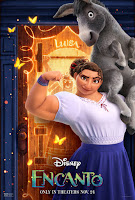
Luisa Madrigal - Super strength

Super strength in folklore is as common as dirt, but it becomes a tad more interesting when we talk about super strong women. Many people might be familiar with the picture book Three Strong Women, which is based on a Japanese folktale. In it, a three-generation family of brawny ladies teach an important lesson to a sumo wrestler. It took me a while to track down the original story, about a strong girl named Oiko, in this folktale collection. She also trains a sumo wrestler to be stronger, and also teaches a lesson to villagers who try to mess with her.


Isabela Madrigal - Flower power

Isabela makes flowers grow everywhere (as well as "a hurricane of jacarandas, strangling figs, hanging wines", which is a line from her song I adore). She reminded me of a princess from Hungarian folklore: The Princess Who Makes the Forests Green and the Meadows Bloom. Wherever she walks, she brings nature to life. An Indian princess has similar abilities in a tale titled A story in search of an audience - here, she receives her gift because her pregnant mother listens to a legend no one else is willing to hear. In another, even more beautiful tale from India, a girl has the power to turn herself into a Flowering tree, providing fresh flowers for her family to sell. In the same collection we can also read about The Princess of Seven Jasmines, from whose lips jasmine flowers drop when she laughs. By the way, flowers blooming from a girl's laughter, footprints, or hair is a common motif in folklore (numbered H71.4 or D1454.2.1 in the Motif Index). It is usually a blessing that distinguishes her as a "good bride" or a "kind sister."

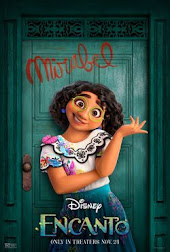
Mirabel Madrigal

Isn't it the entire point of the movie that Mirabel doesn't have a superpower? Well, yeah, it is. But her story is not without parallels anyway. There is a dark prophecy about her, one that everyone thinks means she will wreck the family. This reminded me of an Icelandic folktale, titled Hild, the Good Stepmother. While it is about the No. 1 rule of folklore that a prophecy always come to pass, this story goes in the opposite direction. A princess is foretold to bring ruin to her family before she turns 18: burn down the palace, get pregnant out of wedlock, and kill a man. Her stepmother, however, helps her figure out ways to bypass all three on technicalities, and in the end, she lives happily ever after with her family. (Find another version here.)

Encanto

And since the house and the home of the Madrigal itself is a character in the story, I can't miss mentioning the Encante of Amazonian legends: a hidden, magical city full of magical creatures. It is usually believed to be the home of the encantados, shapeshifter people that like to appear as Amazon river dolphins. People who are lucky enough to make the journey to the Encante usually return wiser, and kinder, than before.

Conclusion

I have a soft spot for superpowers in folklore (I even wrote a book about it). And Encanto does an excellent job of using them.

Wednesday, August 18, 2021

StorySpotting Extra: Folktales of Elsa and Naruto

StorySpotting Extra is a new thing I just invented: a report from an actual gig where I got to use my pop culture experience. Because I like sharing fun moments when theory gets put into practice.

This summer, luckily, we got to have our camps with the Világszép Foundation where I work full time as a storyteller. We take children who live in the state care system to our campsite in beautiful Paloznak for a week (per age group, seven camps total) filled with games, adventures, and storytelling. The latter is very important: we tell stories every night - yes, even to the teens, and they get lullabies too! -, and sometimes in the mornings. Kids who have known us for years look forward to these events, and some of them like to give me requests for what kinds of stories they would like to hear. While the "official" stories are selected in advance, there is always ample time in the afternoons and evenings for some extra storytelling. This year, I got two requests: they wanted "Naruto stories" and "Elsa stories." 

The quest was on.

It is always a precious chance for a storyteller to connect to her audience through their fandoms. We can learn a lot from the stories and characters that kids these days are invested in. It is even better if it is a fandom we happen to share: Naruto and anime culture was a part of my childhood too, and I also adore Frozen.

I spent the next few weeks with intensive research. Elsa seemed like the easier ask of the two, since it is a fairy tale adaptation (although pretty far from the original). However, I have never liked Andersen's Snow Queen, and did not want to tell it. Instead, I looked for other tales about powerful women with cryokinetic abilities who are portrayed in a positive light. Suddenly, the search got a lot harder... I returned to one of my old favorites, the legend of Queen Virignal from the medieval German Dietrich cycle. I also tracked down a gorgeous picture book titled Snow Princess, by Ruth Sanderson. This latter is a retelling of a classic Russian folktale, not very close to tradition, but it does have a happy ending (which was very important to me). An American friend helped me track down a copy in time, so I could head out to camp with two "Elsa" stories in my repertoire.

Naruto turned out to be the easier of the two. I started with brushing up on my Japanese nine-tailed fox folklore, which I'm very familiar with from earlier trickster research. Teens and middle schoolers can handle longer, more complex stories, so I added the legend of Tamamo-no-Mae, a fox lady who brought down several dynasties over the centuries, and kept hopping from kingdom to kingdom until he was imprisoned in a rock in Japan, and convinced to change her ways. In addition, a previous StorySpotting article led me to the legend of Jiraiya, a famous ninja whose story inspired several characters and elements of Naruto. It is an epic tale with giant frogs, evil snake demons, and thrilling battles.

All the research was absolutely worth it. The kids asked for the ninja stories right on the first day of camp, and it turned out more than one of them were Naruto fans (I don't know if it's playing on Hungarian TV again, or if it's Boruto nostalgia, who knows). The Jiraiya legend found its perfect audience. I spend more than half an hour telling it. Sometimes we stopped the story and discussed how it had been adapted into the anime, what changed and what stayed the same. We also played with the idea of the legend's rock-paper-scissors concept, where giant toad beats giant slug, giant slug beats giant snake, giant snake beats giant toad. It was very amusing.
The other ninja story was told the next evening. It also took a good half hour while Tamamo-no-Mae rampaged her way across Asia and reached the final battle. After the story, we looked up photos on my phone about the places (and the rock) mentioned in the legend. By this point, the kids got so ninja-happy that they made up a whole ninja movie for their filming workshop. It was an instant blockbuster.

The Elsa stories hit a more personal note. A girl had asked for them in advance, and when we arrived at camp she checked to see if I had them. I told Virginal's legend just to her, sitting on the living room couch. She listened in rapt attention. This legend is very male-focused, but it did not need much creative finagling to focus on the character of the Queen of the Mountains instead. I really enjoyed retelling it from a different point of view, and found new things in the story even though I have worked with it before. 
The second story found itself an even better context. At the end of the week we could bid for pictures taken in the photo workshop by the kids. I bid my dessert for one, and for another, I bid the second Elsa story to the same girl. I got to tell it the last morning before the end of camp, just to her. She loved the Snow Princess, and noticed things in the story that I did not. It was a lovely, personal storytelling experience. And I got a lovely photo for it.

There kinds of "gigs" are my favorite. They have everything I love about storytelling: personal connection, cozy moments, enthusiastic listeners, traditional tales, and geeking out over shared fandoms. I can't wait to see what themes they will ask for next...

Thursday, June 24, 2021

StorySpotting: They don't make critters that big anymore (Love and Monsters)

StorySpotting is a weekly or kinda-weekly series about folktales, tropes, references, and story motifs that pop up in popular media, from TV shows to video games. Topics are random, depending on what I have watched/played/read recently. Also, THERE WILL BE SPOILERS. Be warned!


I finally watched Love and Monsters on Netflix, and I have things to share.

Where was the story spotted?

Love and Monsters (2020)

What happens?

"The destruction of an asteroid headed for Earth releases chemical fallout, causing cold-blooded animals to mutate into large monsters and kill off most of humanity."
The movie has some spectacularly designed giant insects, worms, frogs, crabs, and other creepy-crawlies.

What's the story?

Incidentally, the fear of gigantic creepy-crawlies is nothing new to the human imagination. Let's take them in order of appearance:

Giant ant

Large (small dog-sized) gold-digging ants might be familiar to people who read Herodotus. They don't necessarily eat people, but they do attack anyone who approaches their nest. The Irish Voyage of Mael Duin legend, on the other hand, features a whole island of man-eating ants as big as foals (by the way, the folktale motif number for those is B16.6.1). 
In a Dominican version of the "Boots and the Beasts" folktale type, the hero gains the ability to transform into various animals - among them, a monstrously large ant. In a Namibian folktale two siblings accidentally grow an ordinary ant into a giant monster. All the animals try to defeat it together, but it is finally killed by a puff adder's venom and the arrows and ax of the father of the children.


Giant toad

Probably one of the most well-known large frog stories is the Australian Aboriginal myth of Tiddalik, the frog that drinks up all the water in the world, and has to be tricked into laughing to release it. Another famous example is the Japanese legend of Jiraiya, in which the main character gains the magic ability to summon frogs and toads and grow them to enormous sizes. He uses this ability (in tandem with his wife Tsunade) to defeat the serpent magician Orochimaru. If you feel like this sounds familiar, you probably watched Naruto.
There is a Tsimshian legend about a boy who creates a clever trap to kill a giant, copper-clawed frog and take on its skin and powers. In a Macedonian folktale, eternal summer grows frogs and toads so large that they threaten to take over civilization. When the Toad King tries to kidnap St. Peter's daughter, the saint finally finds a way to end the heat wave. In a legend from the Khasi in Northeast India, the beautiful girl Ka Nam is first helped, then enslaved by a giant toad named U Hynroh. When she escapes into the sky and joins the household of the Sun, the toad wages war on her - which is what causes solar eclipses.
In more recent sources, the Wuhnan Toads of China deserve a mention. They are large, voracious albino amphibians that pursue people who disturb them. One of them allegedly even ate a camera tripod.

Giant worms

One notable story is the tale of the Giant Caterpillar from the Ivory Coast. In it, a giant and ugly caterpillar swallows a young boy, and when the men of the village fail to defeat it, the women band together and beat the monster to death. In an Inuit legend a young man named Kivio goes on an adventure and encounters an evil old woman who eats people. The woman's protective spirit is a giant worm that attacks Kivio, but the boy shoots arrows at it and manages to kill it.
In the Persian Book of Kings there is a legend about a giant worm raised by a man named Haftvad and his daughter. The worm brings good fortune, and the bigger it grows the better the luck of its owners is. However, the worm is evil, and it corrupts Haftvad as well, until he becomes drunk with power. Finally, a hero named Ardashir defeats the monster with molten lead.

Giant snail

Giant snails are somewhat less common in folklore, but we can still rustle up a few. The Sarmatian Sea Snail is a delightful specimen of medieval legends, complete with antlers and meat with curative powers. Another large snail (laconically called Snail) haunts the city of Hastingues in France.

Giant centipede


Possibly the most famous giant centipede story is the Japanese Tawara Toda Monogatari. It features a brave samurai, Fujiwara no Hidesato, who is recruited by a Dragon Queen to help her kill a giant centipede (omukade) that has destroyed many of her family. He manages to kill the monster with an arrow that he'd spit on, after saliva-free arrows don't do the trick. Monster-hunters, take note.
In a Yaqui legend the giant centipede monster (chupia) travels inside a whirlwind. It is bigger than a human, and a man chops it to death with an ax. (Centipedenado, anyone?).
There is also a Thai folktale in which a kind boy saves and raises a snake. When he later travels to take examinations in the city, the snake follows him, and saves him by battling a giant centipede that has killed many people. An even larger centipede monster is mentioned in a legend from Myanmar: this one is big enough to hunt and eat elephants, and build its lair from their ivory.
A Korean folktale (A father's legacy) mentions a giant centipede that ate thirty people. It is killed with a gun by the hero, who uses a woman as bait... Interestingly, the Korean hero Nam Yi was believed to be the reincarnation of the spirit of a giant centipede that was killed by another hero for demanding human sacrifice. Nam Yi retained some supernatural, ghost-related powers from his origins. 
On an even more disturbing note, in a folktale from Assam a man with the evil eye transforms into a giant centipede in his sleep, chasing people around. When his family is burned for their ability, they pass on their evil eye powers to those who killed them. Oops.

Giant crab

Spoiler alert: the giant crab in the movie turns out to be a friendly creature. Hands down my favorite friendly giant crab story is an indigenous legend from Taiwan, where a giant snake causes a flood, and people are saved by a giant crab that takes up the battle against the serpent. To protect it in the fight, people make a giant clay shell for it; but since time is short, the crab puts on the shell while it is still hot, accepting the pain in order to help. 
A hero of the Garo people enlists the help of a loathsome giant crab, Songduni Angkorong Sagalni Damohong, The Terror of the Sea, to threaten his grandmother into helping him defeat another monster. This creature "was a hideous loathsome-looking being. It had projecting eyes that seemed to be constantly glaring , long , flexible feelers and gigantic claws with which it used to nip its victims to shreds." On a friendlier note, the legend of Our Lady of the Barn from Guam tells of a "naked fisherman" who finds a statue of the Virgin Mary floating in the sea, guarded by a giant crab carrying two candles in its pincers.
A Haida legend tells of the giant crab of Chief Rock that served a famous chief by guarding the entrance to his harbor. Eventually it kills a lot of people, and a young man (who learns how to turn himself into a halibut) manages to kill it in an underwater battle. 
Another giant (golden) crab appears in the Kakkata Jataka, in which the Buddha is born as an elephant, and is captured by the crab that likes to eat elephants. With the help of his mate he breaks free, and tramples the monster. A giant, ship-sinking hermit crab features into an adventurous navigation legend from the Maldives. According to Moken tradition, tides are caused by a giant crab that lives under a sky-high mango world tree. There is also the giant crab from Indonesia that ferries girls across a river in exchange for a kiss...
But giant crabs are no strangers to European mythologies either: the constellation Cancer is based on a giant crab named Karkinos that tried to stop Herakles from killing the Hydra, and in the legend of Theseus the famous murderer Skeiron kicks his victims into the sea to be devoured by a giant crab (sometimes a turtle). 


Conclusion

Rule of animals in folklore: if it exists, there is probably also a giant version of it.

Monday, May 17, 2021

StorySpotting: Weather wizards and cloud pirates (New Amsterdam)

StorySpotting is a weekly or kinda-weekly series about folktales, tropes, references, and story motifs that pop up in popular media, from TV shows to video games. Topics are random, depending on what I have watched/played/read recently. Also, THERE WILL BE SPOILERS. Be warned!


Where was the story spotted?

New Amsterdam, season 3, episode 11 (Pressure drop)

What happens?

Dr. Iggy Frome, New Amsterdam's resident psychiatrist, runs into an interesting case: a young man who insists that he can control the weather with his mind. A self-proclaimed "weather nerd", Iggy convinces him to get a scan, hoping to find an explanation for the delusion. While waiting for a scan, he jokes that the man either has a tumor, or "he is a tempestarii." When Dr. Kao asks him what those are, he says "medieval wizards who could control the weather."
(Obviously the guy turns out to have a medical condition in the end.)

What's the story?

Let's say up front that Dr. Frome uses the Latin incorrectly: tempestarii is the plural of tempestarius, storm-maker. We know of these strange medieval wizards from the writings of Agobard of Lyon, a 9th century archbishop who wrote a treatise titled "On Hail and Thunder." And no, that's not the title of the next Thor movie.

According to Agobard the people around Lyon claimed that storms, hail and thunder were raised by storm-makers. These wizards were in league by the people of Magonia, a magic land of sky pirates. Magonians sailed in the clouds on their ships, and under the cover of the storms raised by tempestarii they stole the crops from the fields.

While the good archbishop Agobard rails extensively about the stupidity of people who believe such things, I gotta admit I love everything about this. I am predisposed to: weather wizards are an integral part of Hungarian folklore. I blogged about them here but I want to add some more info.

Hungarian weather wizards are called garabonciás, derived from the Italian word for necromancy. They are mortals who gain their magic powers by going to a secret wizard school abroad, usually in Italy or Transylvania (eat your heart out, JK Rowling). After they complete their studies, they all have to sit on a spinning wheel of fortune, and one of them has to fall down and die so the others can gain their powers. 
And you thought your graduation was tough.


Garabonciás wizards most often deal with the weather. They can summon storms just like the tempestarii. They usually wander from village to village, asking for milk, eggs, bread and other simple foods. If people are rude to them, they create a storm to punish them and destroy the crops. In one story, the garabonciás turns eggs into hail, and milk into clouds. They can also travel inside storm clouds or even in whirlwinds. While they sound terrifying, they are actually often helpful: they can protect villages from hail, and deflect magic storms summoned up by witches.

The garabonciás' most common features are his book and his dragon. The latter are usually aquatic creatures that bring storms when they fly up into the sky. Garabonciás use their magic book to summon up these dragons, tame them, and ride them, creating raging storms, lightning, and thunder. People often called storm clouds 'dragon's tail'. Some believed the wizards ride the dragons to Africa, where they sell their cool meat for protection against the heat.

Garabonciás beliefs lived on well into the 20th century. Some famous Hungarian writers and poets - Petőfi Sándor, Csokonai Vitéz Mihály, Jókai Mór - were rumored to have been garabonciás. Also, in the early days of bicycles, people tended to claim anyone riding a strange metal contraption at breakneck speed had to be a garabonciás too. Makes sense to me.

Conclusion

When someone asks you for a cup of milk or a bite of bread, don't refuse them.